Where We Tie Up Some Loose Ends Before The Ship Leaves Amsterdam
In the morning we had the included canal cruise, which was rated as “easy”. However, it was a 15 minute walk to the canal boat AND entry into the boat included an incredibly steep tiny ladder. Even people with good knees were struggling, and of course, I managed to wrench a kneed when my foot slipped of the last rung. Spoiler alert! Said kneed seems to be cooperating this morning, though yesterday it let me know it was not happy.
One really important factoid we learned on this cruise: the term “Holland” applies to two provinces in the Netherlands. There’s the North Holland province (where Amsterdam is located) and the South Holland province. This has always been confusing – learning as a child about a country called “Holland”, only to find out the real name of the country is the Netherlands. Apparently the Dutch are confused about this as well, so it’s a legit confusion.
Here are some assorted “standard” canal views, as we sailed along at 3 kilometers/hour:
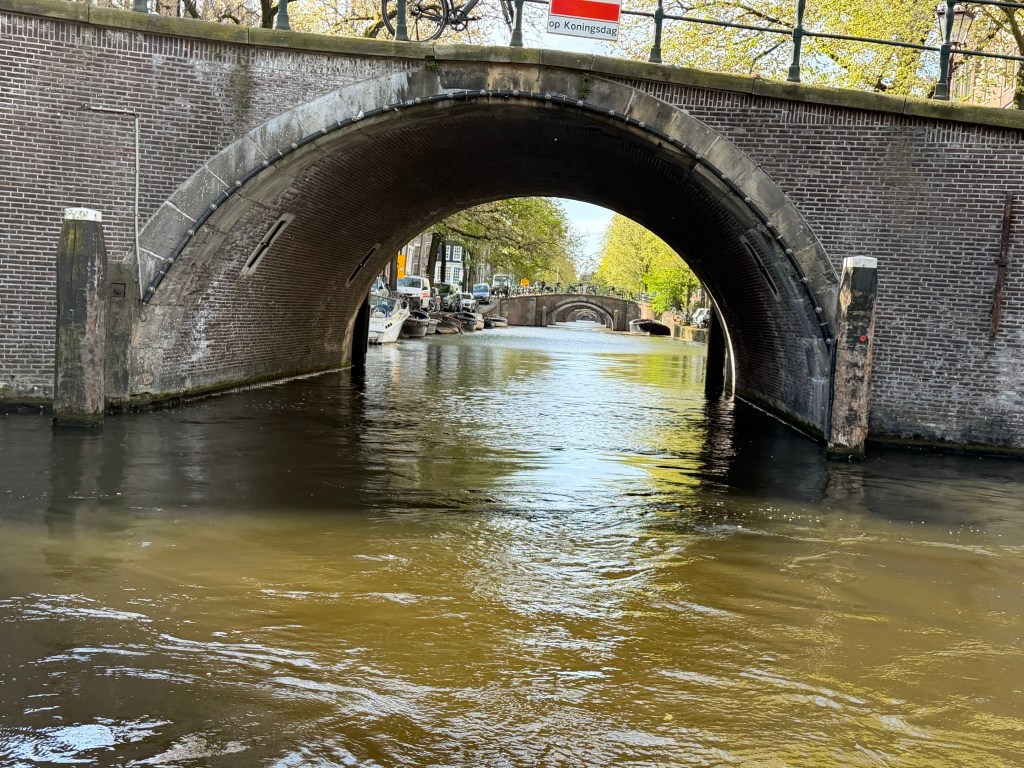
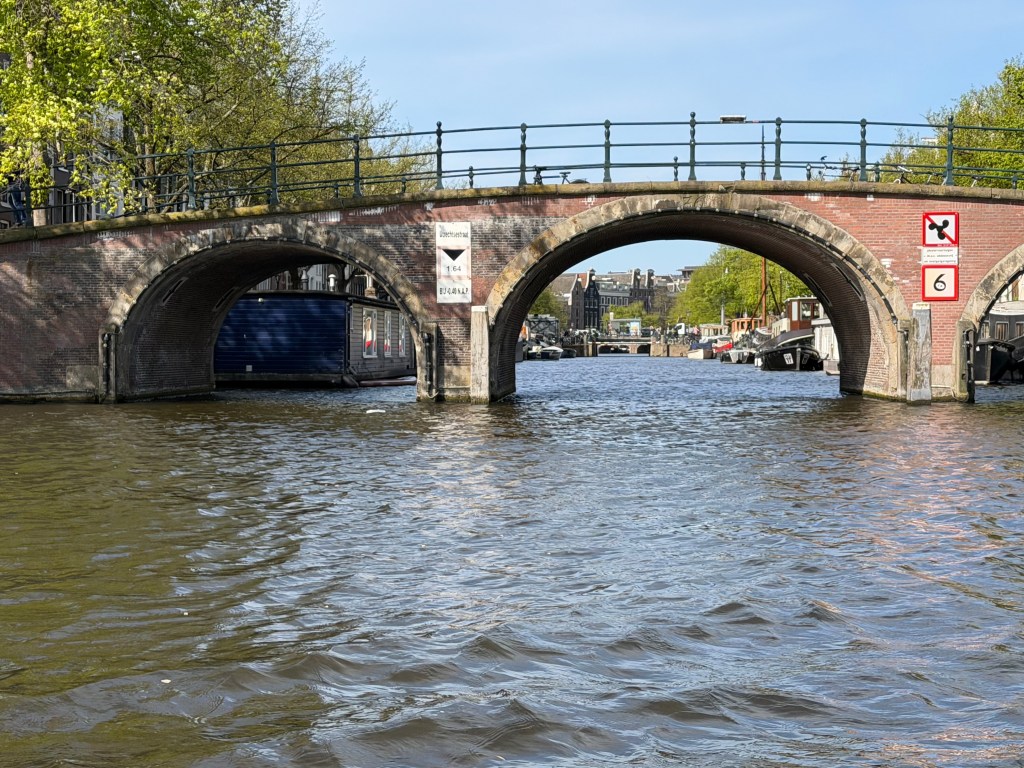
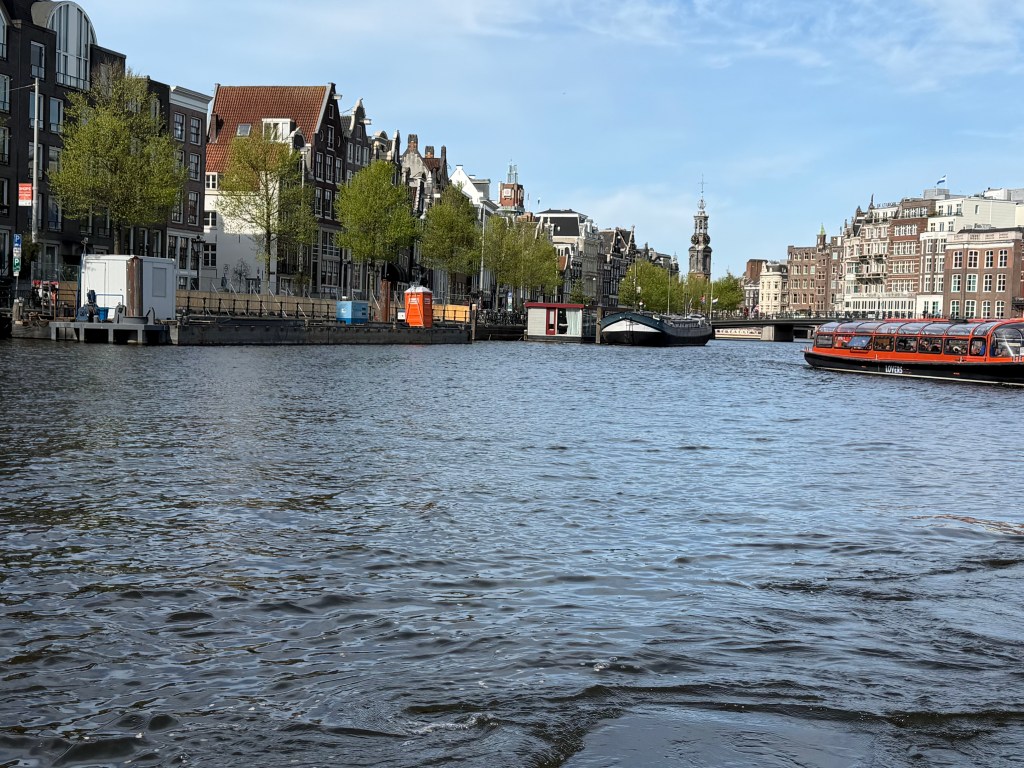
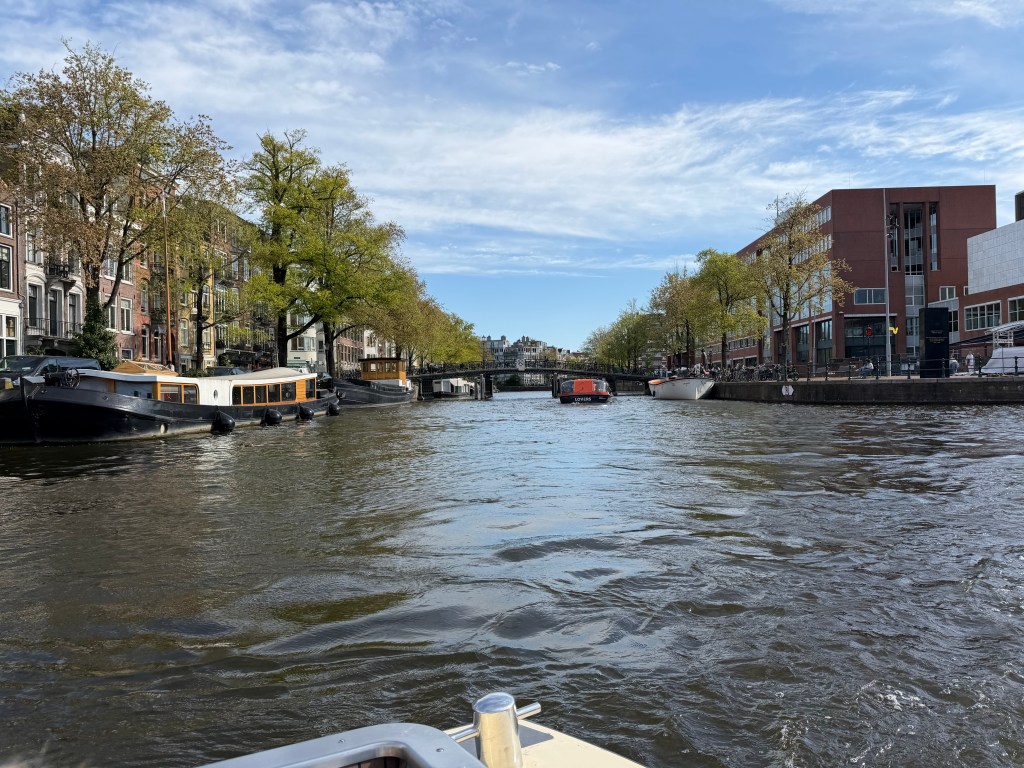
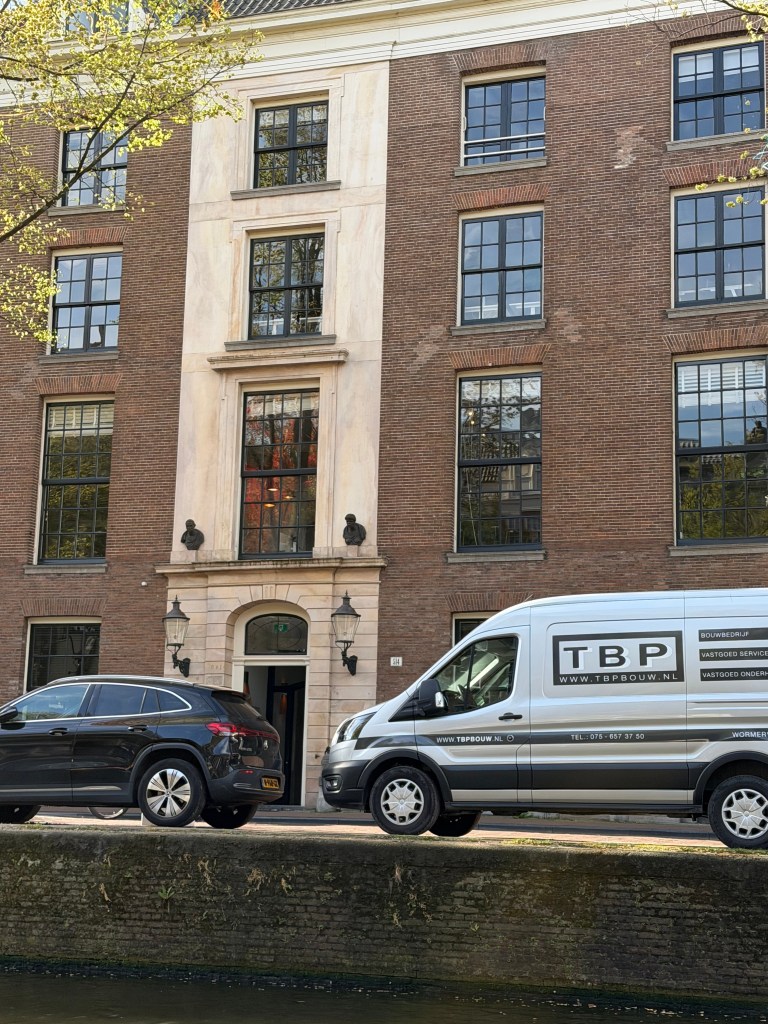
The building in white is extremely narrow, dating from the time when people were taxed by the width of their houses.
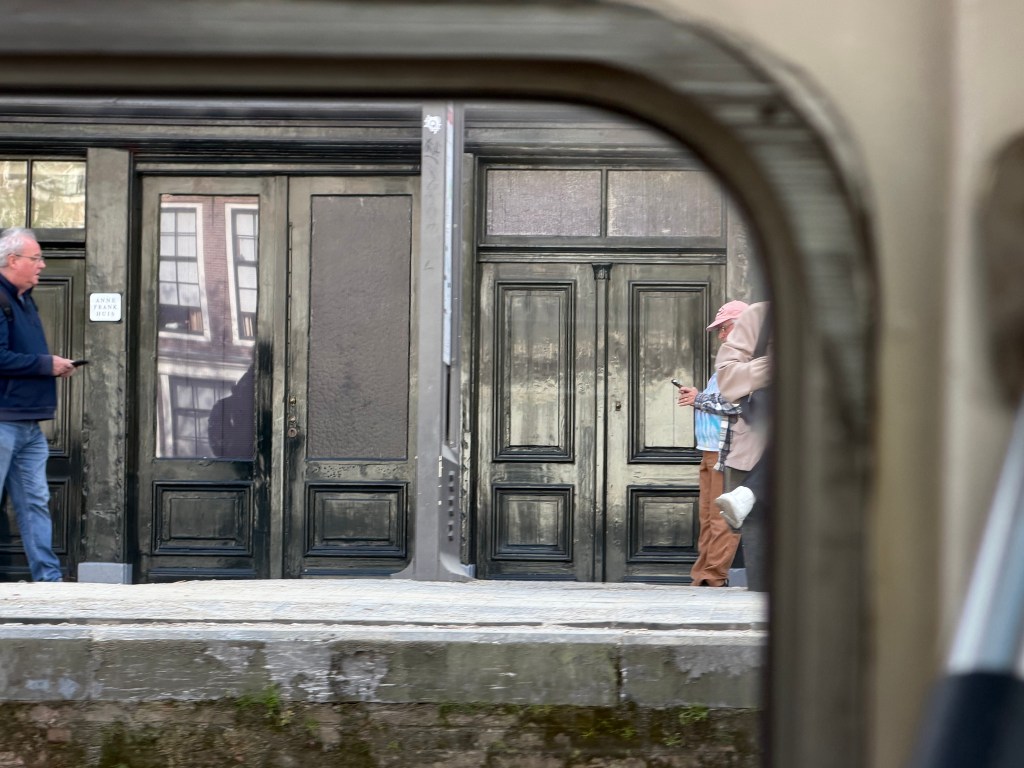
Anne Frank’s house (No, we didn’t visit during this trip: Andy went the last time we were here, and I went in 1977, which was more than sufficient).
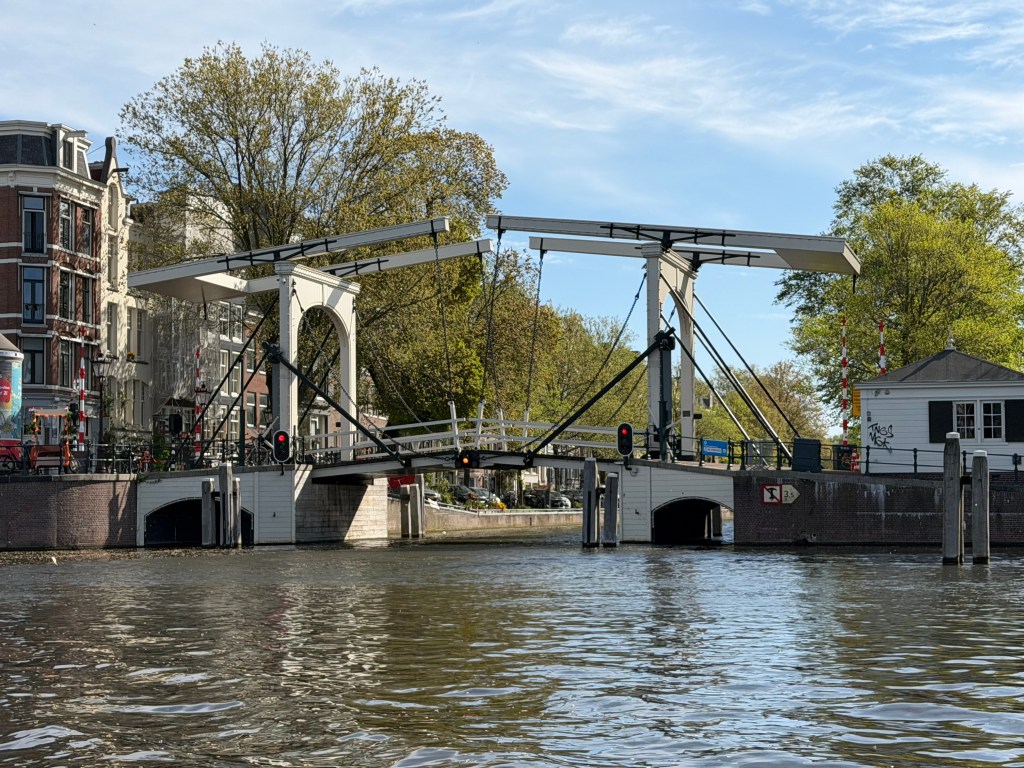
Claude Monet painted this scene
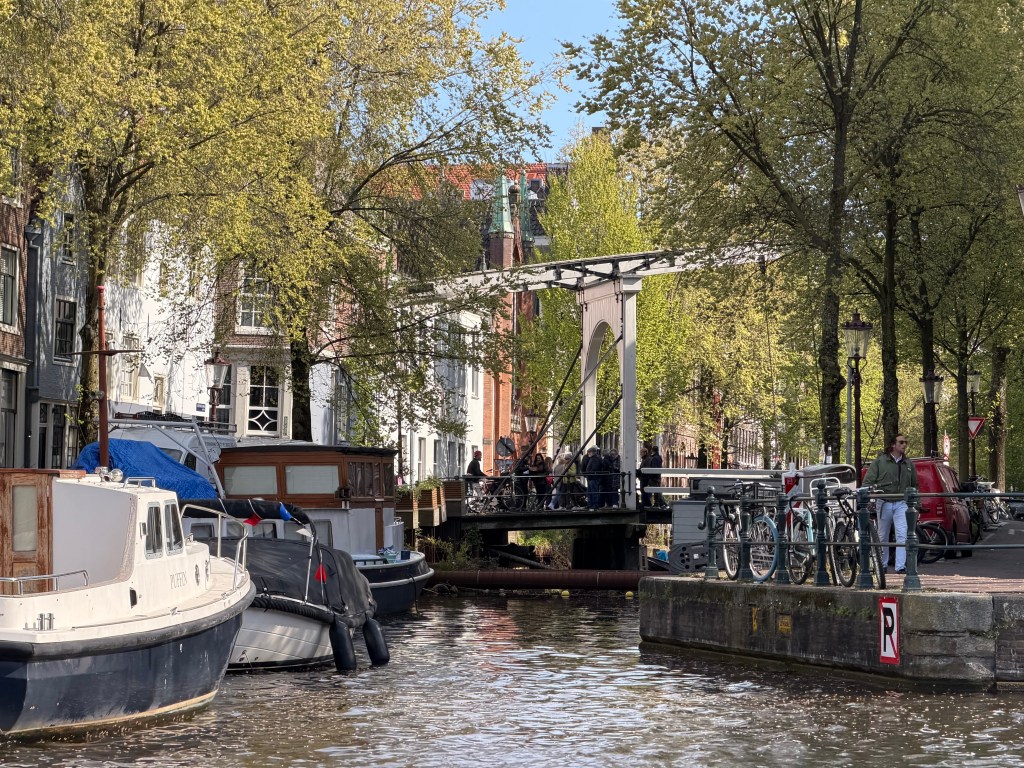
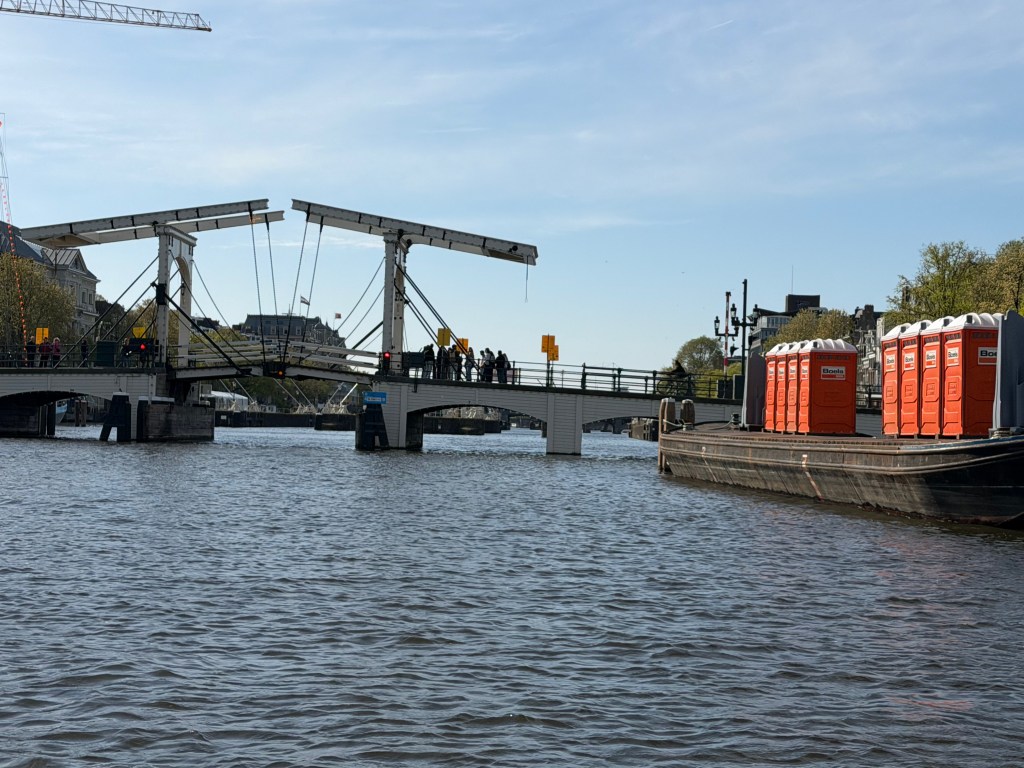
The port-a-potties in this photo was for King’s Day. These served as bathroom access for people who were out and about in little boats too small to have onboard bathrooms.
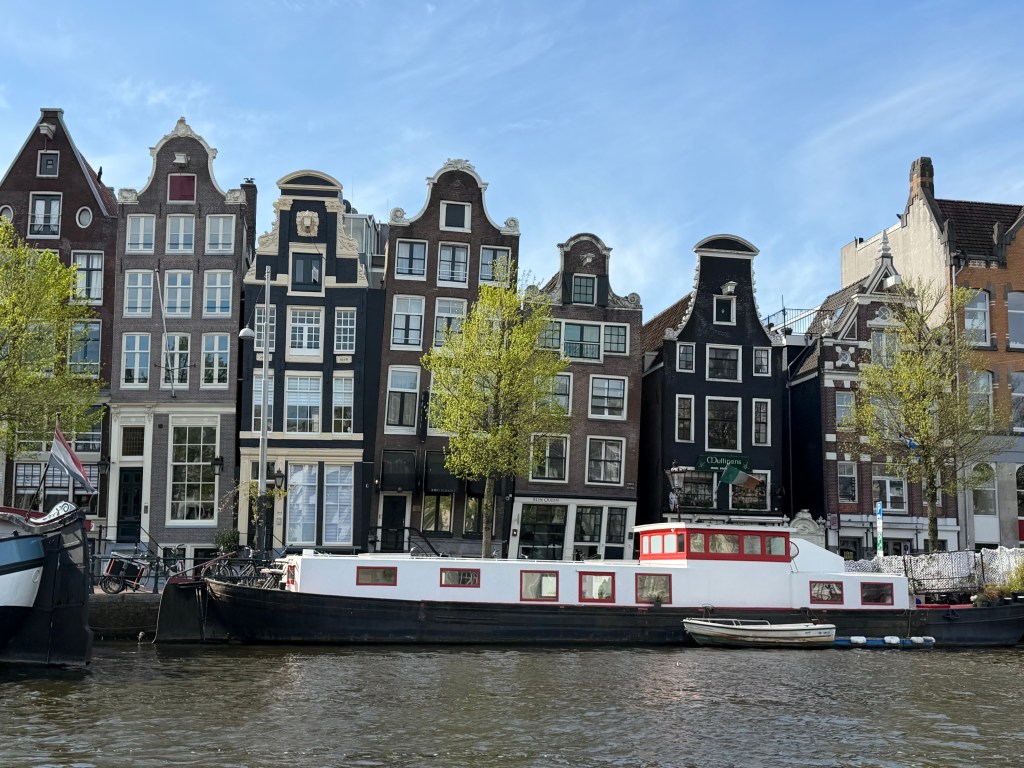
If you look closely, these buildings are tilting to the side. This is the result of the wooden piles they were built on rotting away. We were assured the wooden piles have since been replaced by concrete. But the buildings still lean.
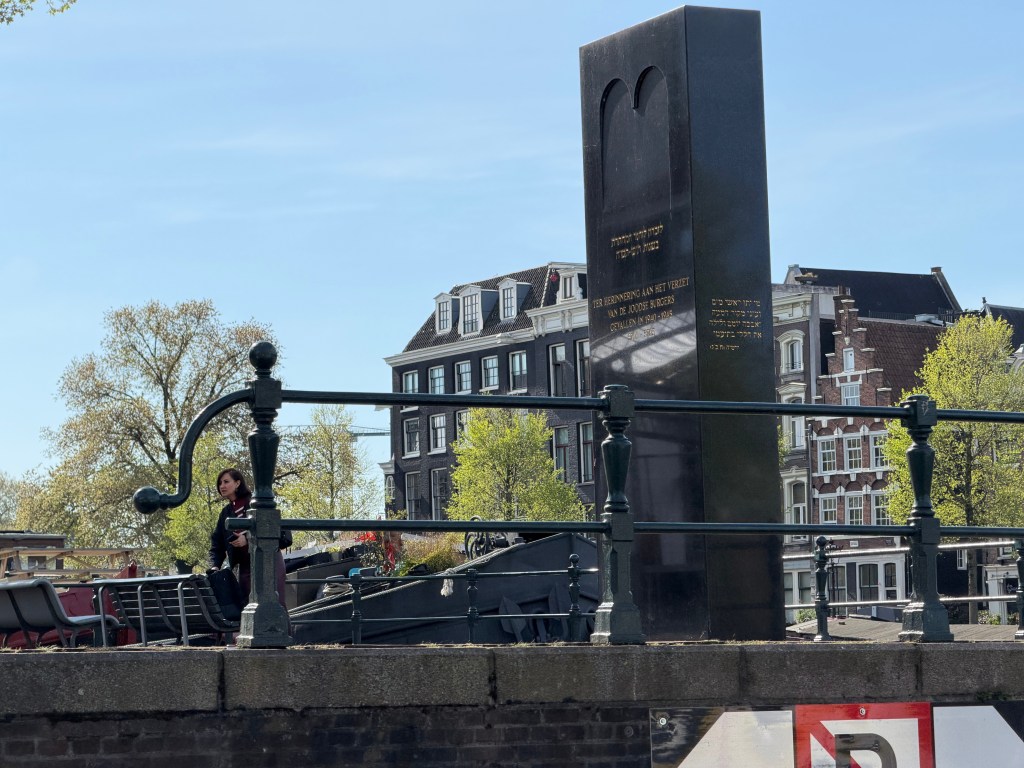
Other interesting things we saw along the way:
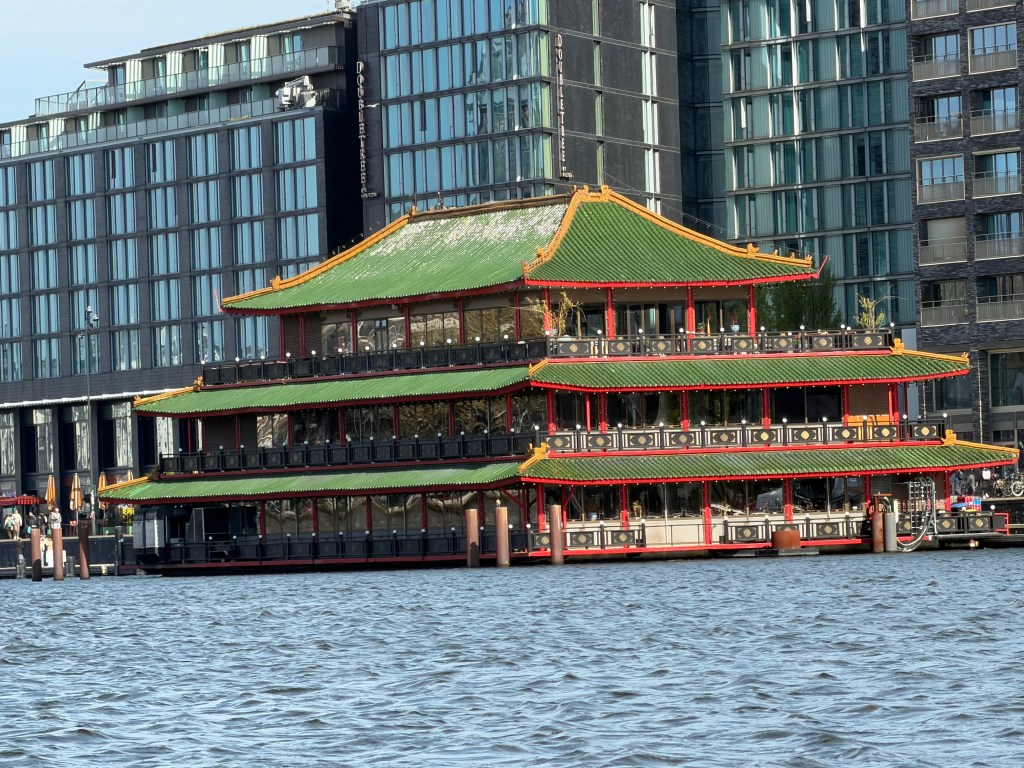
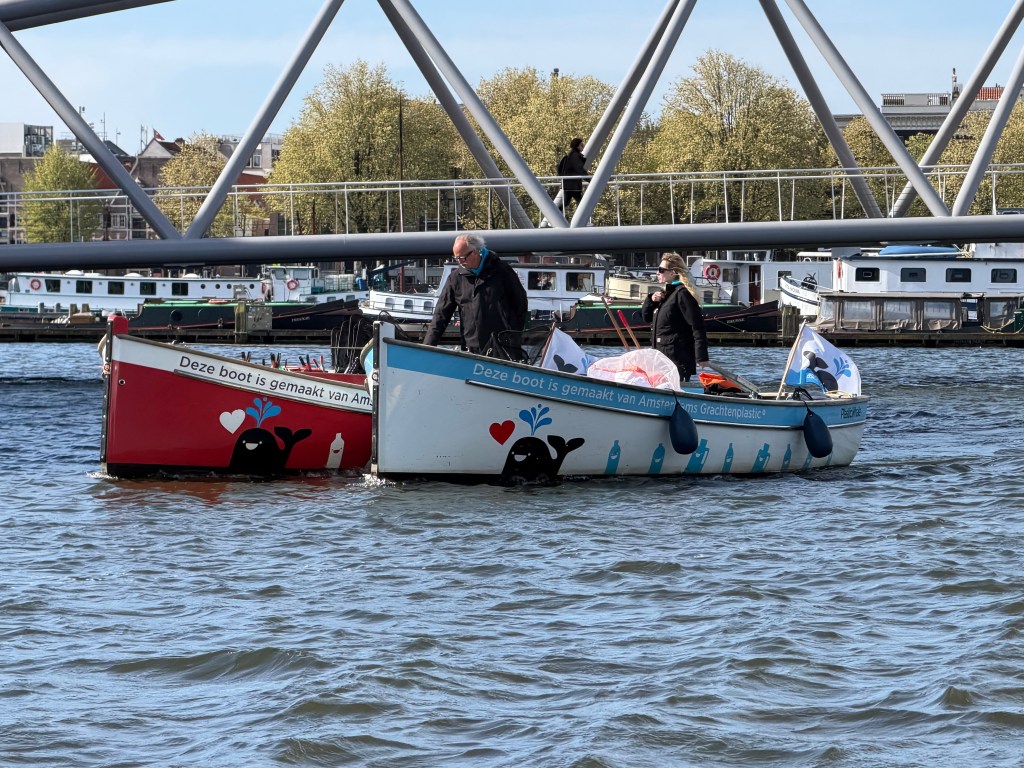
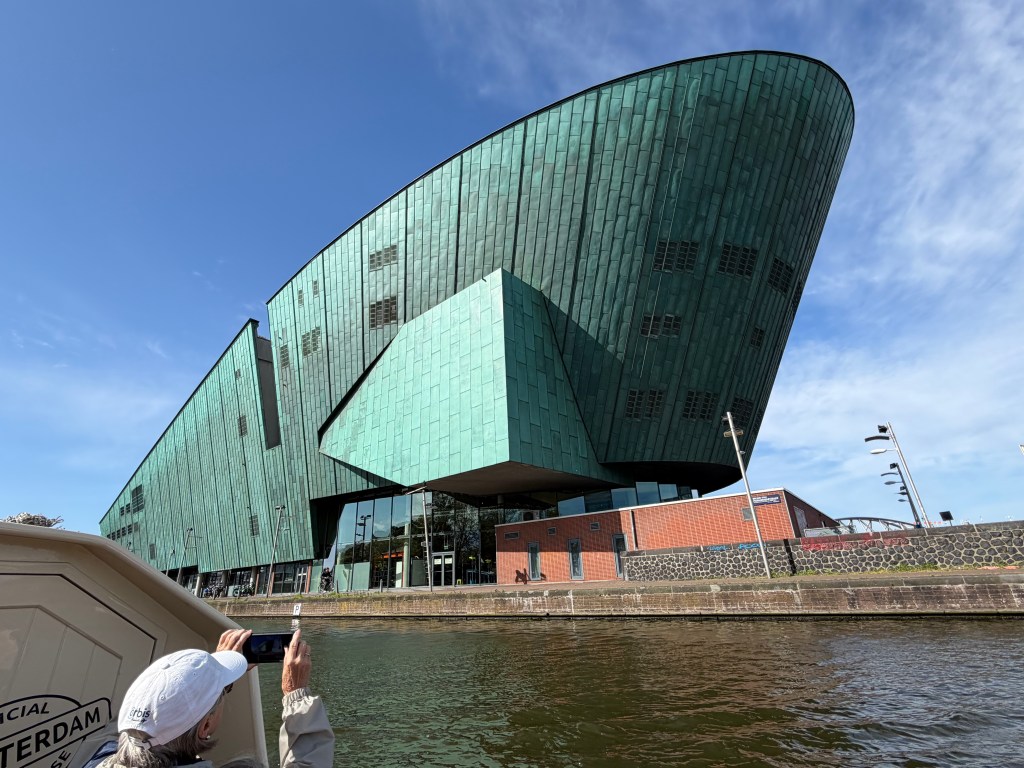
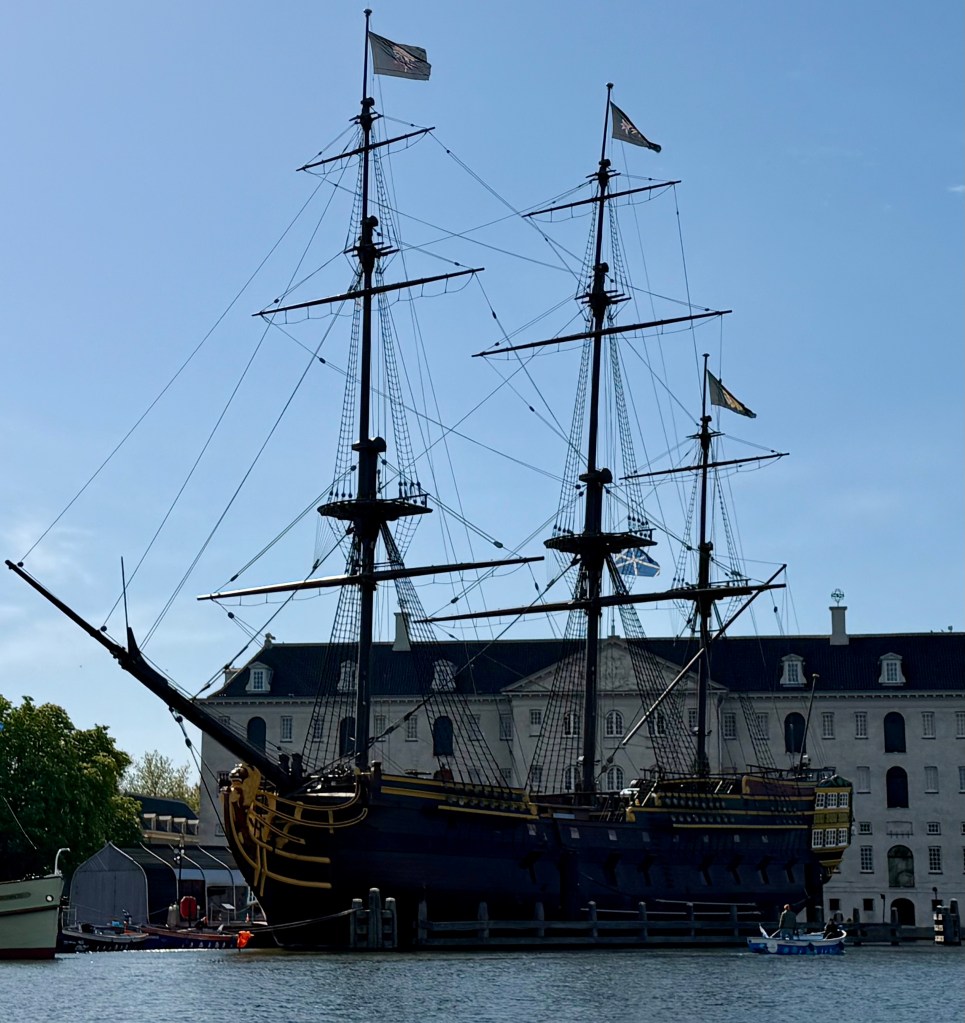
Amsterdam seems to be more interesting every time we come!
After lunch we decided to finish up our Jewish quarter tour by returning to the Jewish museum. We decided to ask the front desk to call us a taxi that would guaranteed drive down the cobblestone ramp to the dock and pick us up right at the ship. Uber drivers might not do that, and require us to meet them up on the street, which would mean I’d have to hobble up the cobblestones. Not ideal.
The taxi worked perfectly, though twice the cost of an uber. We figured on the way back we could guide the uber driver where to make the turn down the ramp to the dock.
If the Portuguese Synagogue represented the Sfardi Jewish experience in Amsterdam, the Jewish Museum showed also the Ashkenazi (eastern European) Jewish experience. The museum building itself is the old Ashkenazi synagogue.
Navigating the multi-floor building required using the convoluted elevator system that seemed to work when it wanted to. We needed museum staff to get us started via the handicap entrance. The staff member had to badge the elevator several times to get it to go, and then he had to meet us on the next floor. It was confusing as to exactly which floors contained the museum itself, and first we needed to buy tickets: our ticket for the Portuguese synagogue included entrance to the Jewish museum, but we lost those tickets, so we figured we had to buy another ticket. The ticket guy told us we didn’t need to pay again once we told him the story, which was nice.
The entrance ticket included the free audio guide like the Portuguese synagogue, though this time we knew what to do. My device spoke in English from the git go.
The first floor we visited was labeled “Religion” that displayed the religious aspect of Jewish life in Amsterdam before WWII.
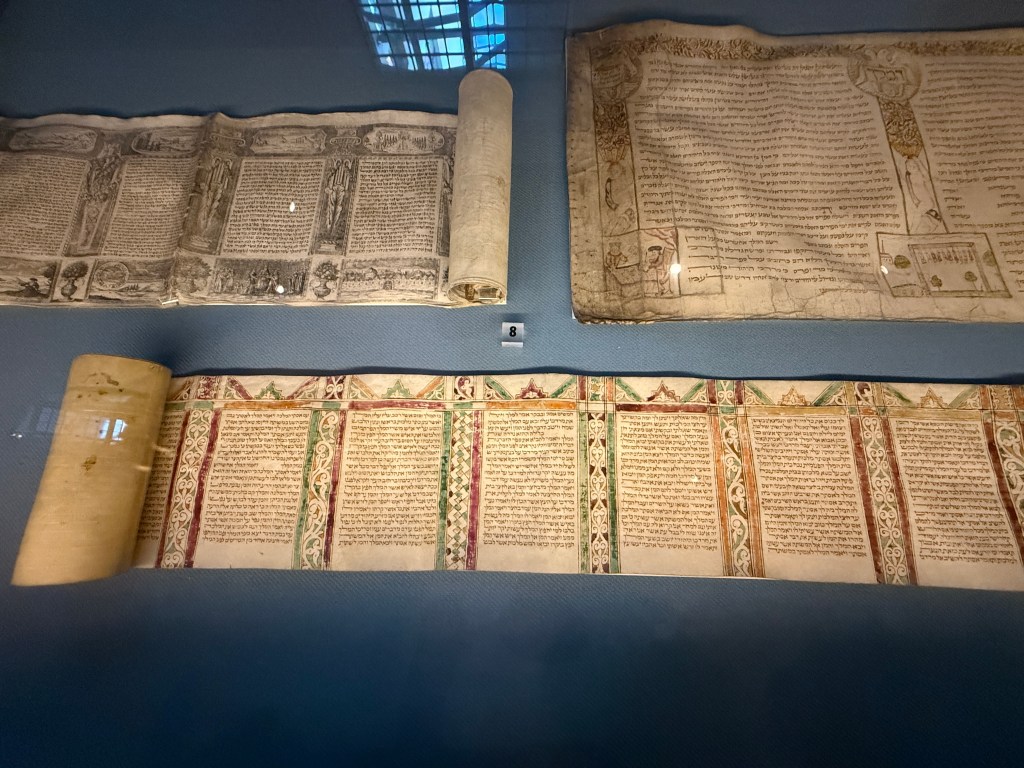
These are meggilot Esther – hand written scrolls containing the book of Esther. The illuminations were beautiful.
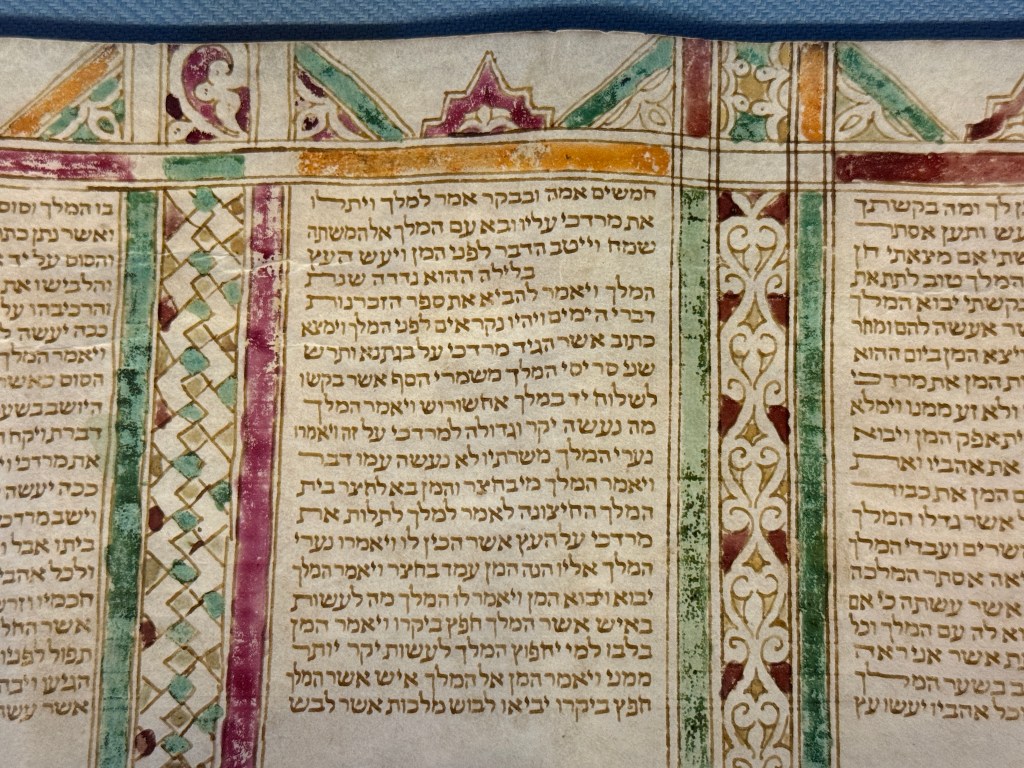
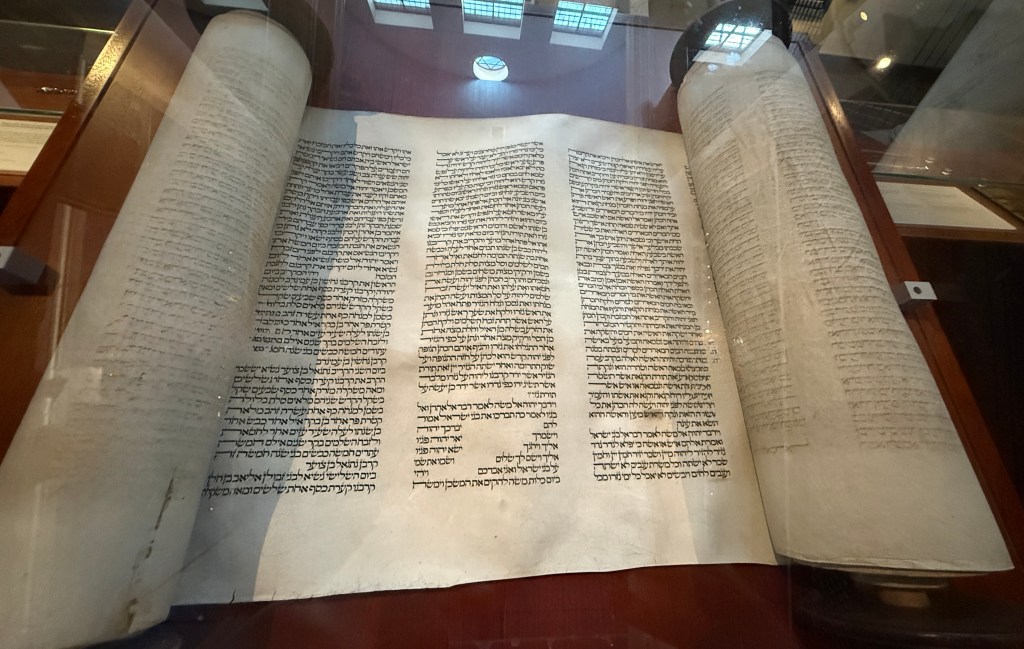
This is a sefer Torah (Torah scroll) set to the Priestly Blessing – at the bottom of the middle column. Perfectly legible and easy to read.
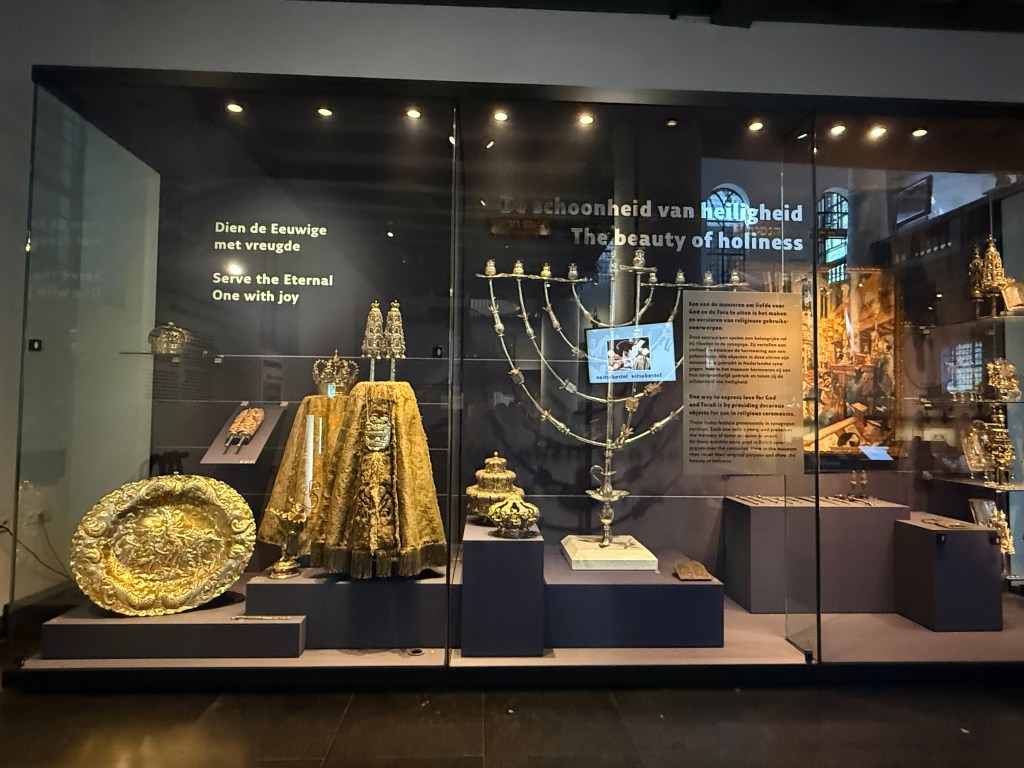
This is a display case containing assorted religious objects, including a huge Hanukkah menorah and Torah covers with silver crowns. The big silver bowl in the lower left hand corner is a bowl to hold water for the Kohanim (men who inherit the priest role from their fathers) to wash their hands before they bless the congregation with the Priestly Blessing (as seen in the sefer Torah). It’s a little hard to see, but to the right of the bowl is a “laver”, a pitcher the Levi’im used to pour water over the feet of the Kohanim before the Kohanim bless the congregation.
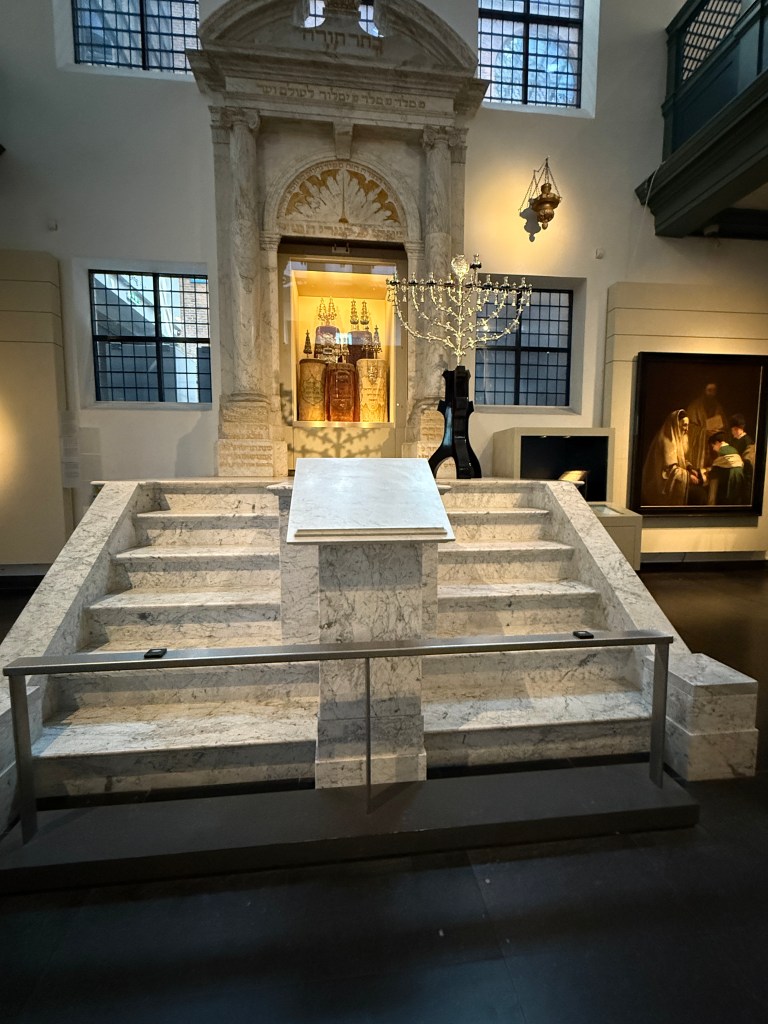
This is the original bima (kind of like a little stage) in front of the Ark that holds the sifrei Torah (Torah scrolls) that you can see behind the glass. The menorah on the bima looks like another Hanukkah menorah. A standard menorah would have 7 branches; this one has 9. Up on the wall to the right of the ark is the Ner Tamid – the Eternal Light that would normally be continuously lit in an active synagogue. Before electricity the Ner Tamid would be lit with oil. It represents the continuous presence of G-d.
These are other religious or ritual items.
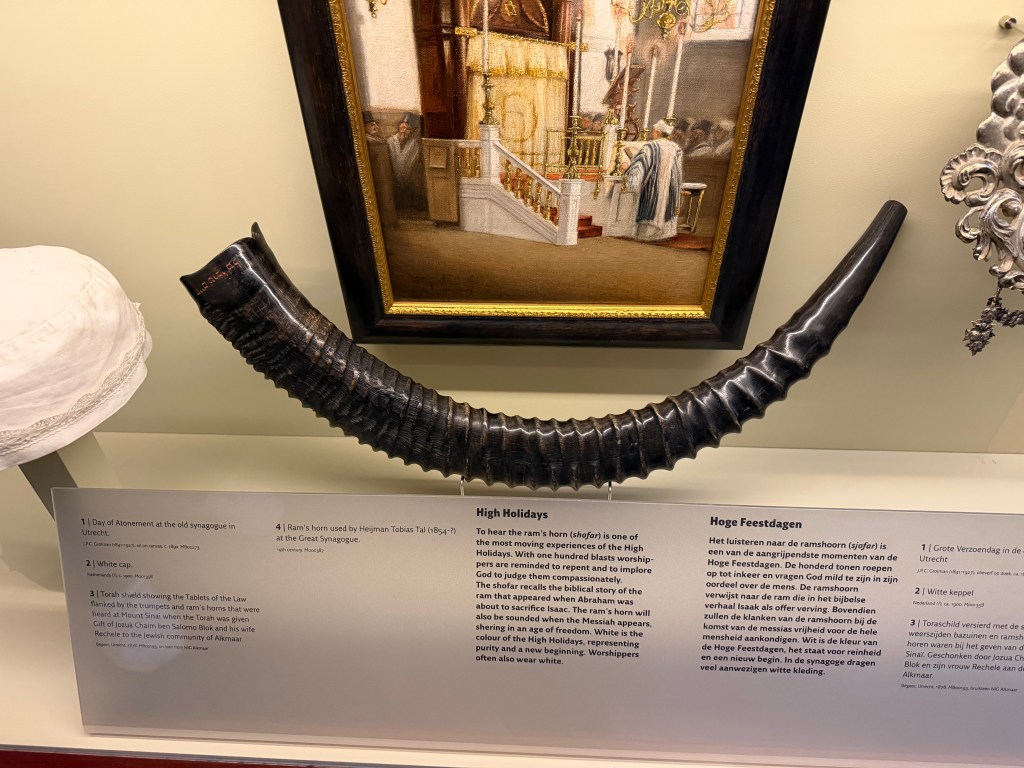
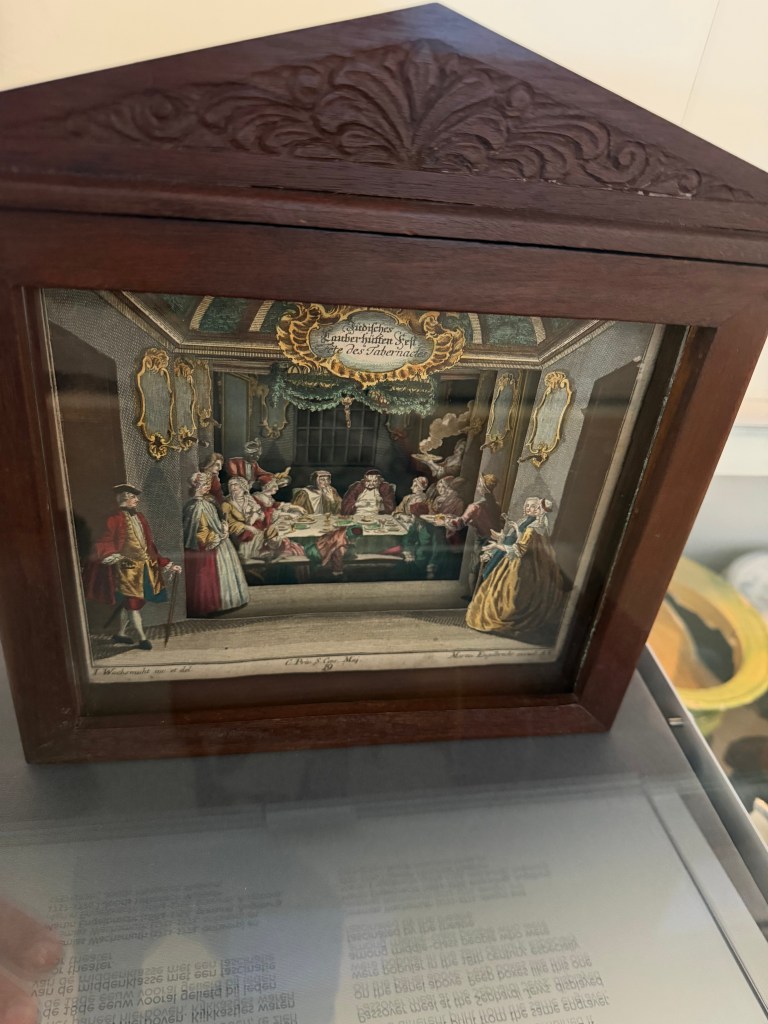
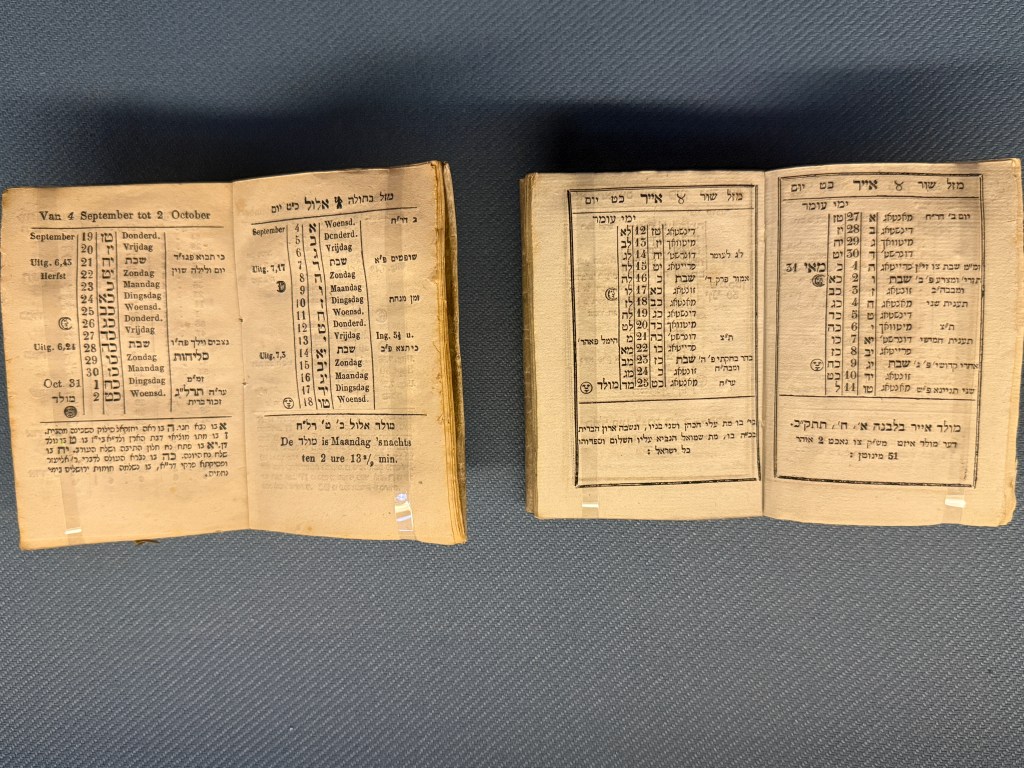
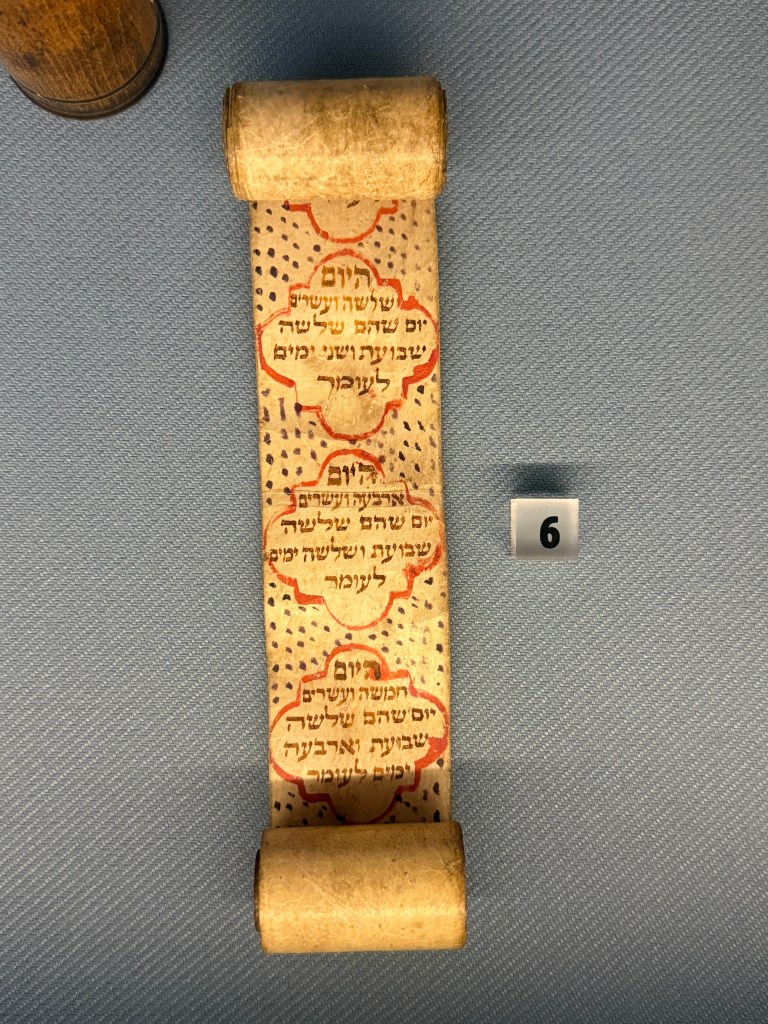
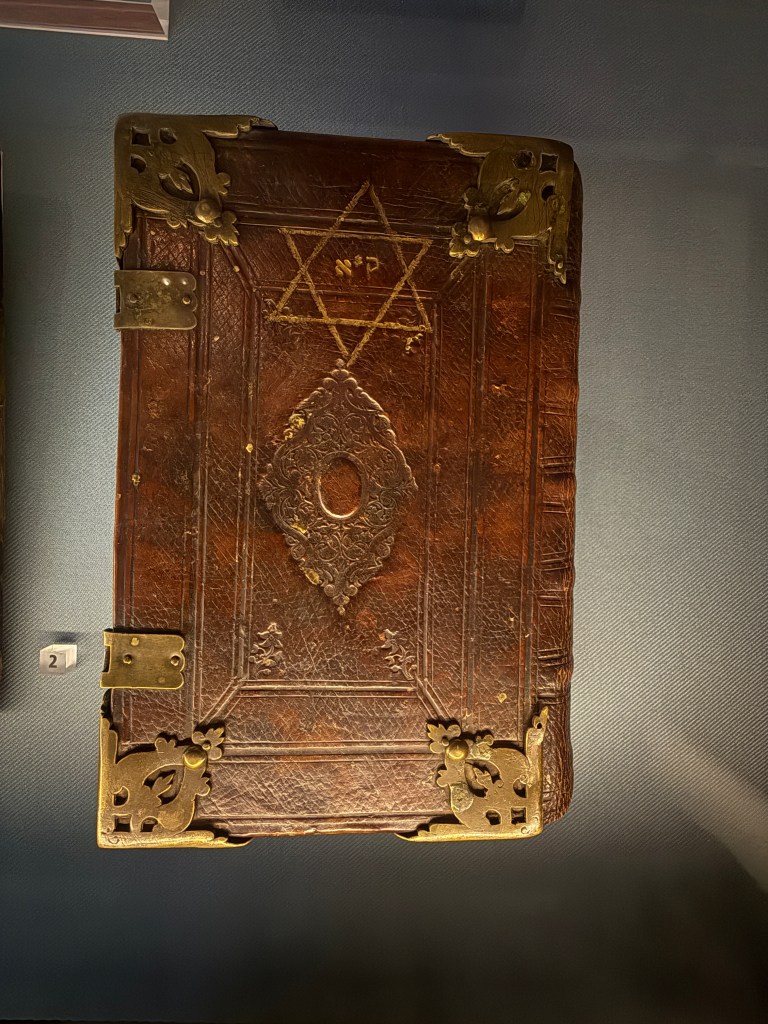
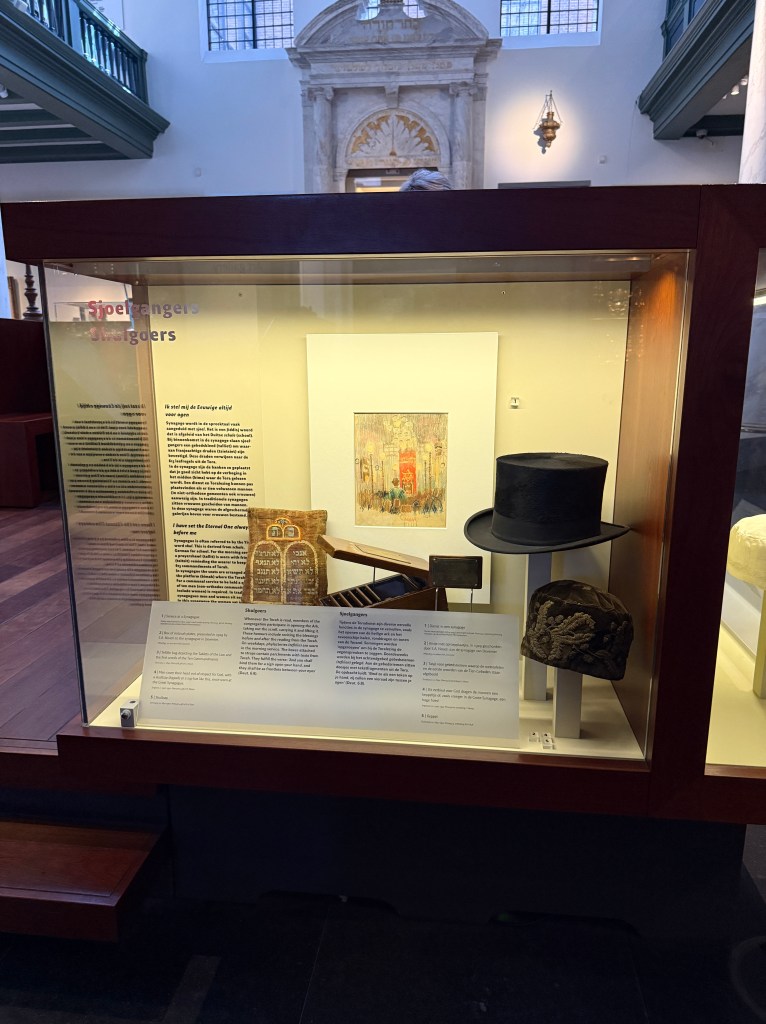
The next floor described the history of the Jewish community in Amsterdam from its origins in the 1600s as Sfardi Jews arrived to escape the Spanish Inquisition in Spain and Portugal, as well as Ashkenazi Jews fled the pogroms and dire poverty of Eastern Europe. One remarkable note: Jews were given full Dutch citizenship in 1796 with all the rights and privileges as non-Jews. This is a momentous occasion – most of the time, Jews were second-class citizens in the rest of Europe for much longer than that.
More than 2/3 of the Jewish population in Amsterdam were murdered during the Holocaust. There are now about 60,000 Jews in Amsterdam, but most of them live in the outer areas and not in the central part of the city.
When we were finished with the museum, we took an uber back to the ship. We were able to show the driver where to turn to drive down the ramp all the way to our ship. Success!
Tomorrow: Enkhuizen, where we meet our first windmills and tulip farm
 Maryland Meshugas