January 4: Where We Spend Six Whirlwind Hours Racing Around Buenos Aires To See All The Things
We had the first of our three tours scheduled for this week. Today’s was a 6-hour tour of Buenos Aires. Our tour guide’s name was Juan. Very knowledgable about Buenos Aires. He told us about the many courses he had to take to get a degree and certification as a professional tour guide. He was terrific – speaking for 6 hours in a language that is not his native tongue.
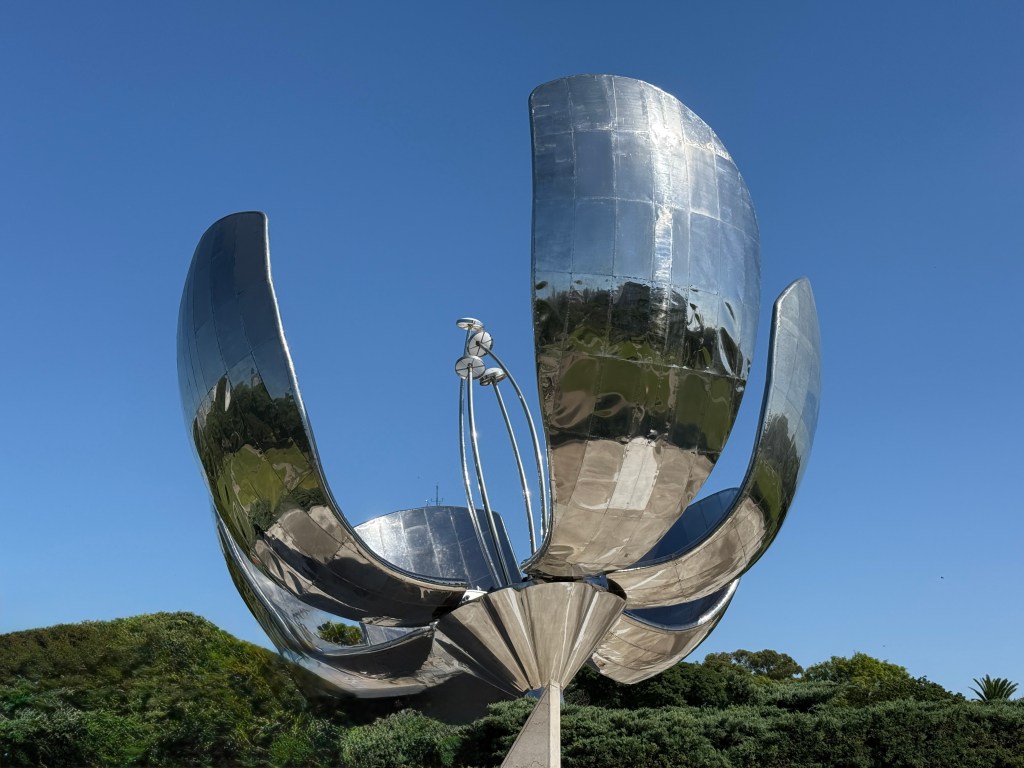
First stop – The Floralis Generica. A giant mechanical sculpture that used open and close. Unfortunately, the mechanical parts are broken and somehow a city with a huge college of engineers can’t find an engineer to fix it. Two of the petals were restored to their positions just a couple of weeks before we arrived.
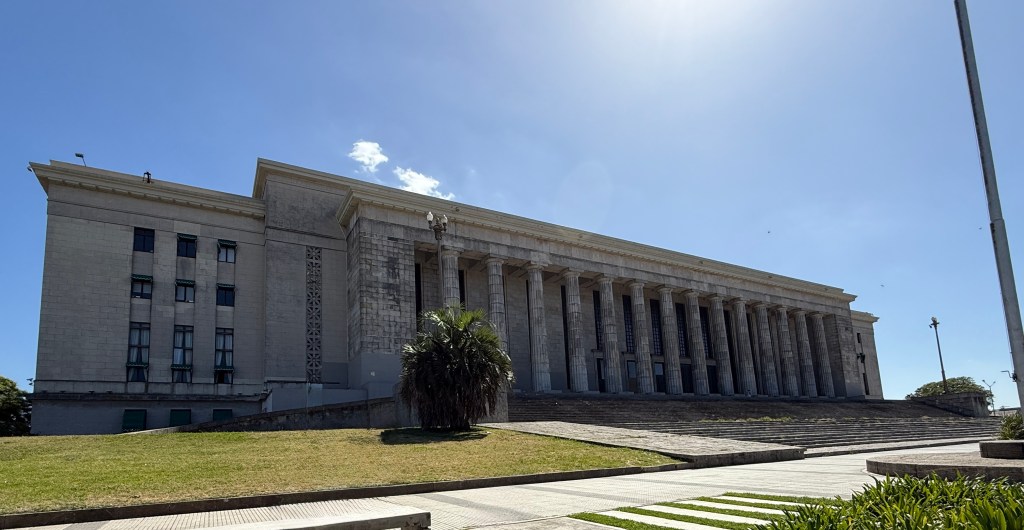
Next photo op: the law school of the University of Buenos Aires.
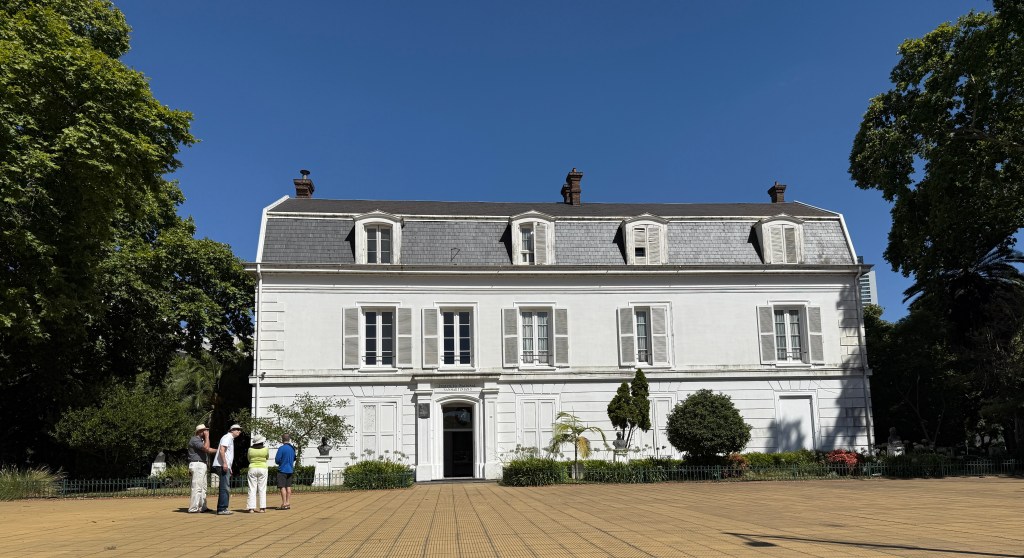
And then the seat of the Jose San Martin Institute. San Martin was the founder of Argentina, akin to George Washington for the US.
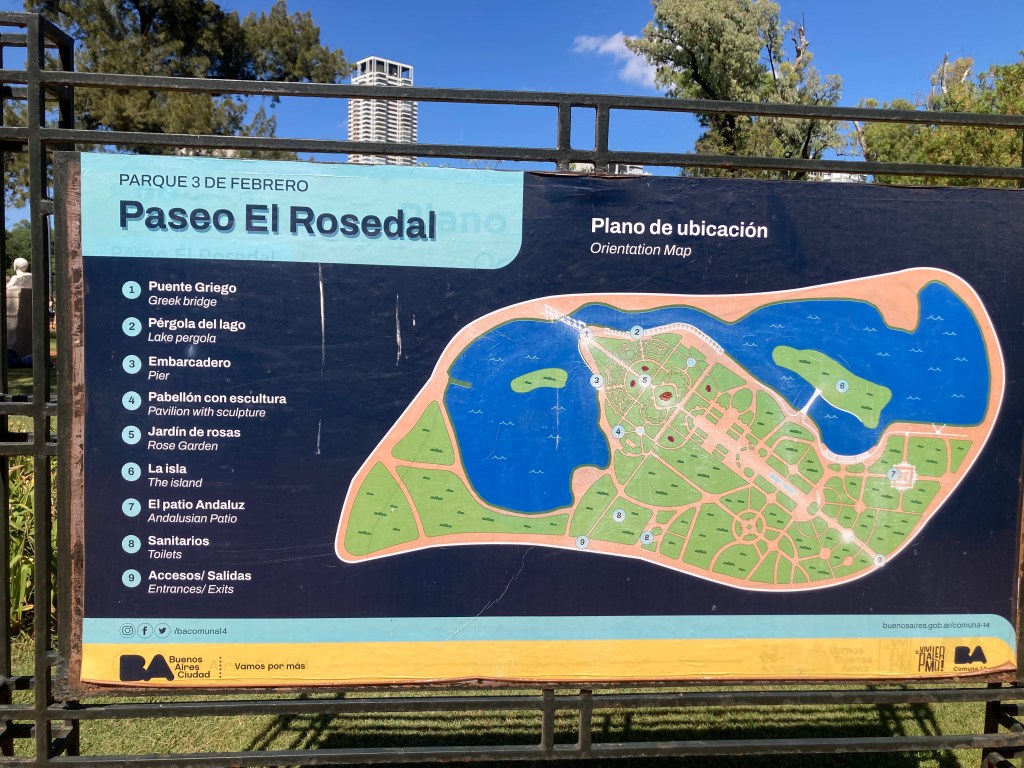
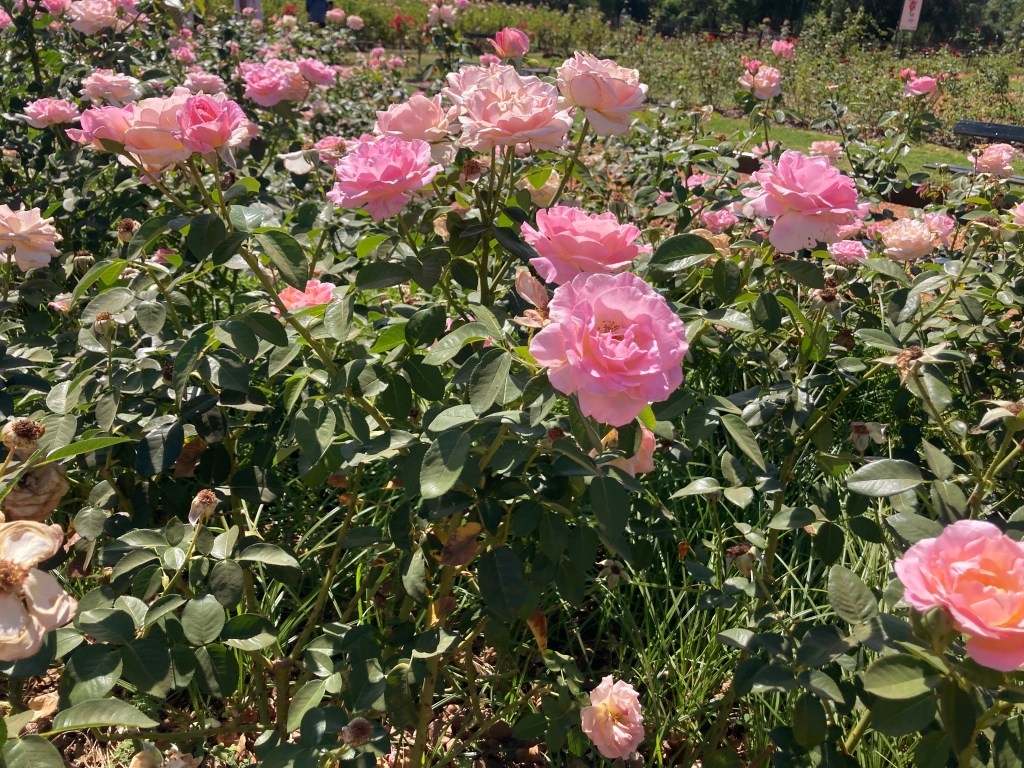
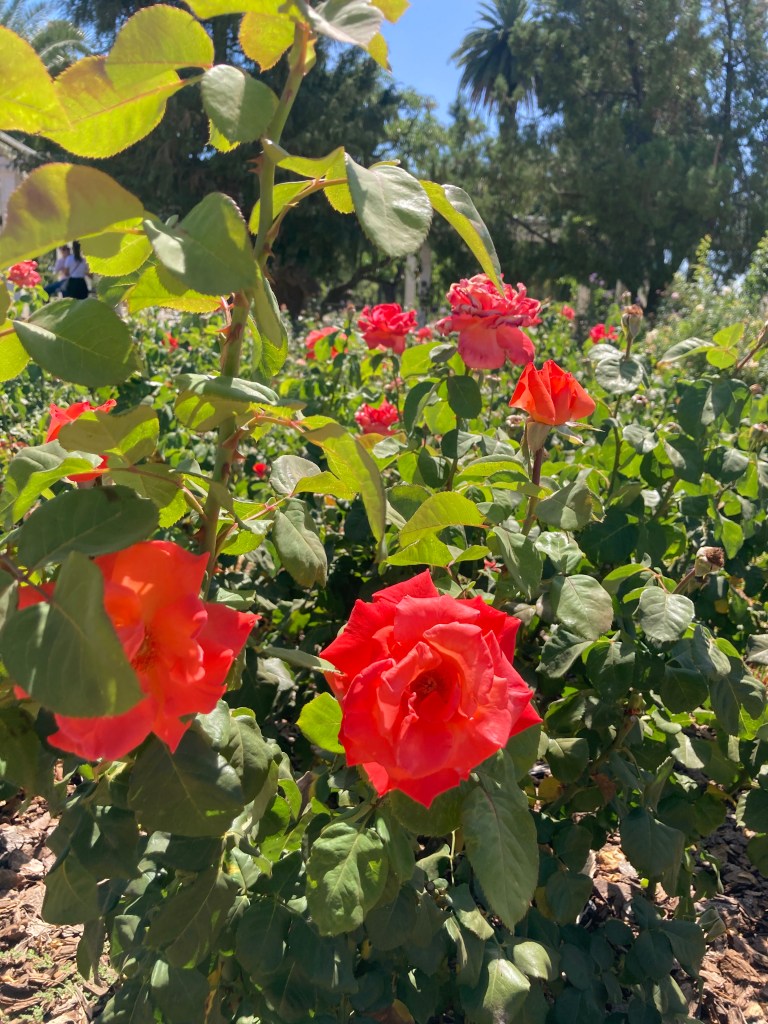
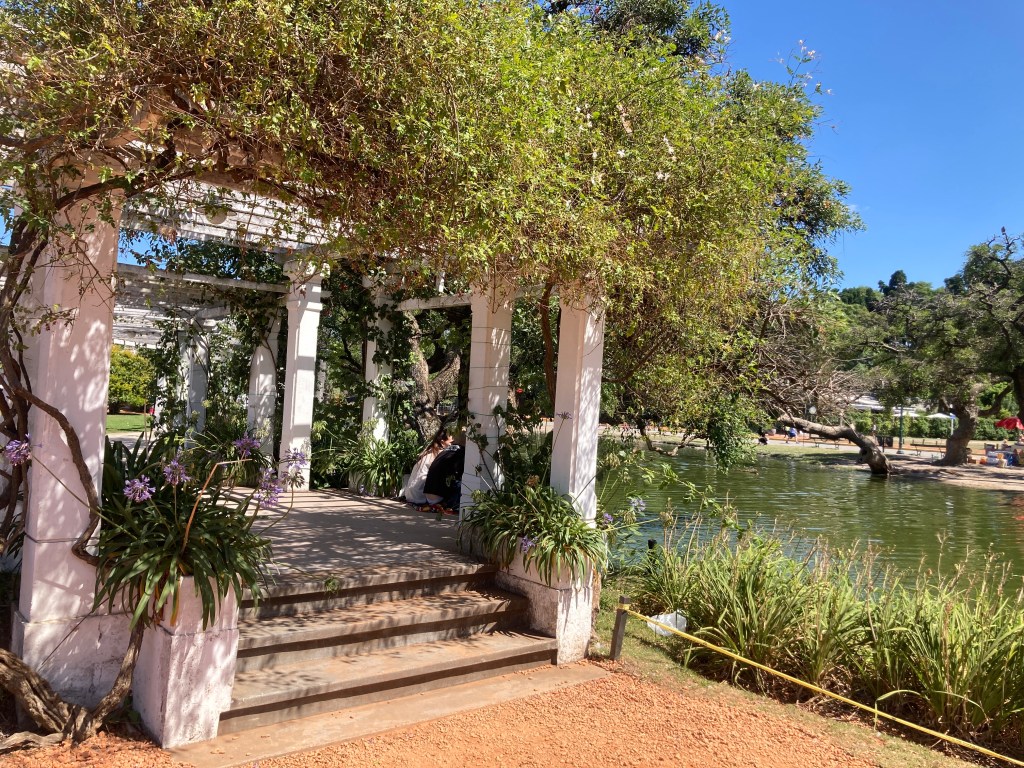
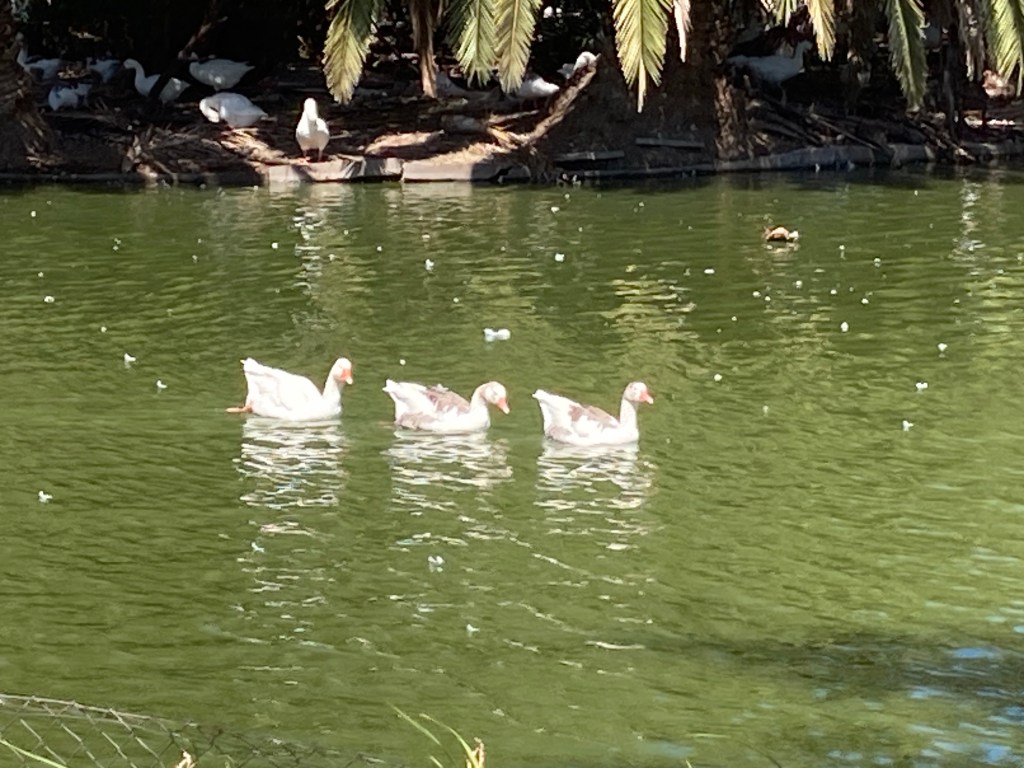
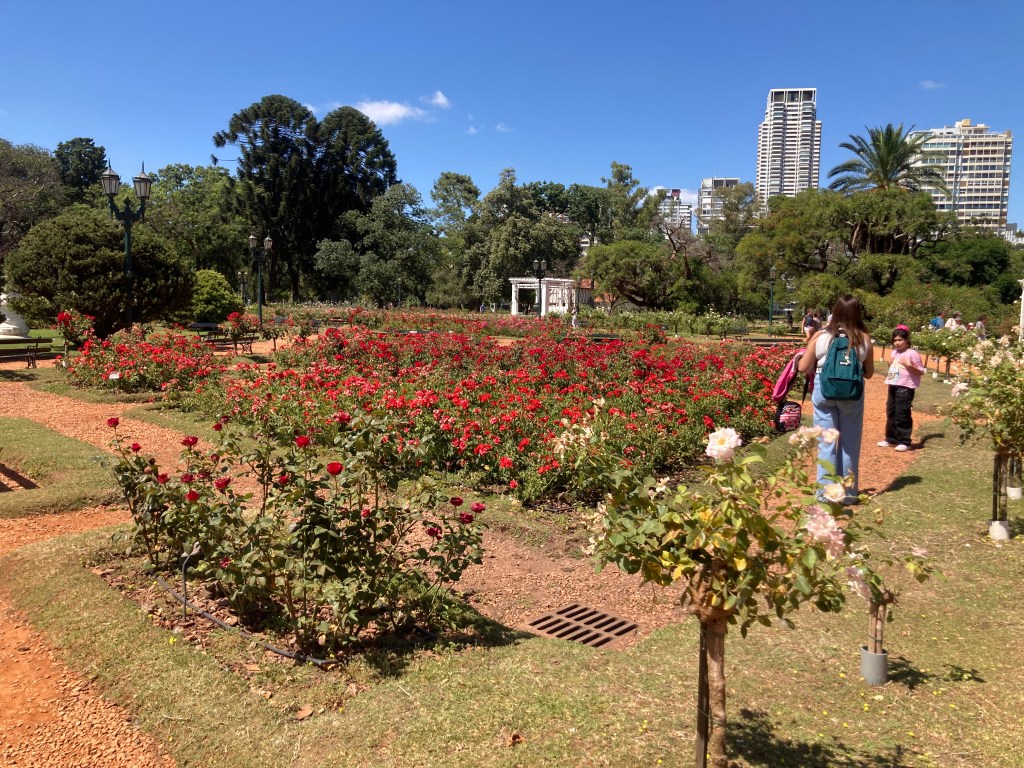
Next stop was the Paseo El Rosedal – a huge rose garden. It was too much for me to walk, so I enjoyed the sunshine while Andy and Juan went looking at roses. Here are some of the photos he took.
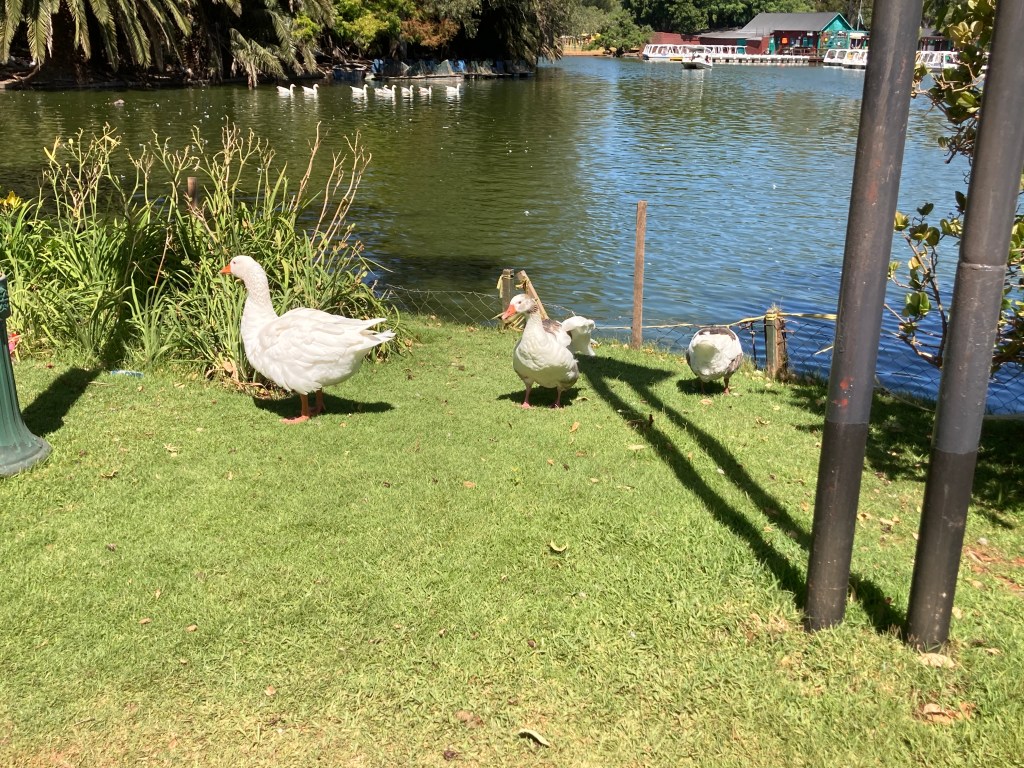
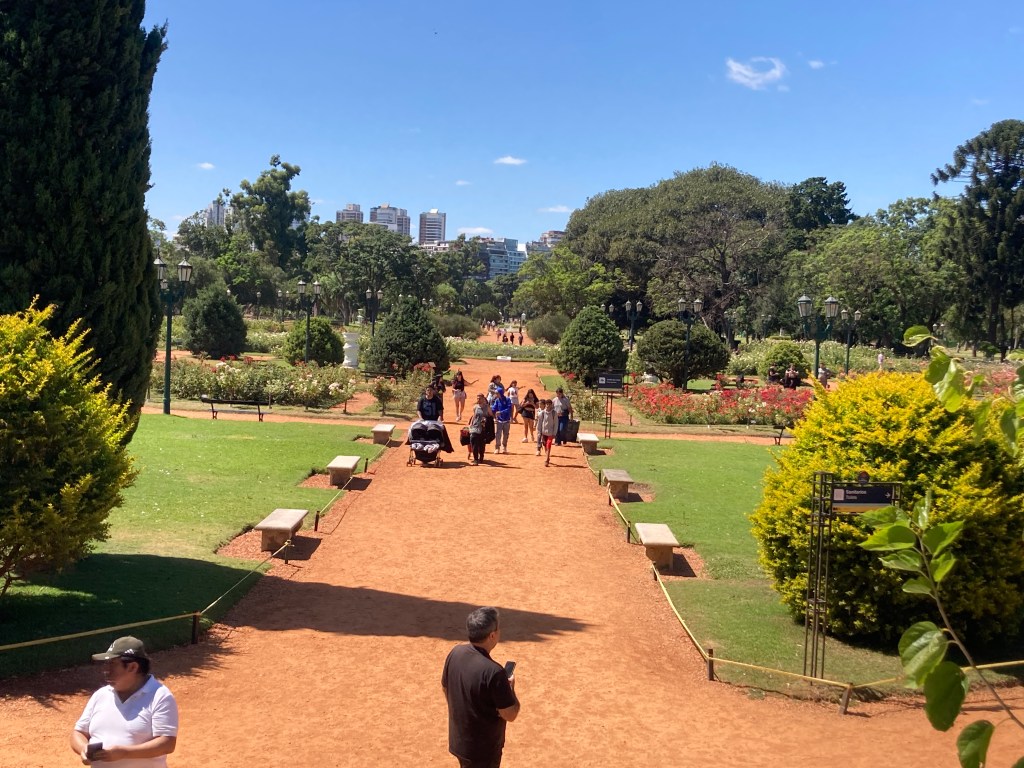
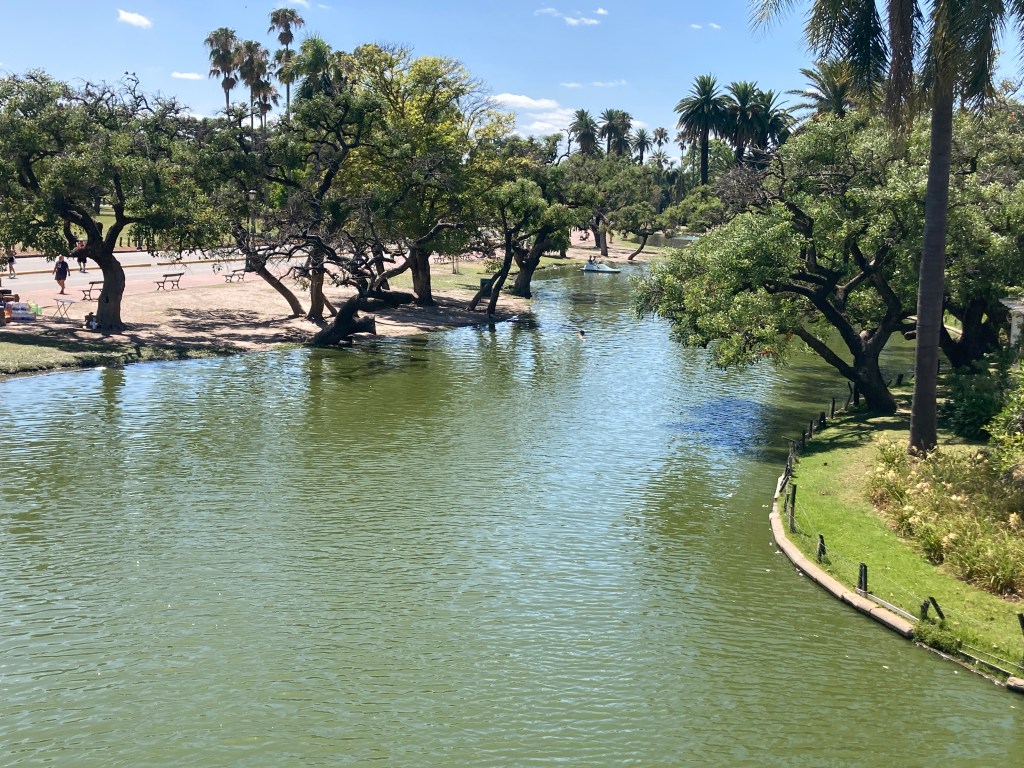
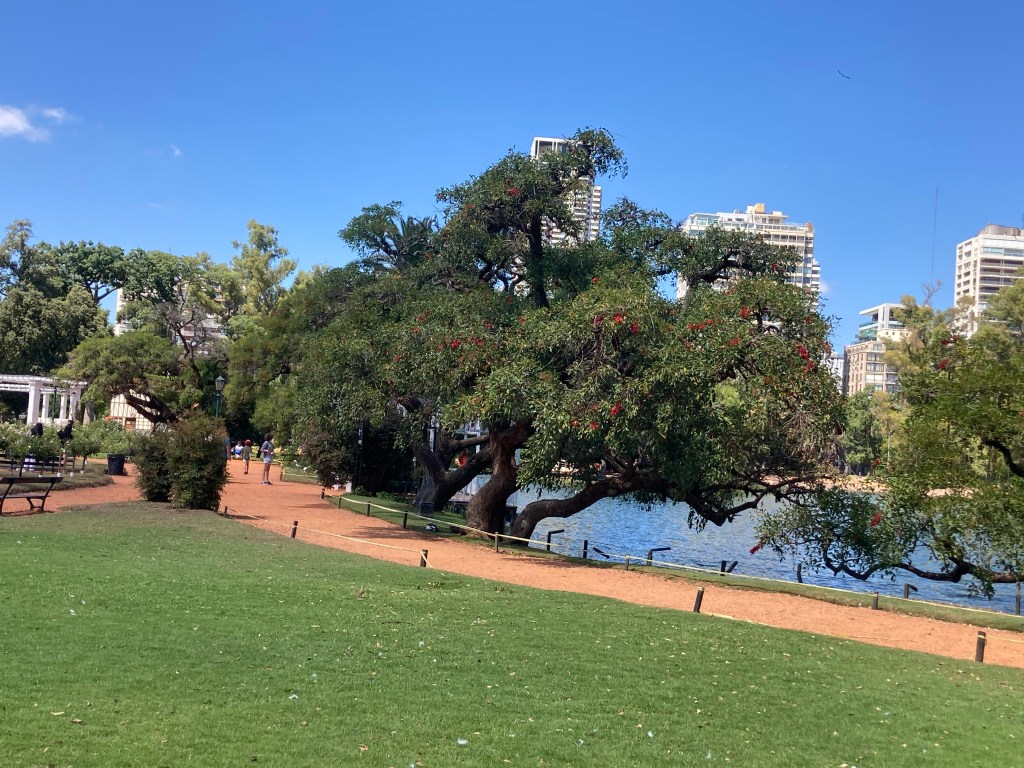

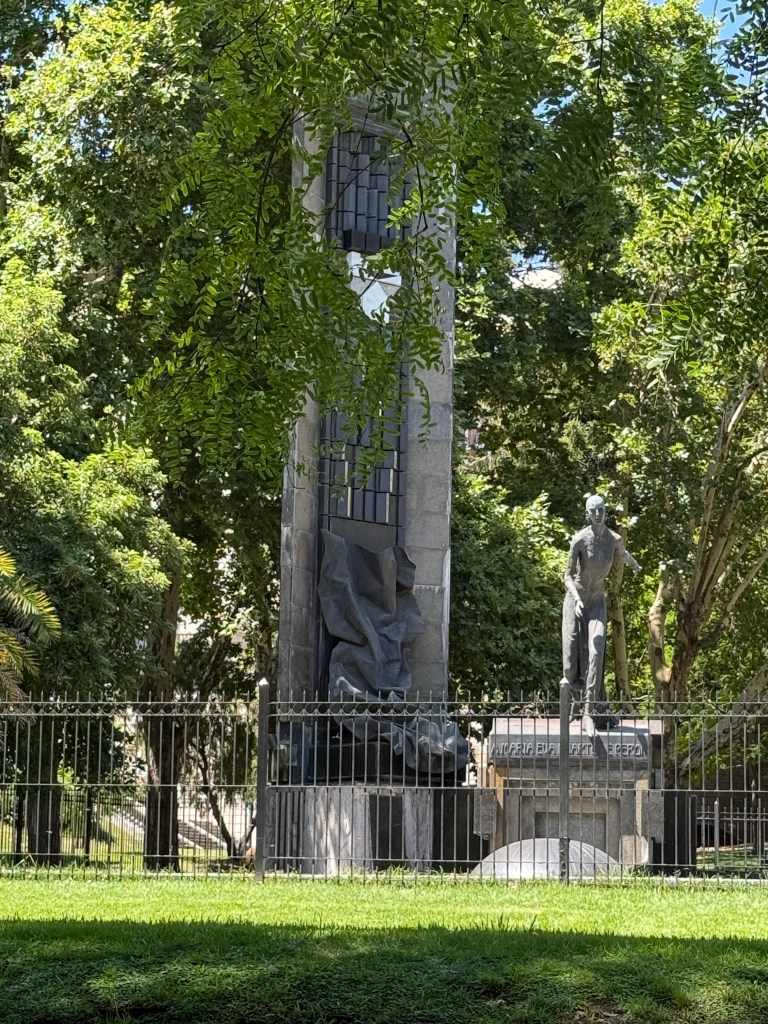
Here is the monument to Eva Perón – first lady of Argentina in the 1970s and 80s. She is still greatly revered in Argentina
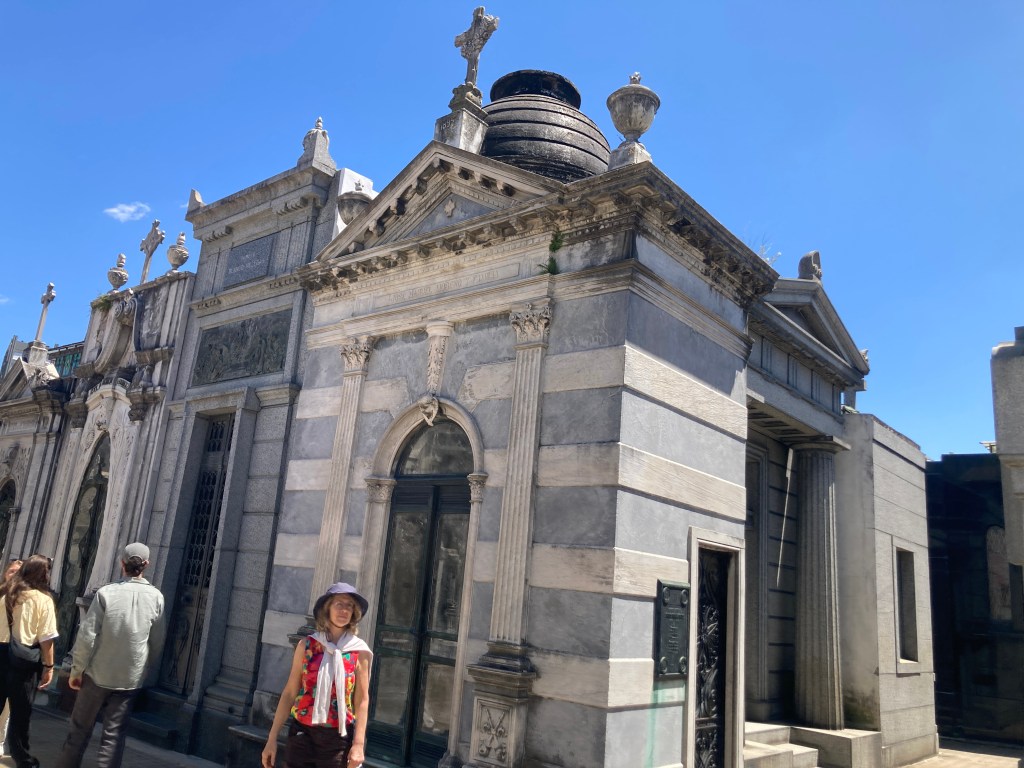
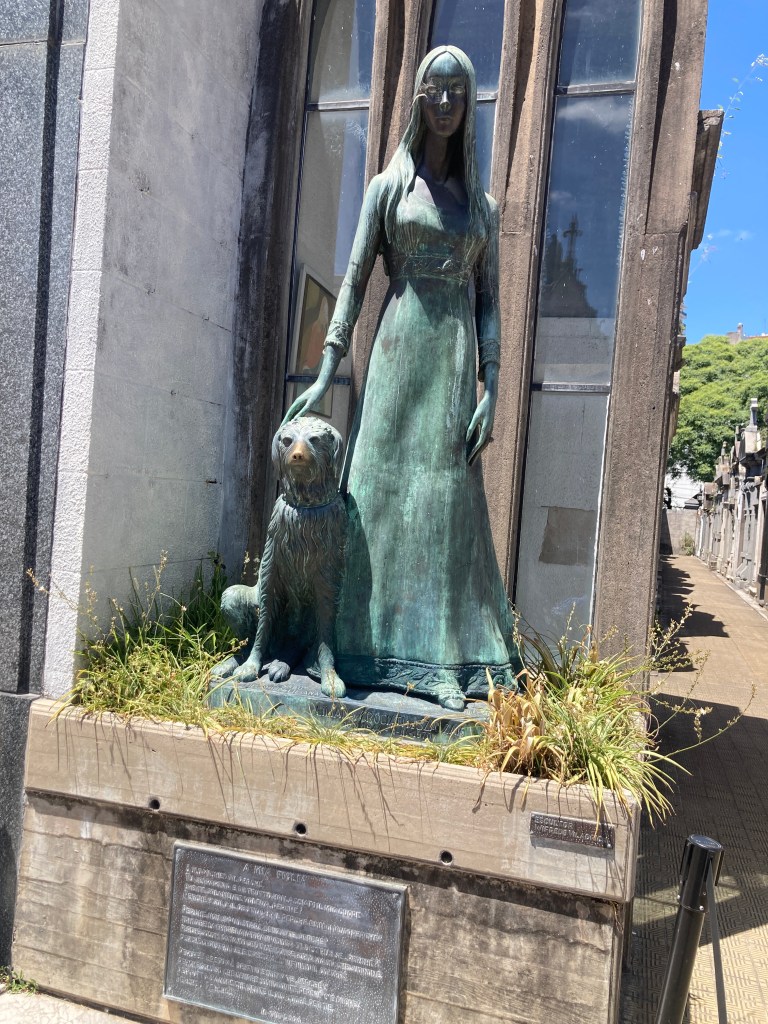
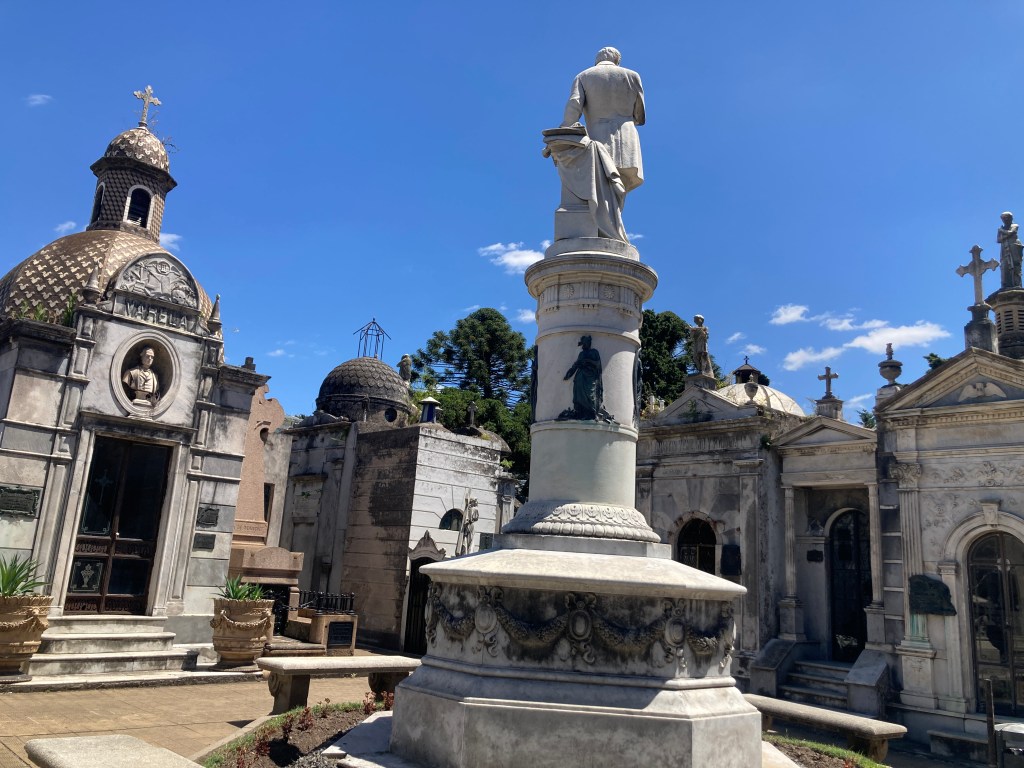
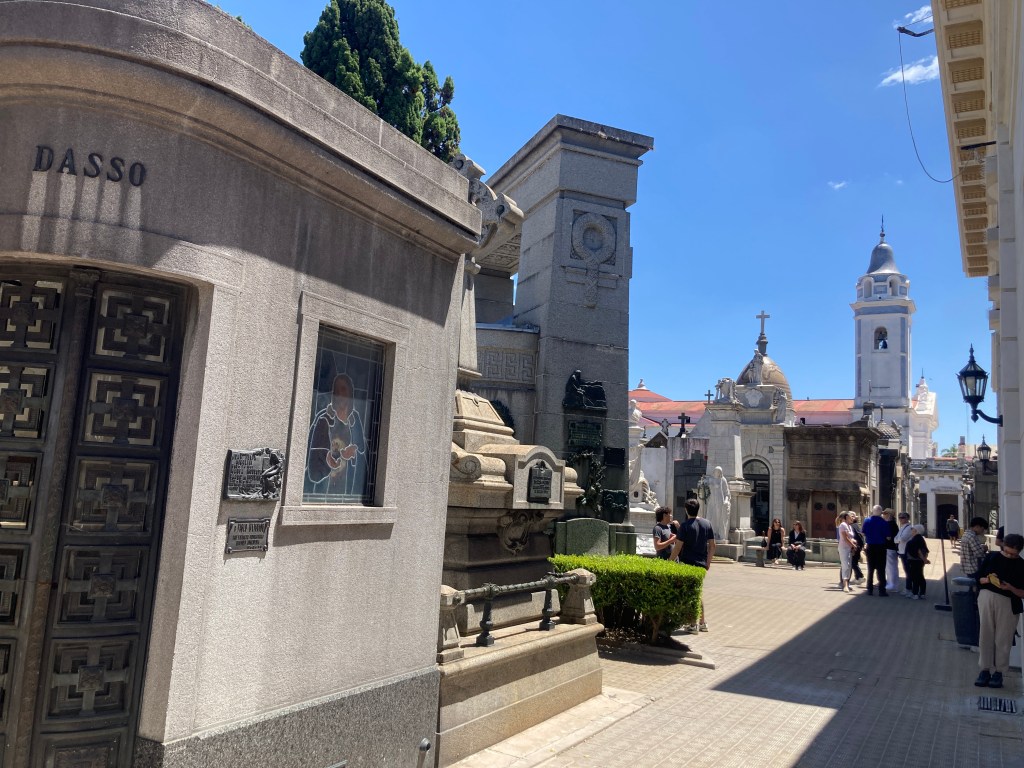
It was fitting that our next stop was the Recoleta Cemetery that is the final resting place for the rich and wealthy in Buenos Aires for the last 200 years. The cemetery is complete – the only way to get buried here is to have a family mausoleum or be somebody incredibly important. In other words – most people don’t rate.
A couple of notable mausoleums:
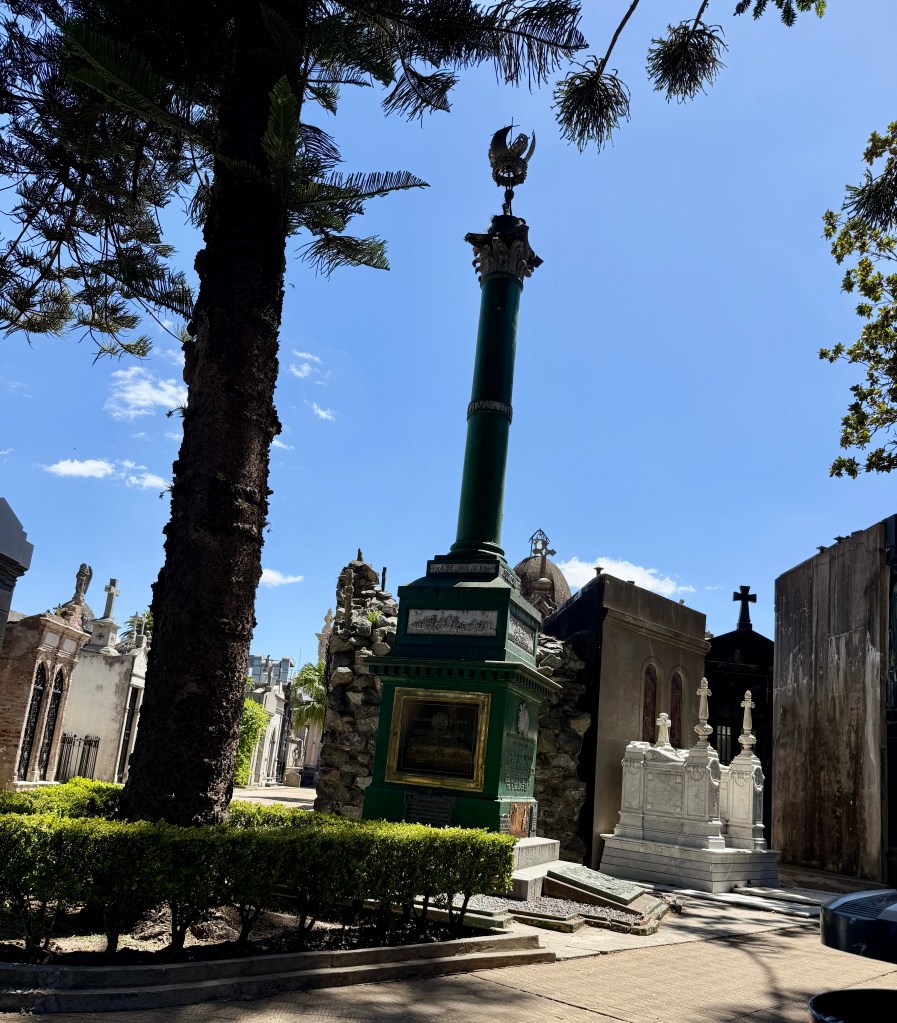
I forgot to make note of who these people are. Juan says this is typical of the interments in this cemetery – the coffins are above ground. The only exception: Eva Perón.

And here she is. Evita is buried underground. Other family members are housed in the mausoleum.
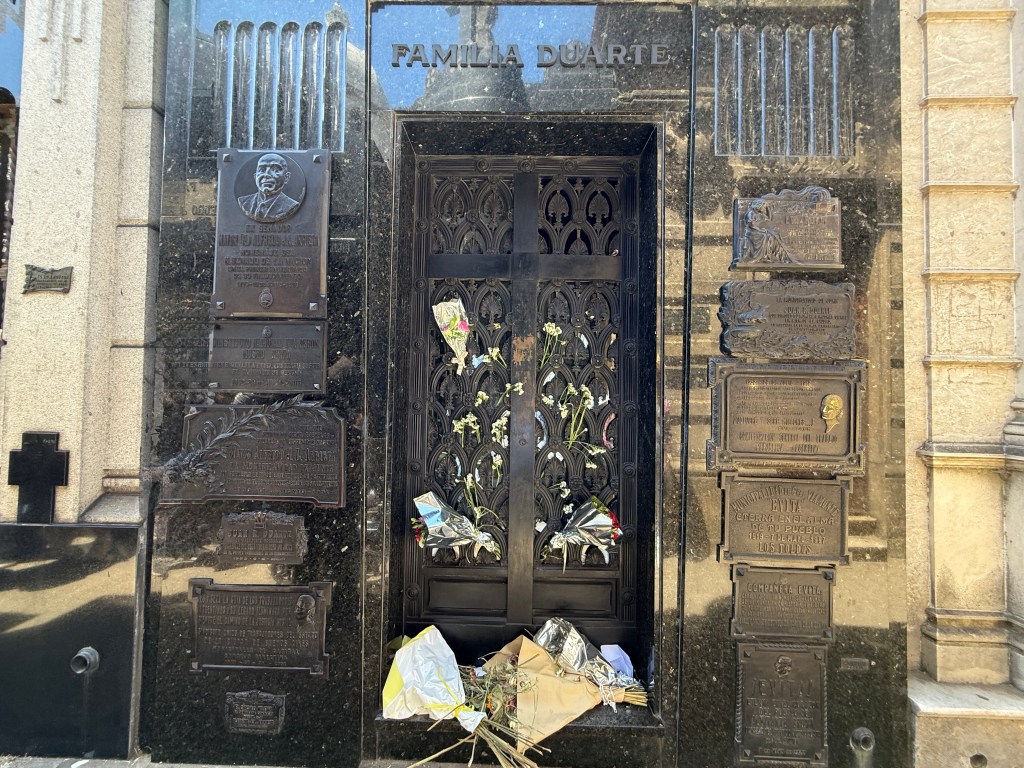
The Recoleta cemetery was endlessly fascinating, with all the different designs
The next few stops were quick ones.
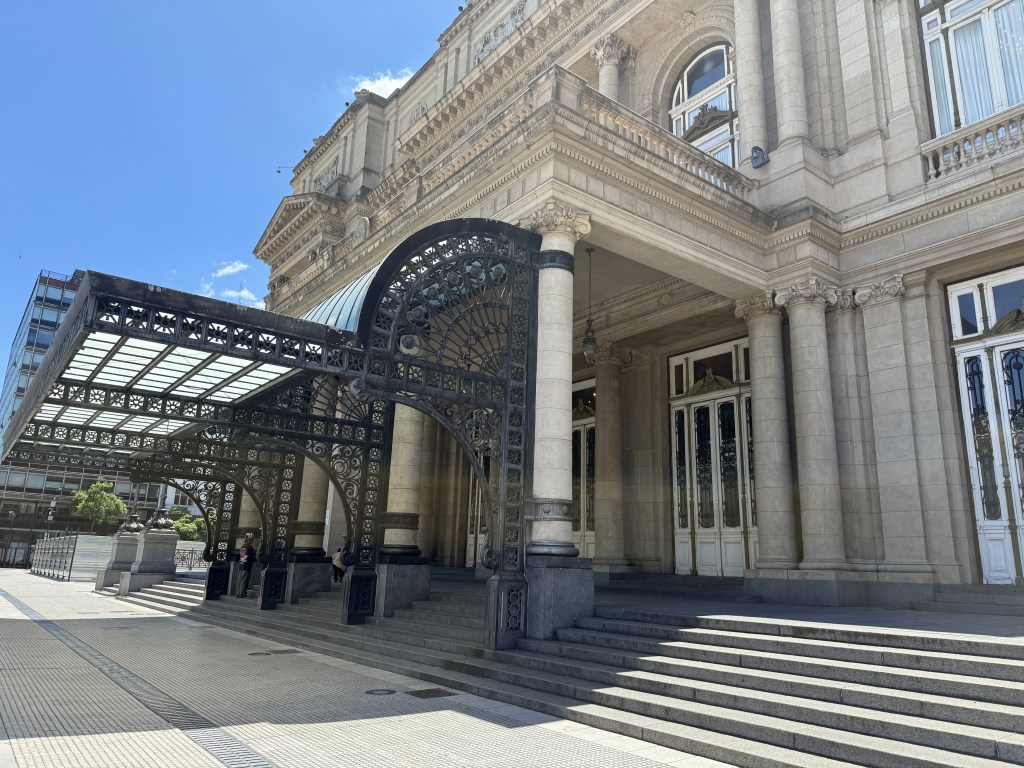
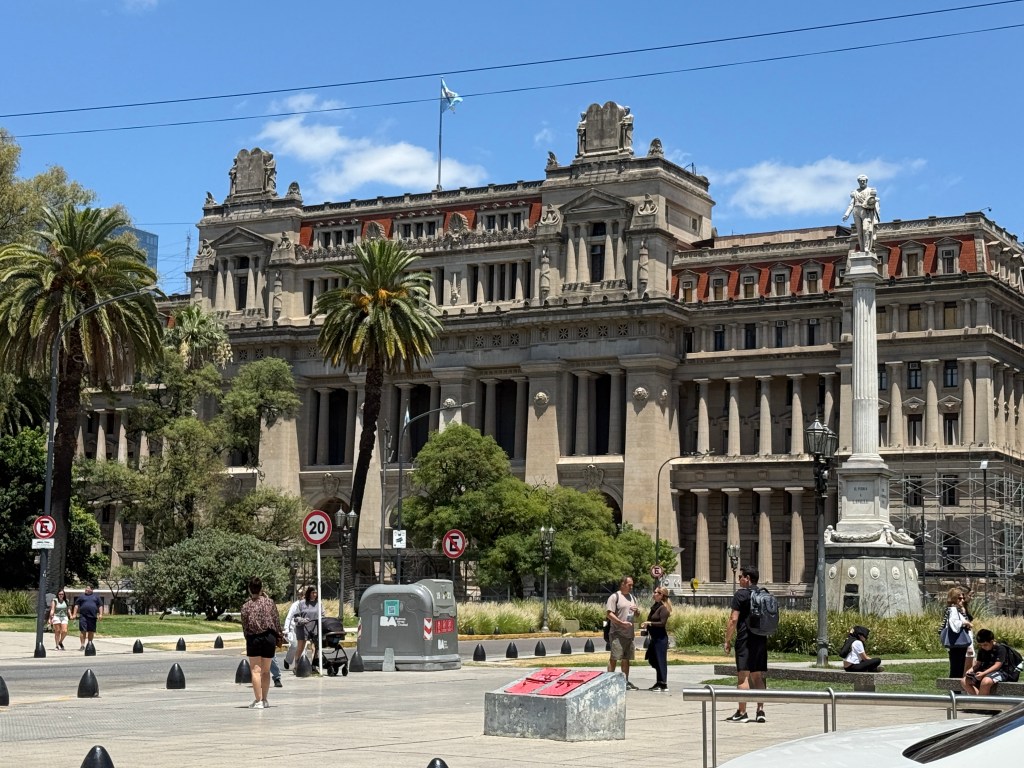
Next up: the beautiful Catedrál de Buenos Airs, where Pope Francis was the archbishop before he became pope.
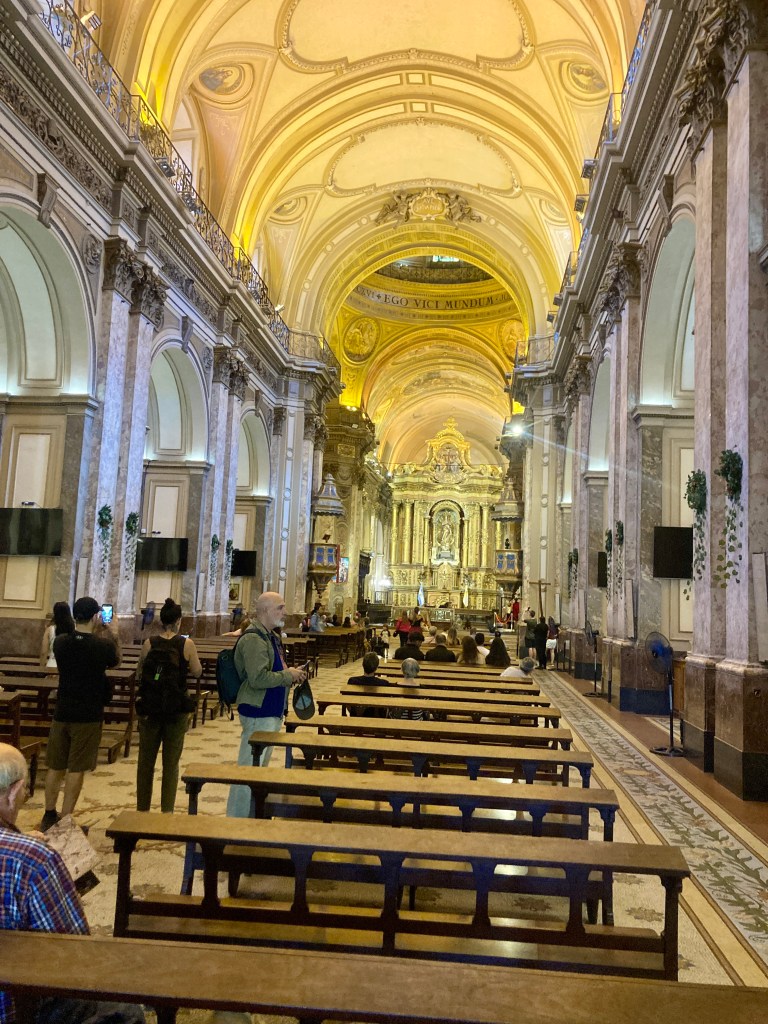
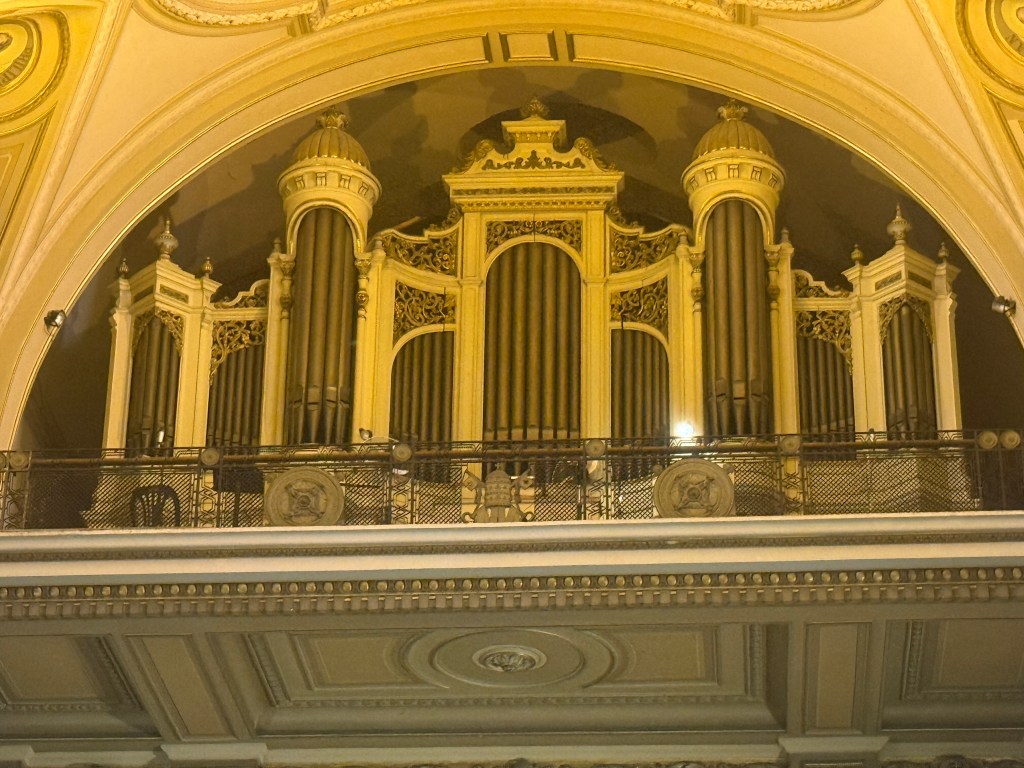
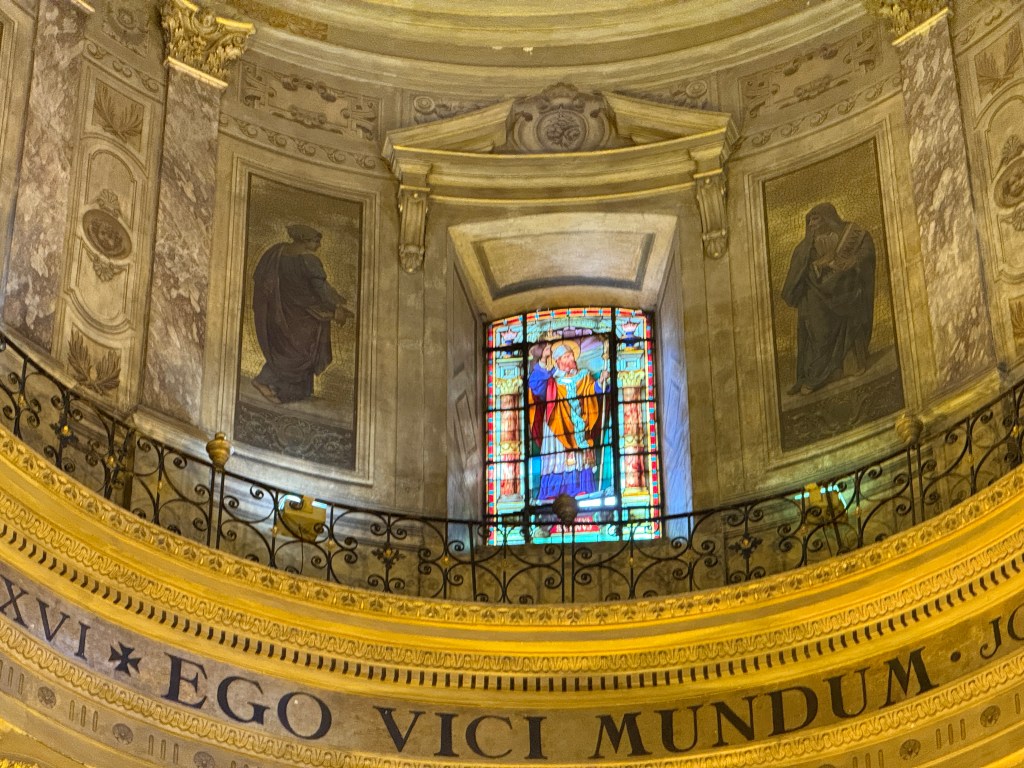
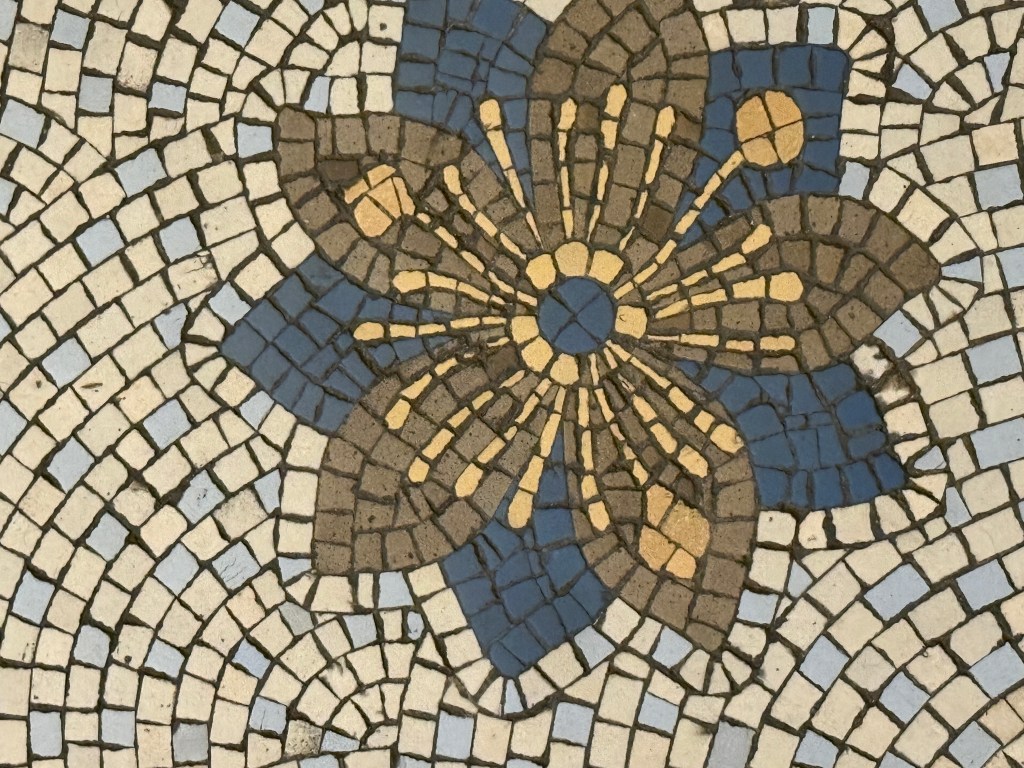
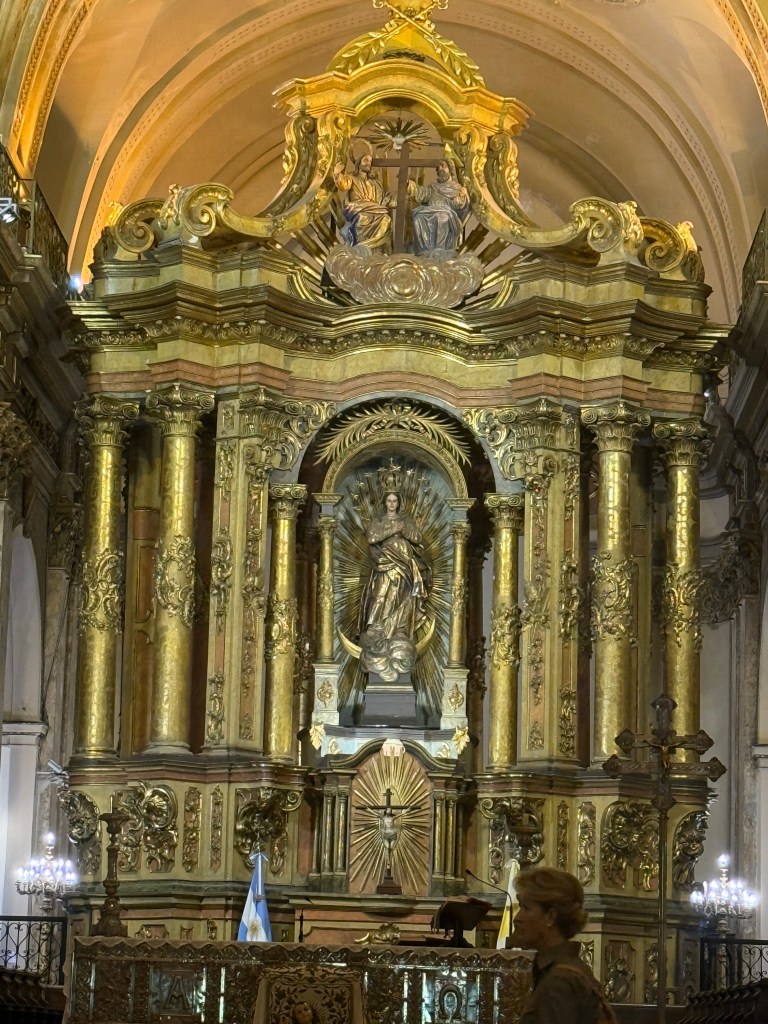
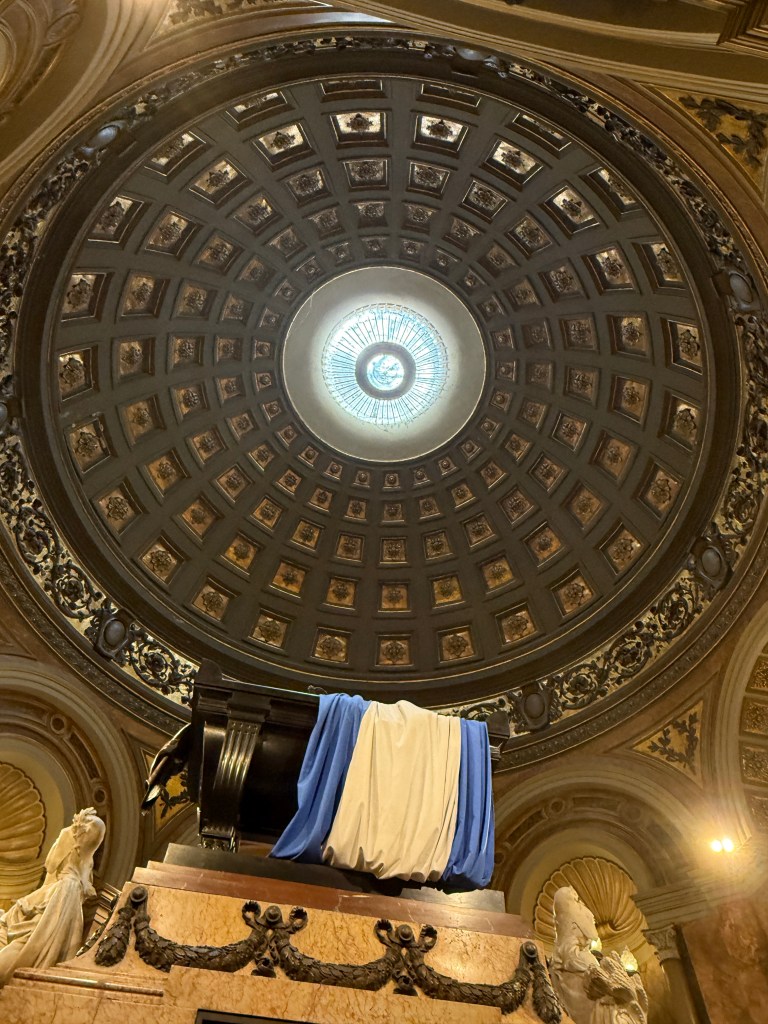
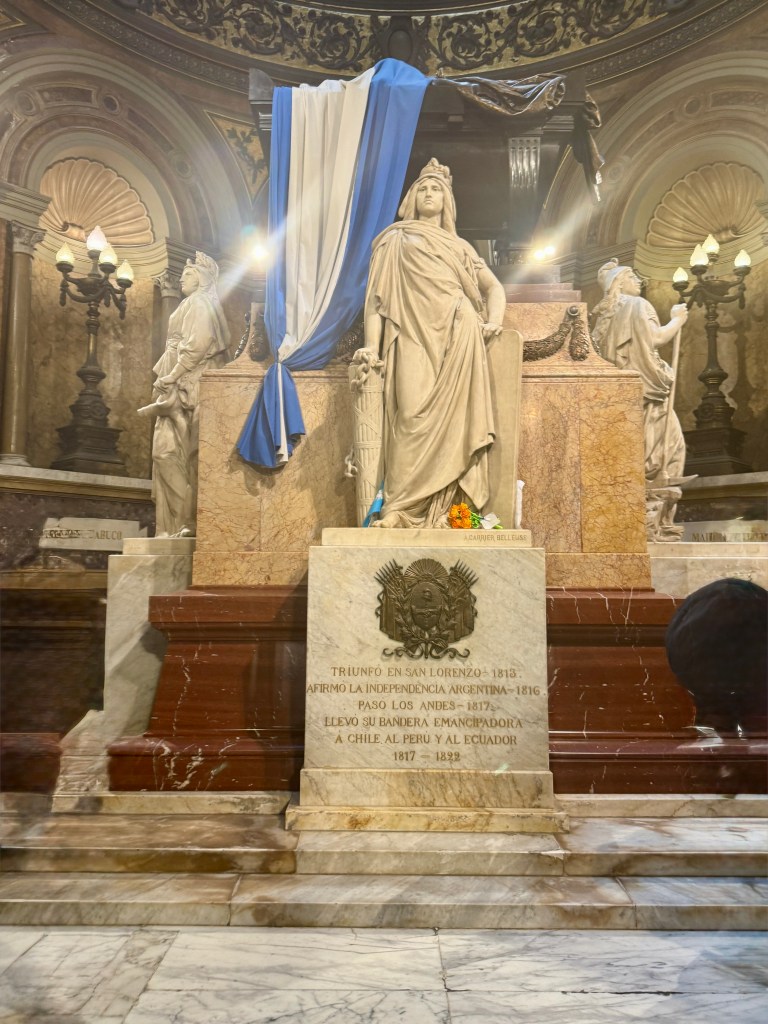
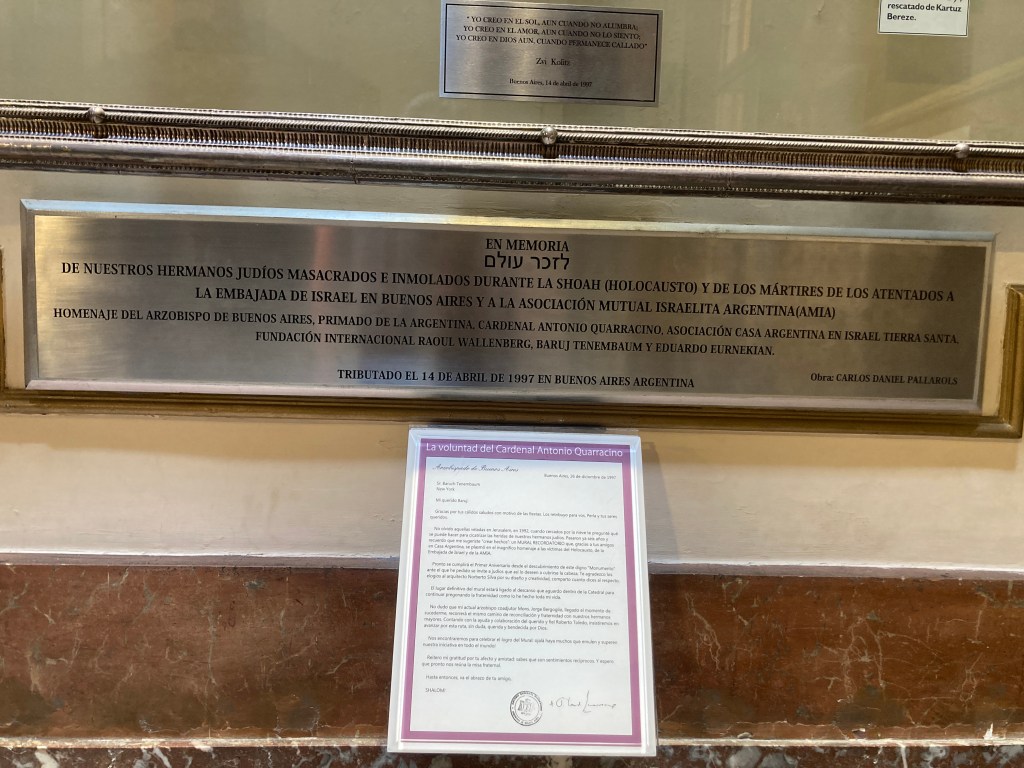
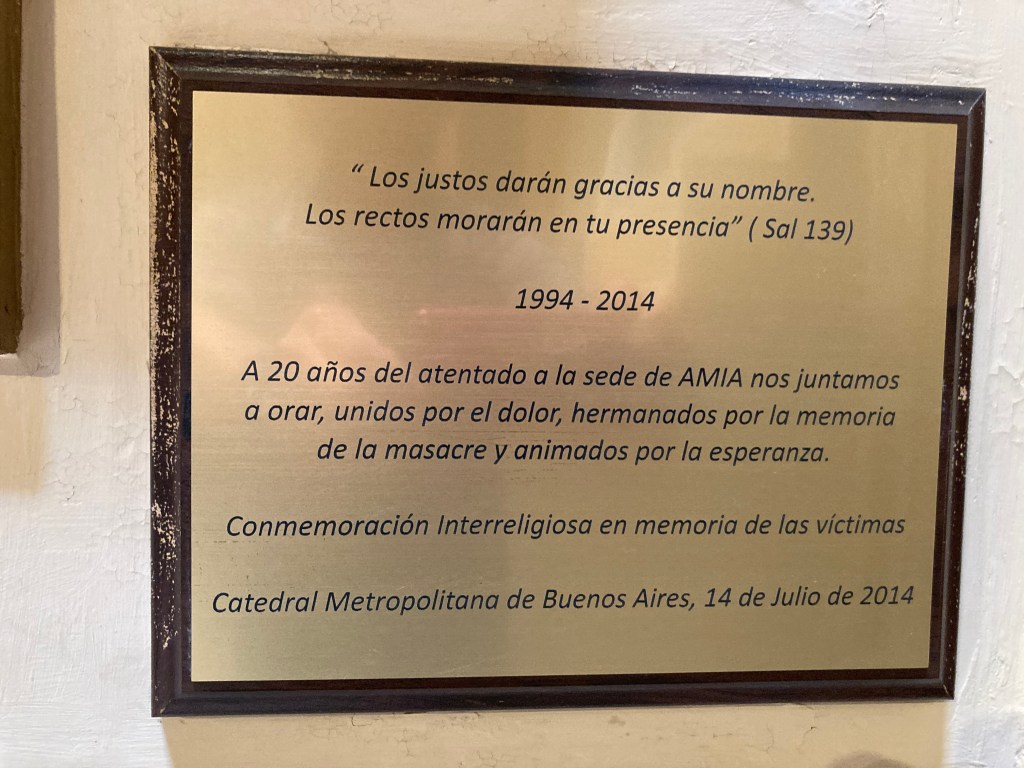
Randomly, Juan asked us if we were religious. We told him we were Jewish, which triggered a surprise: an exhibit memorializing Jewish victims of the holocaust and terrorist attacks in Buenos Aires. It is the only memorial of a different faith in any Cathedral. The normal requirement to remove your hat inside the cathedral is waived in this nave, because it is Jewish custom to keep your head covered, even inside.

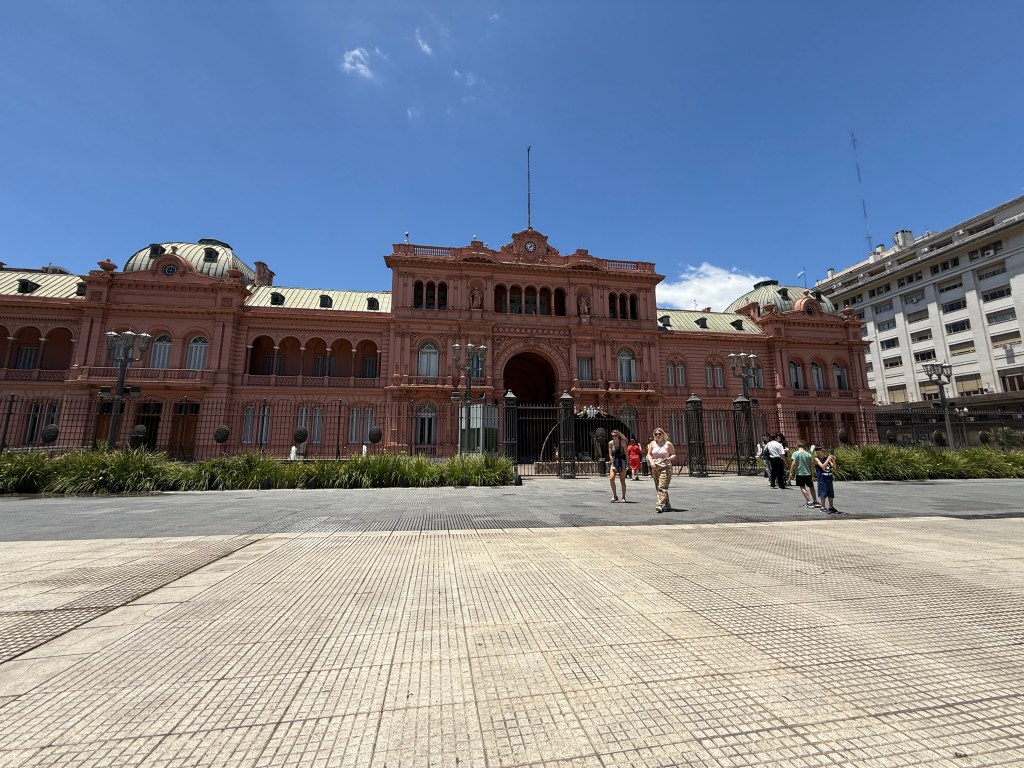
Our next stop was the Plaza de Mayo, the main square in Buenos Aires, created in 1884.
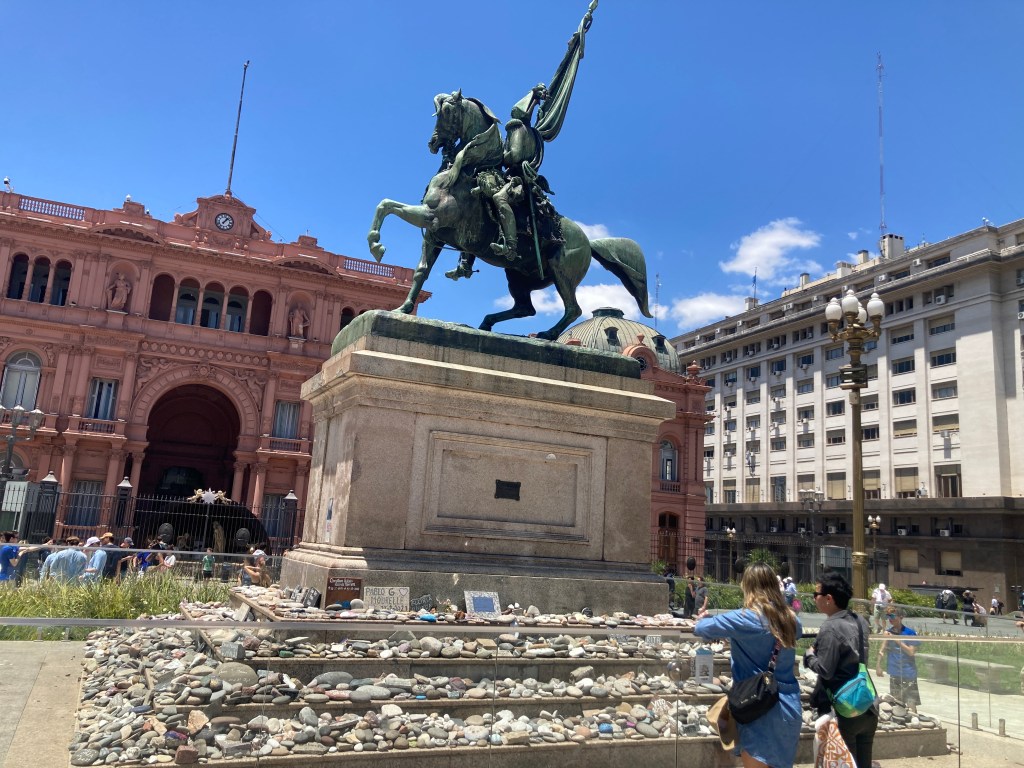
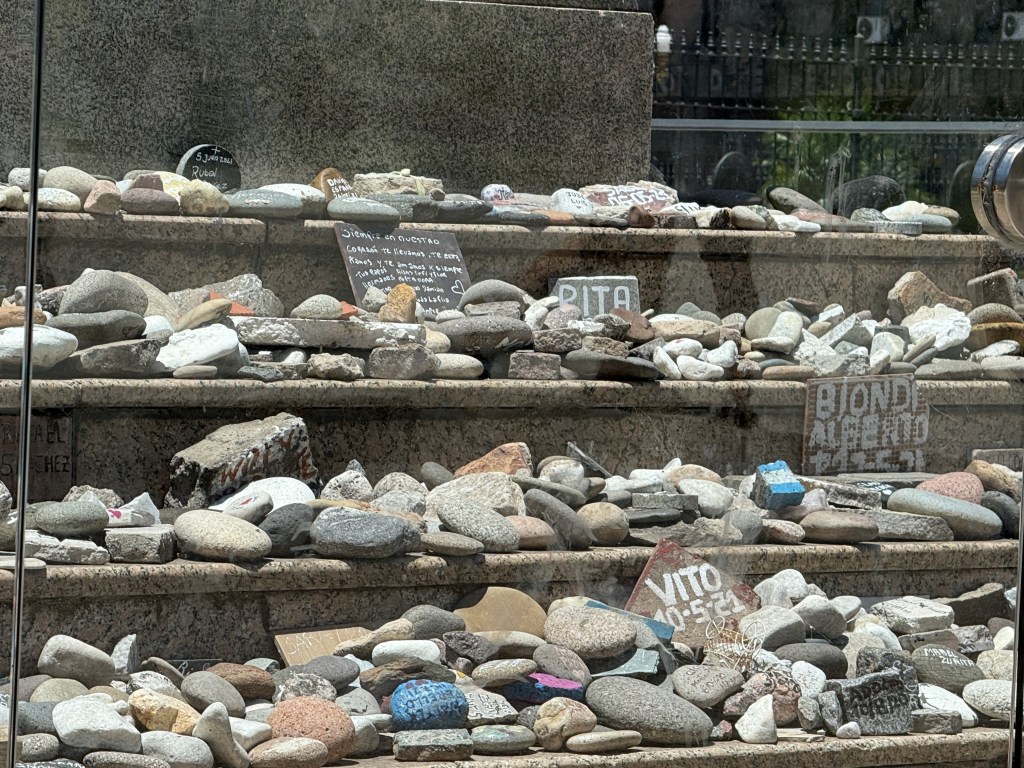
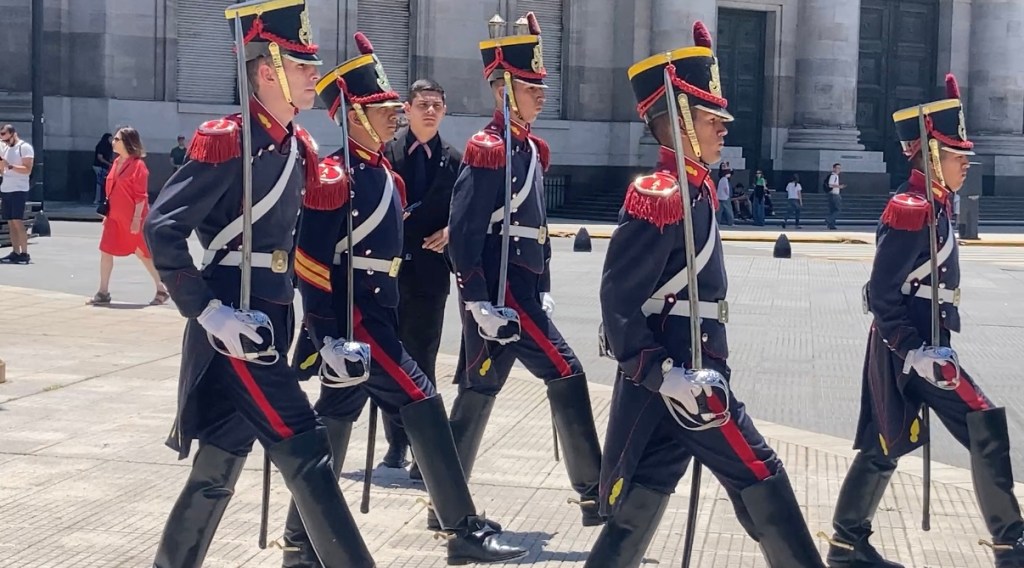
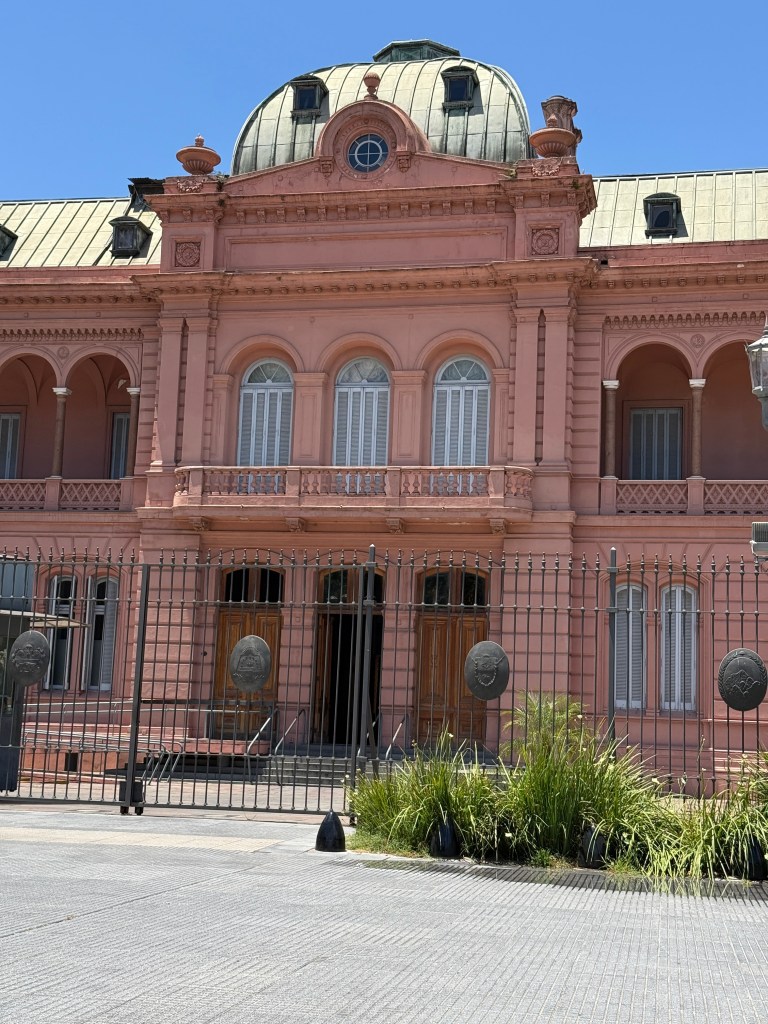
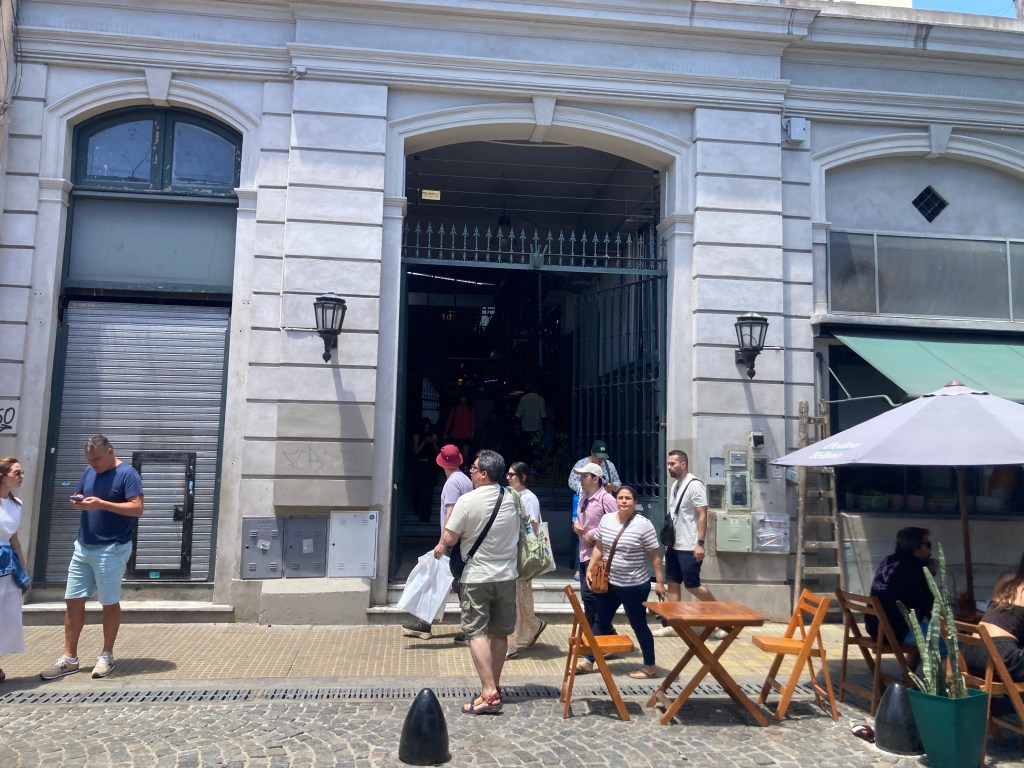
On our way to the neighborhood of Caminito, we stopped by the market of San Telmo. We had a fleeting thought of getting lunch in here, but that quickly evaporated. We were crushed from all sides just trying to move forward. We didn’t get very far at all before we gave up, turned around and came back out.
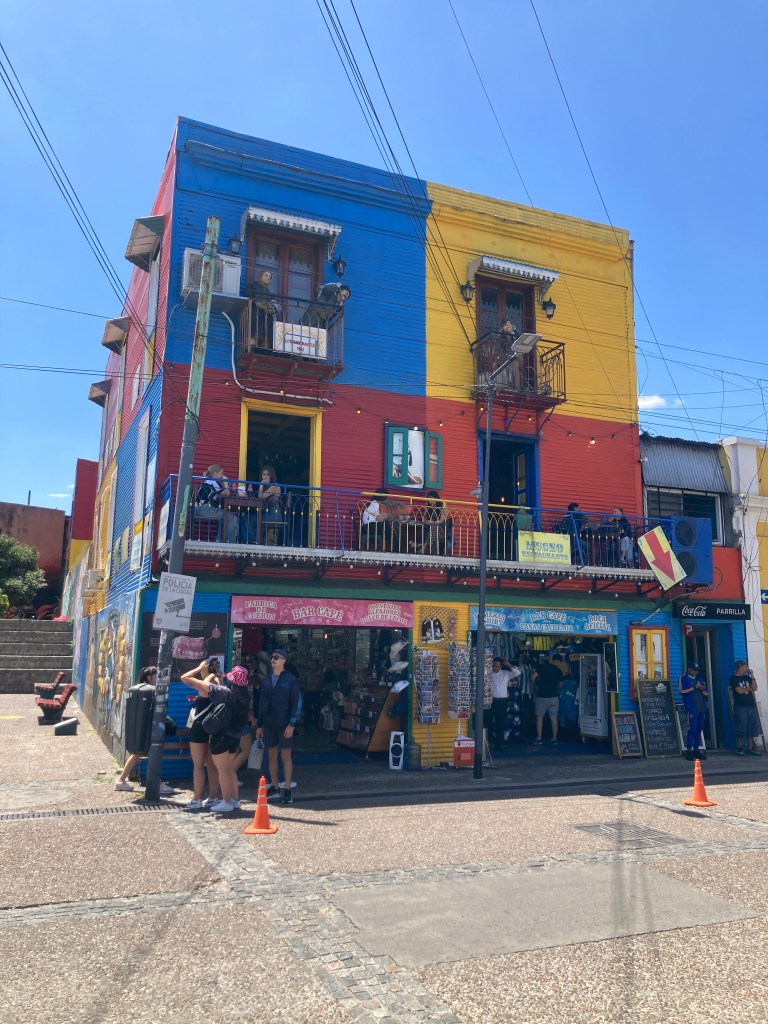
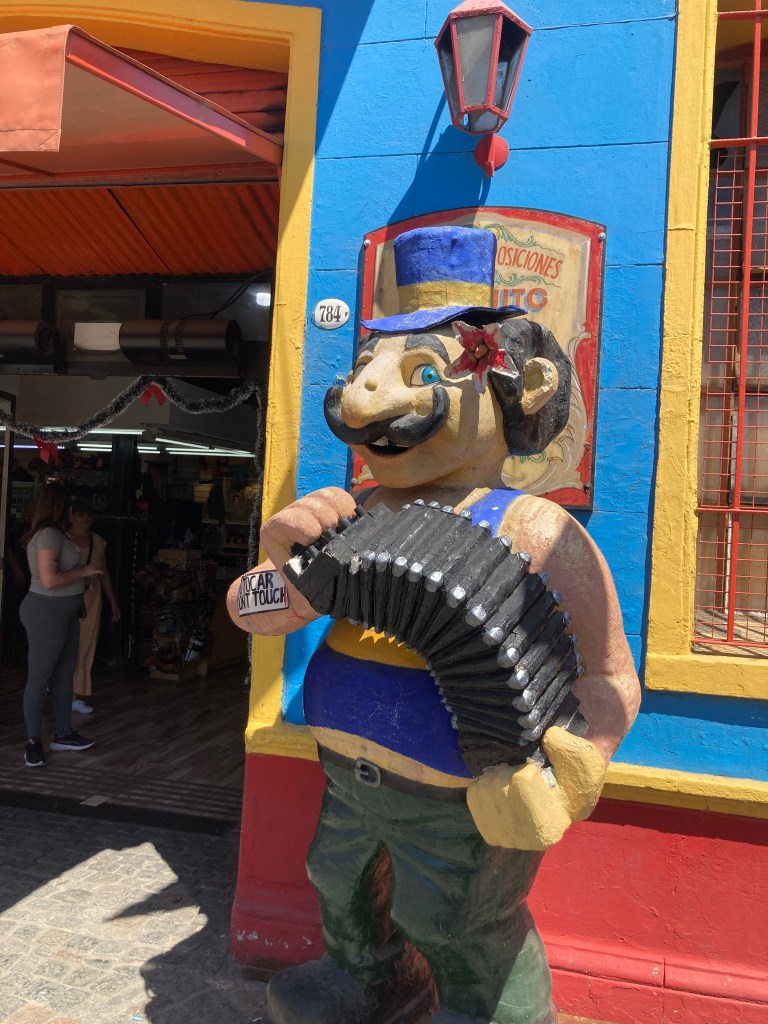
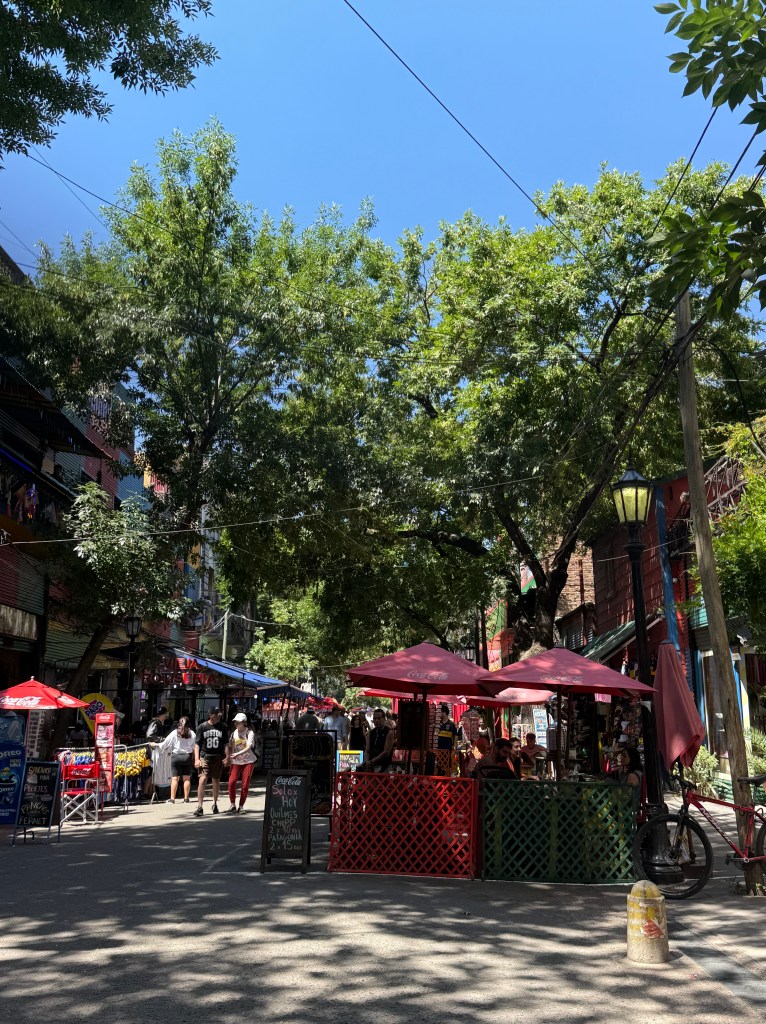
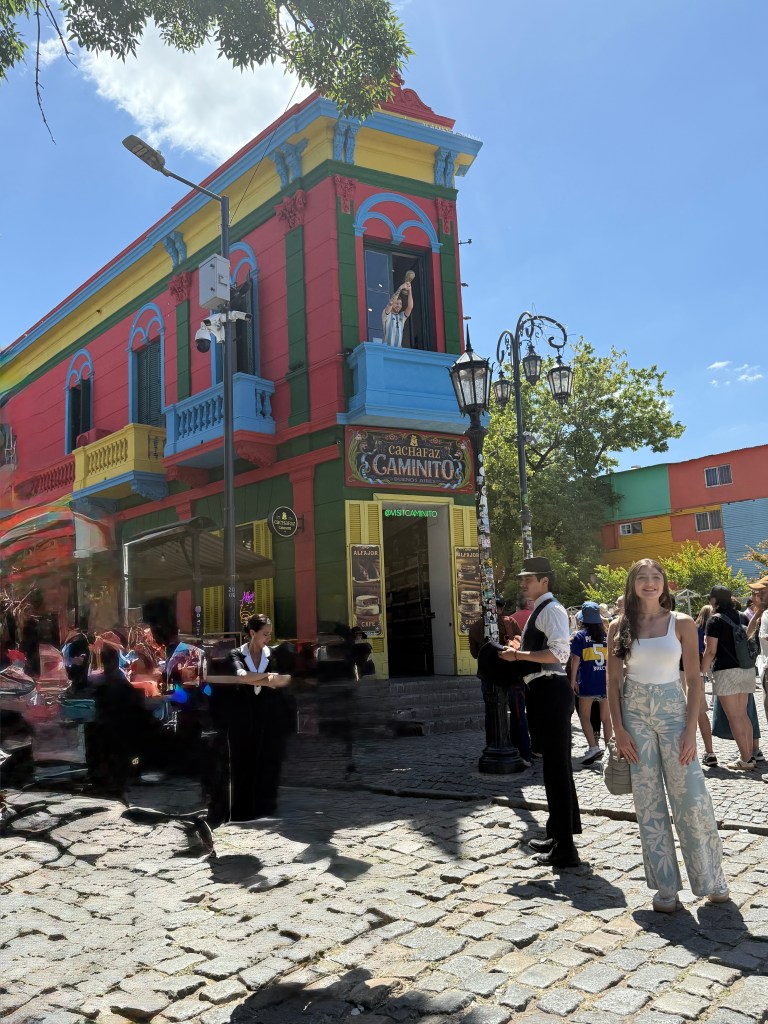
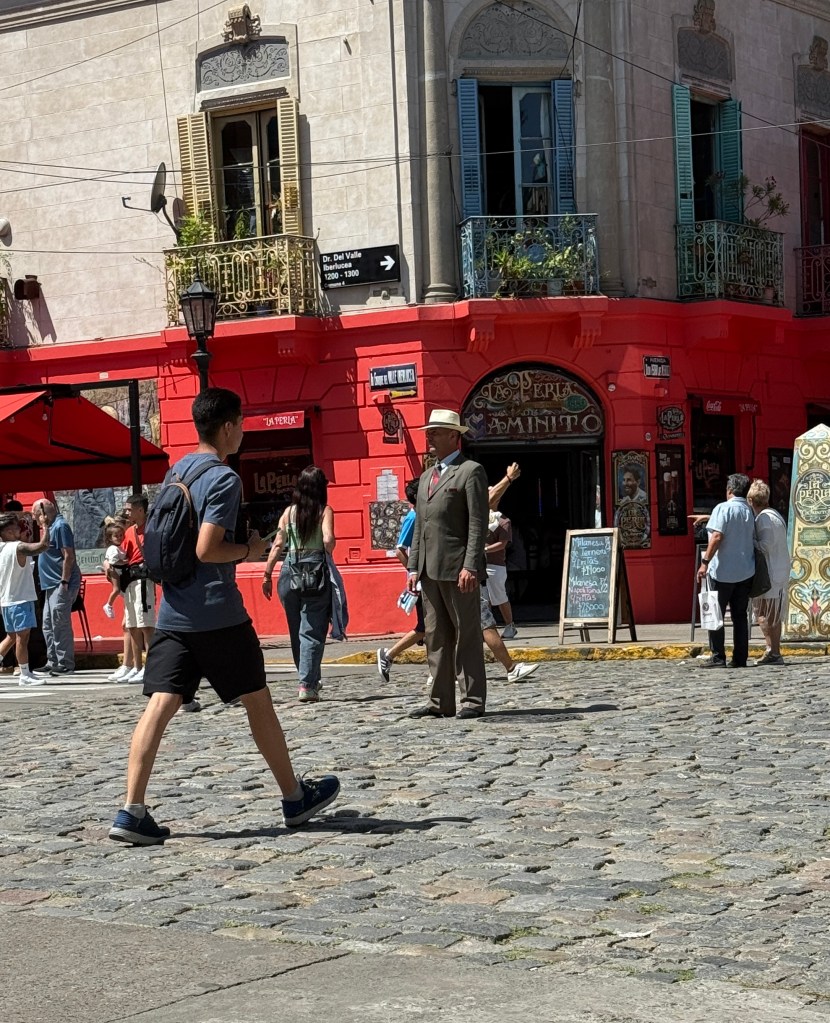
Caminito is my new favorite city neighborhood. Home of past generations of immigrants living by the docks, it’s now a lively food/arts/party scene, with colorful buildings, fanciful cartoon figures on the street, street side cafes, and plenty of great shopping. The only problem: the streets are all cobblestone making it very painful to walk, and my transport chair can’t function.

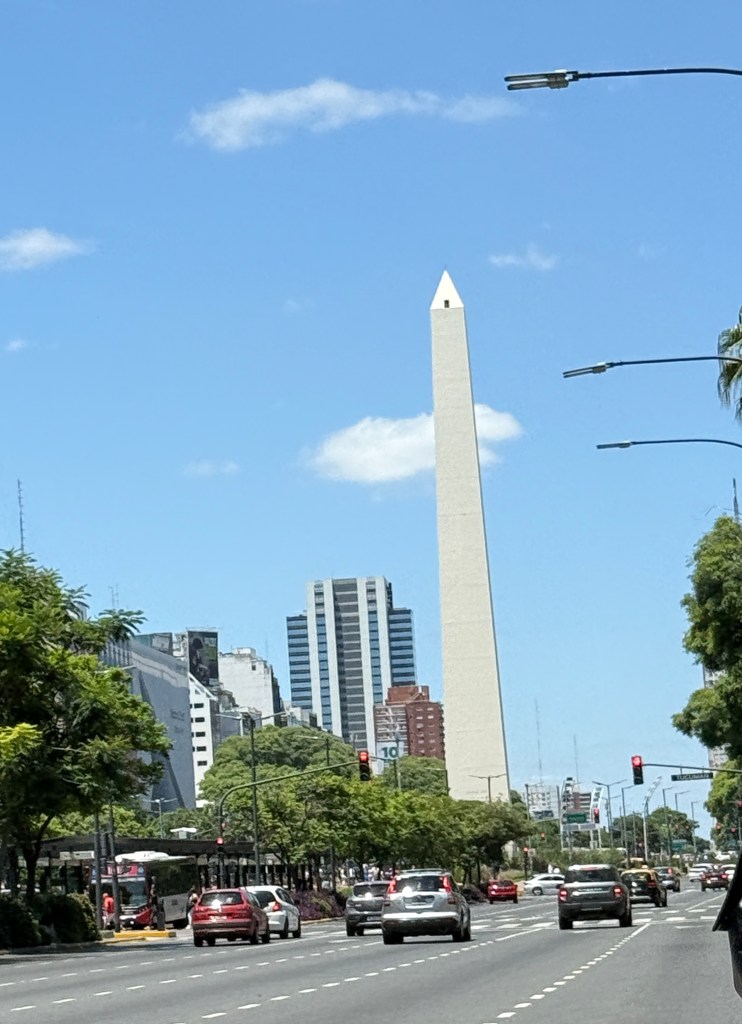
On our way back to the hotel, Juan pointed out two more interesting landmarks.
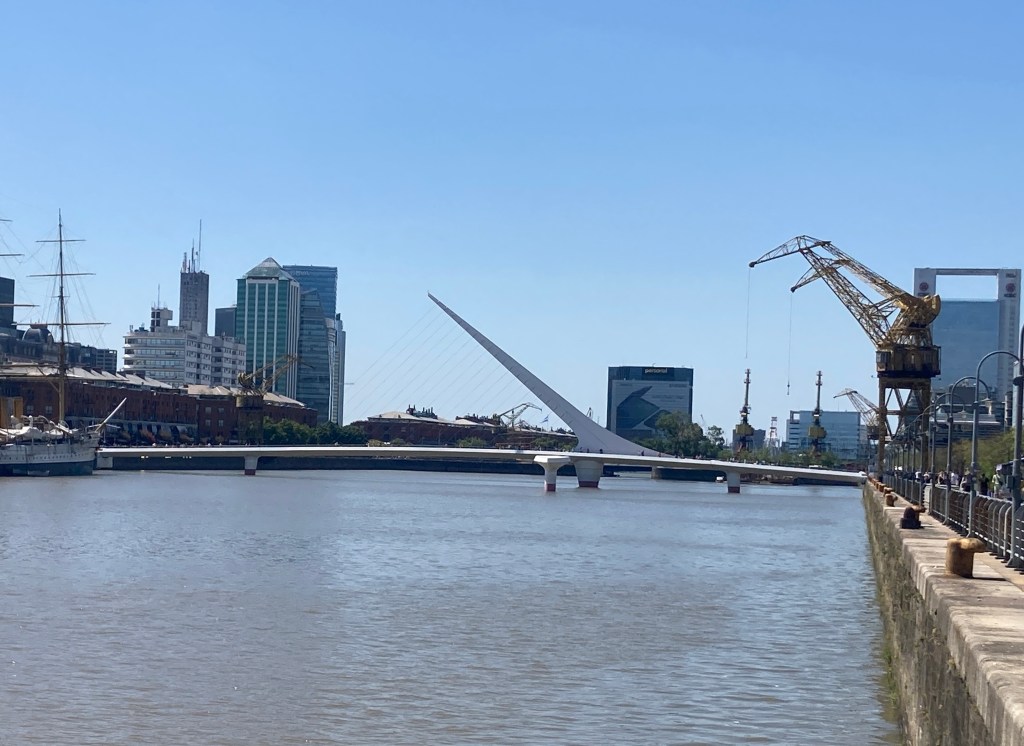
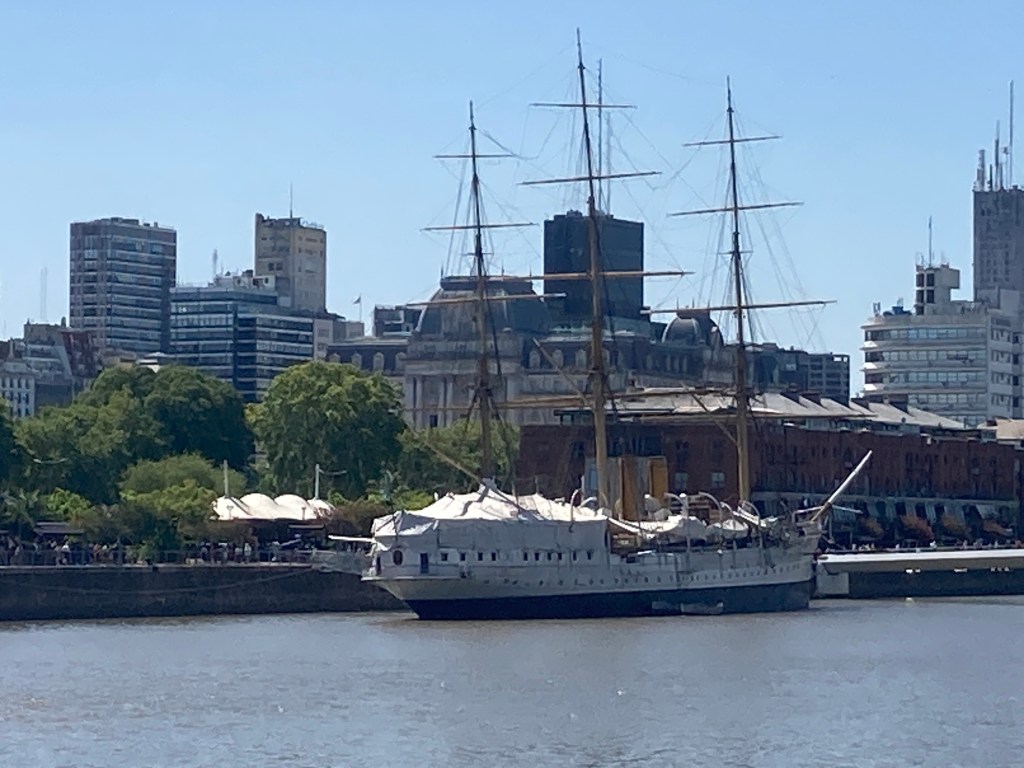
It was 3:30 p.m. by the time we were back in our room. Juan and his driver had done a masterful job of showing us as much of this beautiful city as can be seen in six hours!
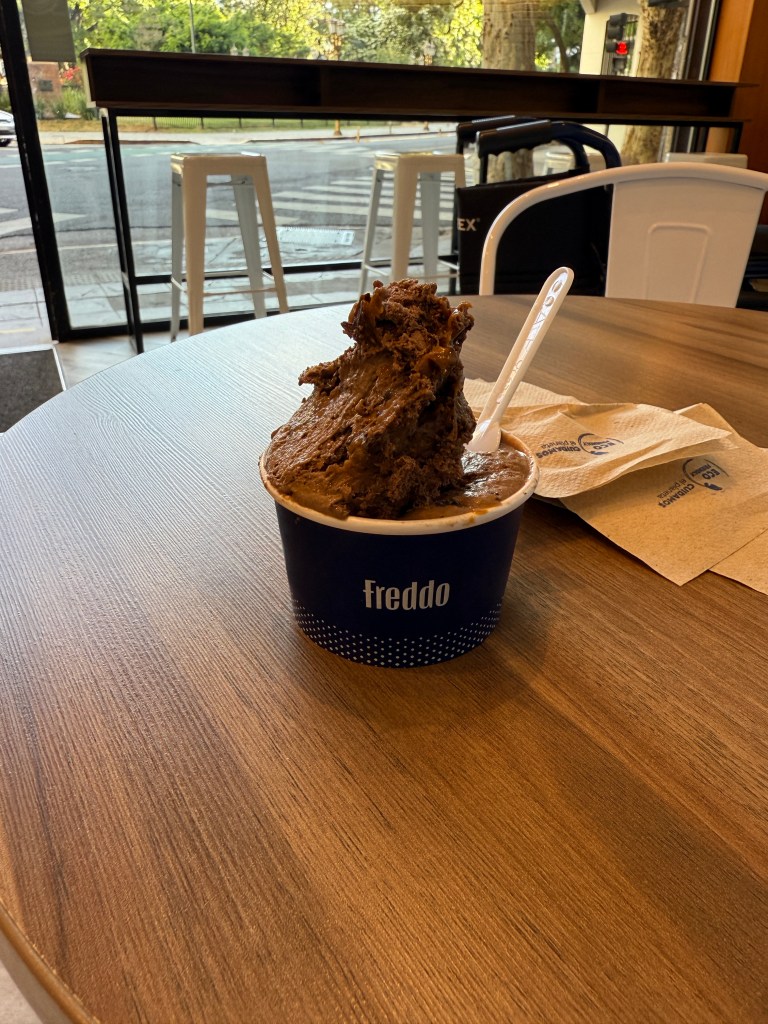
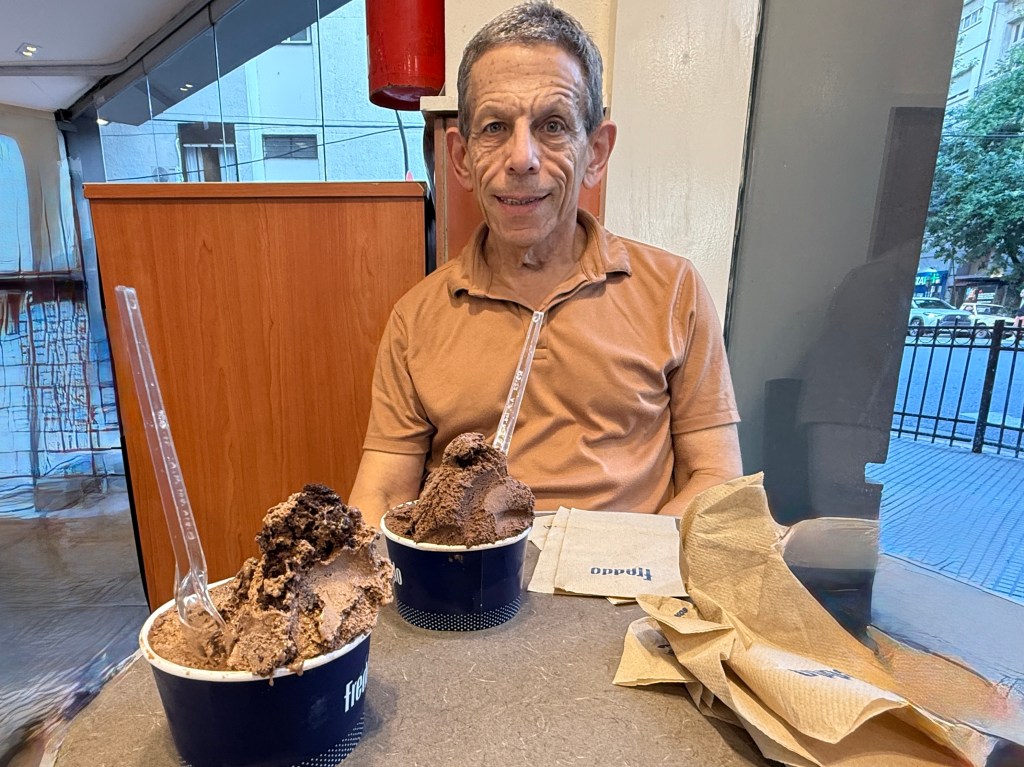
We ended up having an early dinner or maybe it was a “linner”, since we never did manage to squeeze in lunch in those 6 hours.
Tomorrow: Super crazy day – up to Iguazu Falls and back.




 Maryland Meshugas