Amy & Andy’s Excellent Adventure 2026 Part 1 – In Search Of Tulips & Windmills: Zeeland (May 4, 2026)

Where We Spend The Day Learning About The Flood Of 1953

And The Netherlands Water Management System

What I really like about this itinerary is how well it’s covered the whole of the Netherlands. Previously, I’ve only been to Amsterdam and Kinderdijk. Today we were in the southern part of the Netherlands.

A good chunk of the Netherlands is below sea level. Over the centuries they’ve figured out an extensive water management system that is mostly made up of dikes. Dikes are constructed using dirt facing the dry side and layers of sand and rocks facing the water side. BTW, the difference between a dam and a dike is: a dam has water on both sides, and a dike has water on side and dry land on the other.

In 1953, there was a literal perfect storm on January 31 into February 1 in the Zeeland, the southern part of the Netherlands. All the water management systems failed, causing a huge flood that destroyed everything in its path, including over 1800 people. This is known as the North Sea Flood. The devastation was so great, to this day people refer to “before flood” and “after flood” times.

Our excursion ticket just mentioned visiting the Flood Museum (the Dutch are not creative when naming things). Turned out we had two more stops.- which made sense, because we couldn’t figure out what would take us 5 hours at a flood museum.

The museum’s building itself is made up of the 5 original caissons used to stop the flooding at this particular spot. For all the other dike breaches, repairing the dike fixed the problem, but the damage was so great in this location that fixing the dikes wasn’t even an option. Caissons – huge, hollow, concrete boxes – were shipped from the UK to the Netherlands and lowered into the dike breaches to stop the flooding. Years later, after new water management engineering was installed, it was decided to turn the caissons into a museum of the 1953 flood. The museum’s interior is a path through all 5 caissons.
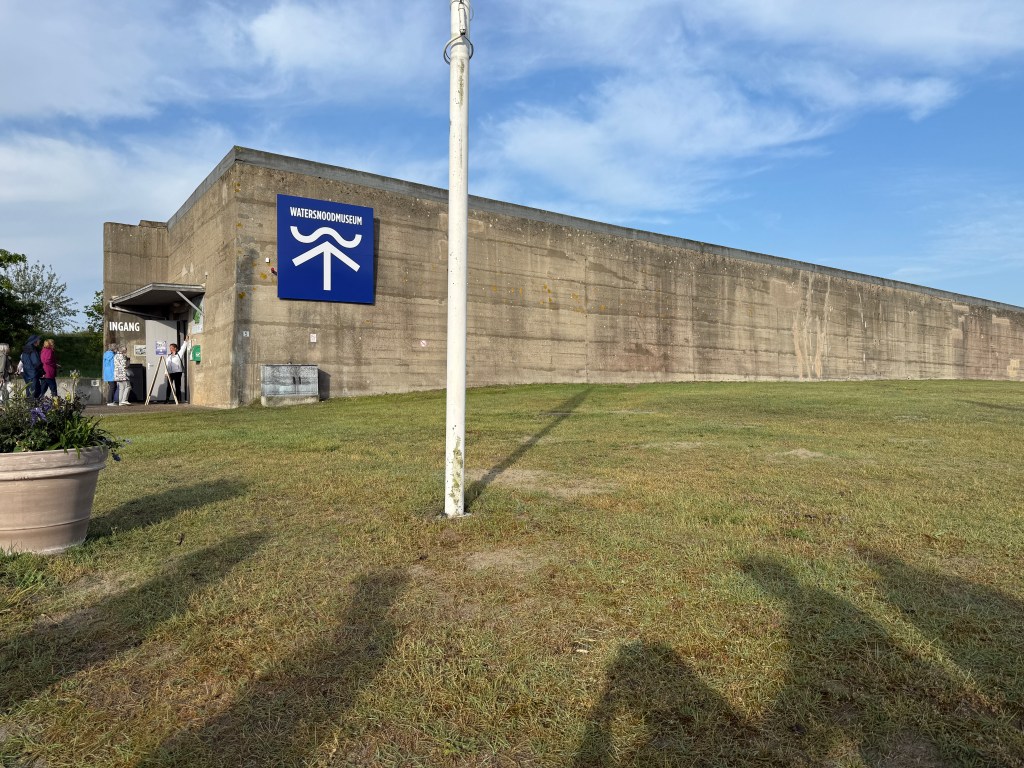
This is the entrance to the museum via the first caisson

The destruction was so complete, the outside world wasn’t aware of the situation for 2 days. Someone rigged together a radio out of odds-and-ends to send an SOS.
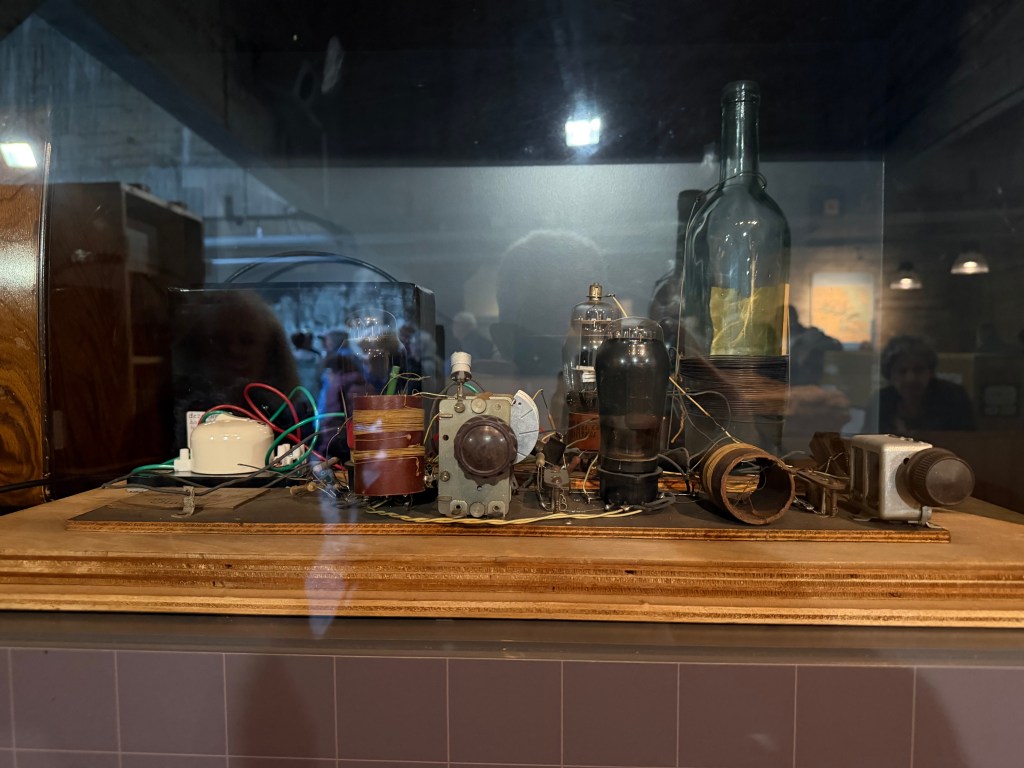
Hand made radio used to call for help

Most of the museum contained artifacts from people impacted by the flood – both survivors and non-survivors.

The dress below was the wedding dress of a woman who died in the flood with her 2 year-old child. Her husband survived and kept it stored away in an attic. Her husband remarried and had another family. Years after her husband passed away, his children found his first wife’s dress and donated it to the museum.
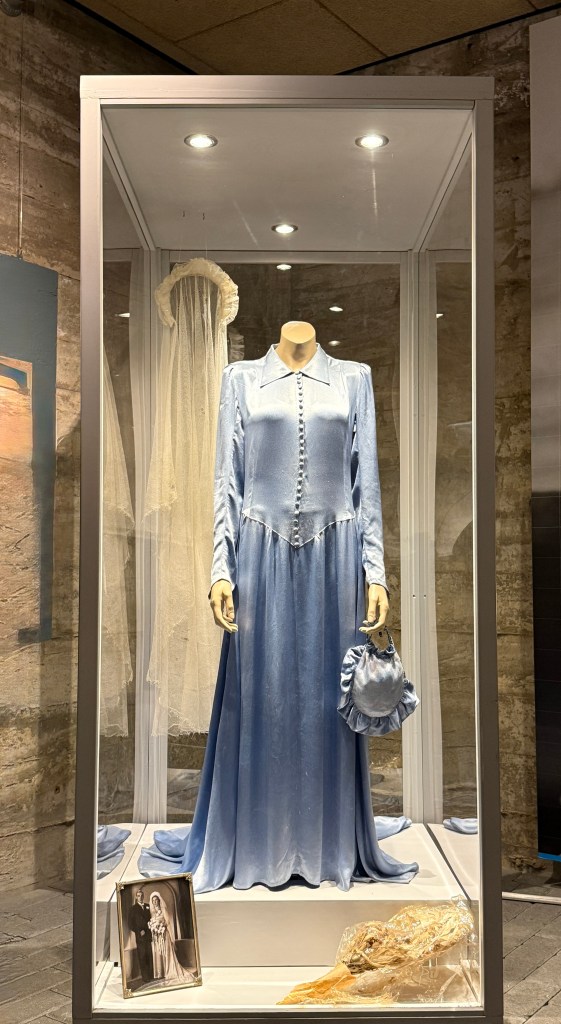
Woman made this dress herself for her wedding day but died in the flood with her 2 year old daughter. Her husband kept the dress and years later his children from 2nd wife donated it to the museum

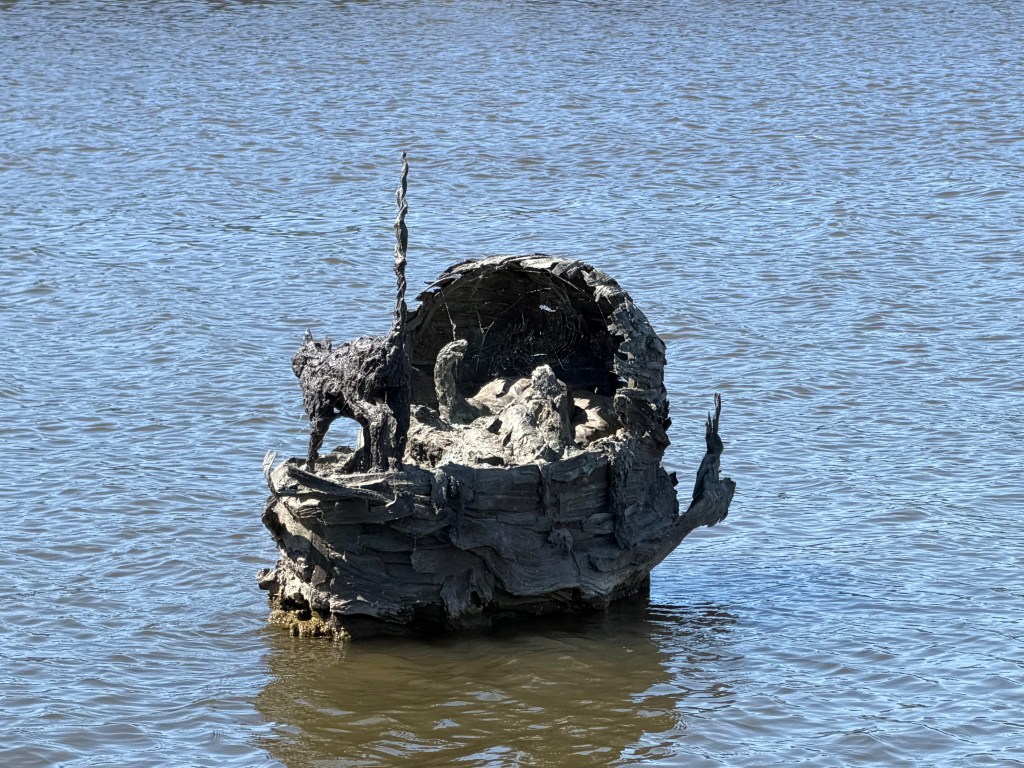
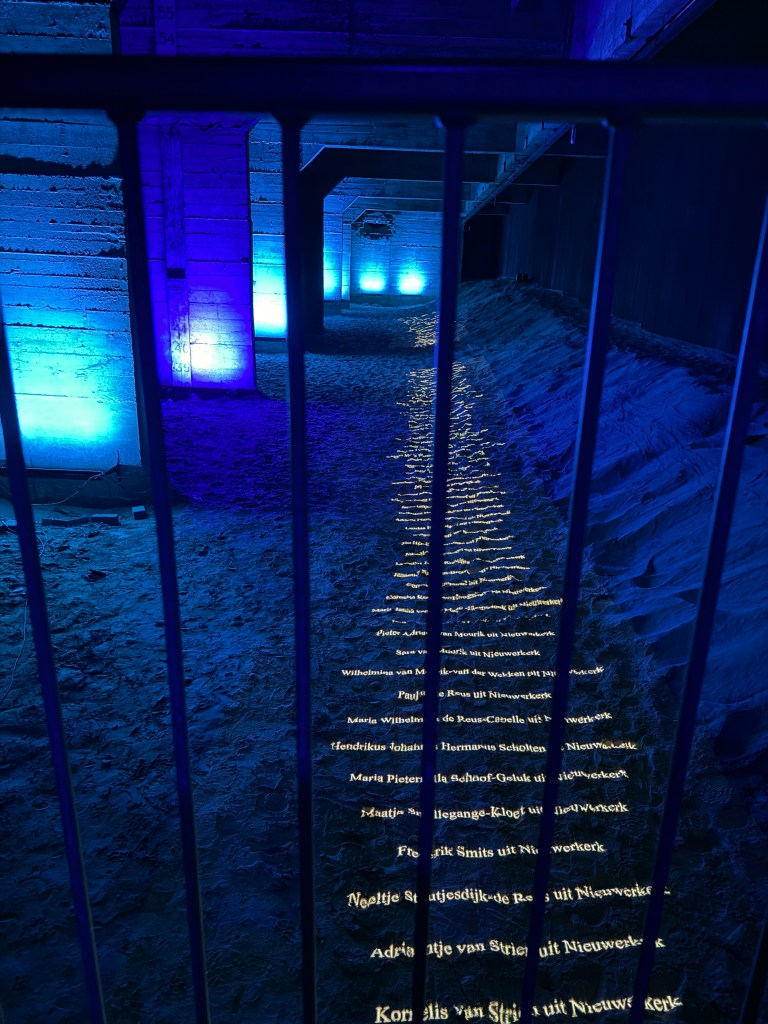
There were several memorials throughout the museum. This memorial listed all the names of the victims moving in a continuous loop – the names appear to flow on the waves of the water.
There was a multi-screen film with clips of the flood itself – most of it was hand-held/shaky camera footage, which tends to trigger my motion sickness, so we didn’t watch it.

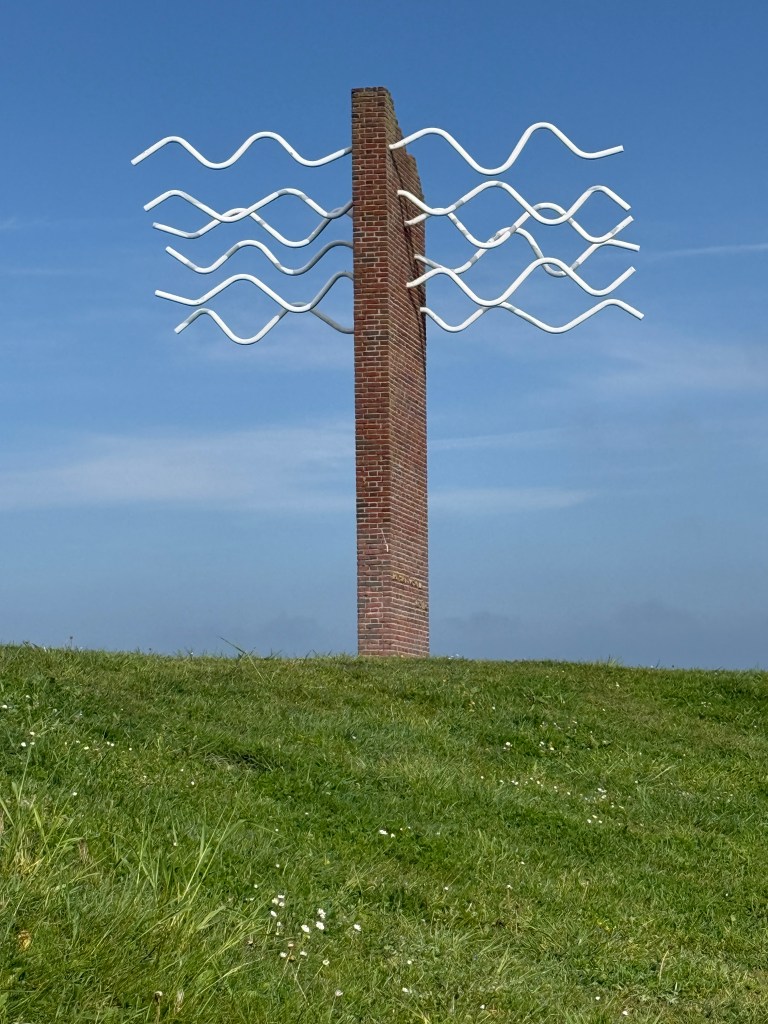
This monument was just outside the exit of the museum:
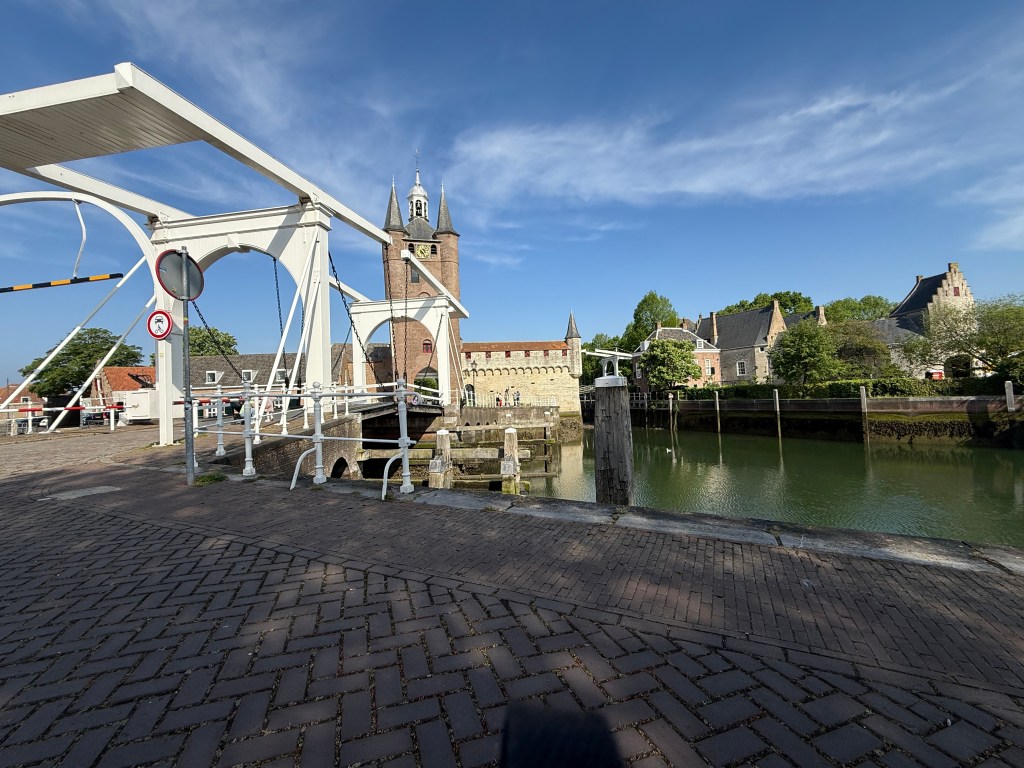
Once back on the bus, we headed to the town of Zierikzee. I’ve already forgotten how to pronounce it. This was a little bit of a surprise, because our ticket nor the excursion description mentioned anything about a walking tour.

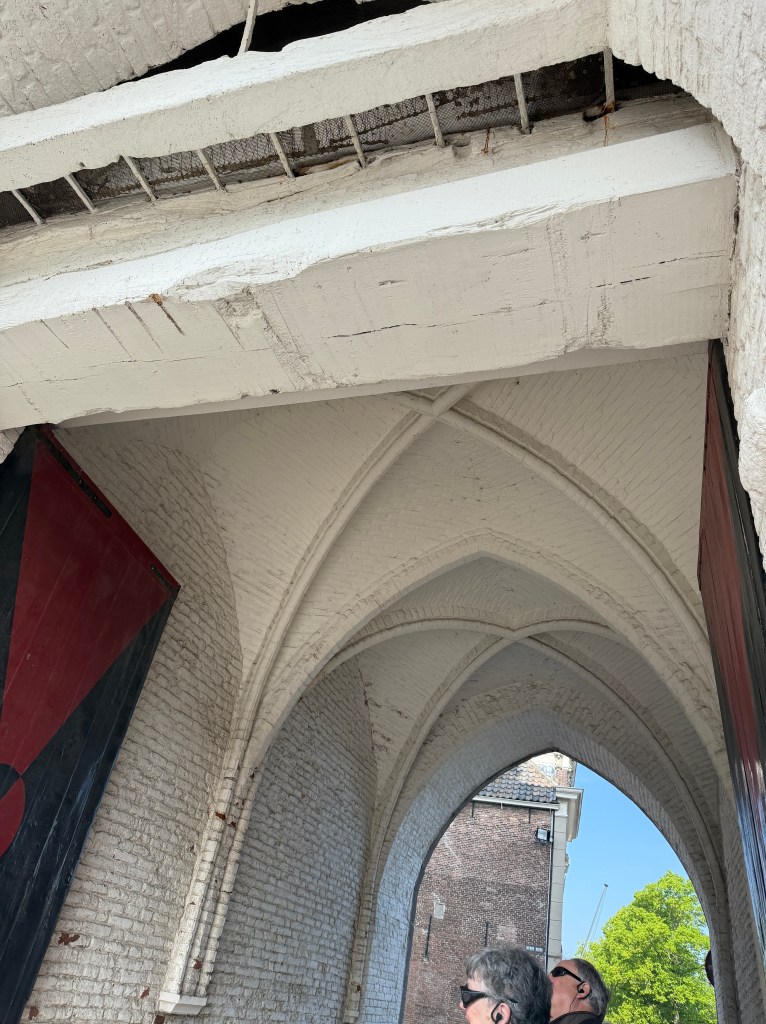
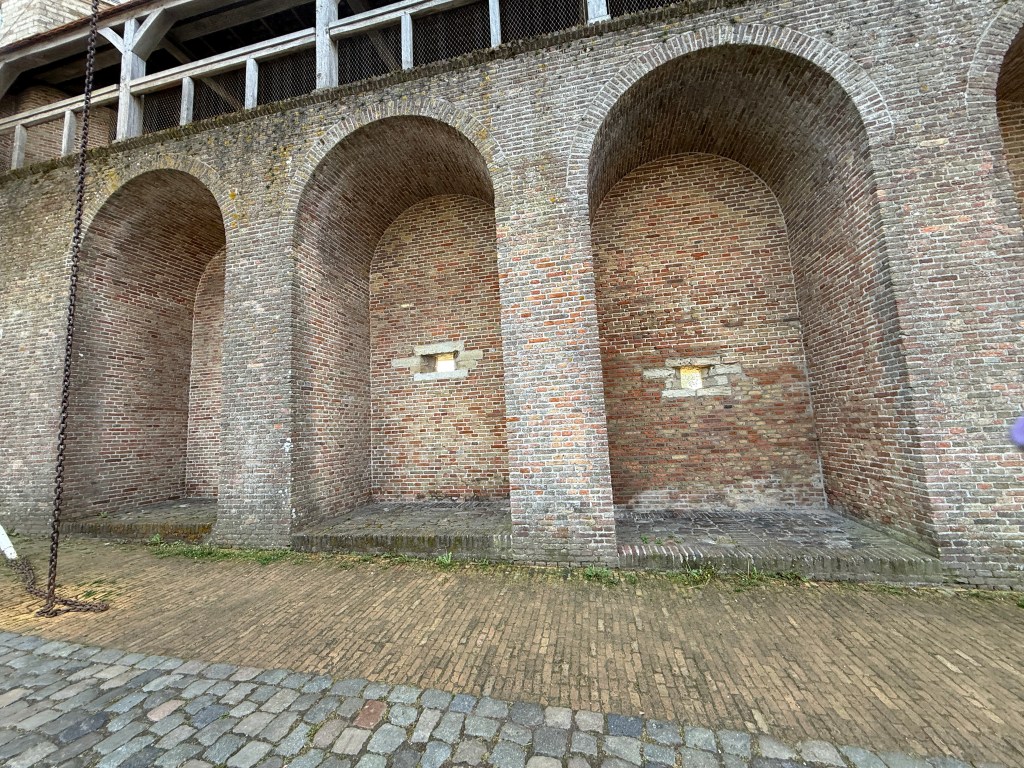
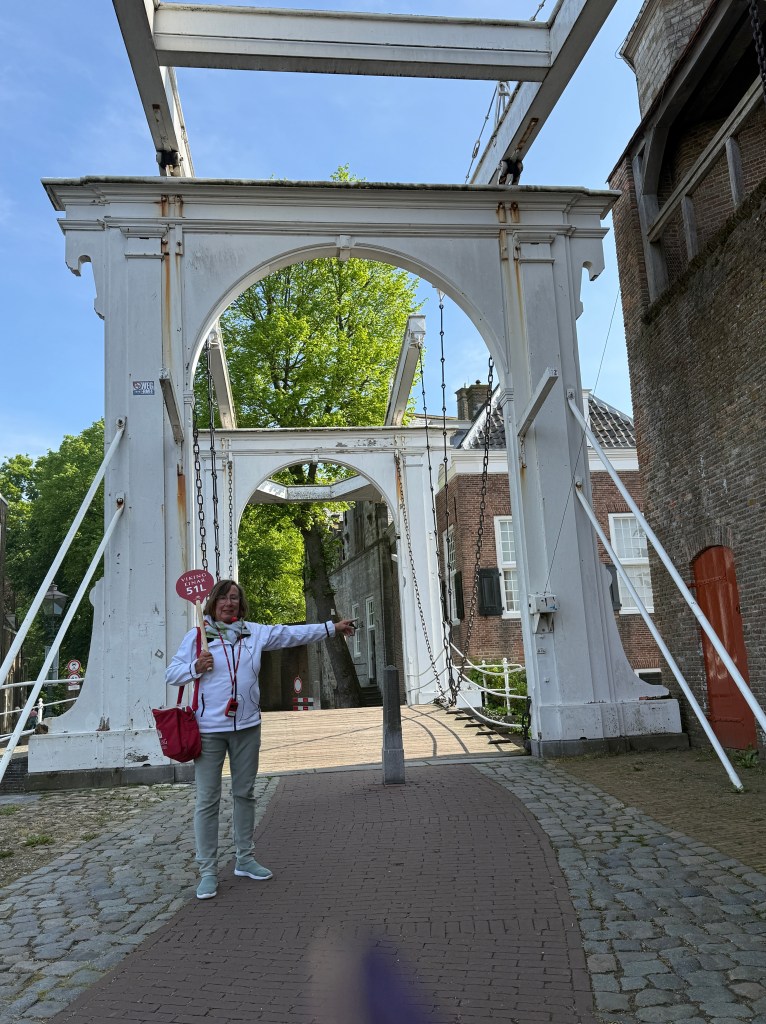
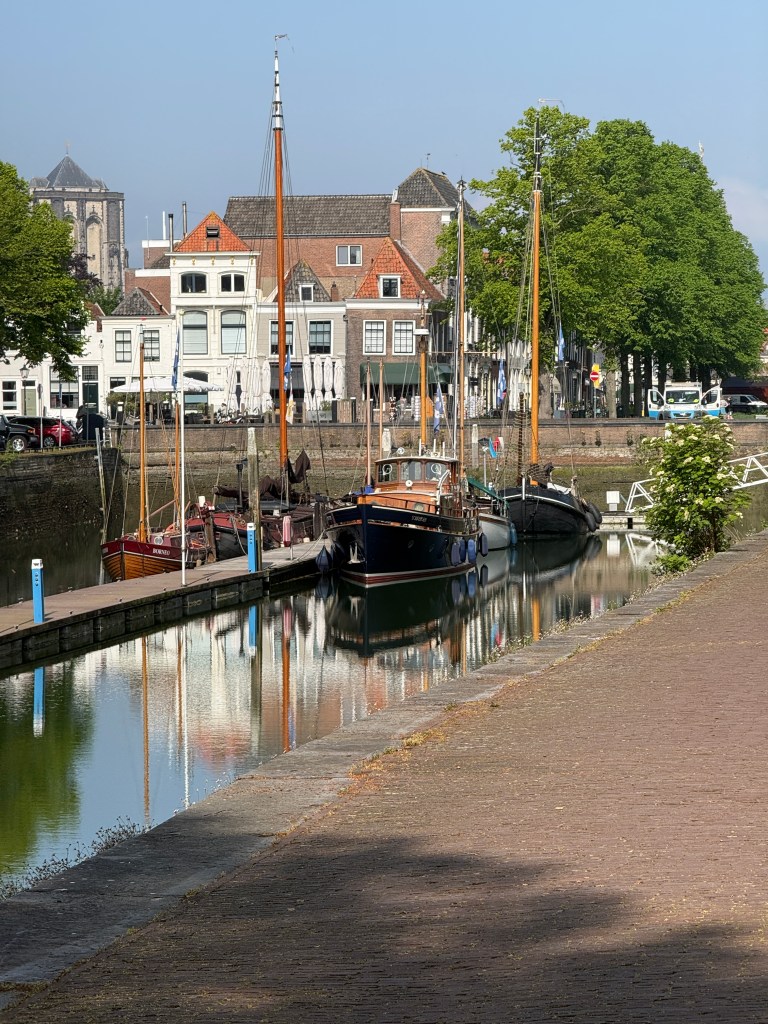
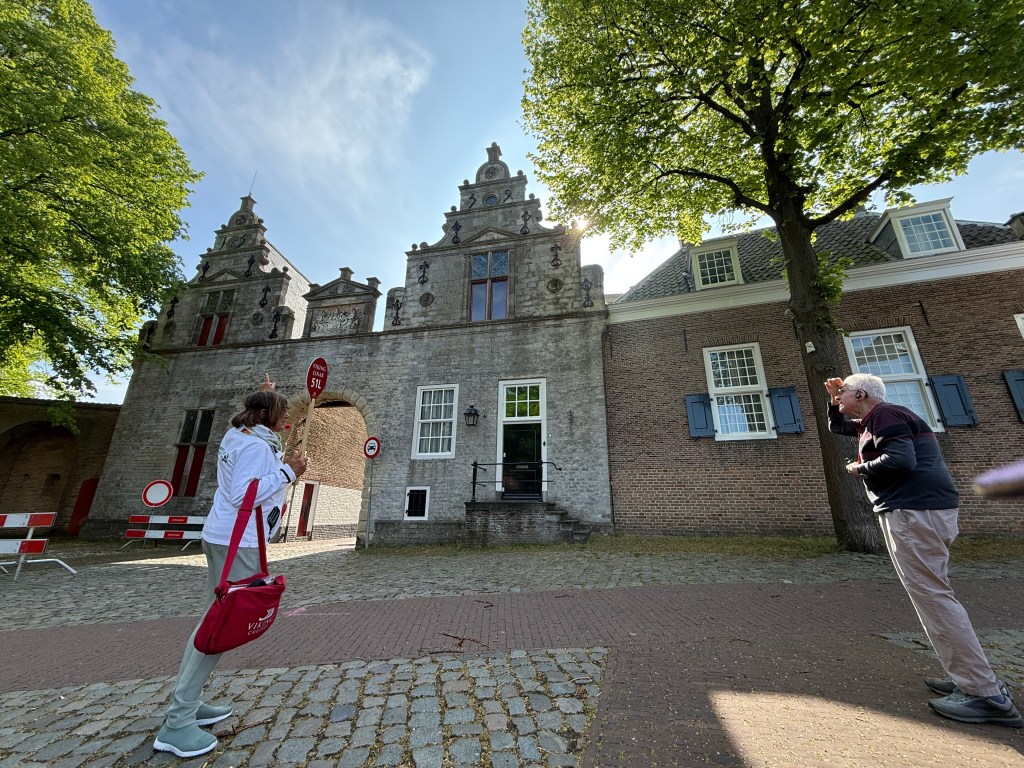
It’s a very old and cute little town, with a city gate as a remnant of the city wall. The town dates back to the 1400s. It is far enough inland that it did not flood in 1953. There was a cute gift shop, and the weather was beautiful.
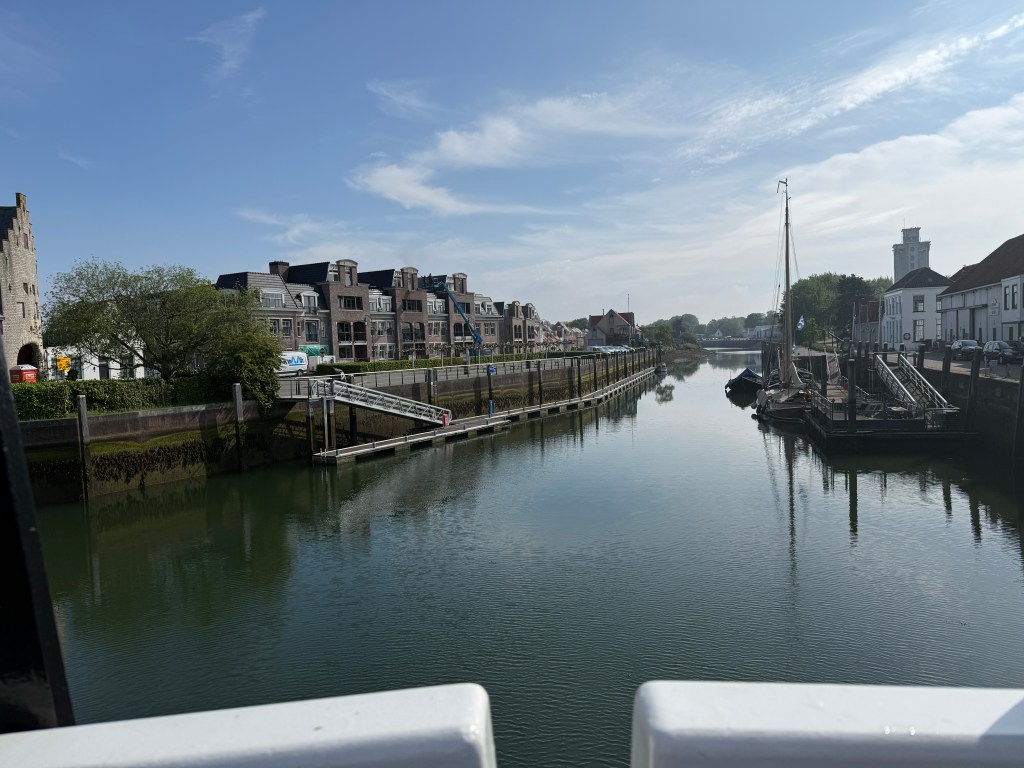
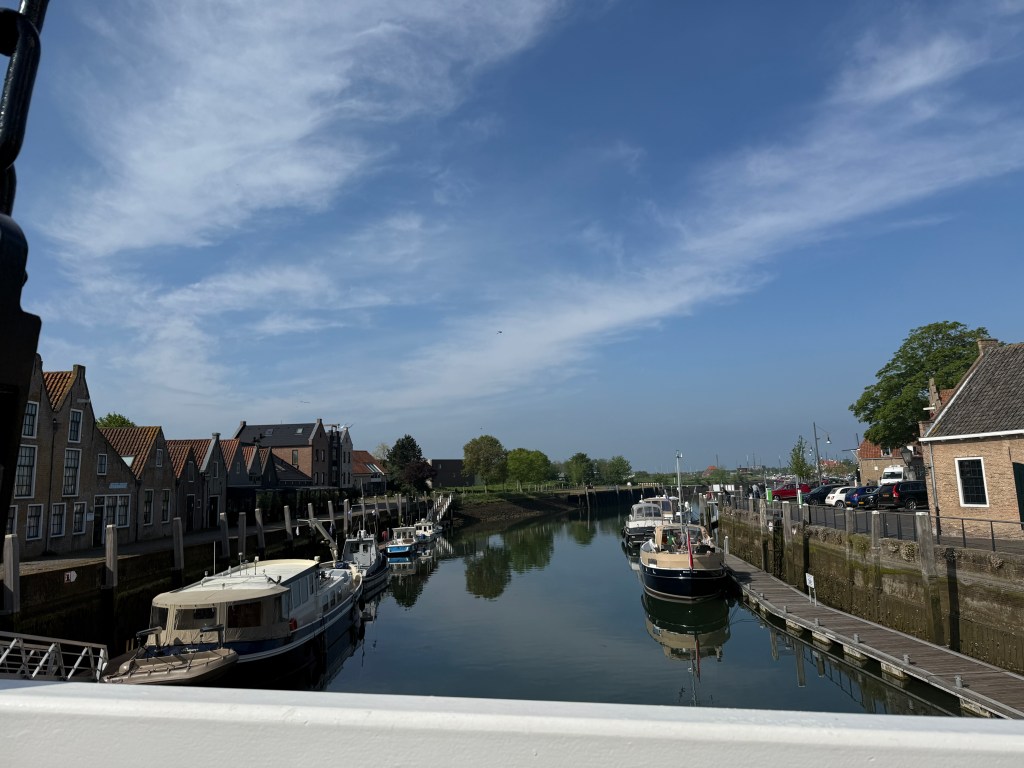
Our next “surprise” stop was a photo op by the water. We drove across the Zeeland Bridge, which is 5km long (3.1 miles).
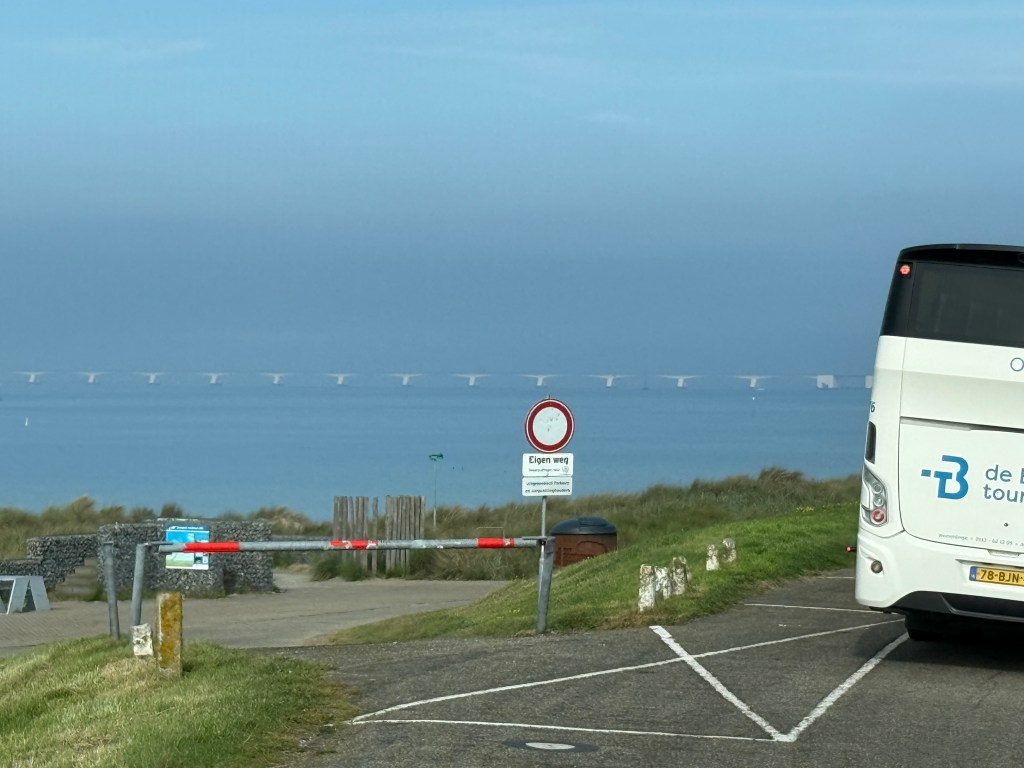
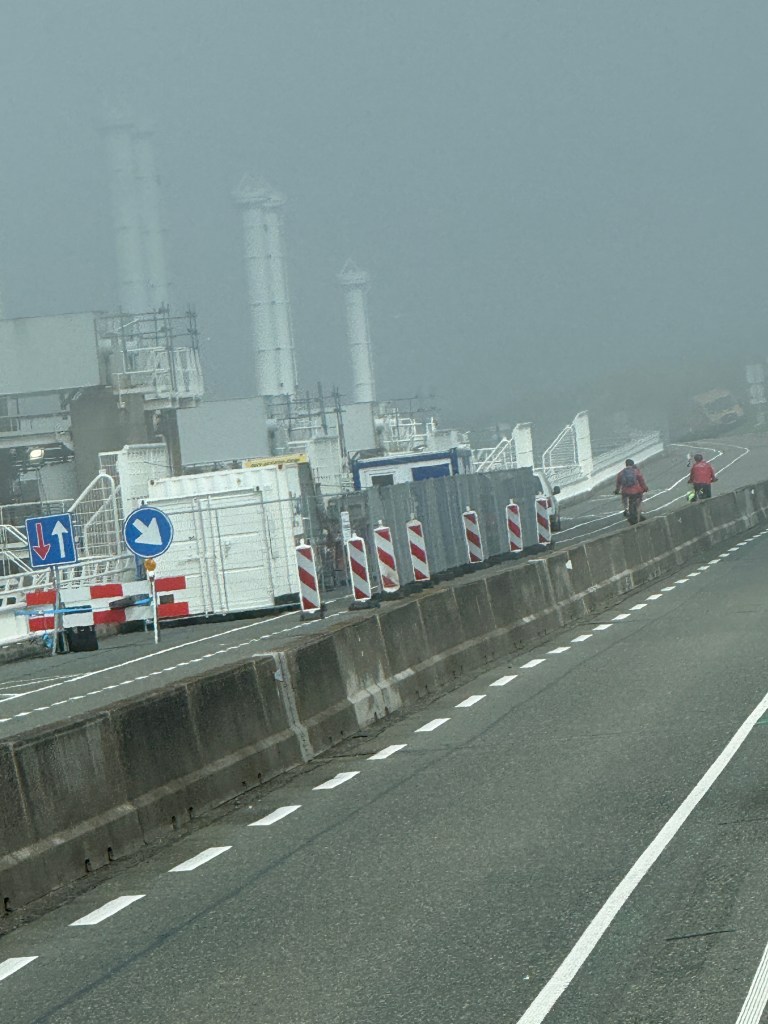
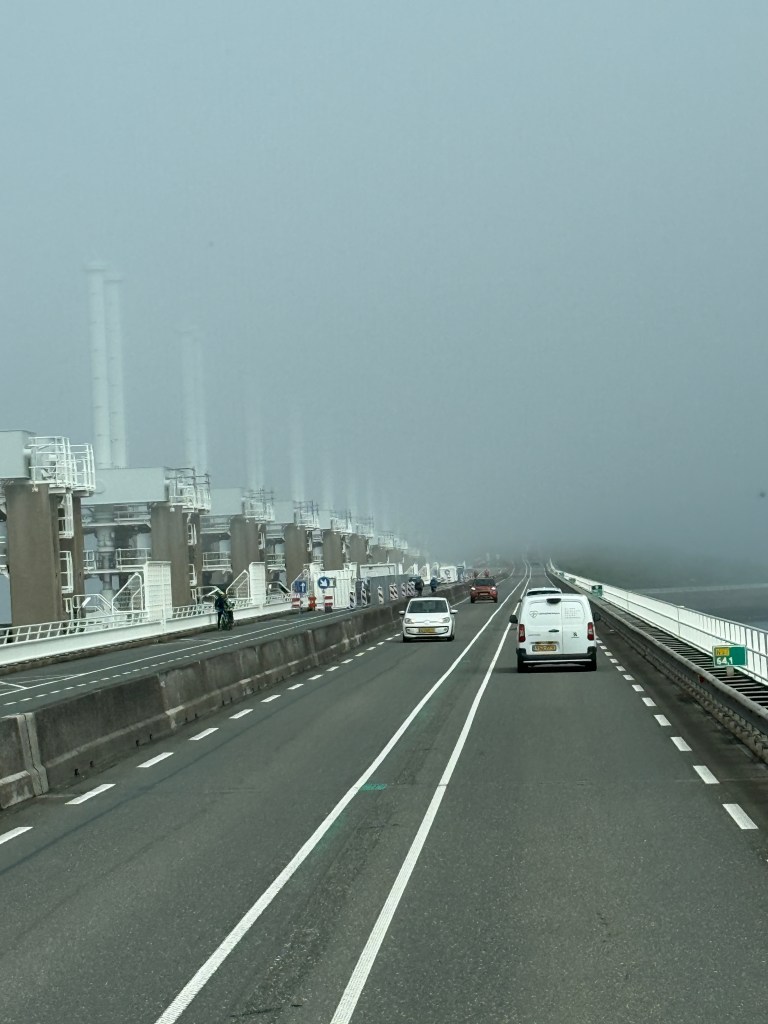
From this vantage point, we had a good view of the Storm Surge Bridge. Each segment of this bridge has a door that can be lowered in 70 minutes to stop the flow of water from the sea to the interior. The Storm Surge Bridge is 8 km long. I remember the tour guide saying that the last time it was used was 1986.
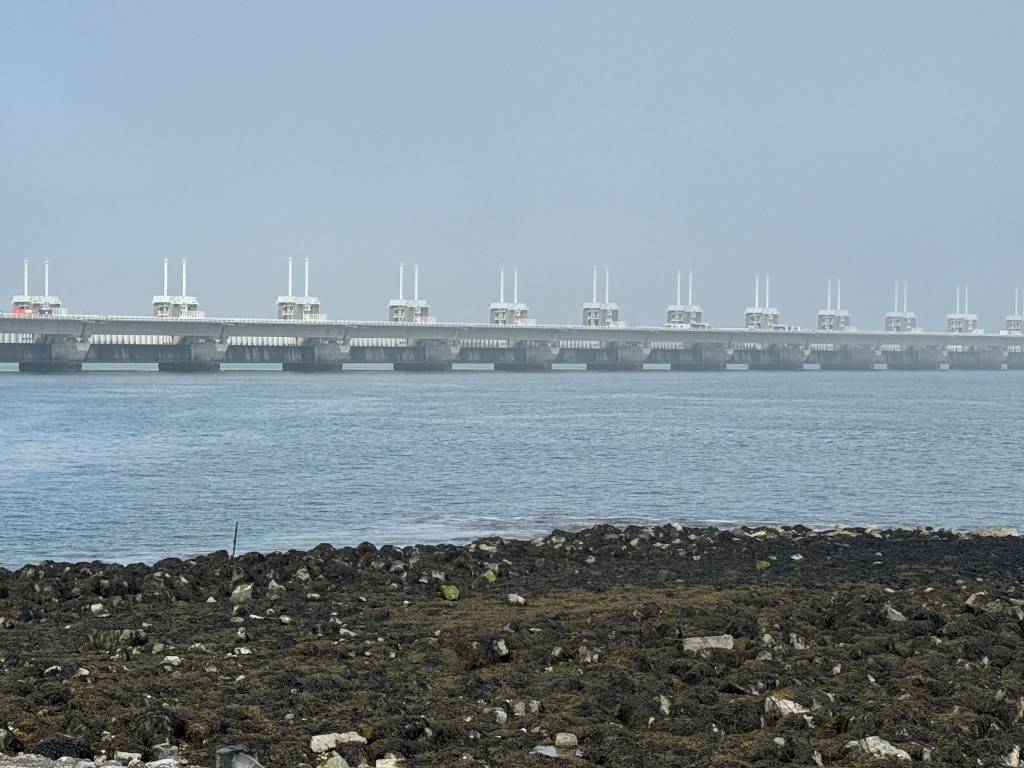
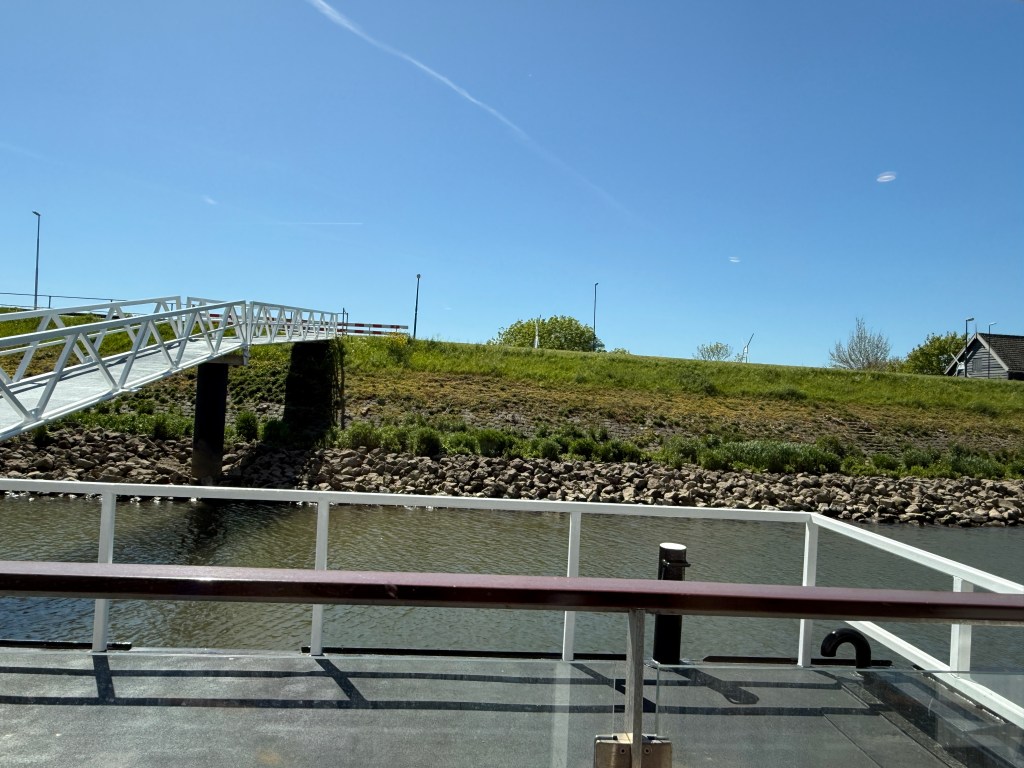
This is a close up of one of the segments. You can see how close the bridge is to the water and how the door would lower if needed.
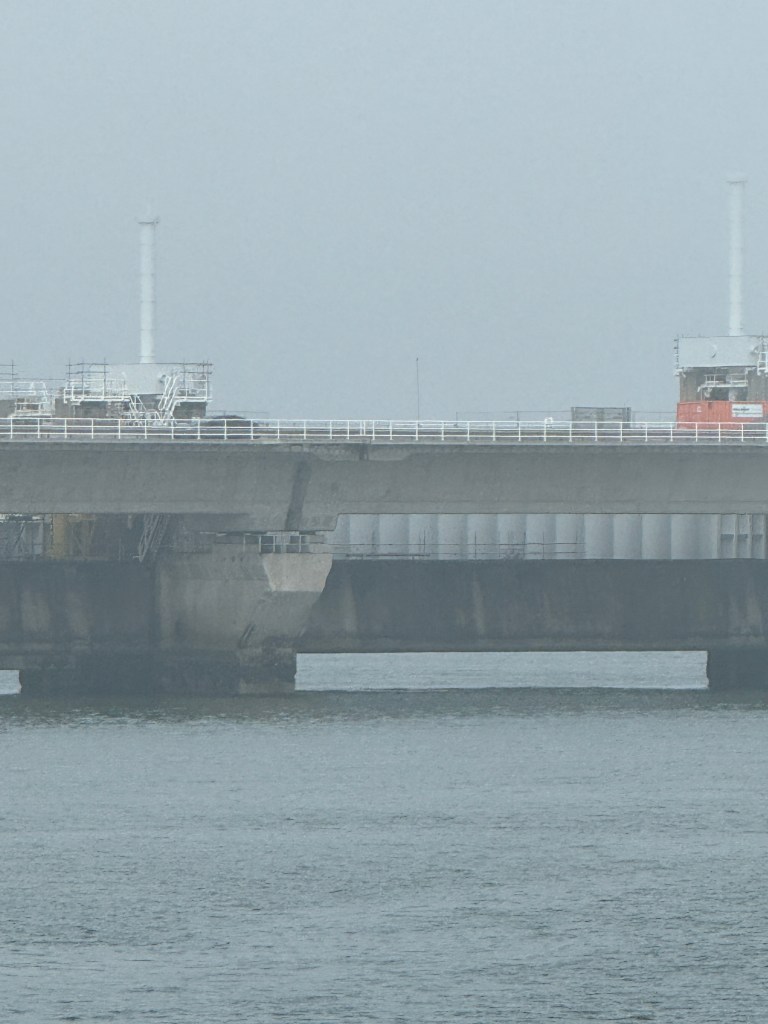
The doors come down in 75 minutes during a storm surge 1986 built

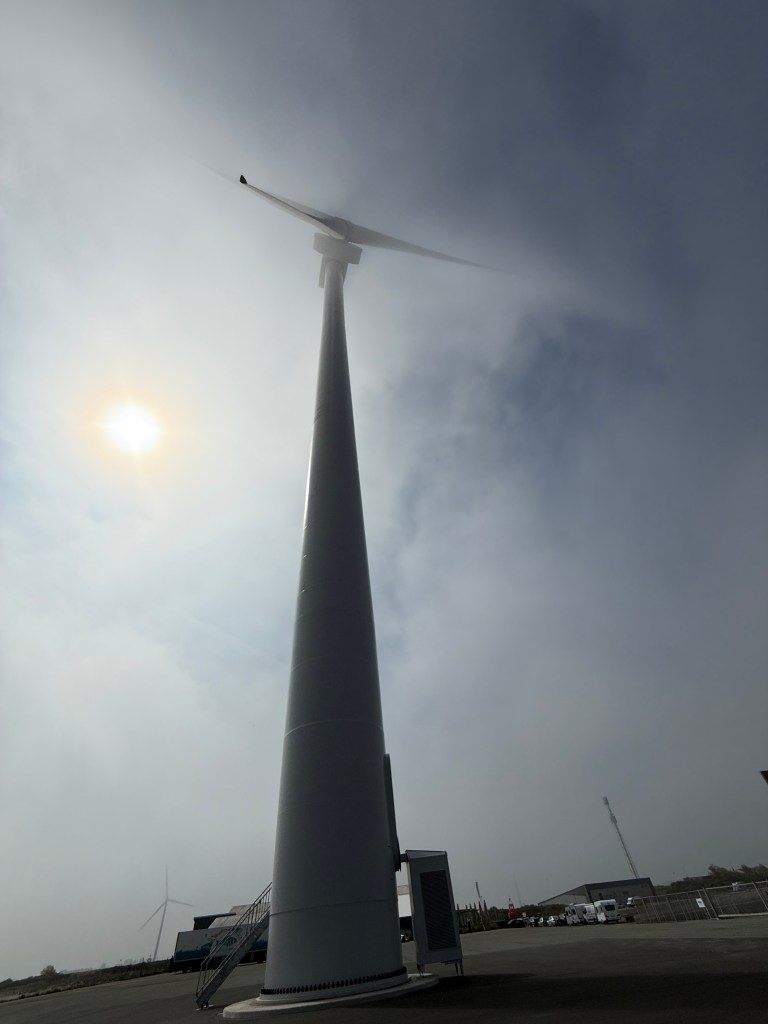
We were standing directly underneath some wind turbines. It was cool to see them spin up close.

On the way back to the ship, we drove across the Storm Surge Bridge.
We were back at the ship by 1:30, just in time for lunch. The ship set sail a little after 2:00 p.m. to head back to Amsterdam. The adventure is almost over!

Tomorrow: The pièce de résistance: Keukenhof Gardens and the end of the tulip season!
Amy & Andy’s Excellent Adventure 2026 Part 1 – In Search Of Tulips & Windmills: May 1, 2026

Where We Succeed At Our Second Goal Of Visiting A Working Windmill in Kinderdijk

Today was a weird and confusing day. We had some scenic sailing down a waterway that Google Maps labeled “Waal” on our way to Kinderdijk, where we arrived at 1:00 p.m. We had booked an optional excursion to take a barge down a canal to visit a working windmill. We had done this exact excursion before on the Rhine river cruise a couple of years ago, so we knew what to expect.

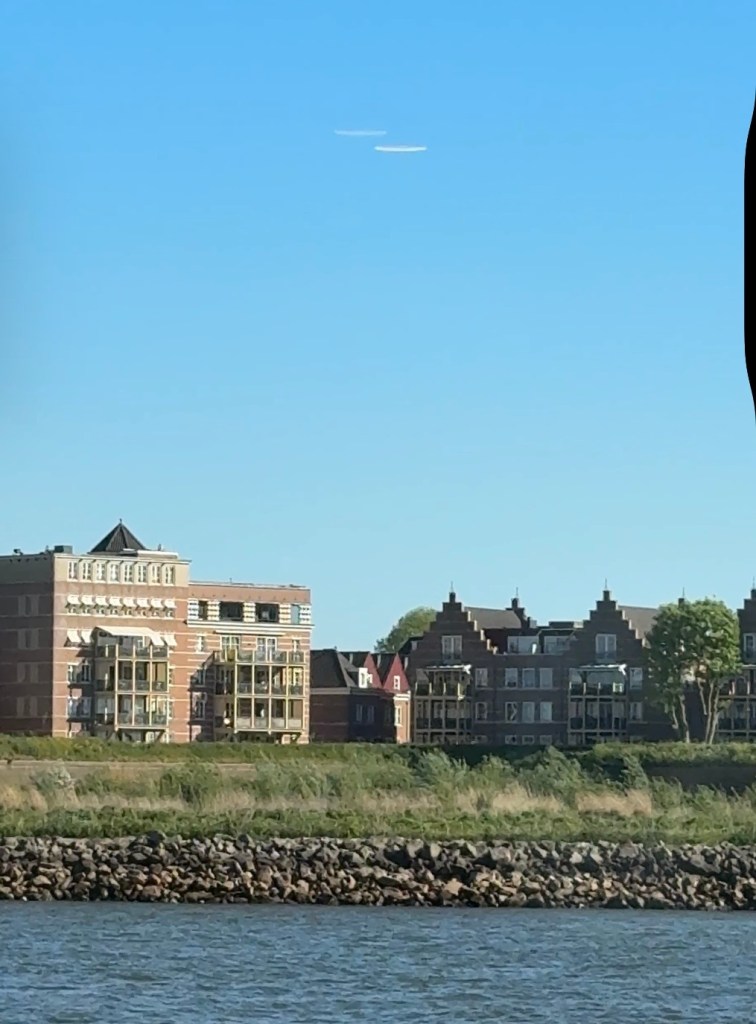
This was the view from our veranda for the short time we were in Kinderdijk

The green mound across the water from the ship is the dike.

We had a short walk from the ship to the Viking-owned barge that would take us to the windmill.

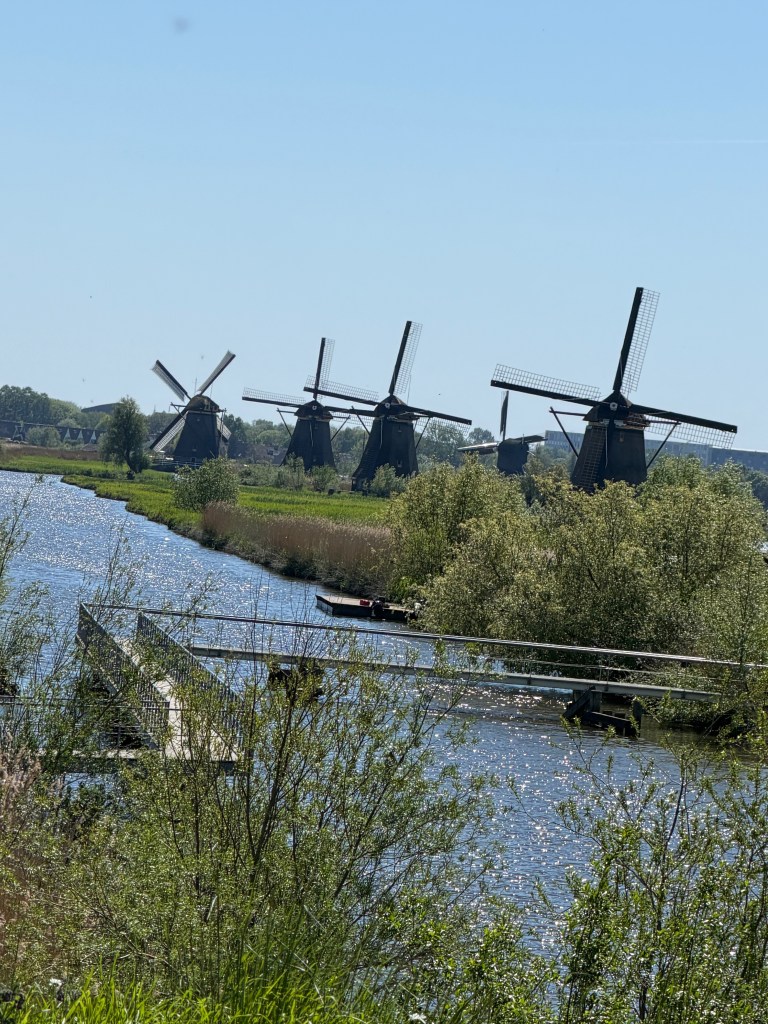
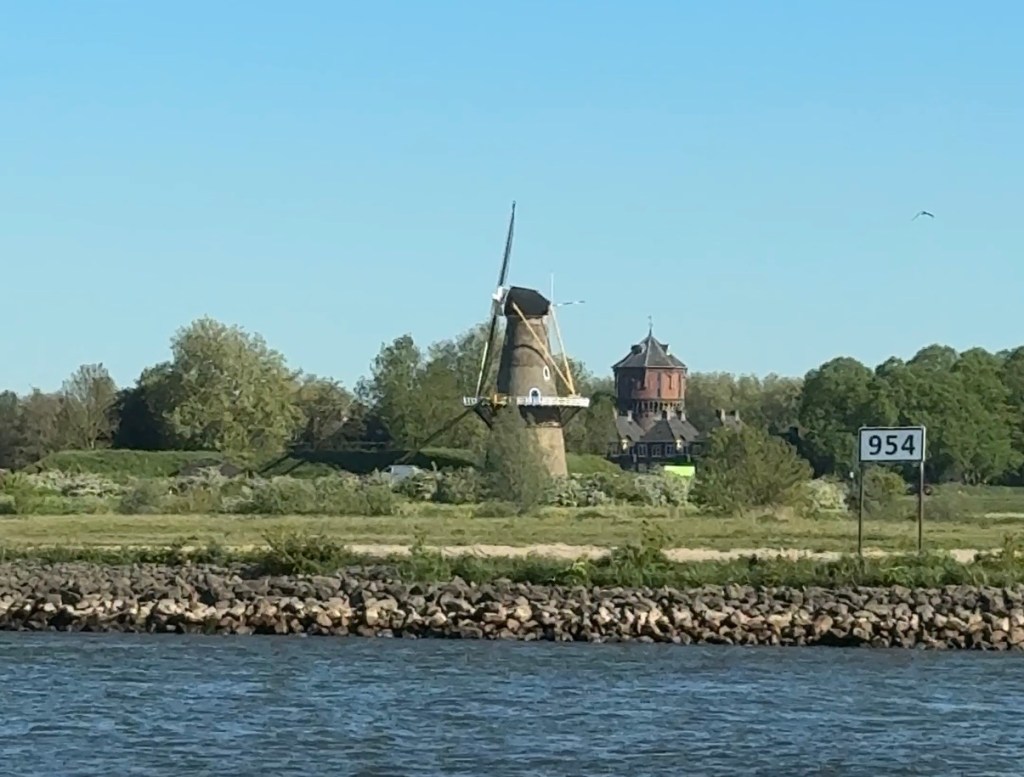
The windmills pump water from the canal with a higher level of water into the canal with a lower water level.

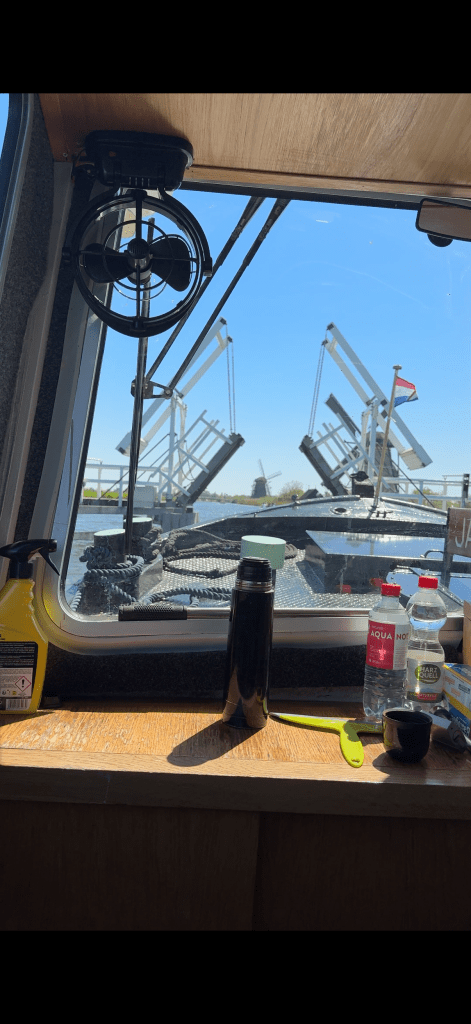
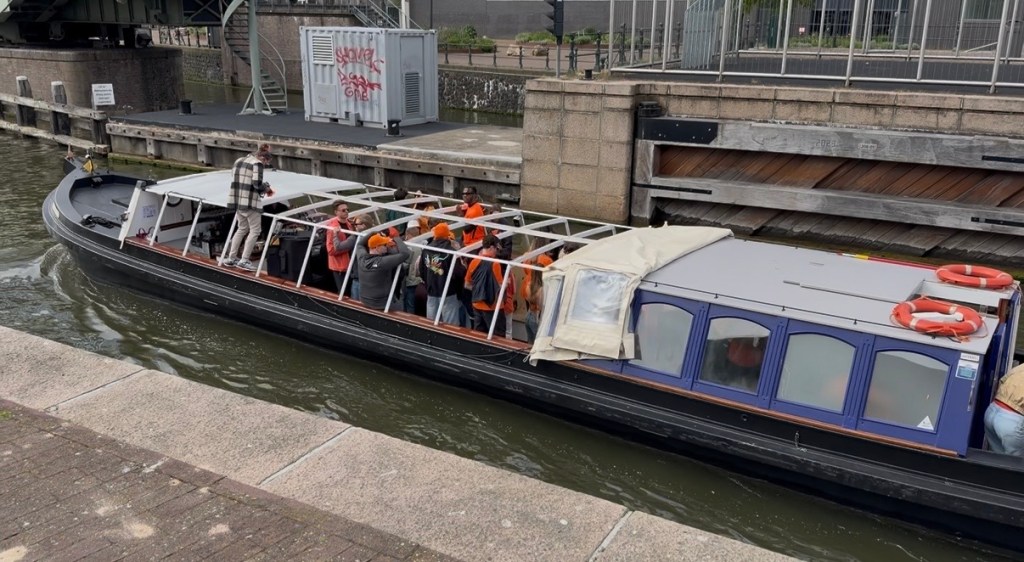
A draw bridge opened for our barge on our way down the canal.

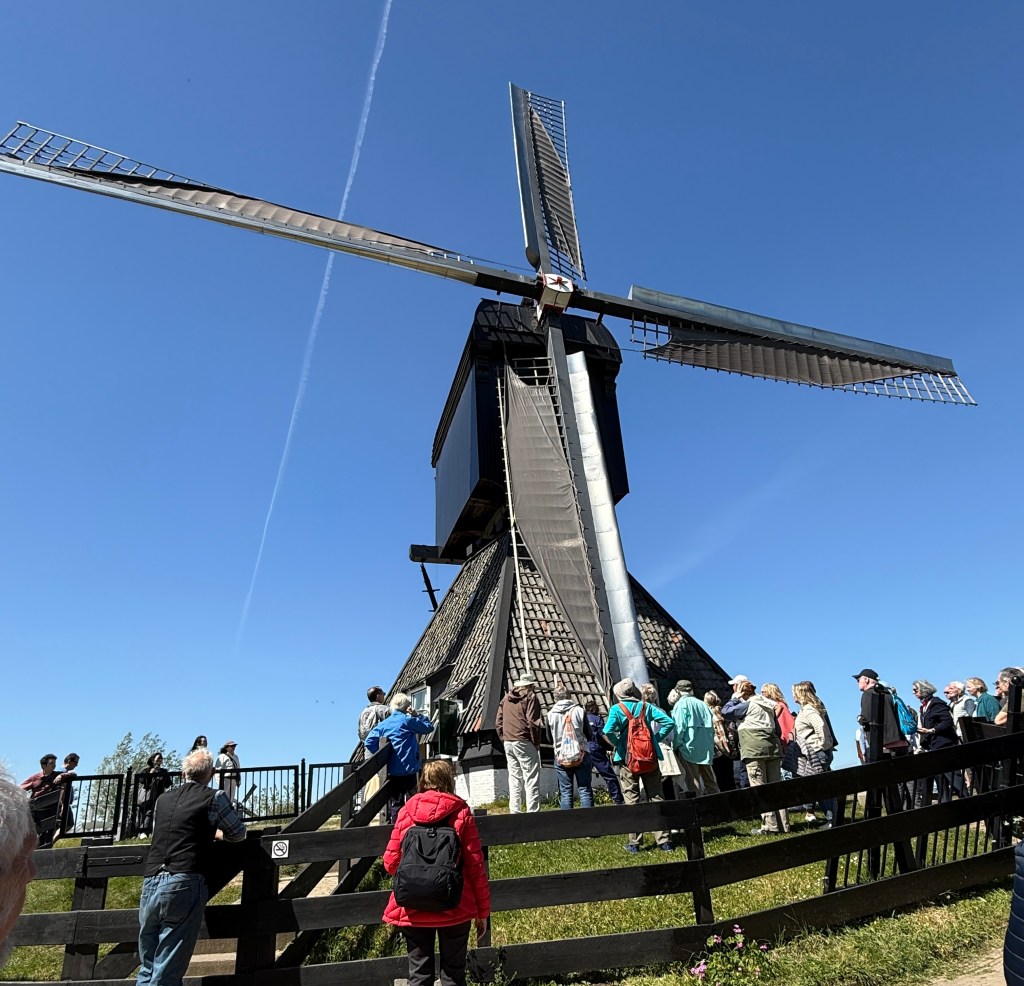
This is the windmill we visited. The blades have steel edges to allow them to spin faster and more efficiently. The miller said the blades can spin as fast as 140 revolutions/hour, but the most efficient speed is about 100 revolutions/hour. Faster than that and the water starts coming back into the waterwheel.

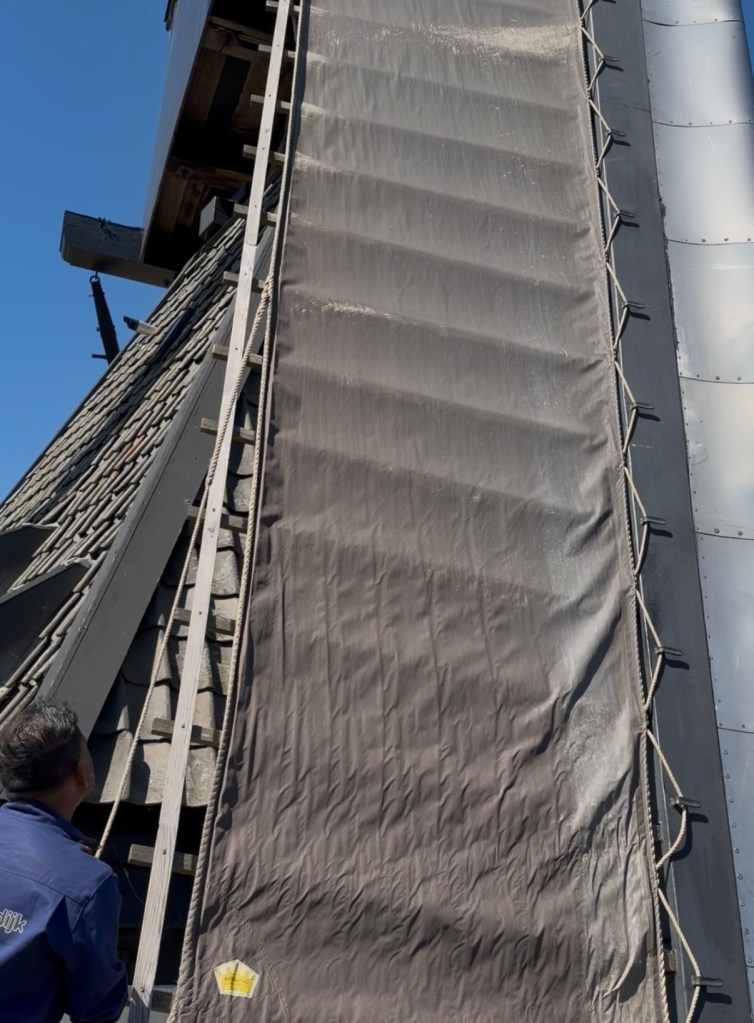
The miller demonstrated stopping the blades, turning the top of the windmill in case the wind changes direction, and changing the covering on the blades – the more the blades are covered, the faster they will spin.

In this photo, the blade is covered.

Fully covered blade

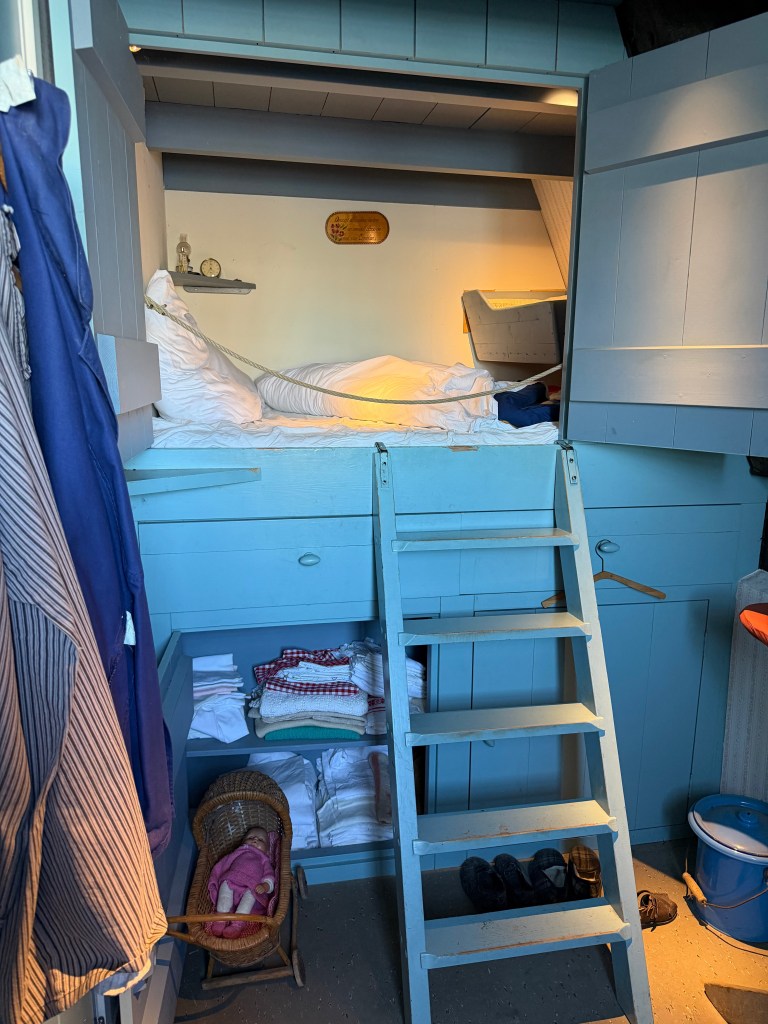
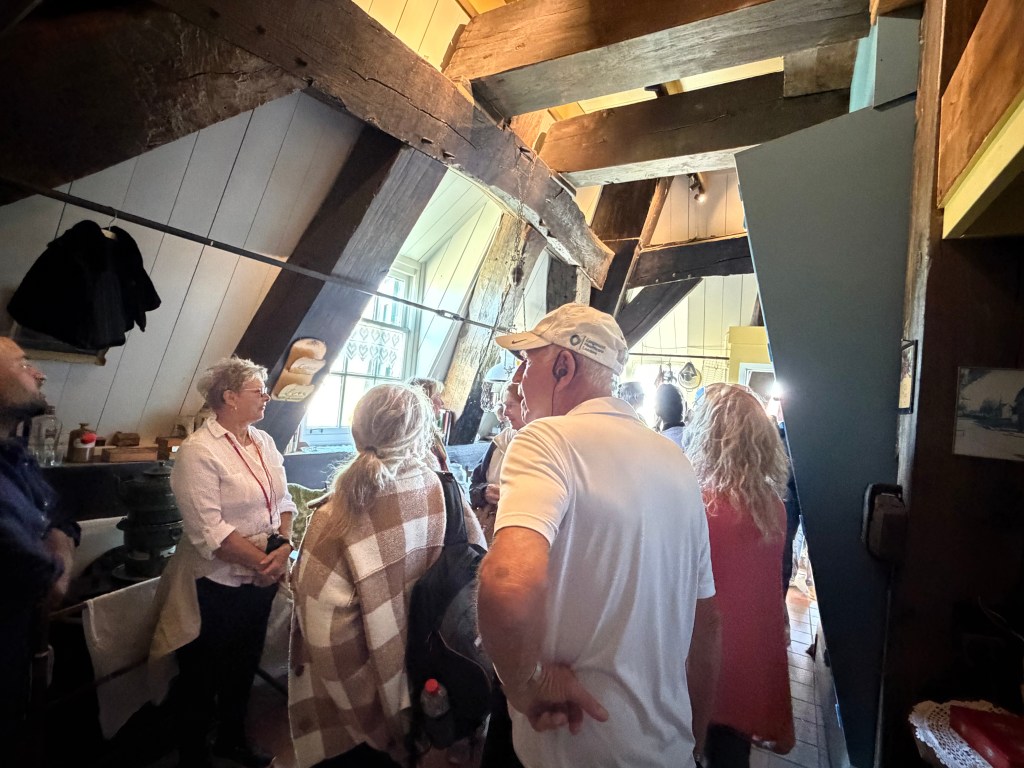
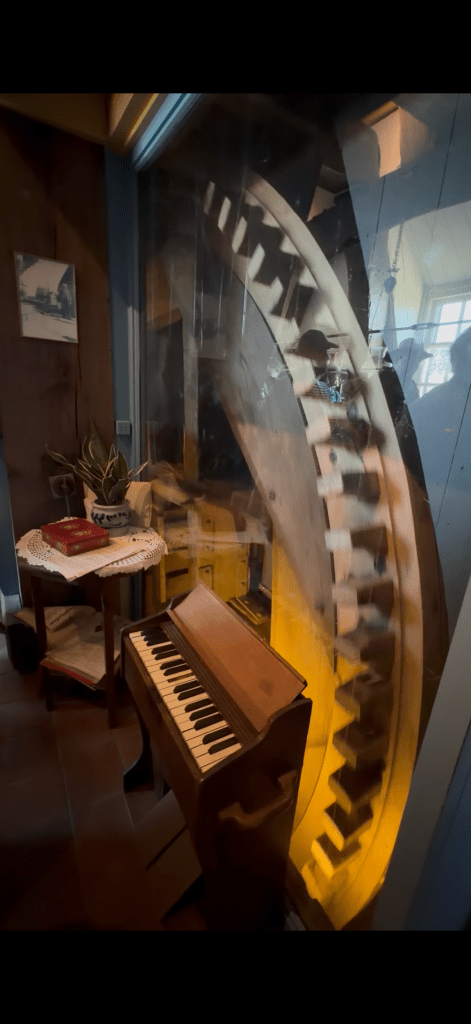
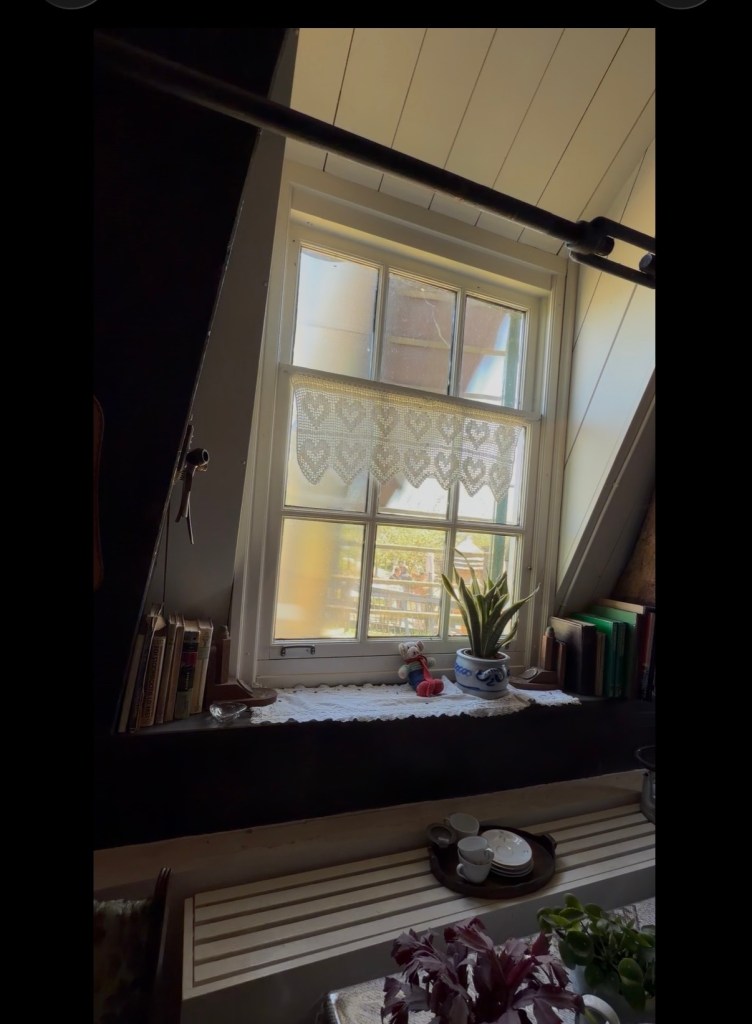
Andy took these photos inside the windmill:

This visit was just as amazing as the last time a few years ago. Windmills are fascinating.

We had issues with my transport chair on the way back – one of the back wheels keeps falling off. It’s been an issue for a few days now. But I was able to walk all the way back to the ship and Andy carried the transport chair. Emily, our Program Director, met me with a ship’s wheelchair when she saw me heading in the wrong direction! And once back on board and we had set sail for Rotterdam, one of the ship’s engineers fixed the wheel!
We arrived in Rotterdam at 4:30. There was only one excursion available and we hadn’t signed up for it. Andy went for a run, but took no photos – he said Rotterdam is a big city with tall buildings. If there’s an old city center, he didn’t get that far.

We’ll be leaving Rotterdam in about 30 minutes to head to our next port.

Tomorrow: Antwerp (and Brussels, and hopefully CHOCOLATE).

Amy & Andy’s Excellent Adventure 2026 Part 1: In Search of Tulips and Windmills – April 29, 2026

Where We Stand In A Tulip Field and Have A Photo Op With A Windmill

Today we are in Enkhuizen. The morning’s excursion was a walking city tour. I decided to opt out of it to let my knee rest a bit. But Andy went.

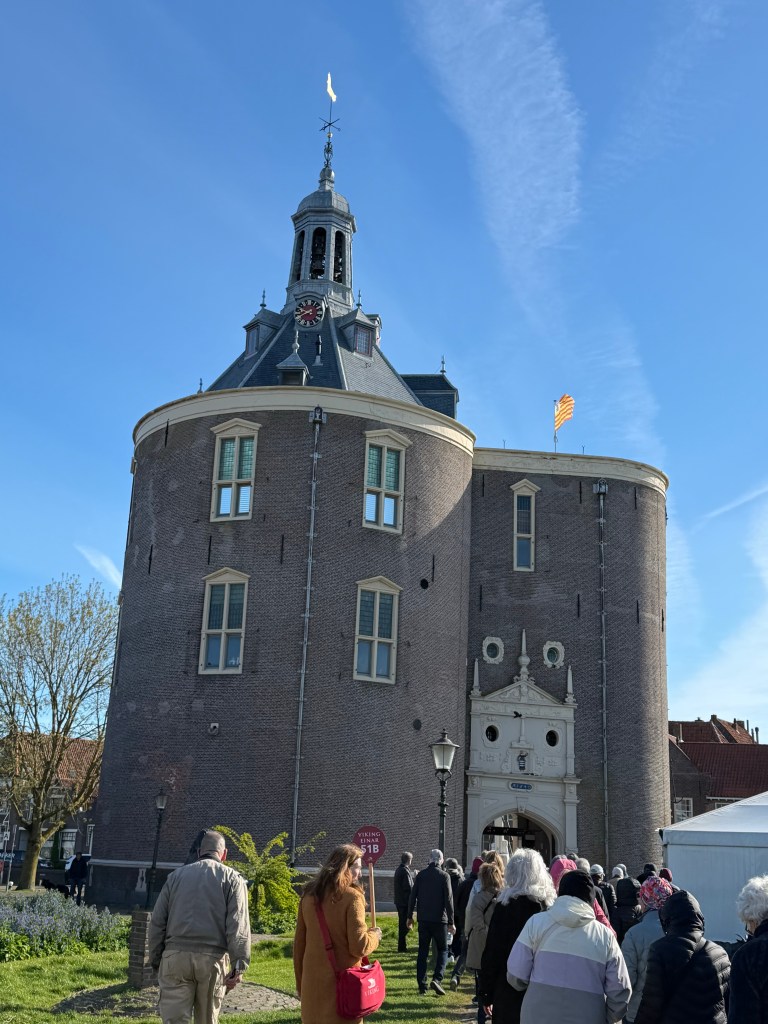
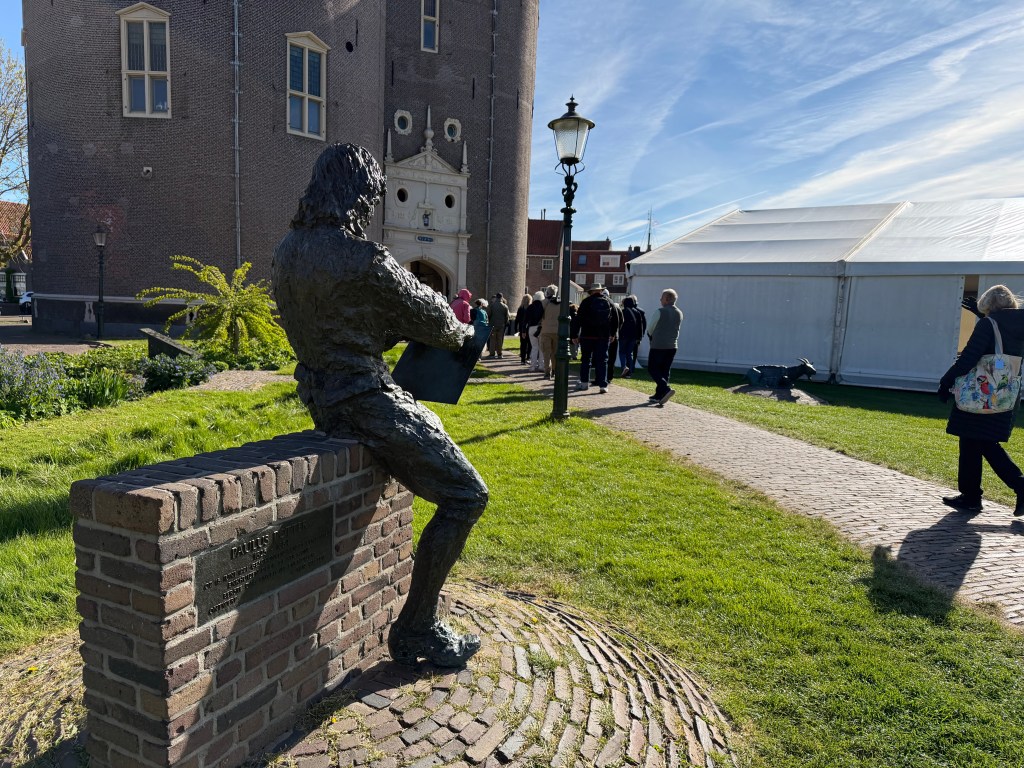
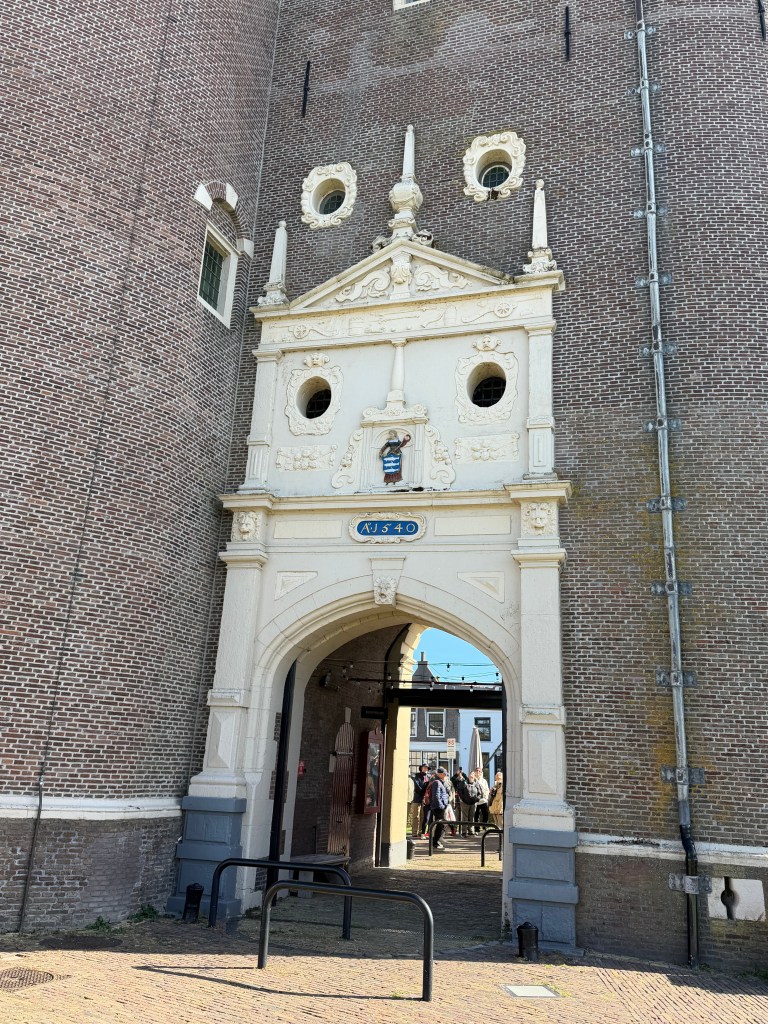
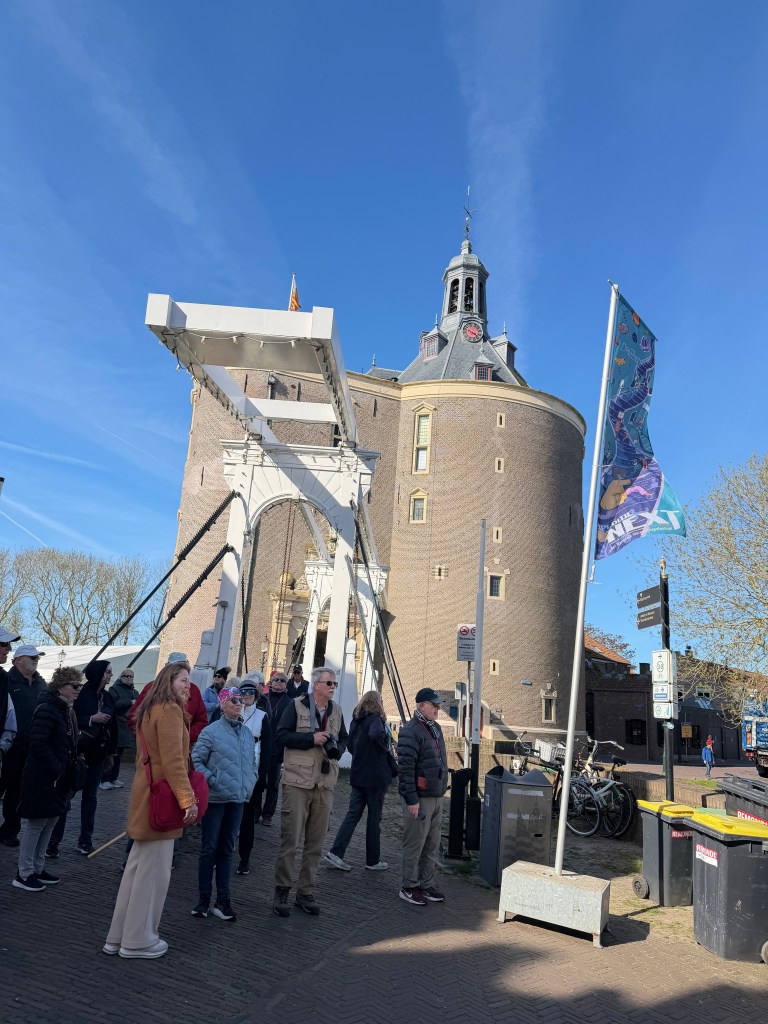
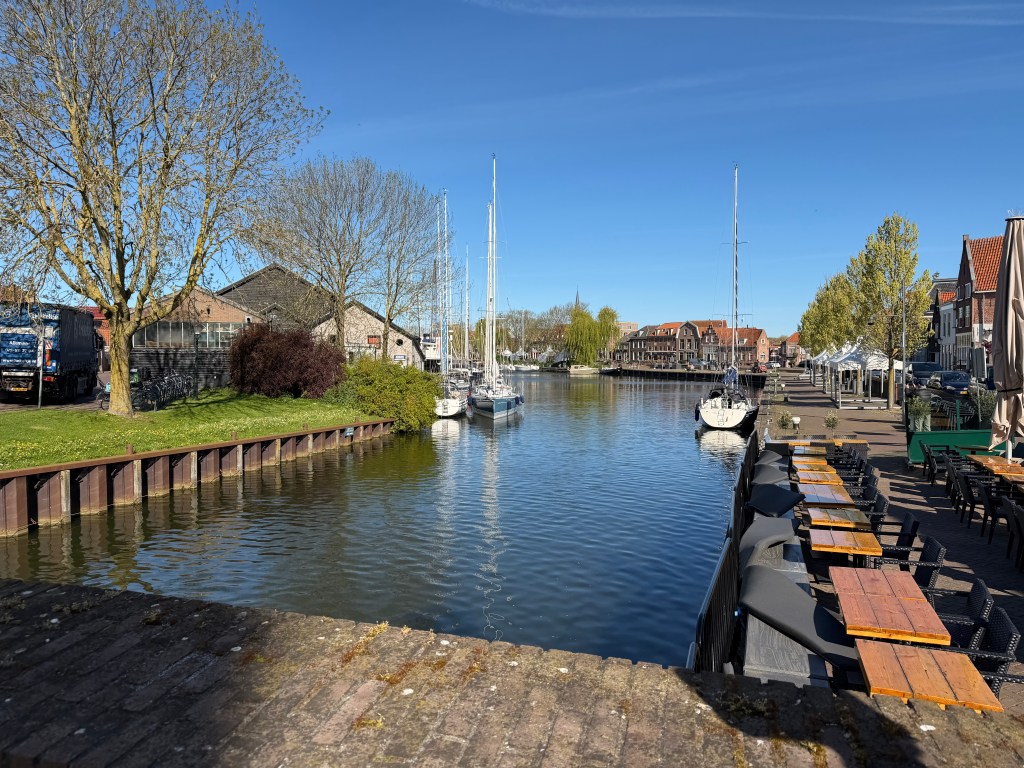
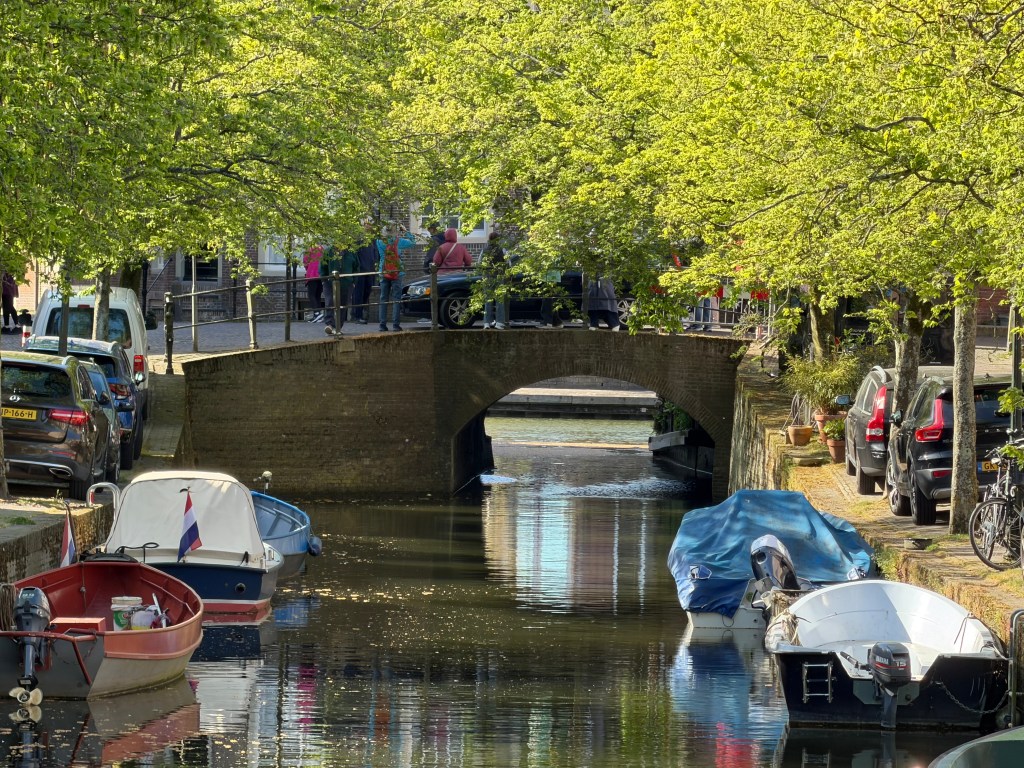
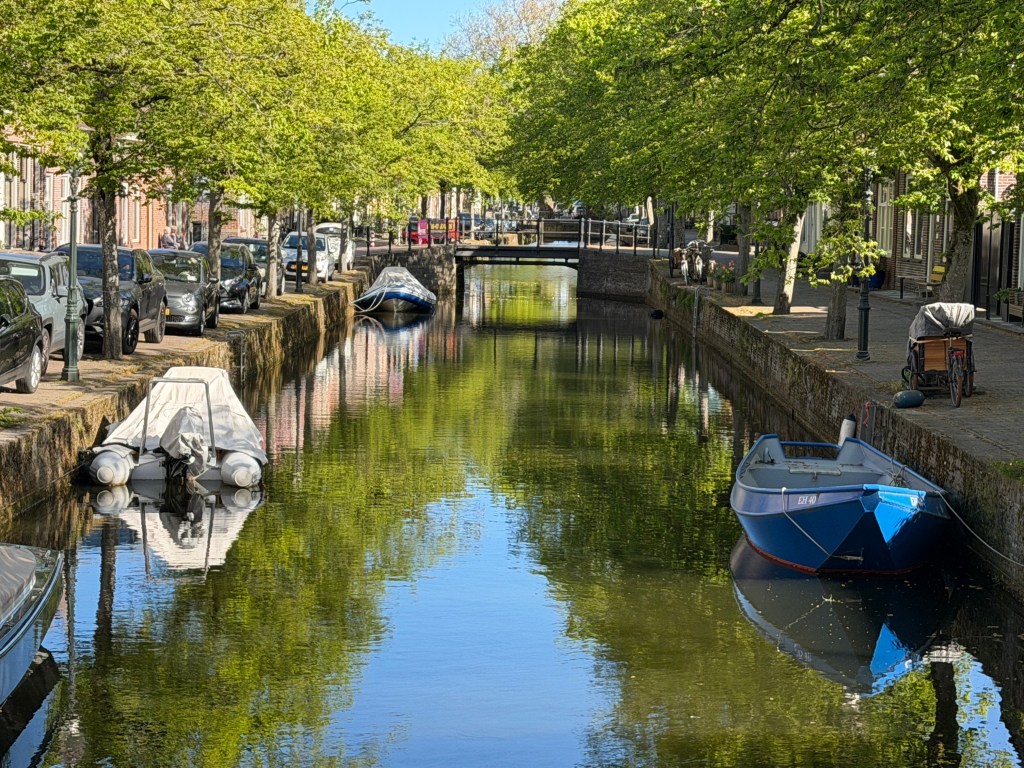
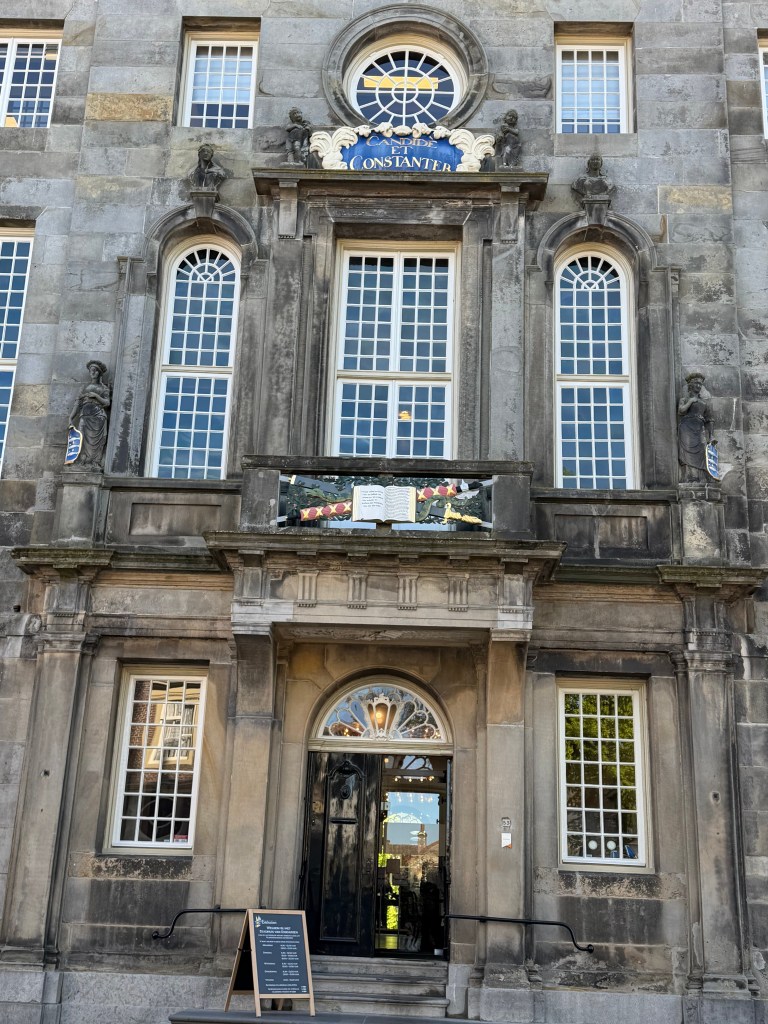
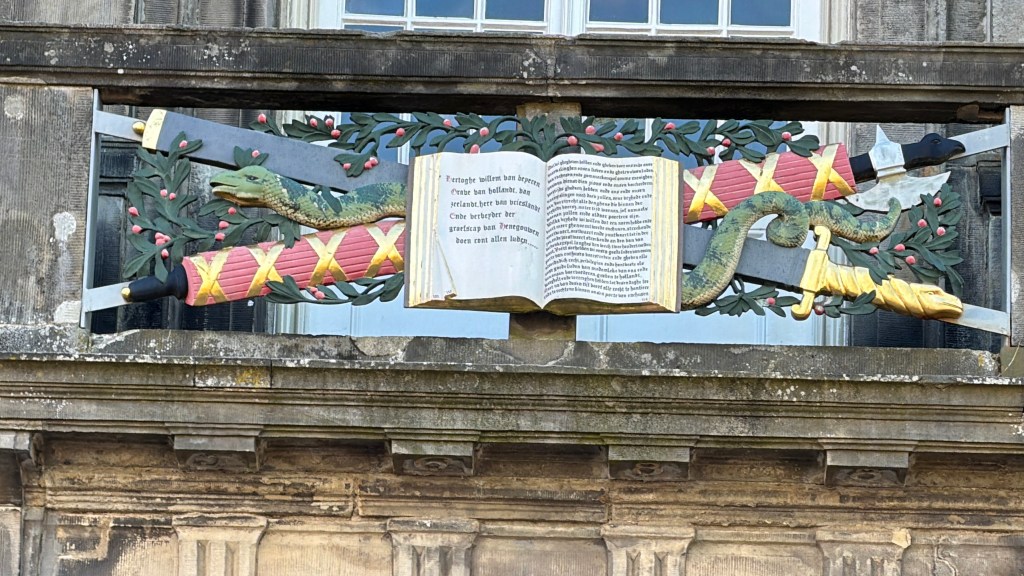
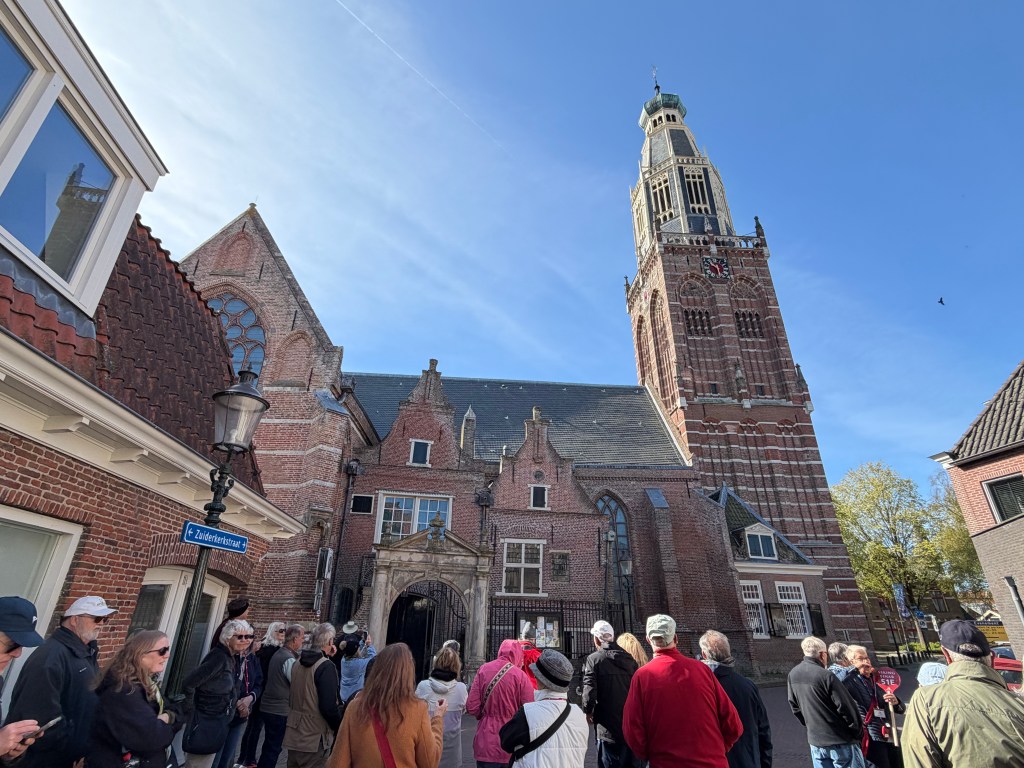
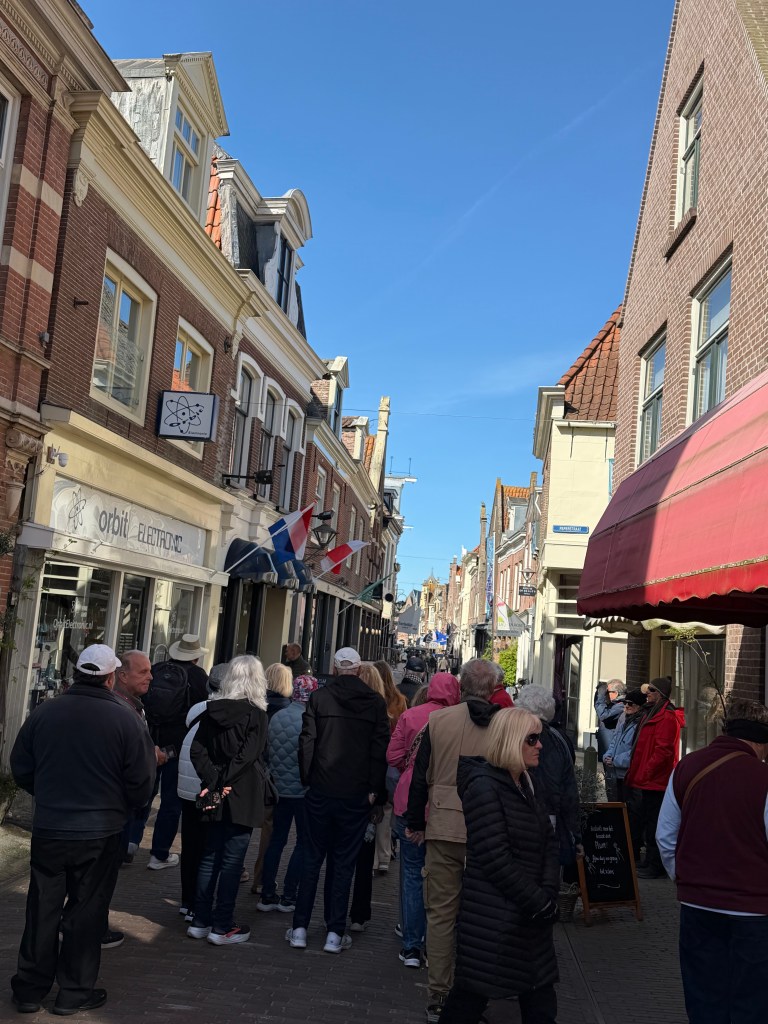
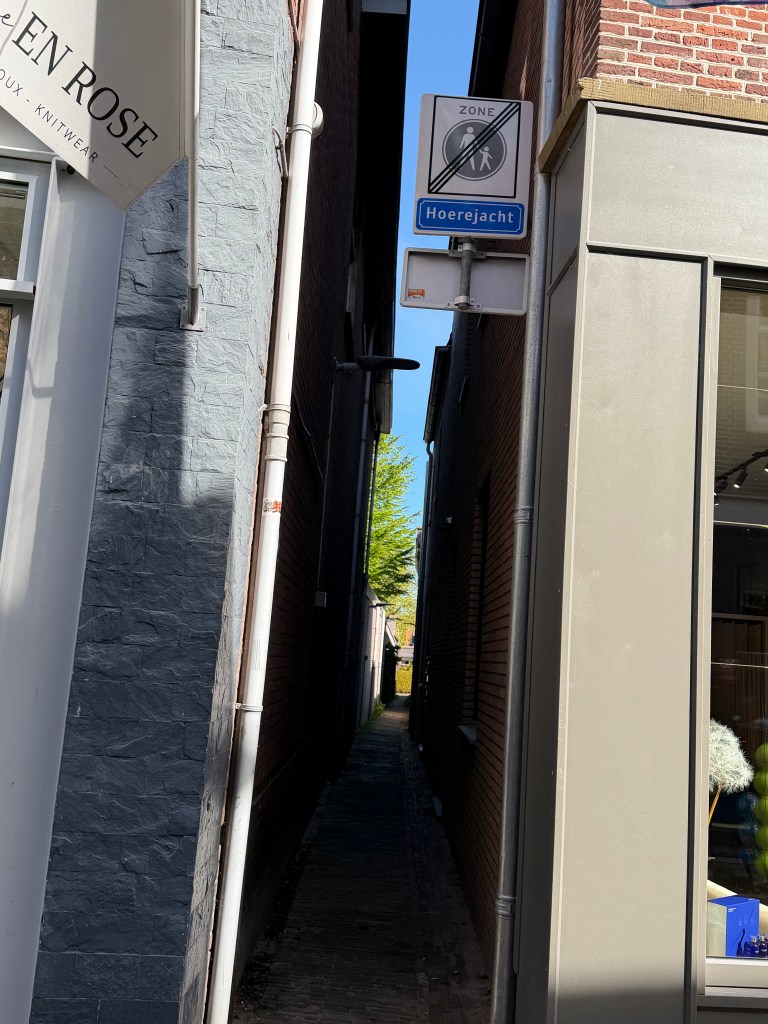
Here are some of the photos he took. It looks like a nice town.

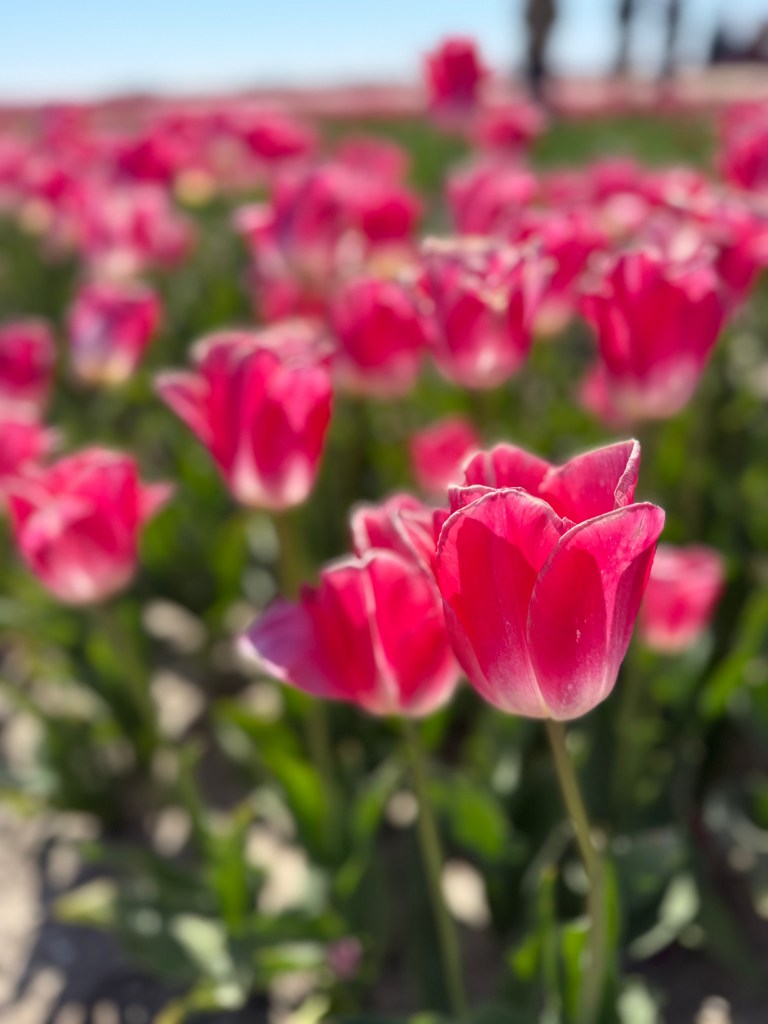
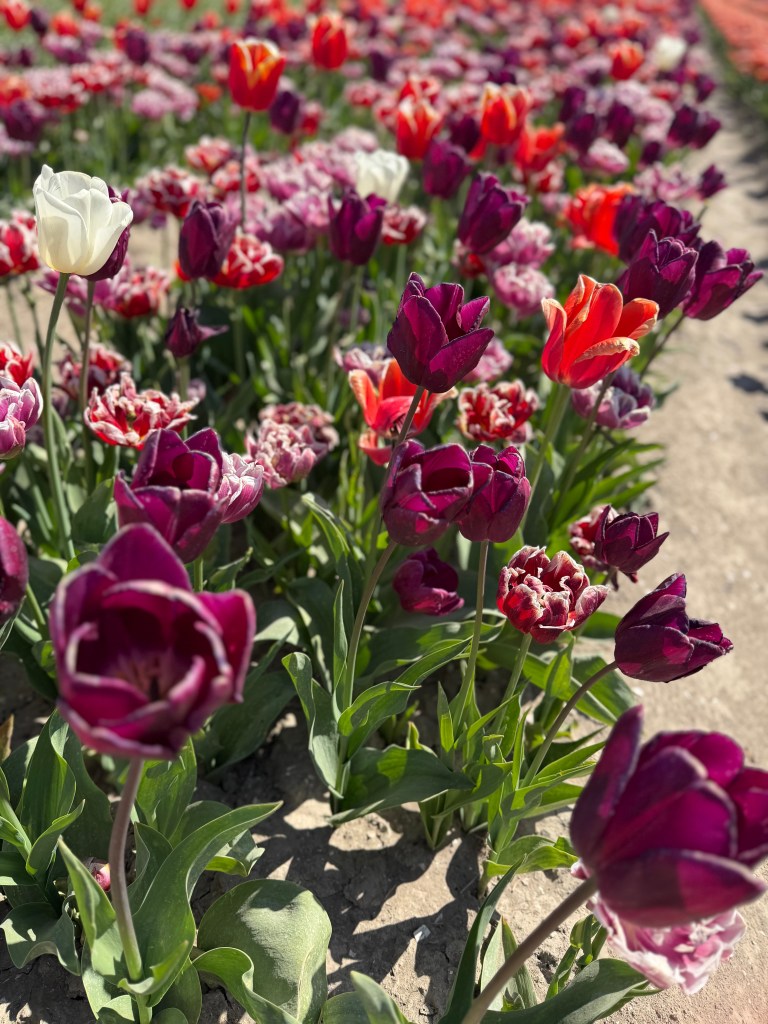
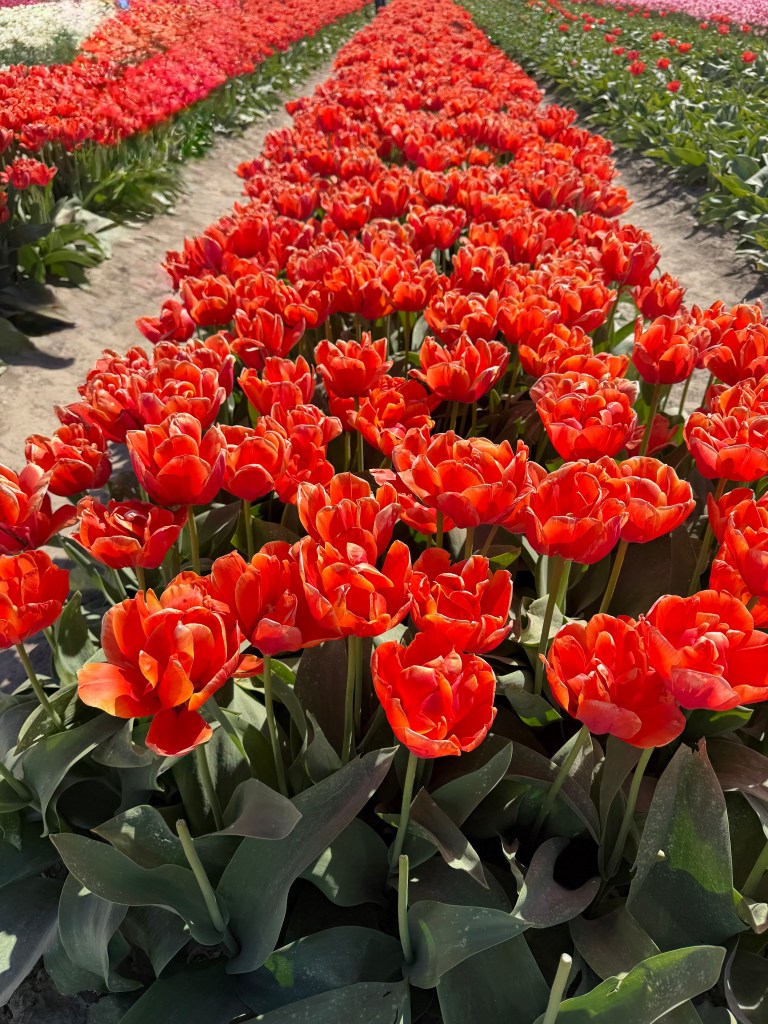
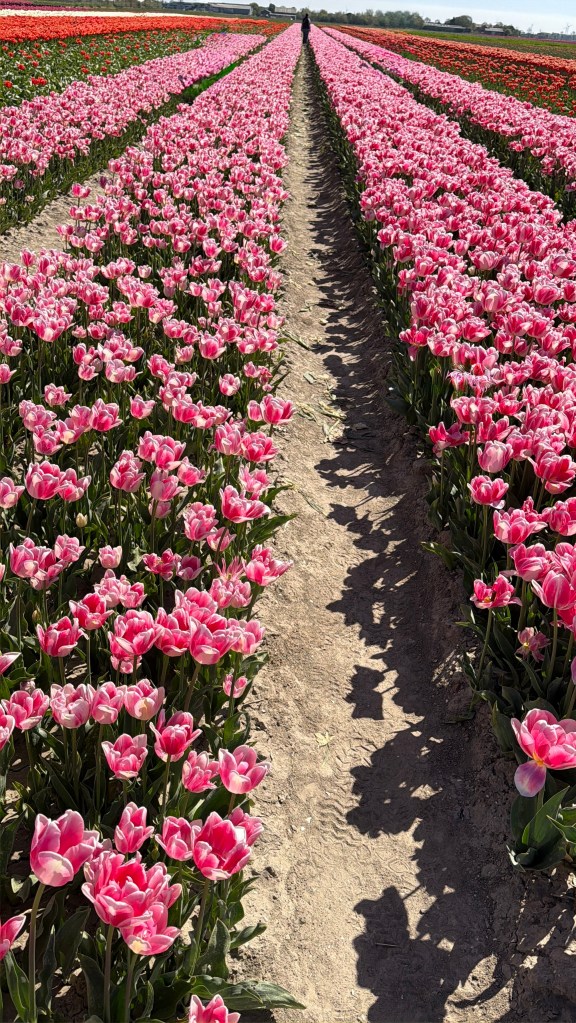
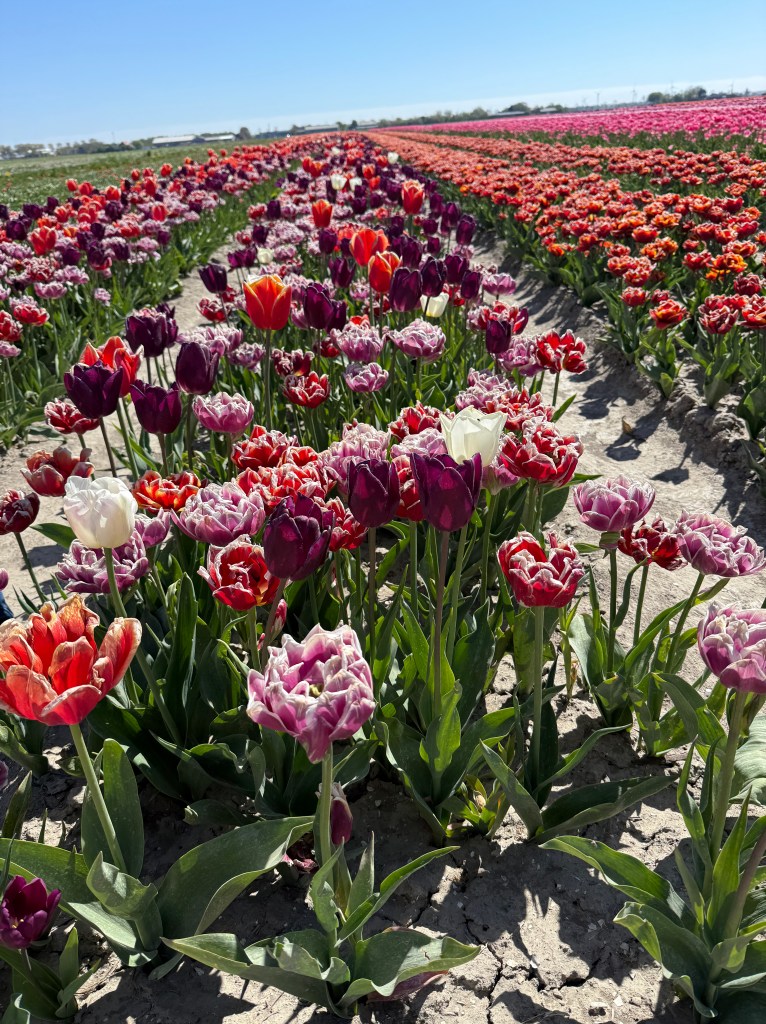
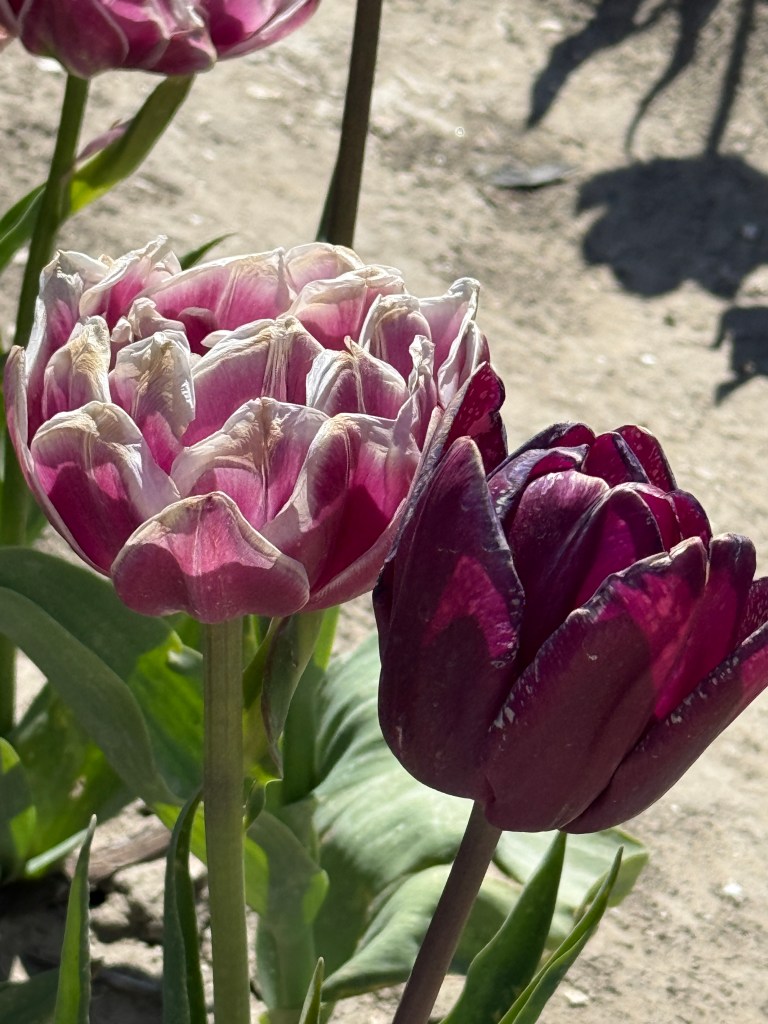
After lunch we went on out “Tulips and Windmill” excursion. This week is the very end of tulip season in the Netherlands. You can tell – the tulips are starting to wilt.

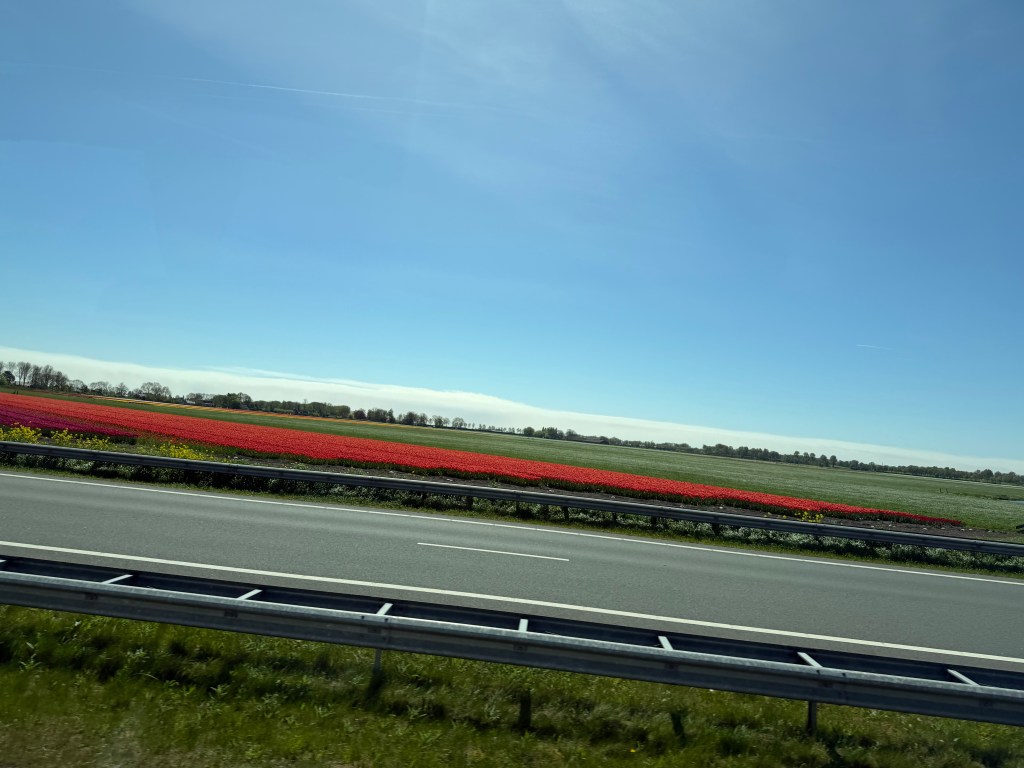
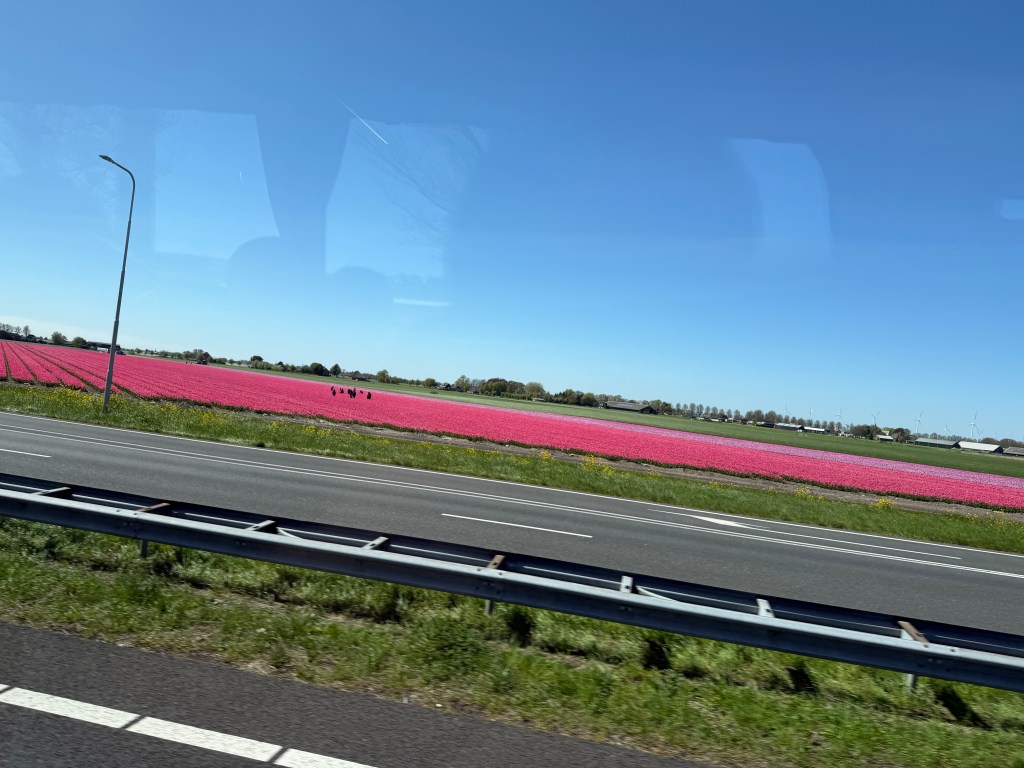
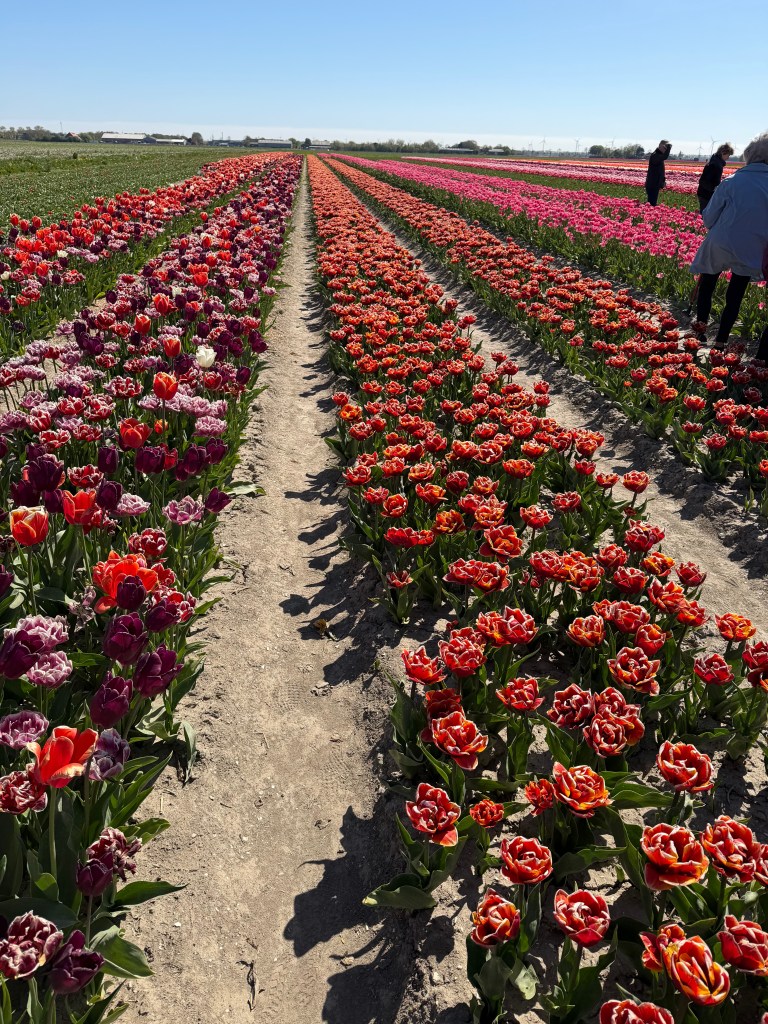
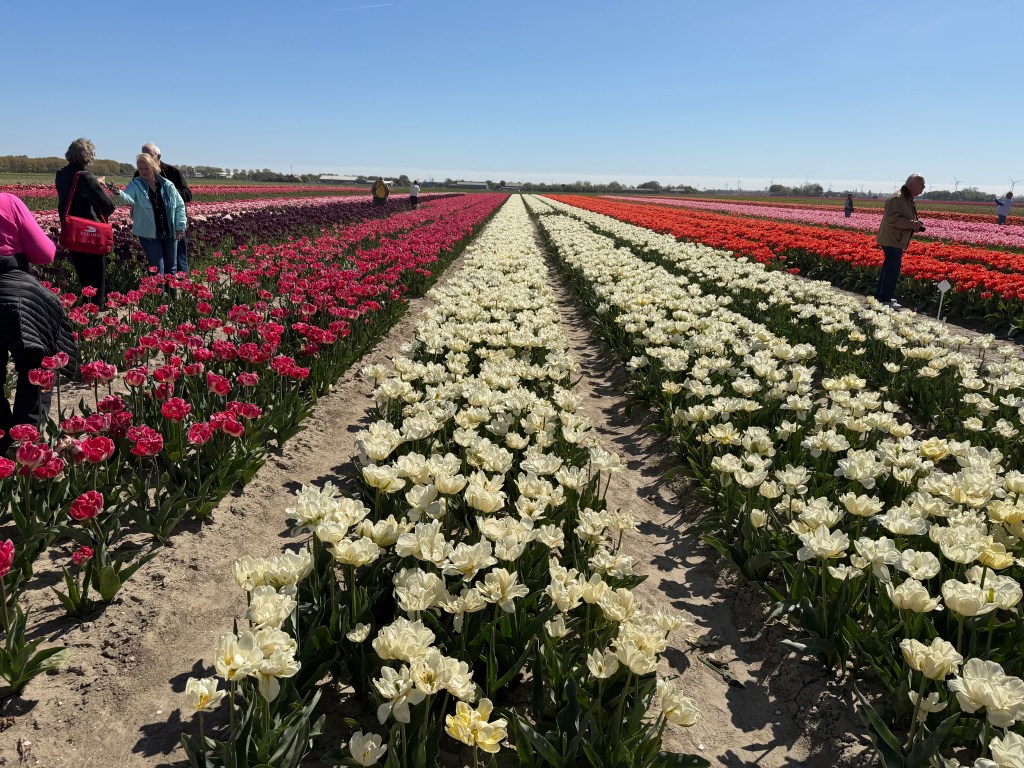
We drove about 40 minutes to a commercial tulip farm. Our guide told us that for most of the tulip flowers have been removed from the tulip plants at this point to encourage the bulbs to grow large and healthy. But we did see a couple of tulip fields along the way.

At the farm we first had coffee/tea and cookies (the cookies were very good), followed by a presentation by the tulip farmer’s wife. Today was the last presentation to a Viking cruise for the season. She walked us through the tulip production cycle including producing bulbs for sale and cut flowers. There are machines for most everything, but there are steps in the process that still must be done by hand. They hire seasonal workers – most of them from Poland – and provide them housing on the farm for the season. As of tomorrow, her husband and his crew will drive through the tulip fields with a machine that will harvest all the flowers and leave the rest of the plant to nourish the bulb.

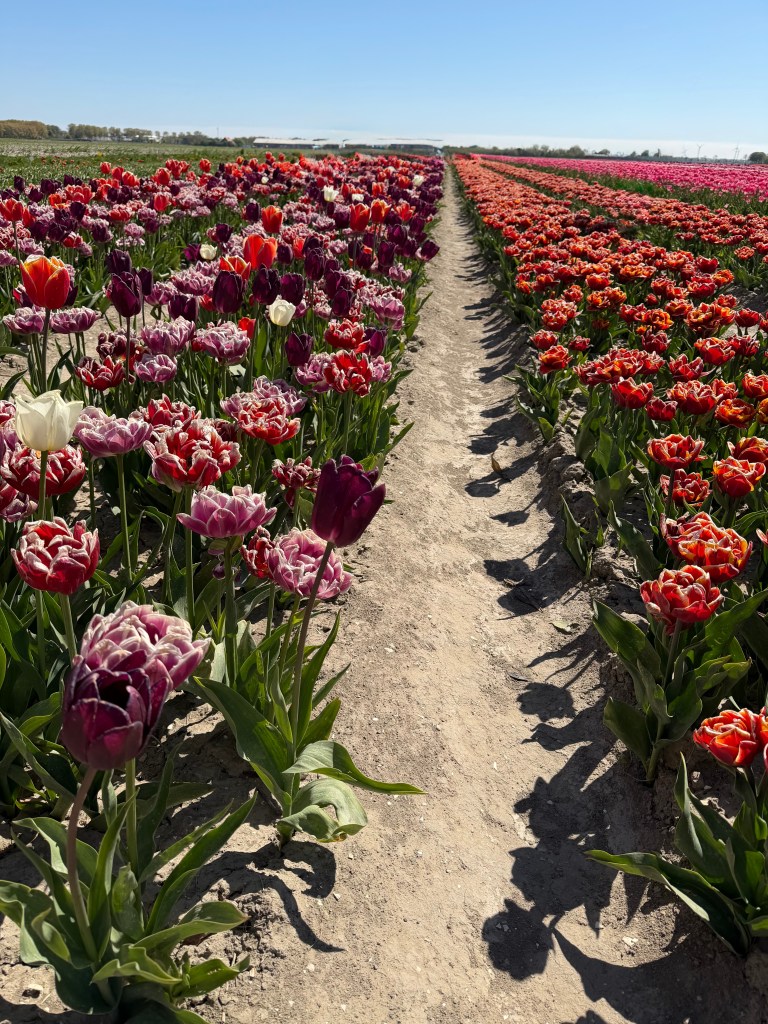
We were able to walk into the tulip fields, which is a rare opportunity. Even though you can tell that the flowers are wilting, they are still spectacularly beautiful.

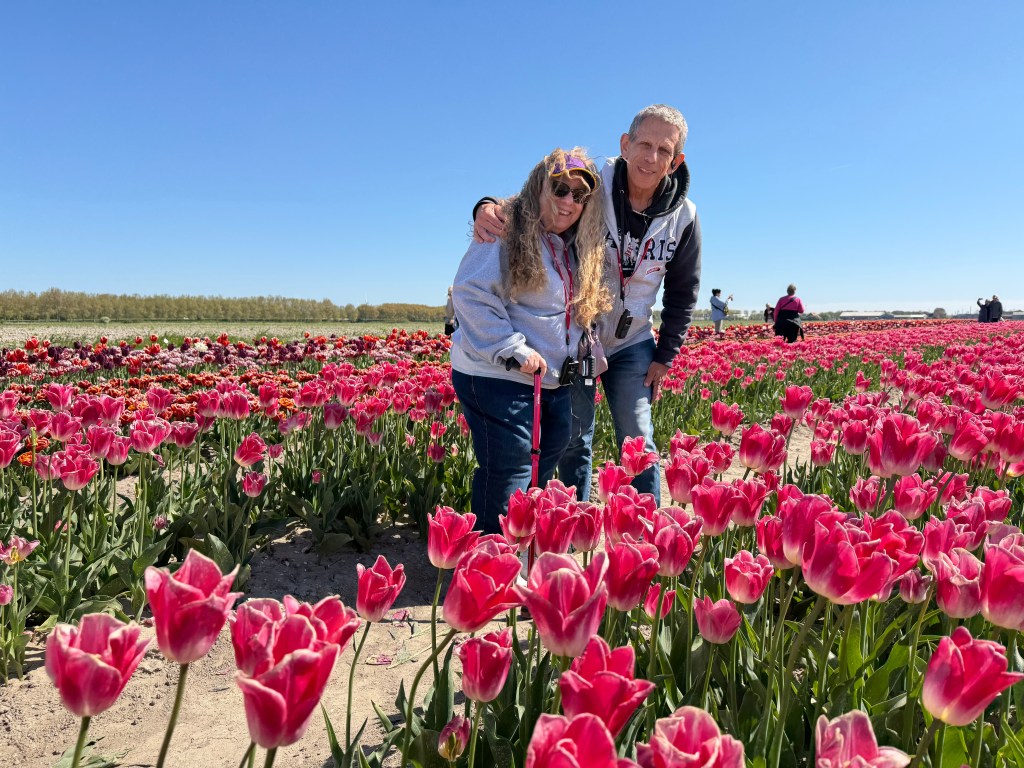
Here we are posing with the tulips. We are crouching, because the person who took the photo wanted to make sure we in the photo with the flowers. You can tell it was a windy day, because my hair is all over the place.

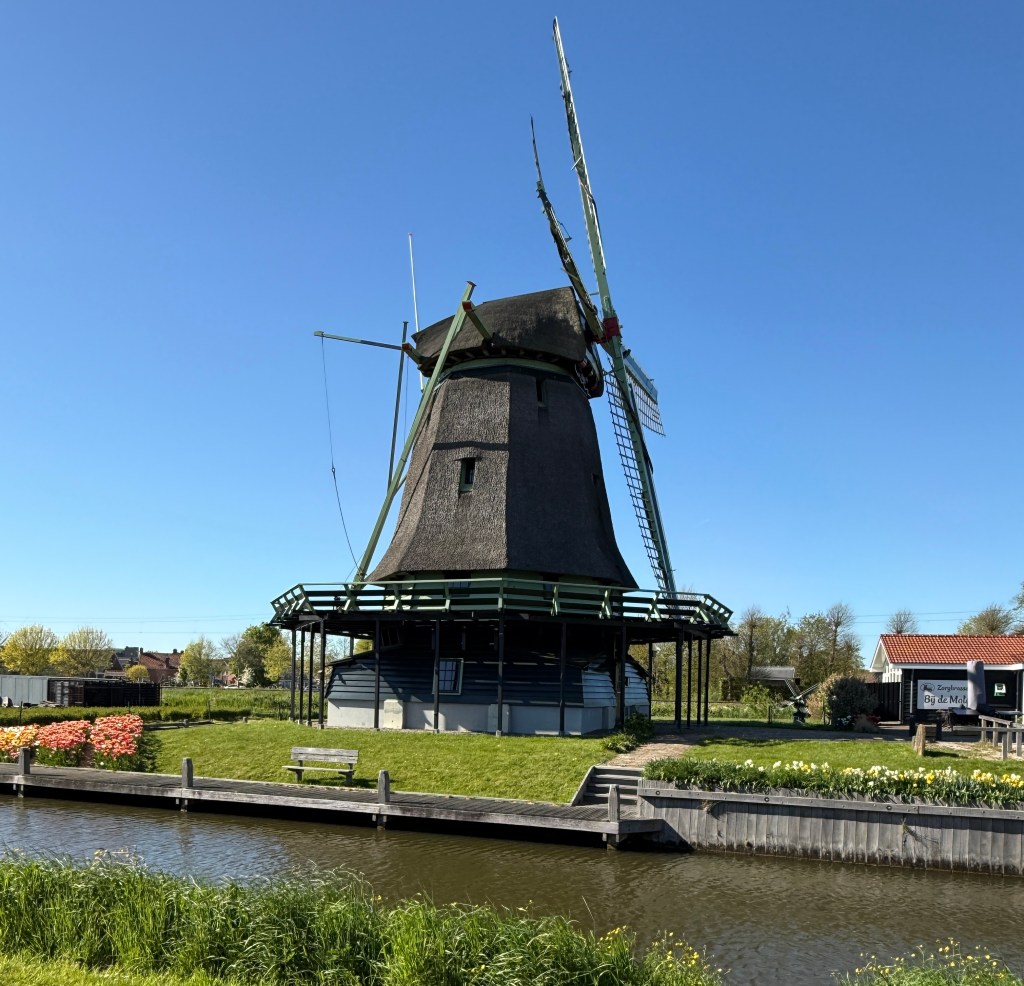
On the way back from the tulip farm to the ship, we had a photo op with a functional windmill. The mill wasn’t working while we were there, but it can and does grind wheat into flour.

So we have seen tulip fields and our first windmill.

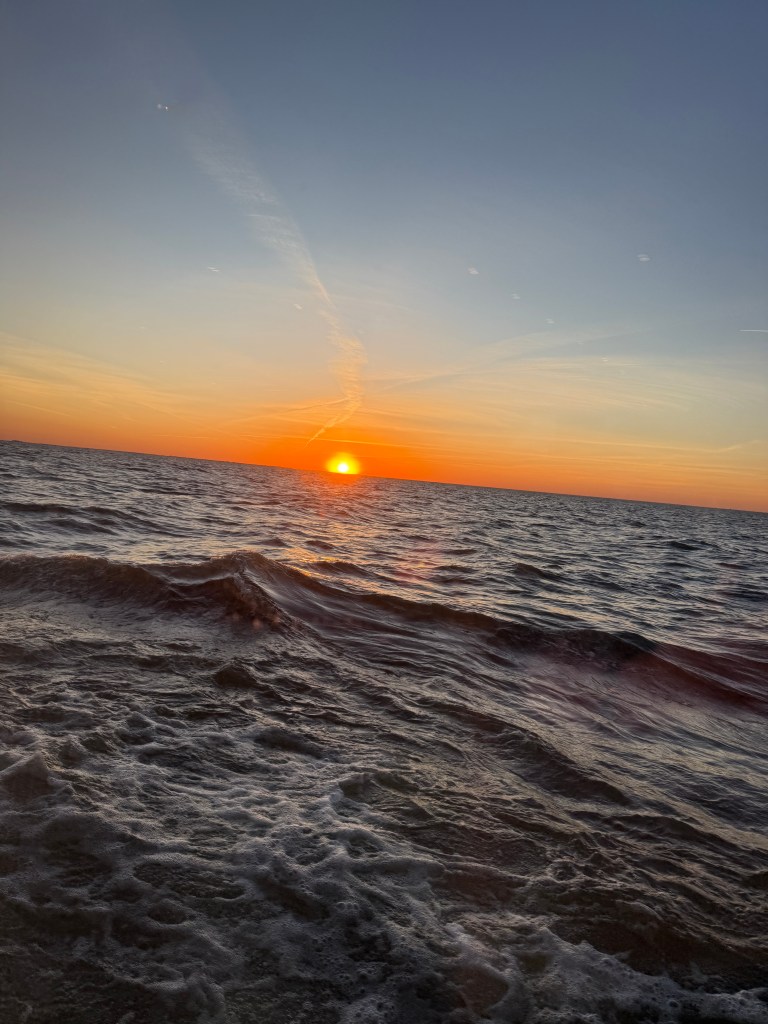
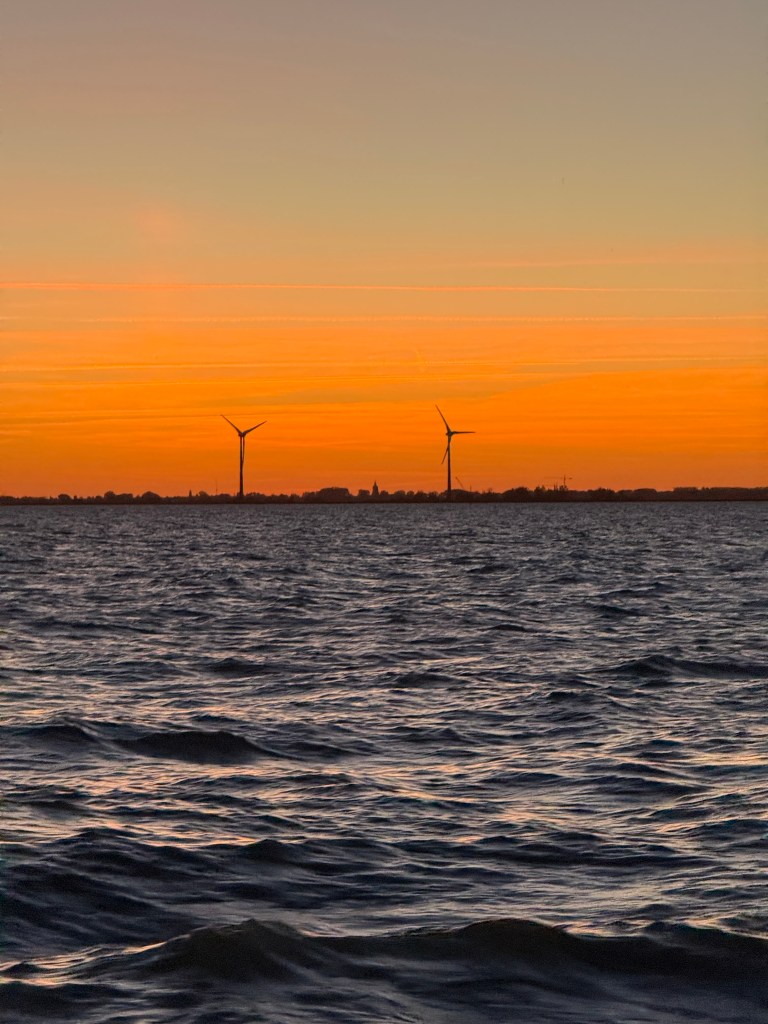
A couple of sunset shots:

Tomorrow: Arnhem

Amy & Andy’s Excellent Adventure 2026 Part 1: In Search of Tulips and Windmills – April 27

Where We Get To Experience The Dutch Version Of Amok Time

But Found Some Tulips

April 27 – King’s Day

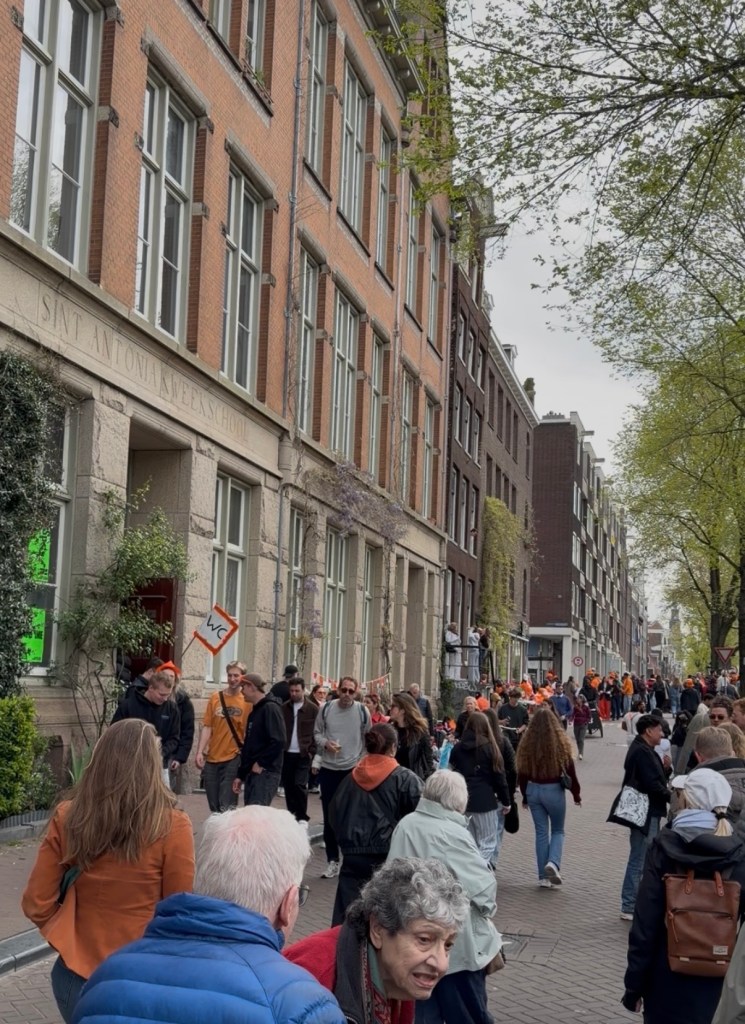
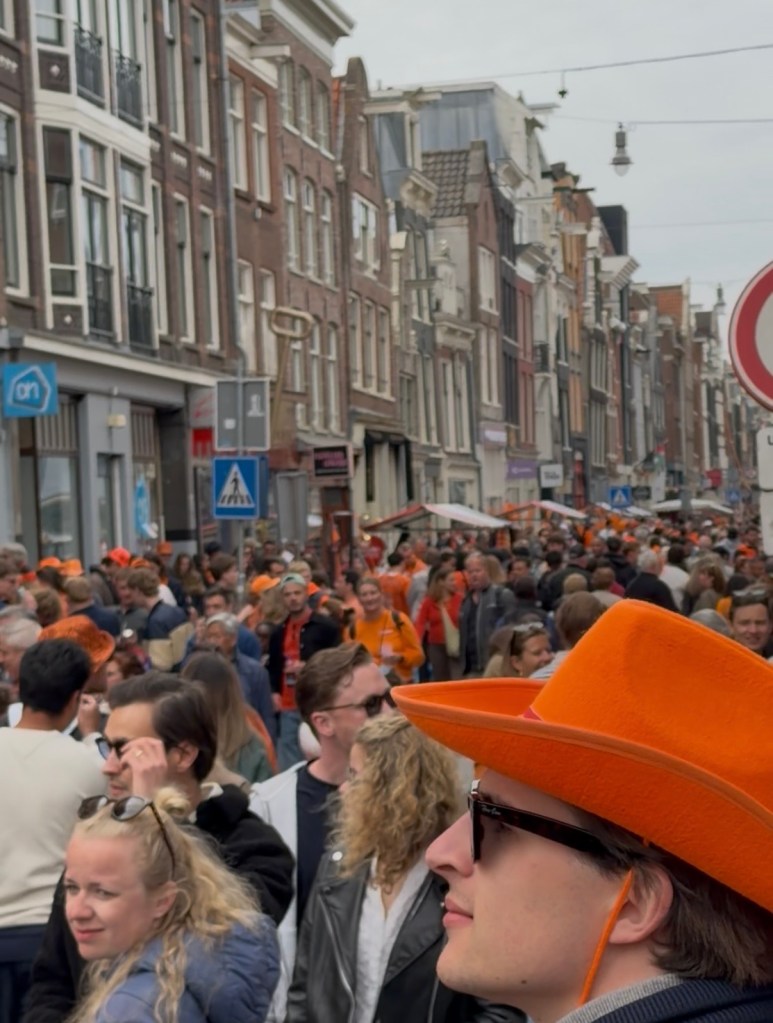
April 27 is King’s Day in the Netherlands. For a full explanation of King’s Day, take a look here. Briefly – it’s a national holiday to celebrate the birthday of the Dutch king, Willem Alexander. Everybody has a day off, and the country goes just a smidge meshuganah for a day. Oranage is the color of the royal family, who has connections to the Orange area in France from several hundred years ago.

Festivities had already started the evening of April 26. It was a bit of a challenge for our uber driver to work his way around the already closed streets filled with partiers to get us to our restaurant. This included a food delivery truck that parked at an odd angle one of the super narrow streets. The driver saw us in the uber car, and just continued on his delivery of fresh fruit and vegetables into an apartment building. Our uber driver gave the delivery guy and earful when he finally surfaced.

Getting back to the hotel was equally challenging, because by the time we left the restaurant partiers completely clogged the street and bridge where we needed to turn (which is apparently against one of the 9,324 rules regarding Konnigsdag). Our driver decided to proceed on at 1 mph, gently moving through the crowd as drunken people figured out that they were, in fact, standing in the middle of an active street. We should have gotten some video of that, but we were kinda amazed it was actually happening.

April 27 is the day we transfer from the hotel to the ship, but we had some time in the morning before we go, so we decide to put on our orange shirts and go in search of King’s Day festivities.

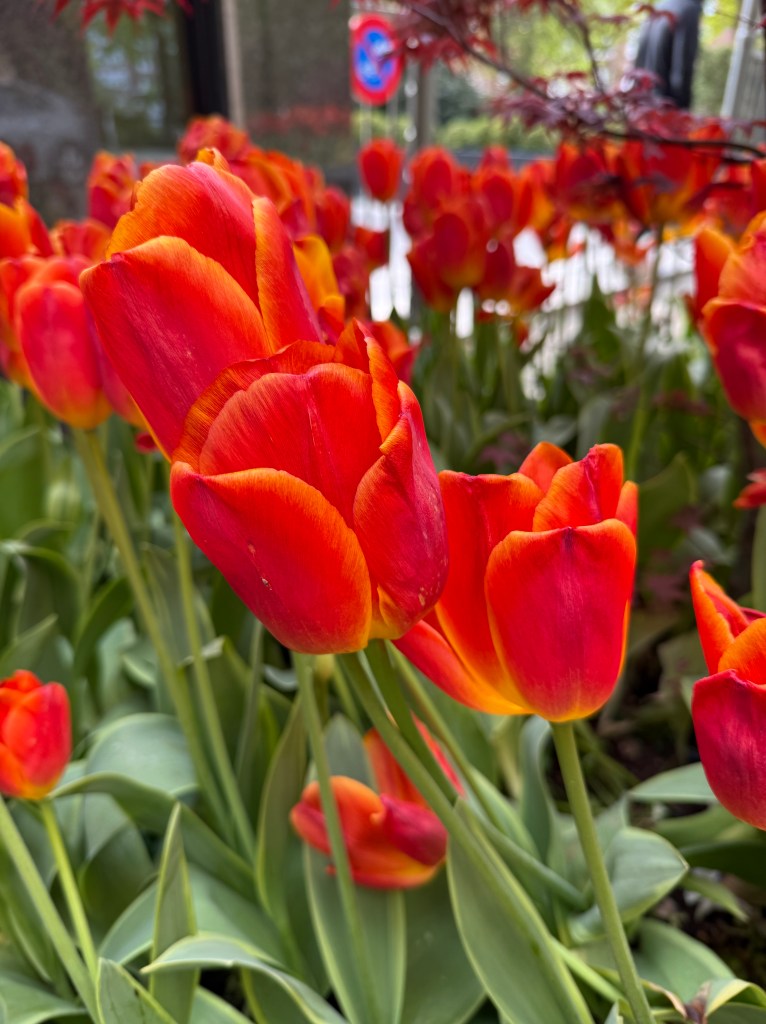
Tulips in front of our hotel

We started walking in the general direction of the city center, though we were warned to absolutely stay away from there due to the nuttiness.

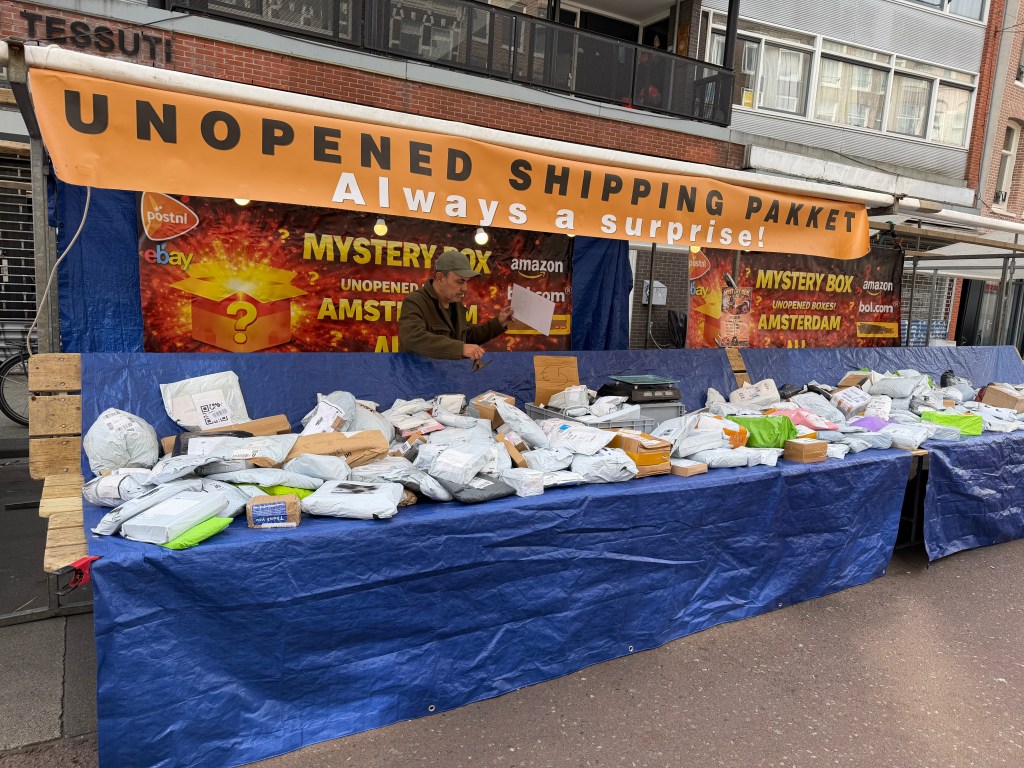
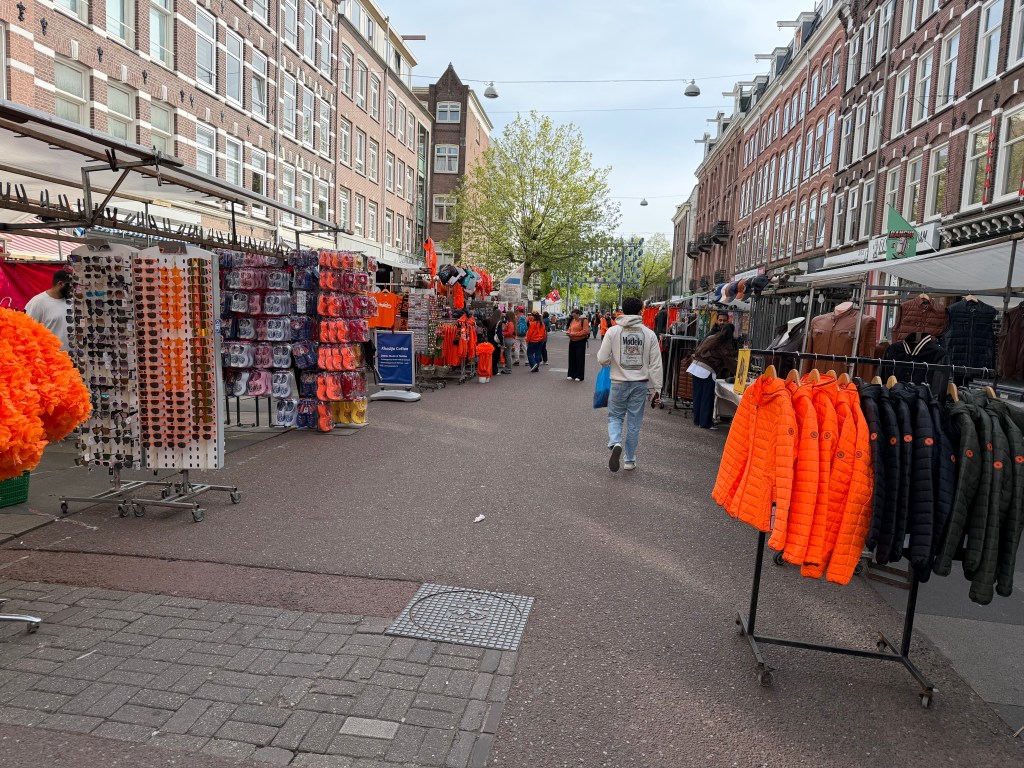
We went quite a distance before we found a street with some vendors. One of the Konnigsdag traditions is for people to bring out their own personal possessions that they want to get rid of; the entire country is one giant flea market. As one of our tour guides said, “People sell their junk and then buy somebody else’s junk”. The street we were on had actual stores who moved their items out onto the street. We ended up buying a few things, including some packages of certified-for-import-to-the-US tulip bulbs for people back home. This was a good thing, because the flower market was closed, and I wasn’t sure where else we’d be able to buy bulbs.

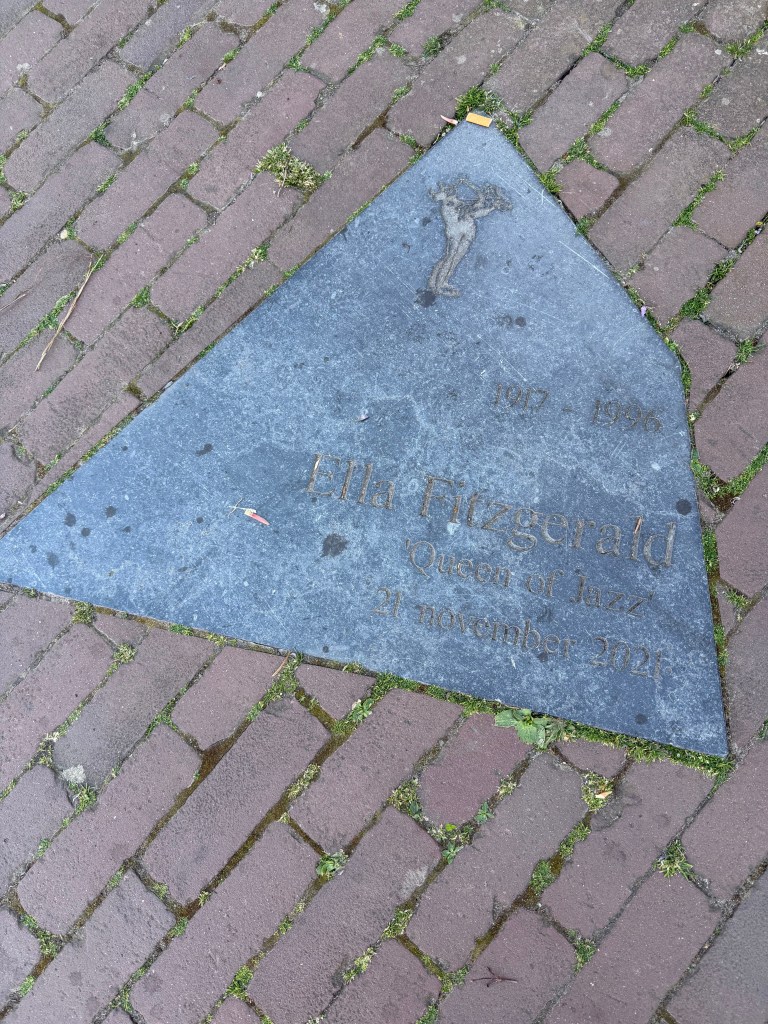
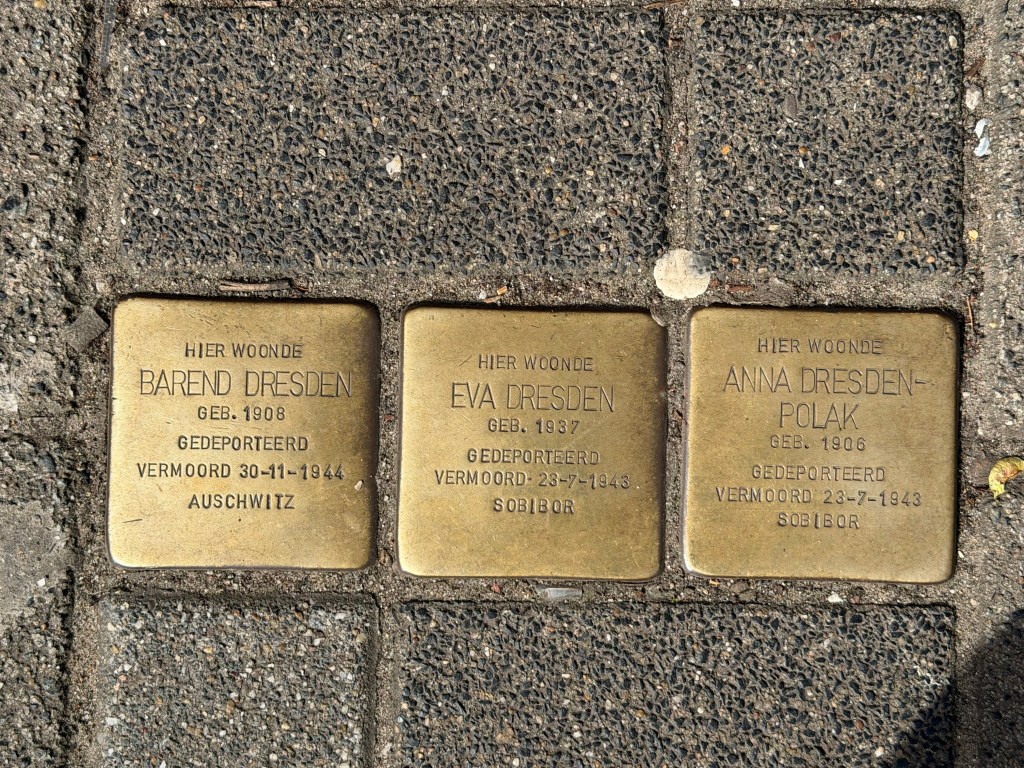
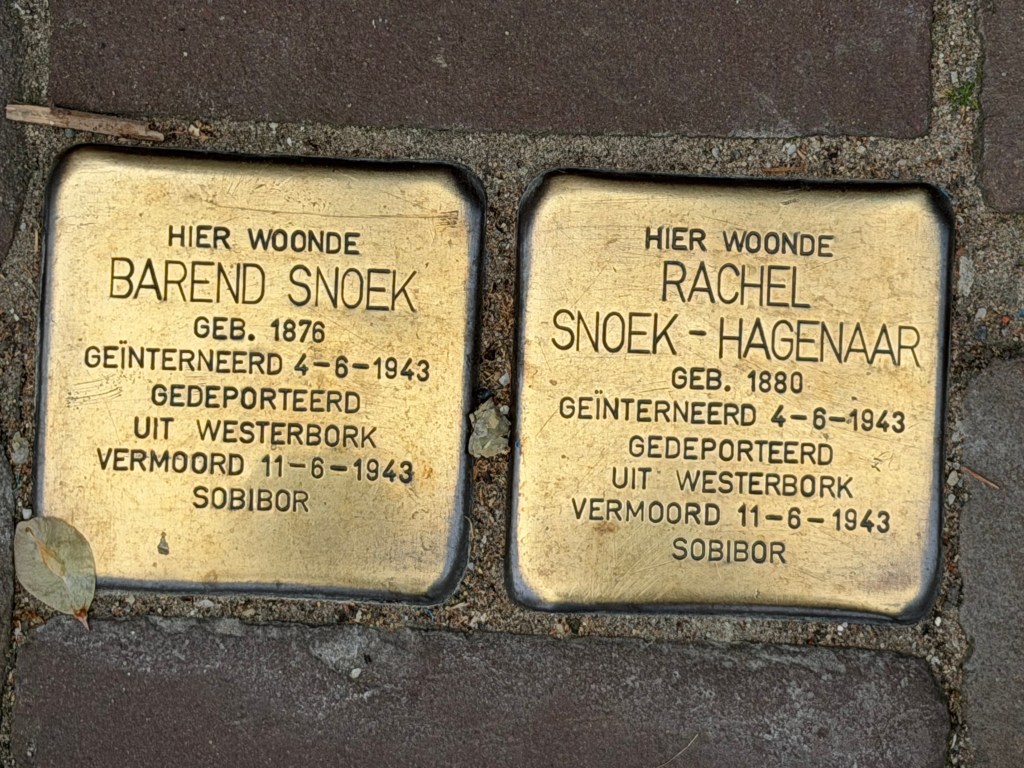
And then there were the stumbling stones, are reminder of the Dutch Jews lost during the Holocaust.

We arrived back at the hotel just in time for the group photo that hopefully we’ll get from the ship’s program director at some point.

The transfer to the ship was as smooth as always. We were scooted off to lunch immediately upon boarding, while we waited for our stateroom to be ready.

We decided to go on the 3:30 p.m. “Welcome Walk”, even though we’d already been on a walking tour. Our first tour was from our hotel in the southern part of the city. Now we were in the northern part of the city, so we expected it to be different.

Which it was. We walked directly into clumps of partiers, making navigation entertaining.

Other photos from our walk, once we pushed through the parties.

Since our ship was docked next to a bar overflowing with partiers. Our tour guide realized that the bar *could* just move aside one of the temporary fences and let us walk through to the dock avoiding the long walk up the block and then back down a cobblestone ramp. It took some convincing – not sure the bar owner thought we were going to do by climbing through her fence – but eventually she relented. Maybe we all looked pathetic enough, who knows.

Our first dinner was great – we had a fantastic conversation with 4 brits. And this is what traveling is all about.

Tomorrow: Canal cruise and hopefully the Jewish Museum.

Amy & Andy’s Excellent Adventure 2026 Part 1: In Search of Tulips and Windmills In The Netherlands (April 24, 25, and 26)

Which All Could Have Been One Very, Very Long Day, As Far As My Brain Is Concerned

April 24 Getting Ourselves To Amsterdam

It was all going extremely well – we arrived at the airport, checked out bags, with plenty of time to spend in the Unite lounge. Scooted to the gate, picked up the tag for the gate check of my transport chair. We even made it as far as the door to the plane.

And then the crew came out of the plane and told us we needed to go back to the gate.

Yada, yada, yada, apparently the anti-skid brakes were not working and could not be fixed. Good news! United found us another plane. Not so good news! It was on its way back from Paris. Our flight was originally supposed to depart at 5:30 p.m. The new plane wasn’t even going to arrive at Dulles until 7:30 p.m.
Which it did, but then it had to be cleaned/serviced/checked out.

At one point we were taxiing around the tarmac so long, I thought we were going to drive all the way to Amsterdam. Yada, yada, yada, we finally took off somewhere around 11:00 p.m.

Fortunately, the flight itself was easy, and I managed to get a little sleep. We landed at about noon.

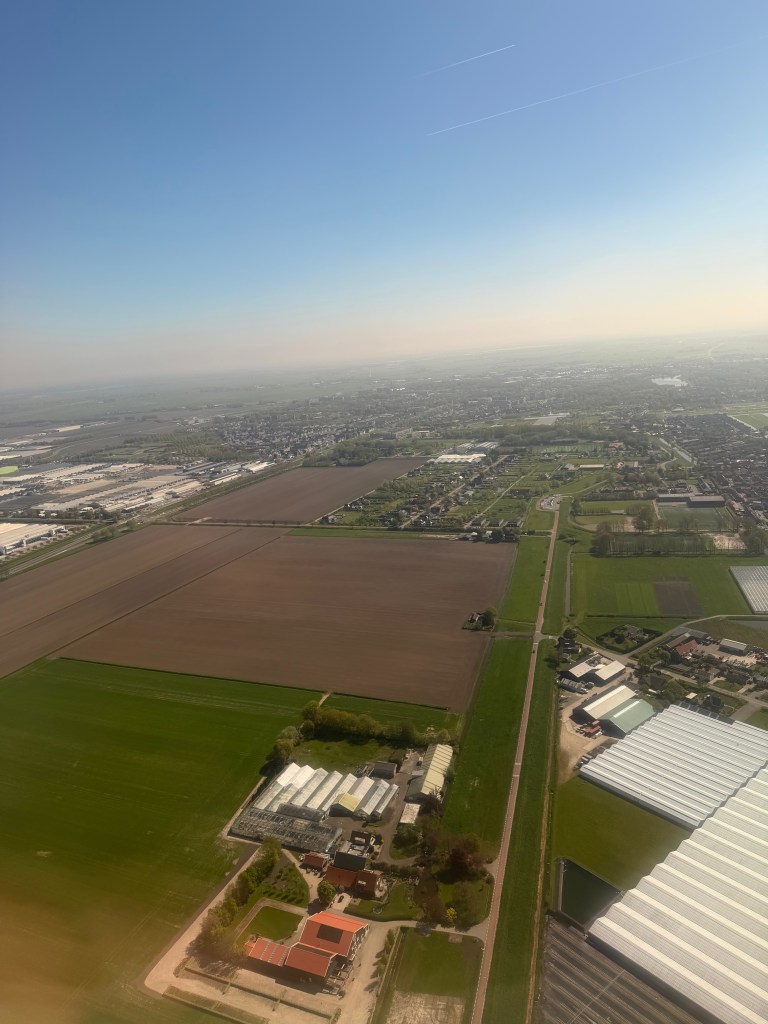
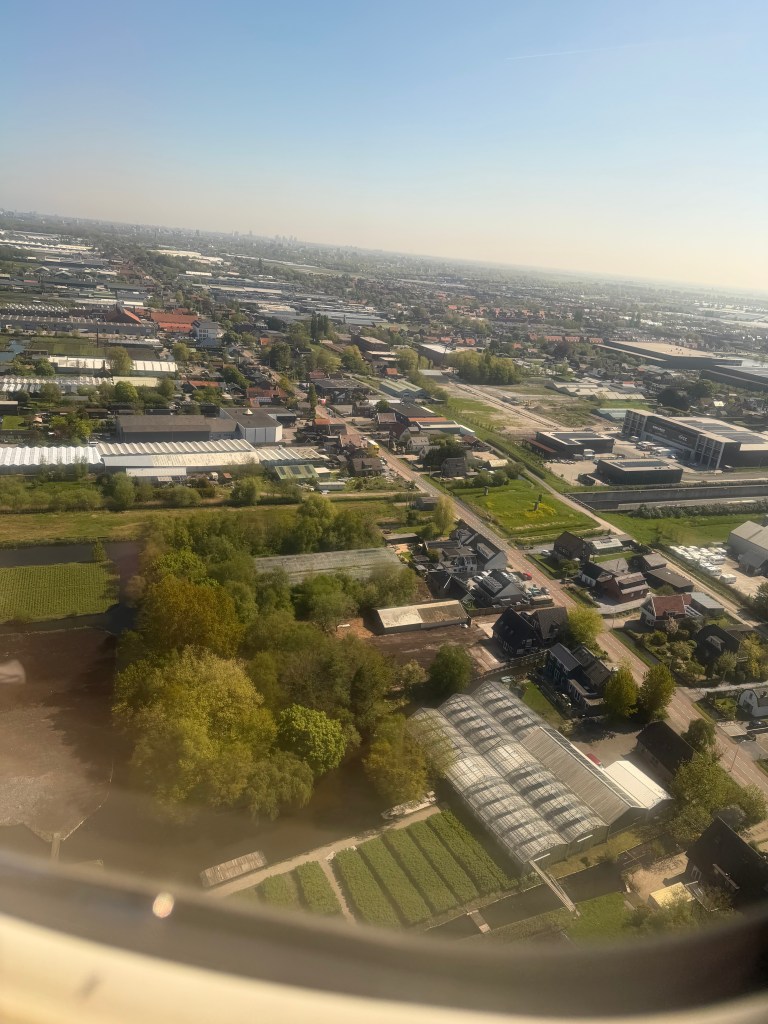
We were hoping to get a glimpse of tulip fields as we came in for landing, but no such luck.

April 25

We found the Viking rep, who found our driver to take us to the hotel.

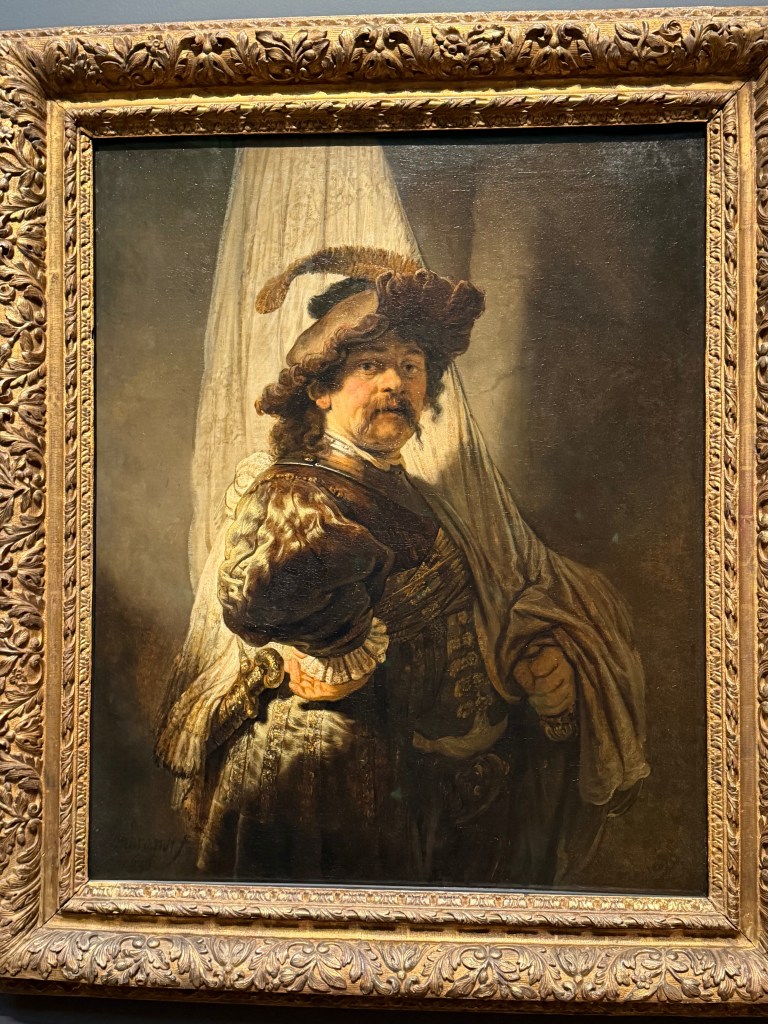
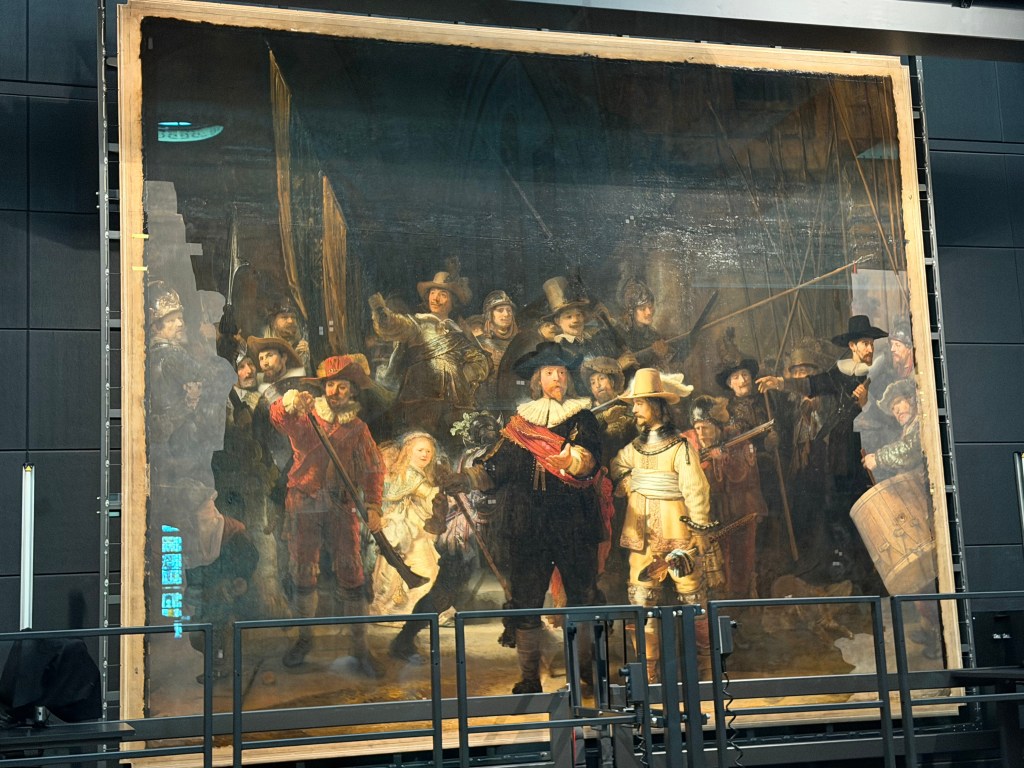
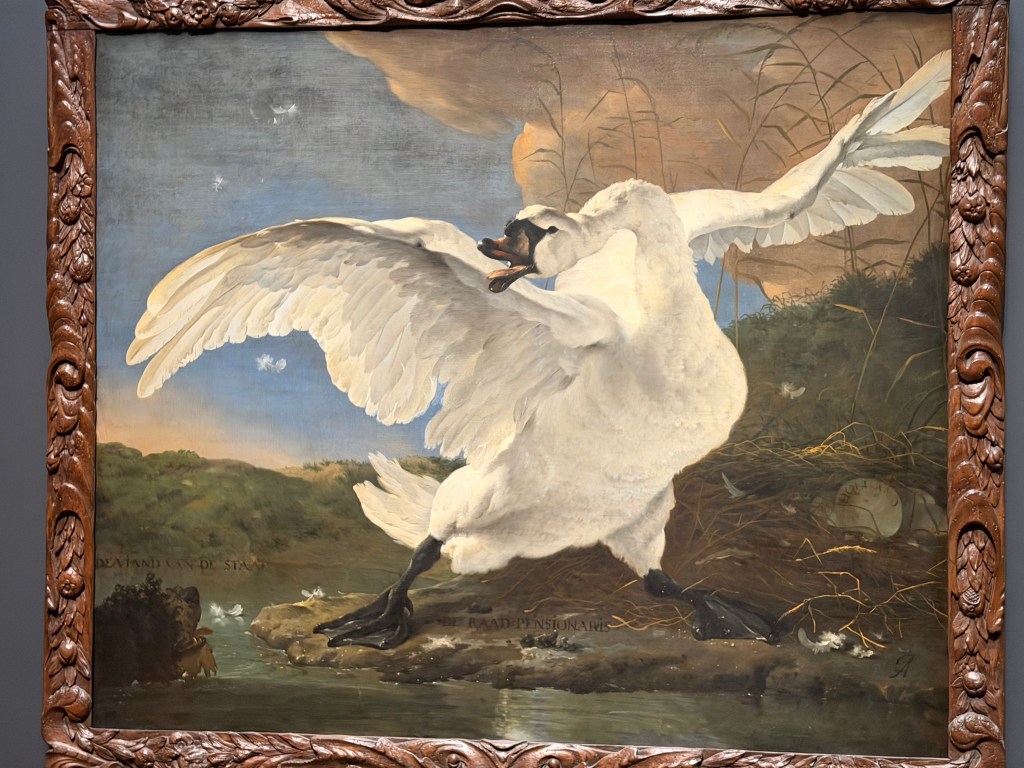
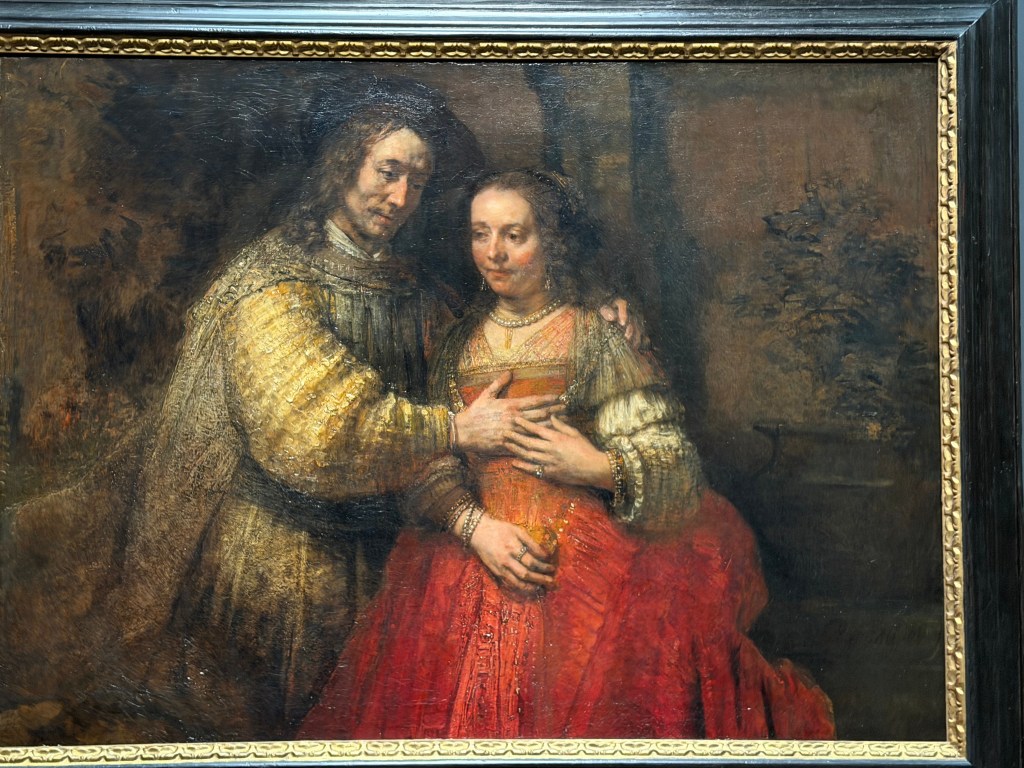
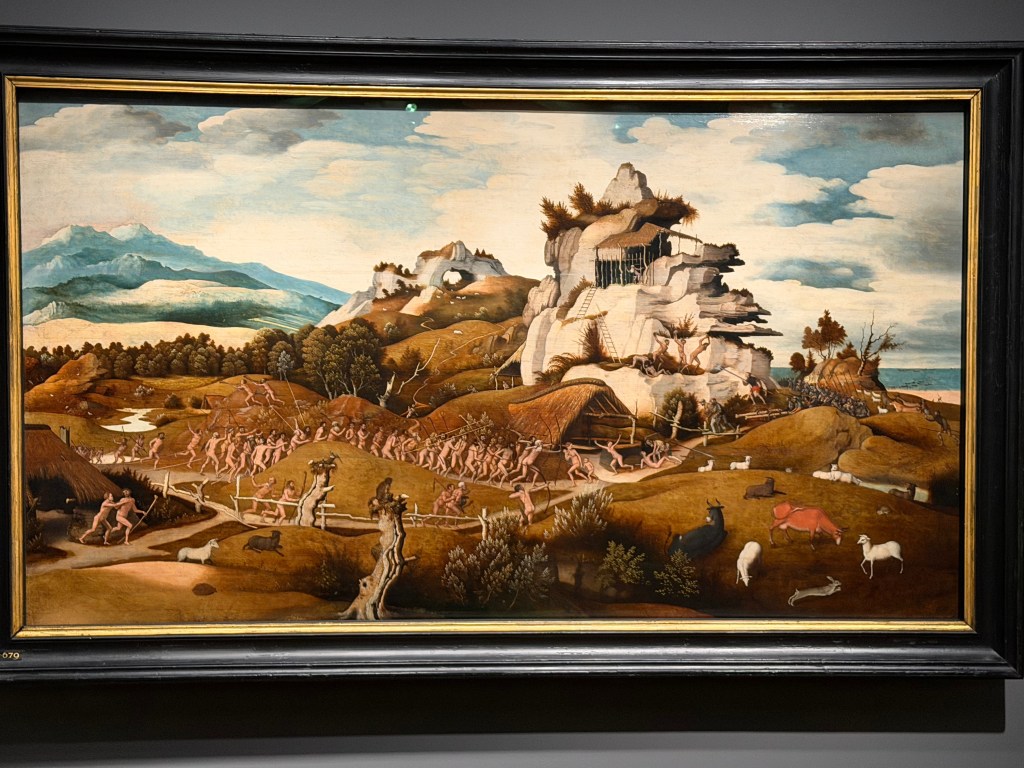
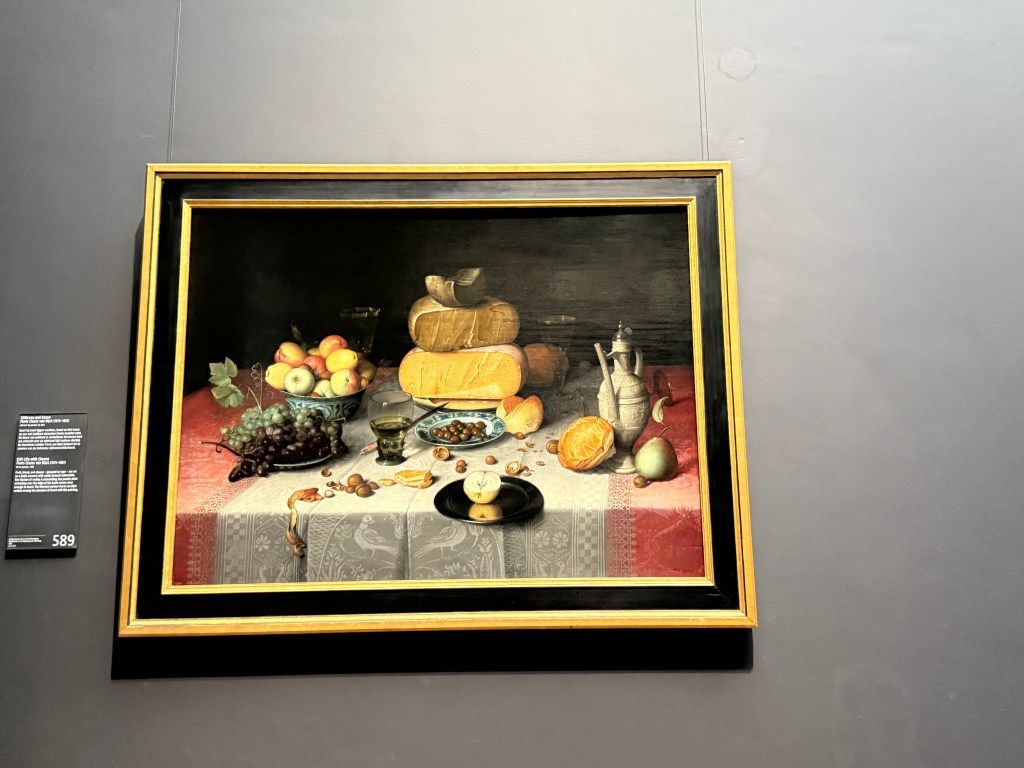
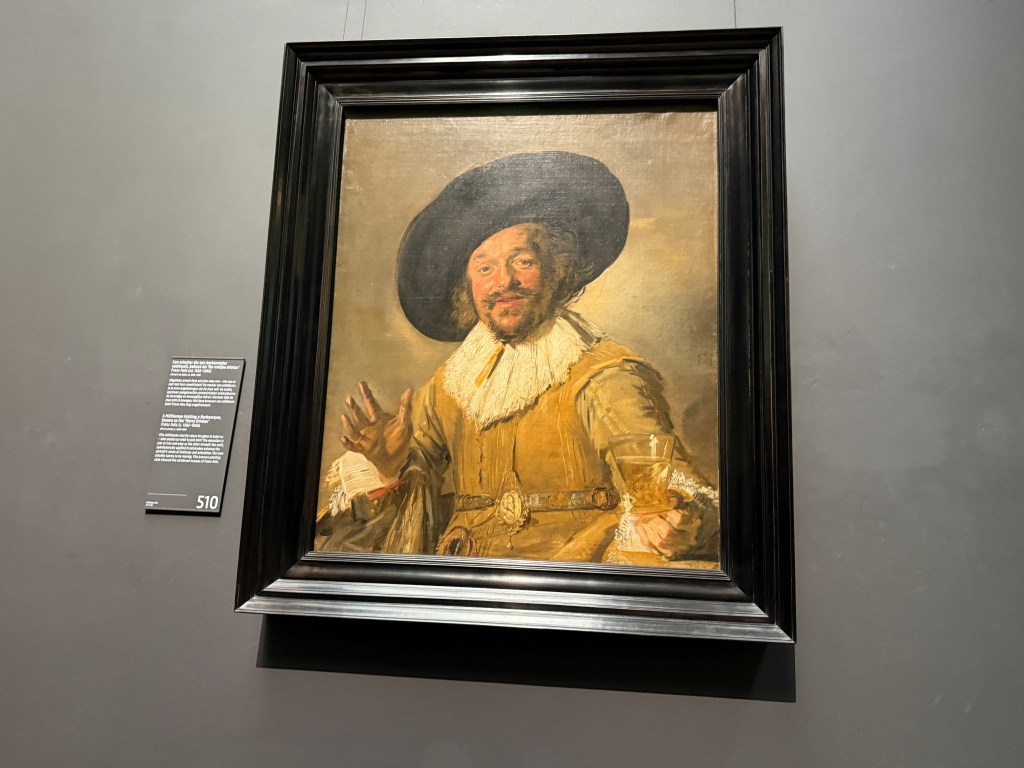
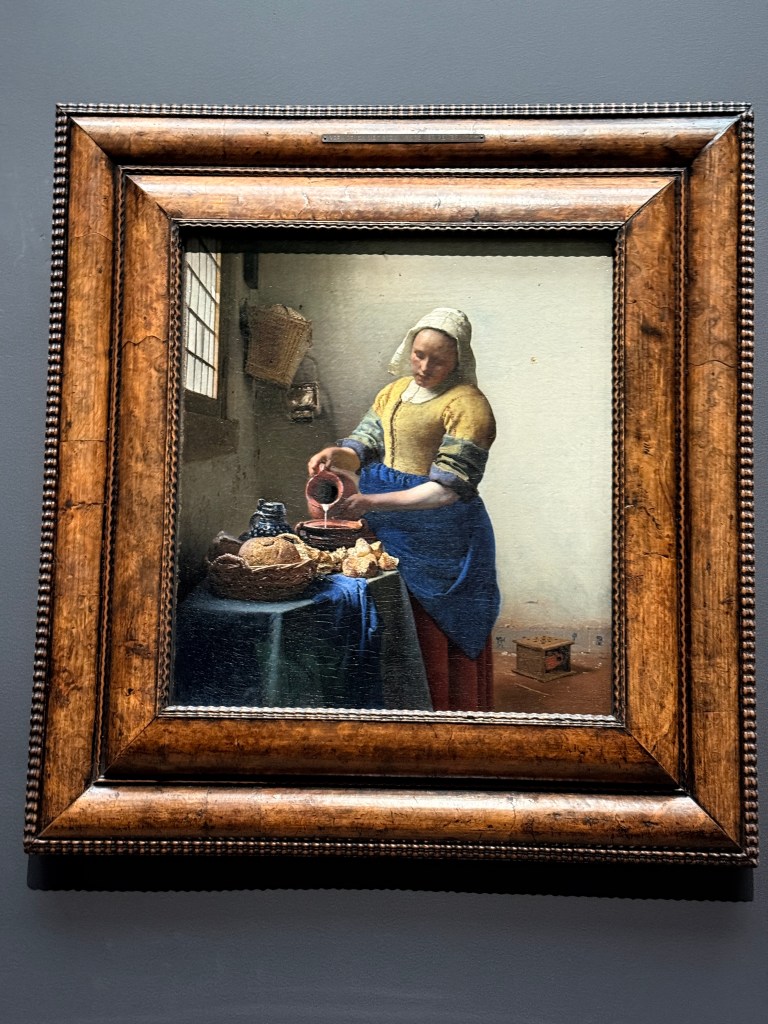
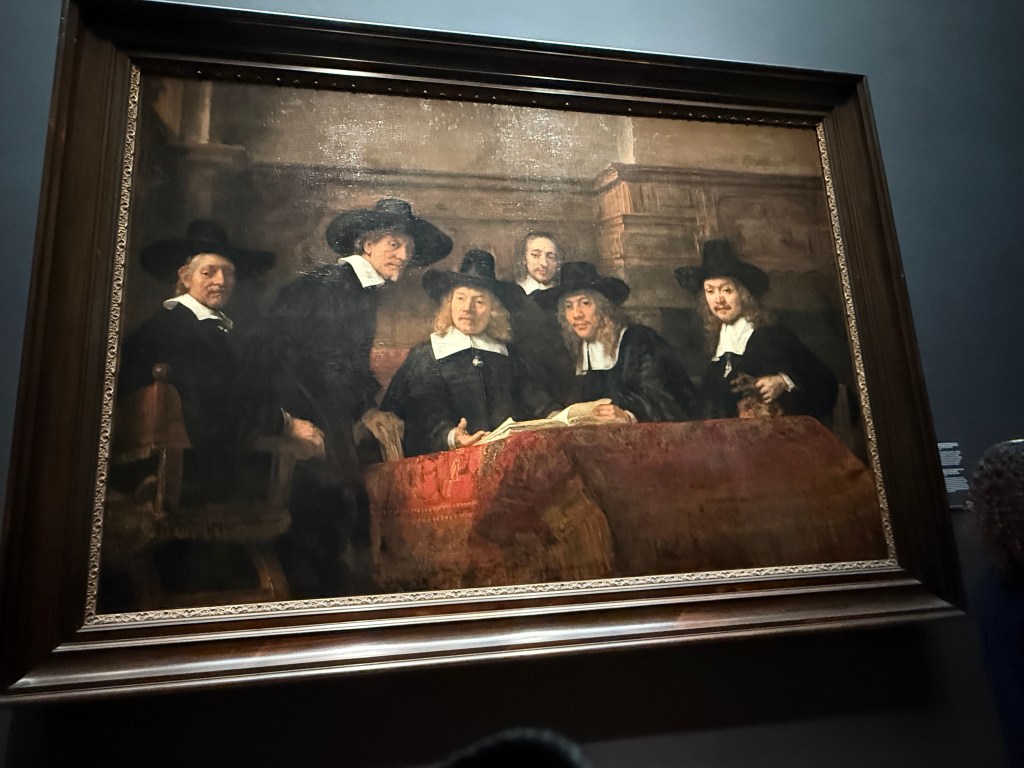
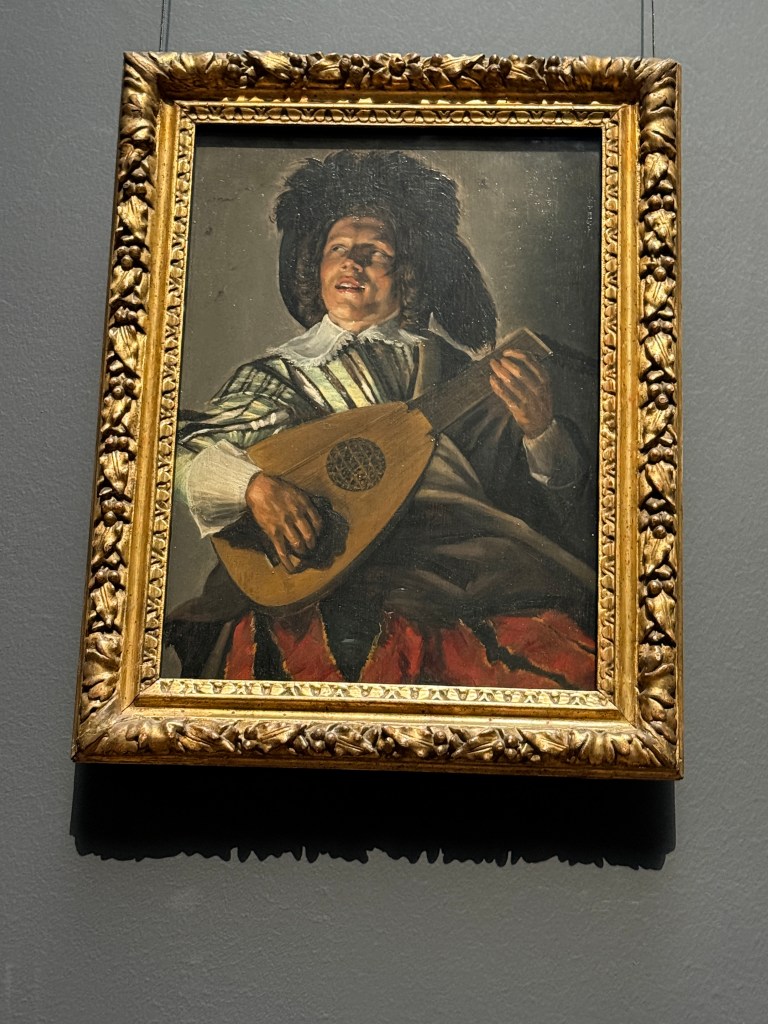
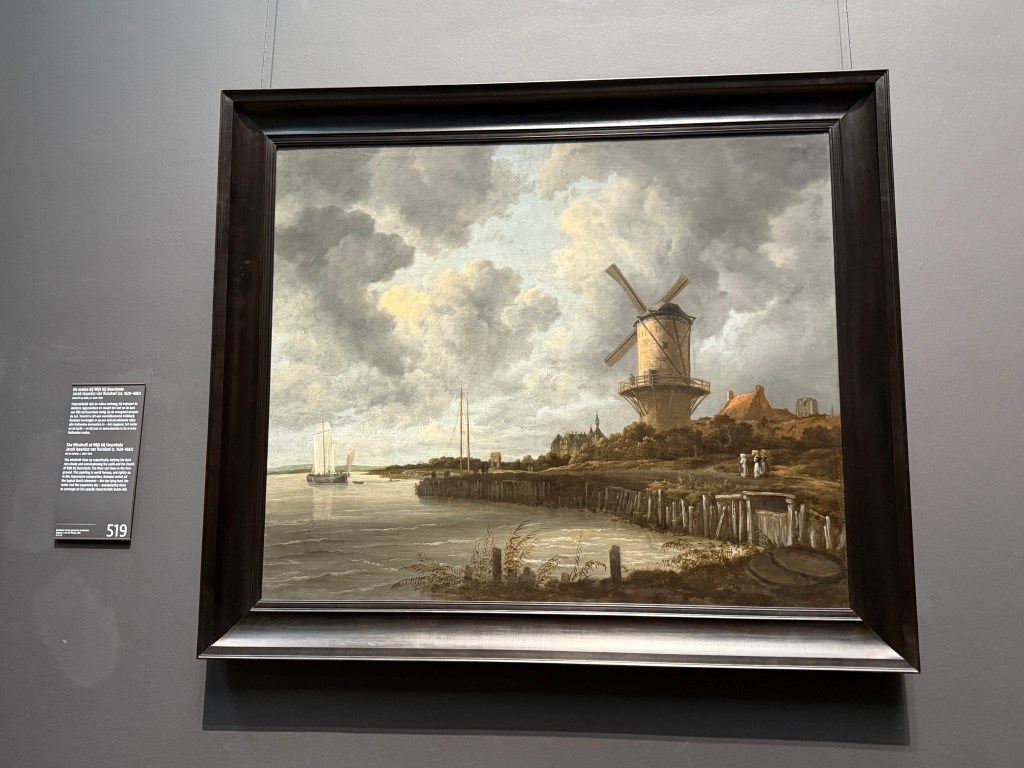
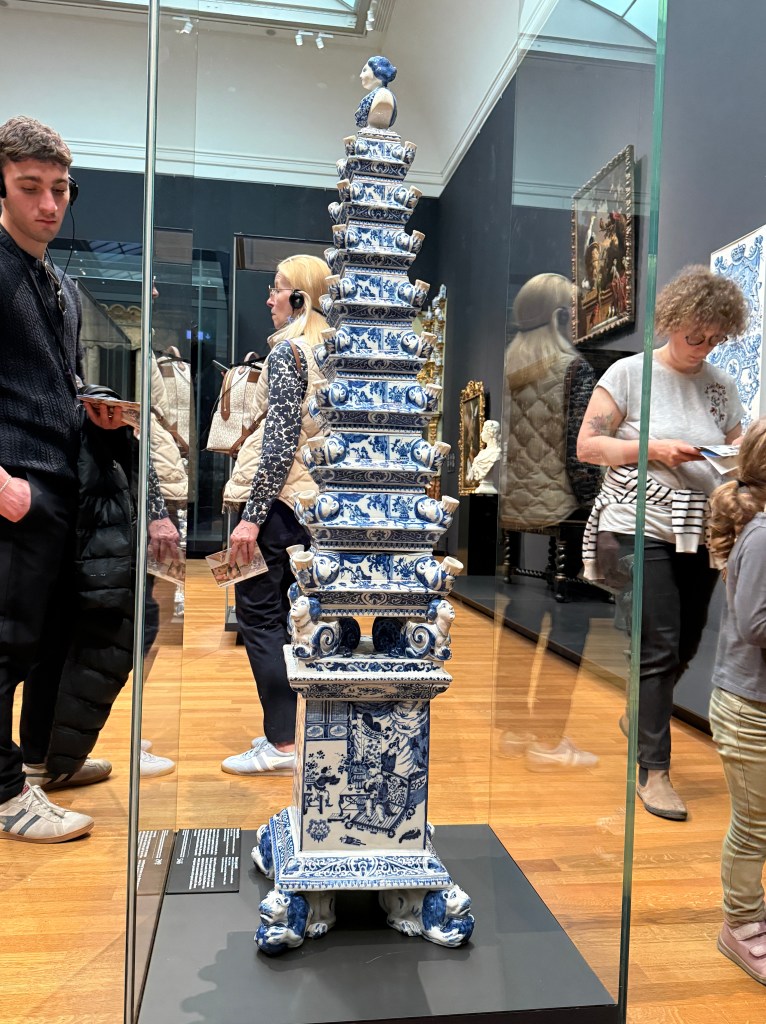
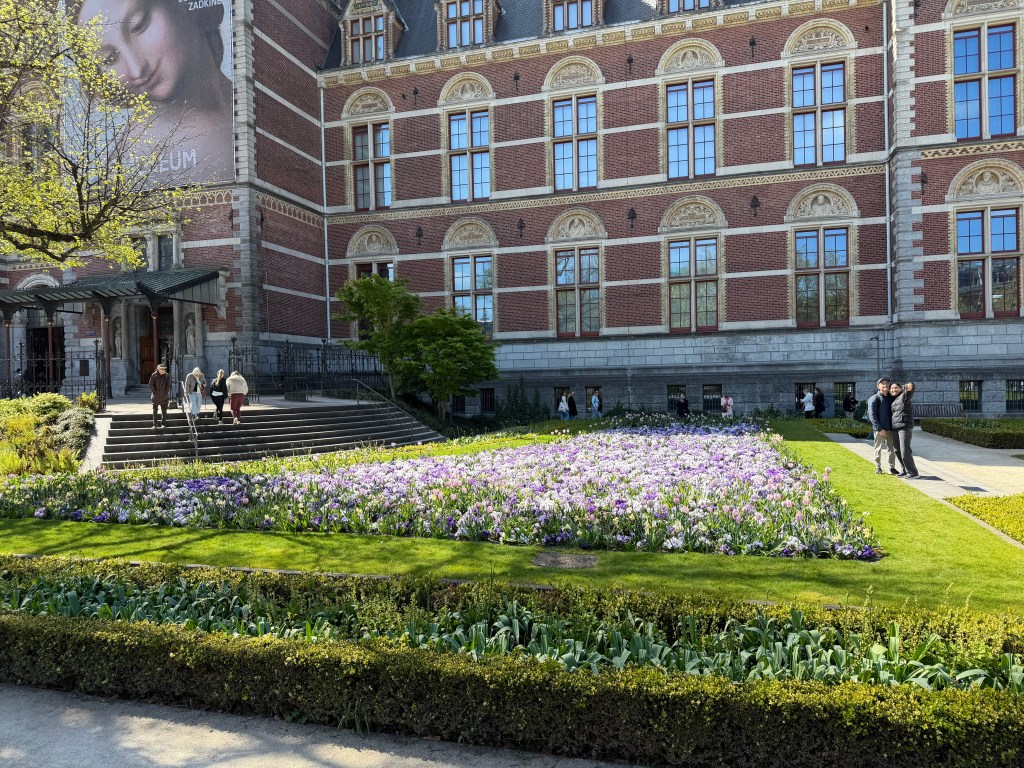
Months ago I bought tickets to the Rijksmuseum with an entry time of 1:00 p.m. for the special exhibit. By the time we were ready to leave the hotel, it was 1:45 p.m. We arrived at the museum right after 2:00 p.m. So no special exhibit for us (it was free anyway), but we had 3 hours before the museum closed to wander around. I had also purchased the audio tour, which had a “highlights” version. Sounds like a plan.

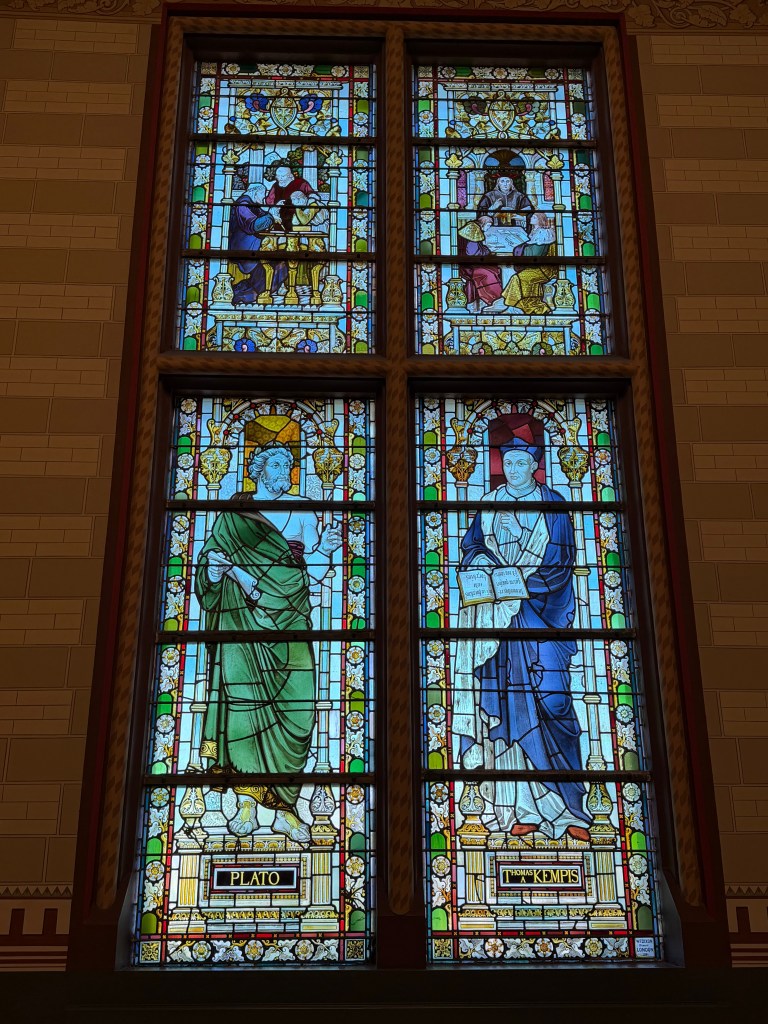
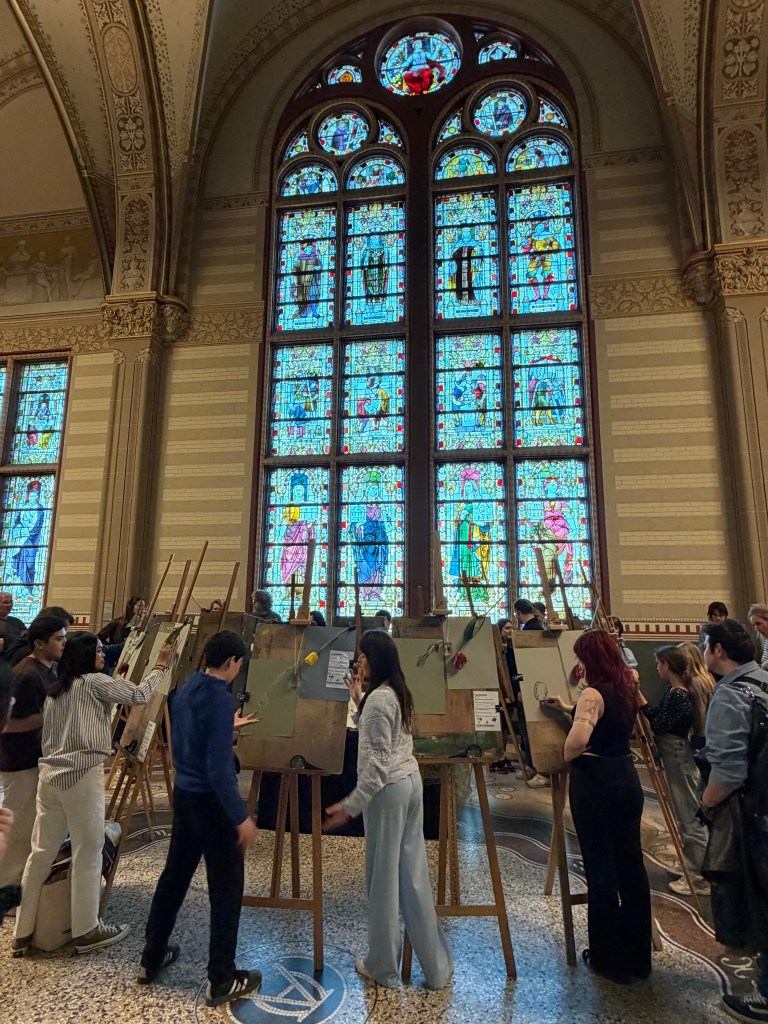
The last time we were in the Rijksmuseum some eternity ago, everything had been under tarps and scaffolding for renovations. This time, everything was open and tarp-free. In the 3 hours before the staff started shooing us out of the building, we managed to see just about everything on the tour.

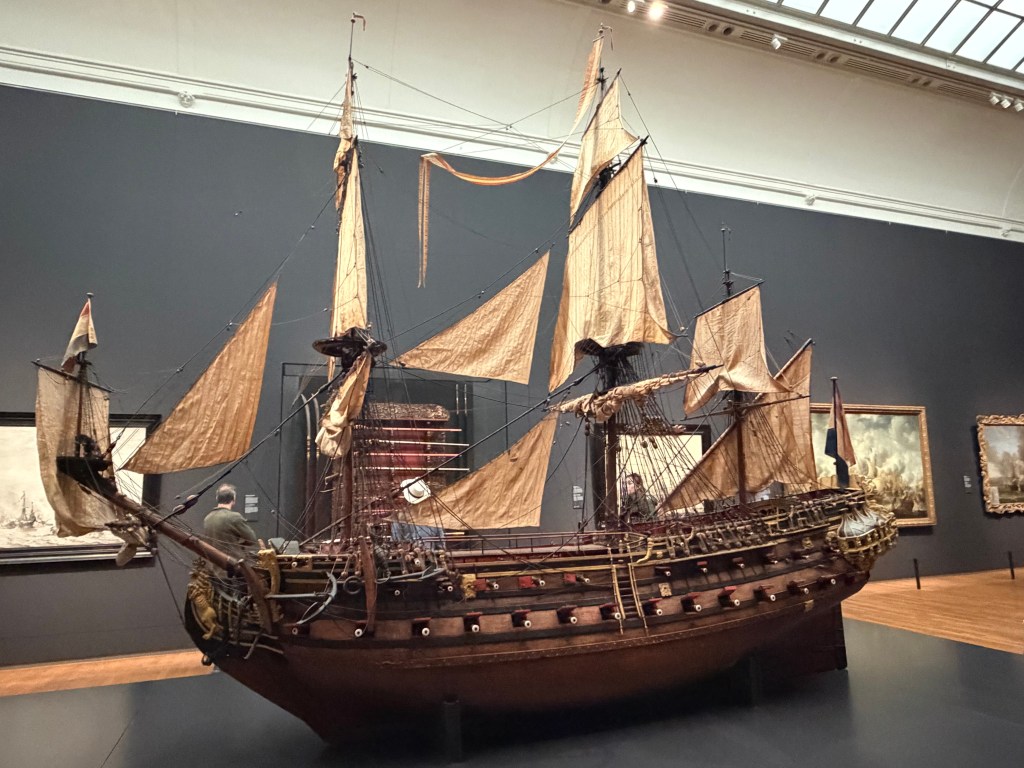
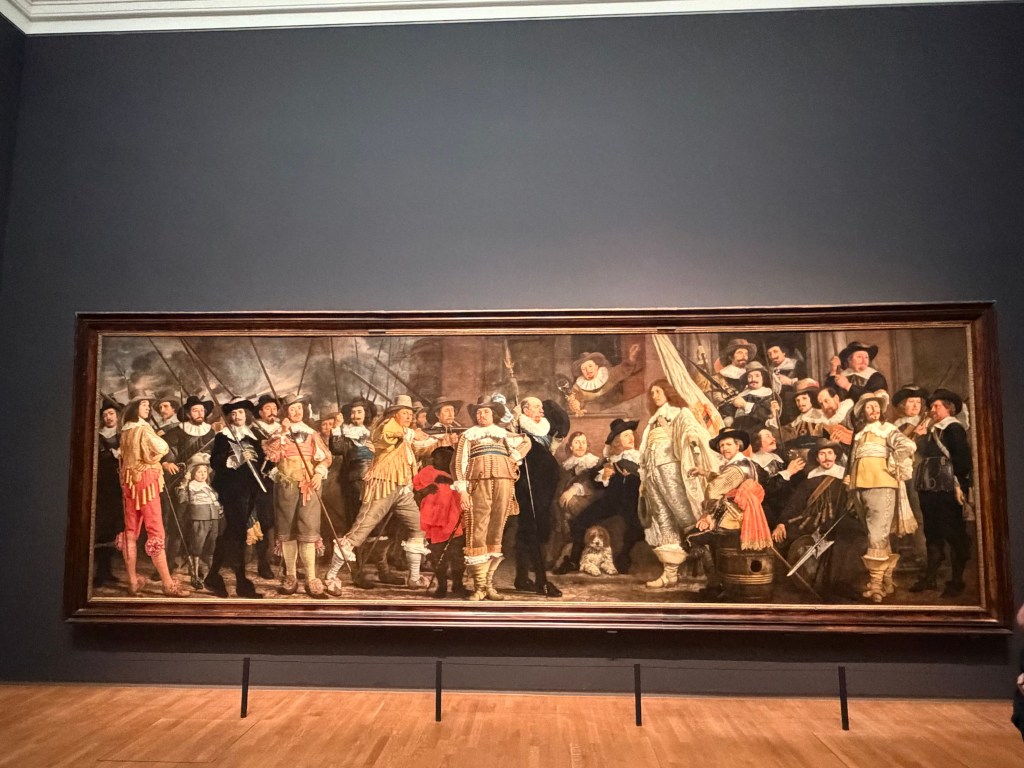
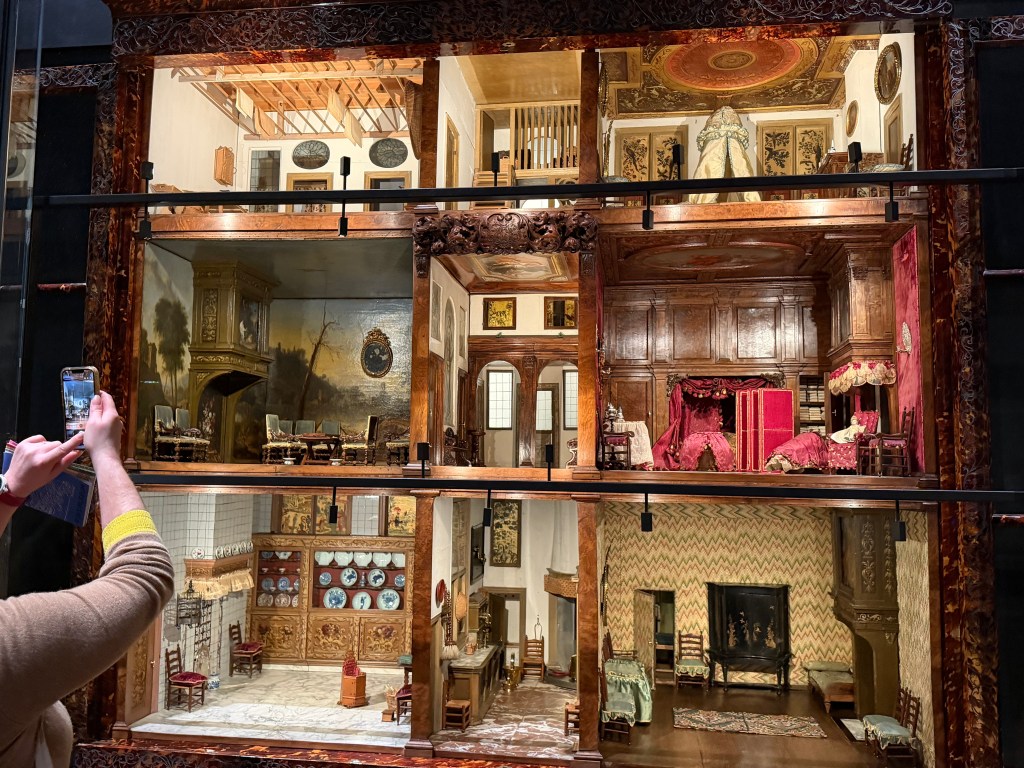
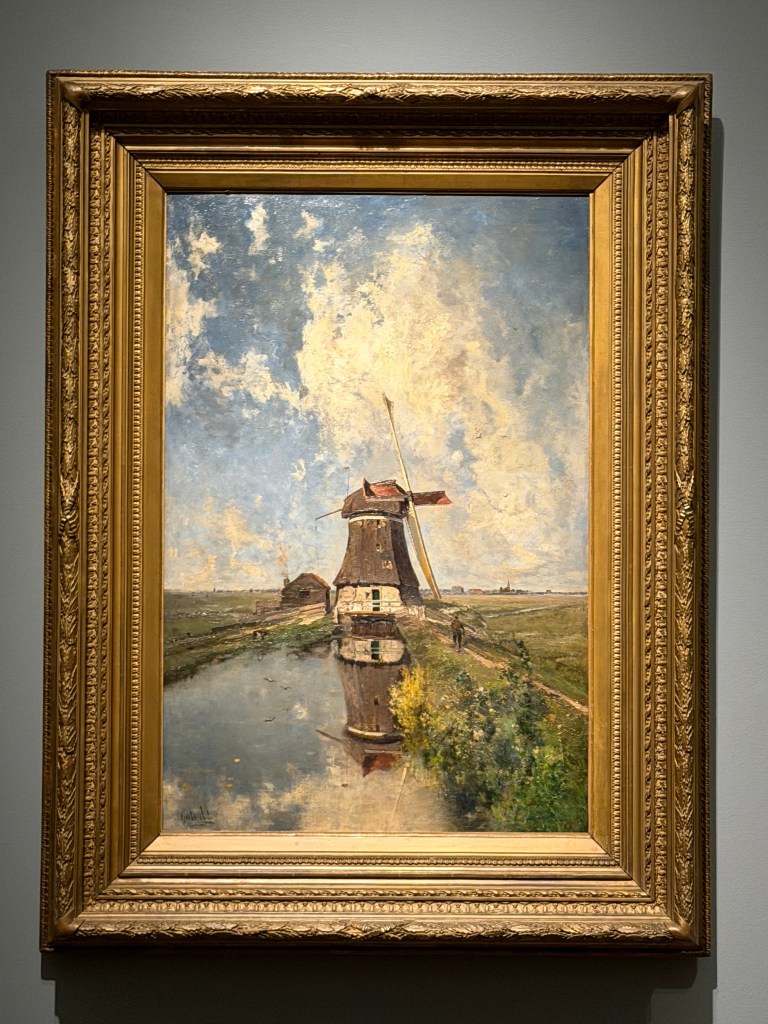
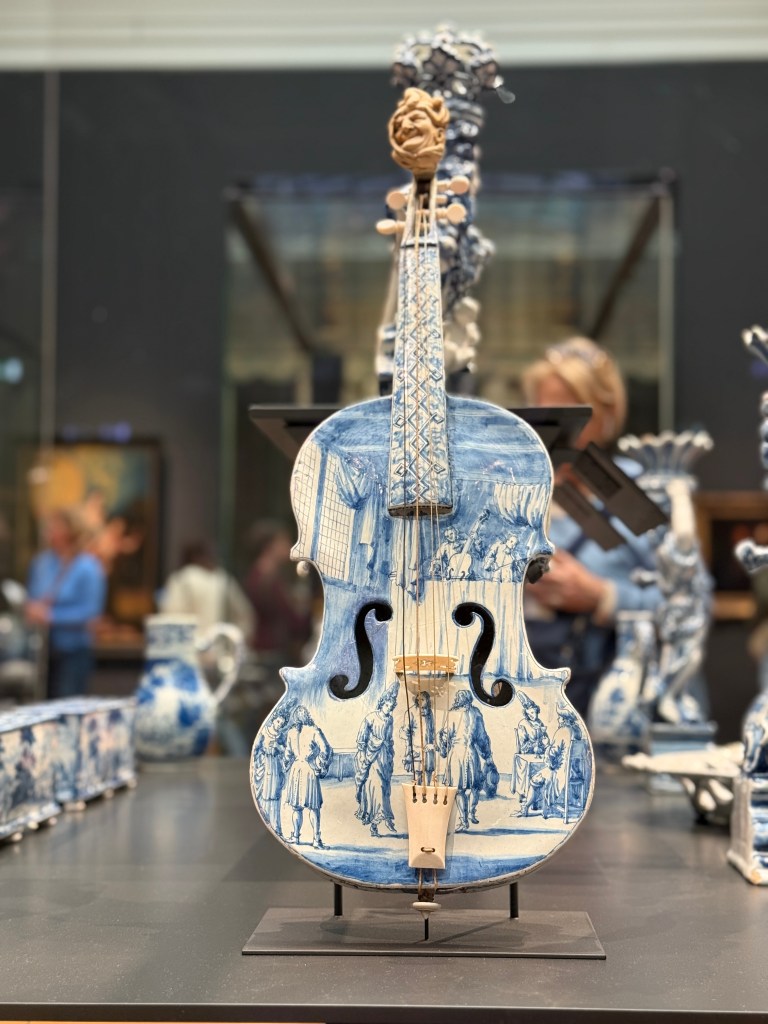
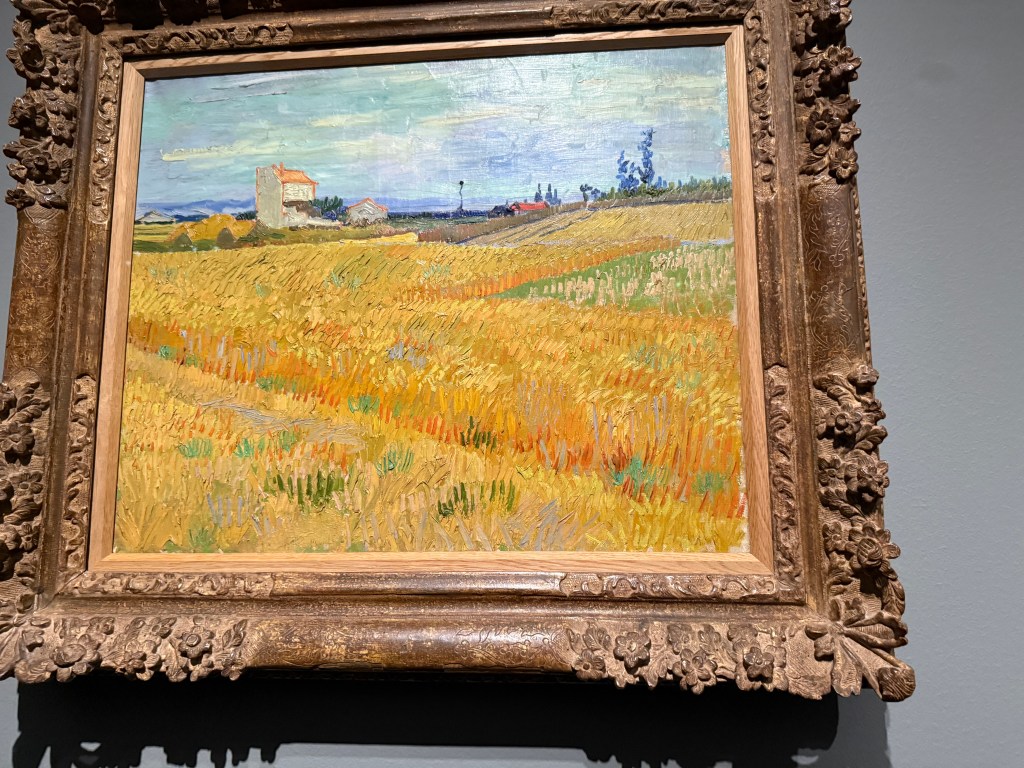
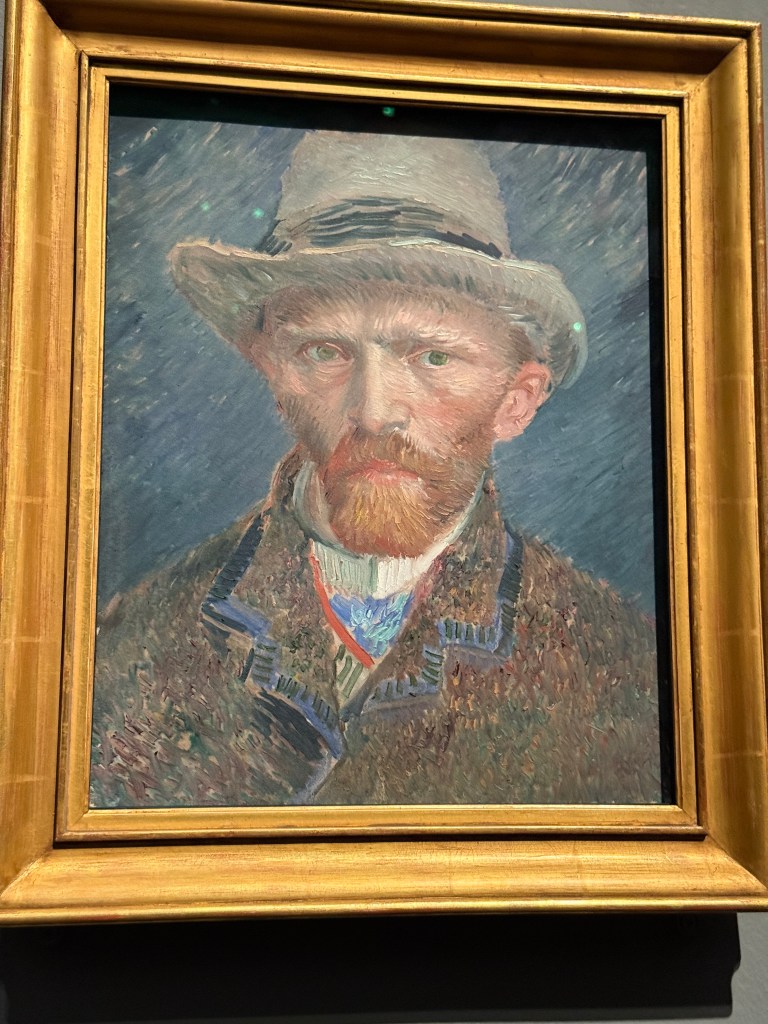
The photos below are not in any kind of order, other than whatever my macbook wanted to do.

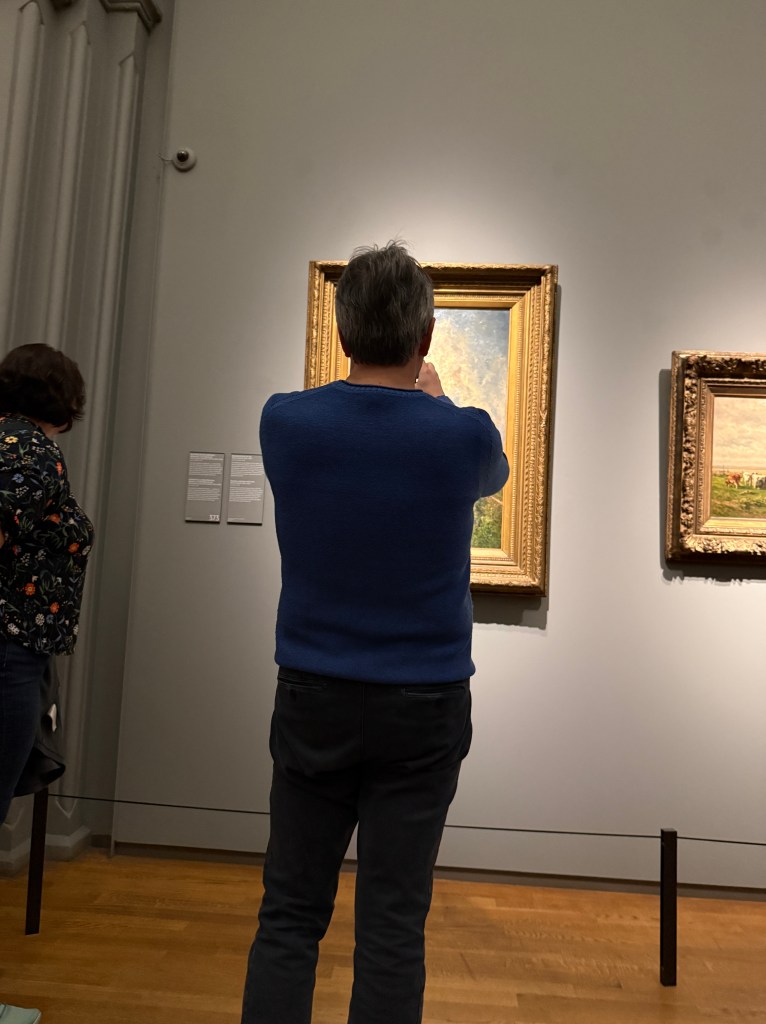
Though possibly my favorite is this one. This guy saw me hold up my phone to take the photo and stepped right in front of me.

We had dinner in the museum’s coffee shop, for expediency more than anything else.

When we got back to the hotel, we knew we had to stay awake just a little longer, so we went downstairs to one of this hotel’s many restaurants and had some ice cream.

April 26

We got up Sunday morning feeling a lot better. We were scheduled for a walking tour with the Viking group. For long walks like this, Andy drives me around in a transport chair. The only time we have issues is when the streets and sidewalks are all cobblestones. We had already talked to the Viking rep about this, and she seemed to think we would not be able to go at all.

By 9:30 there were 4 groups set up. The first 3 tour guides said absolutely not, we could not come because of the transport chair. The fourth tour guide said, “Well, if it reaches the point where you can’t continue, you can always stop and take an uber back”. This sounded like a reasonable plan.

Spoiler alert! We made it all the way for the entire walking tour, because there were almost no cobblestones. I’m beginning to think that the tour guide and the Viking rep think “cobblestones” means something different from what we’re thinking. The sidewalks were no problem at all.

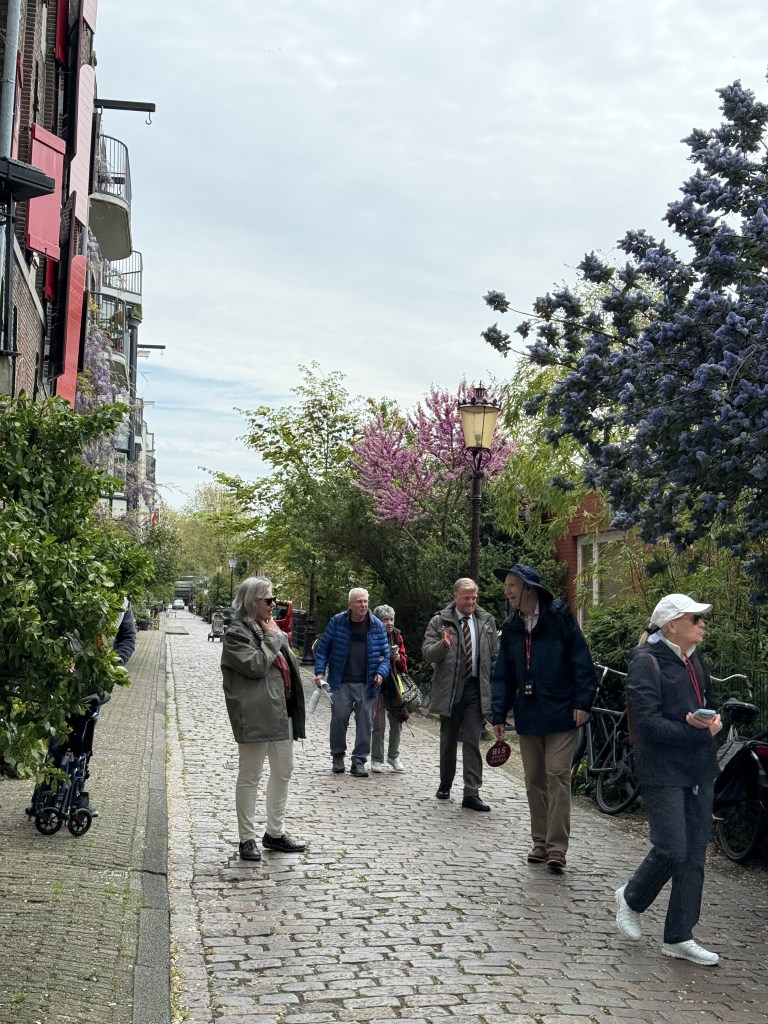
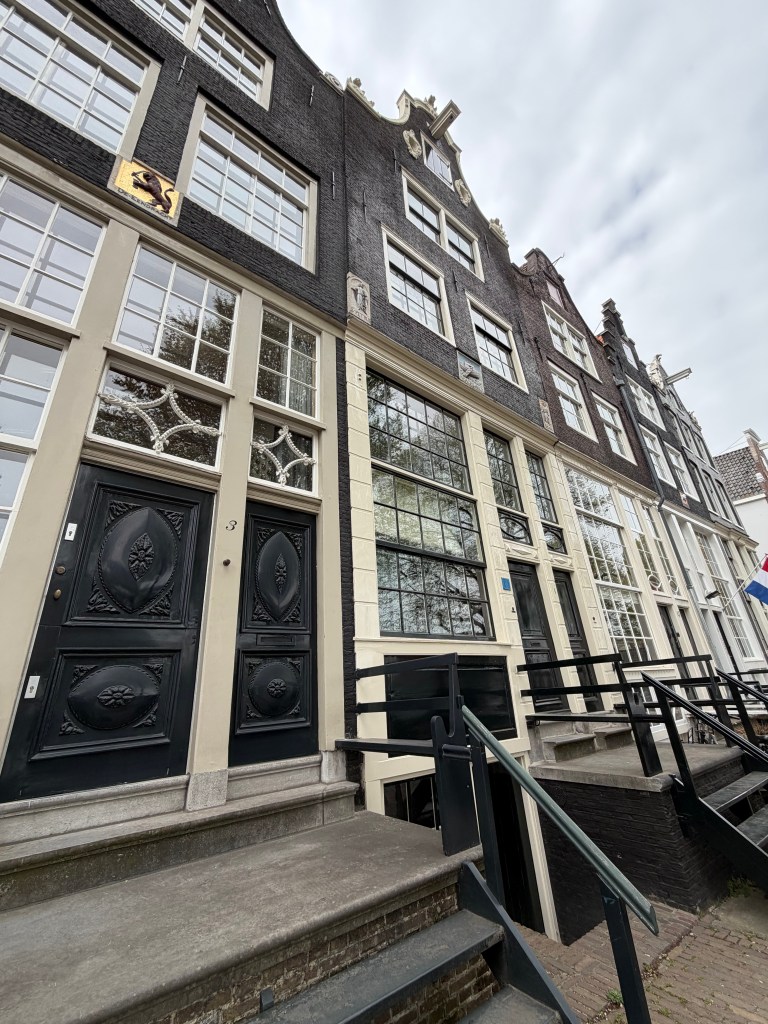
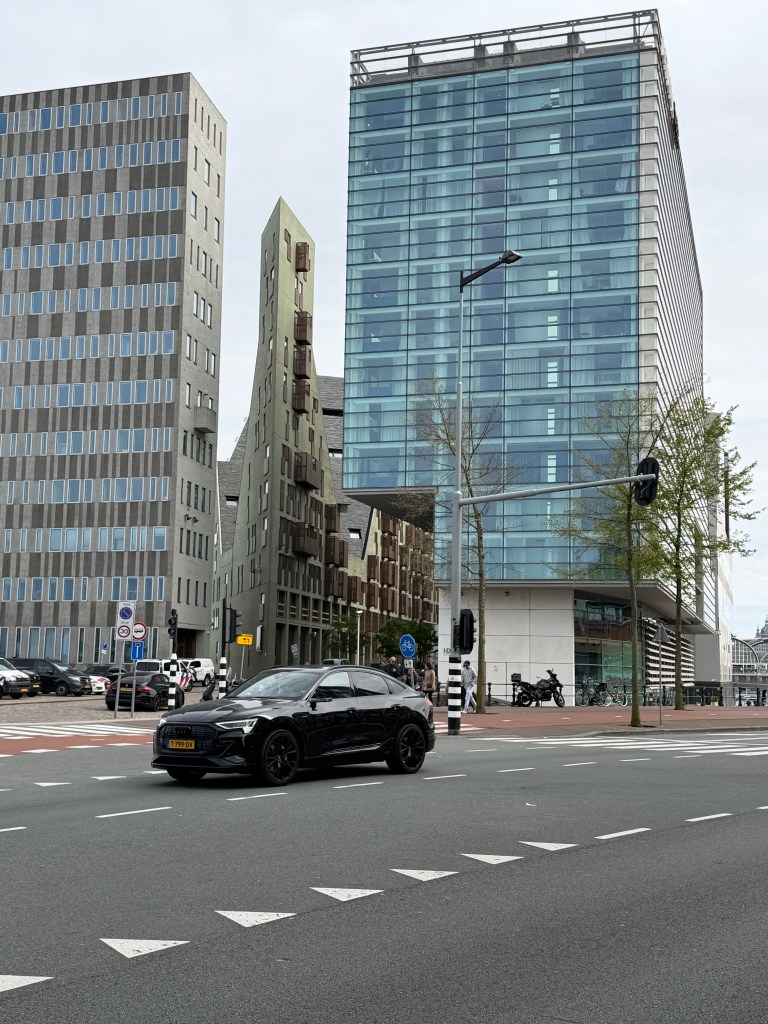
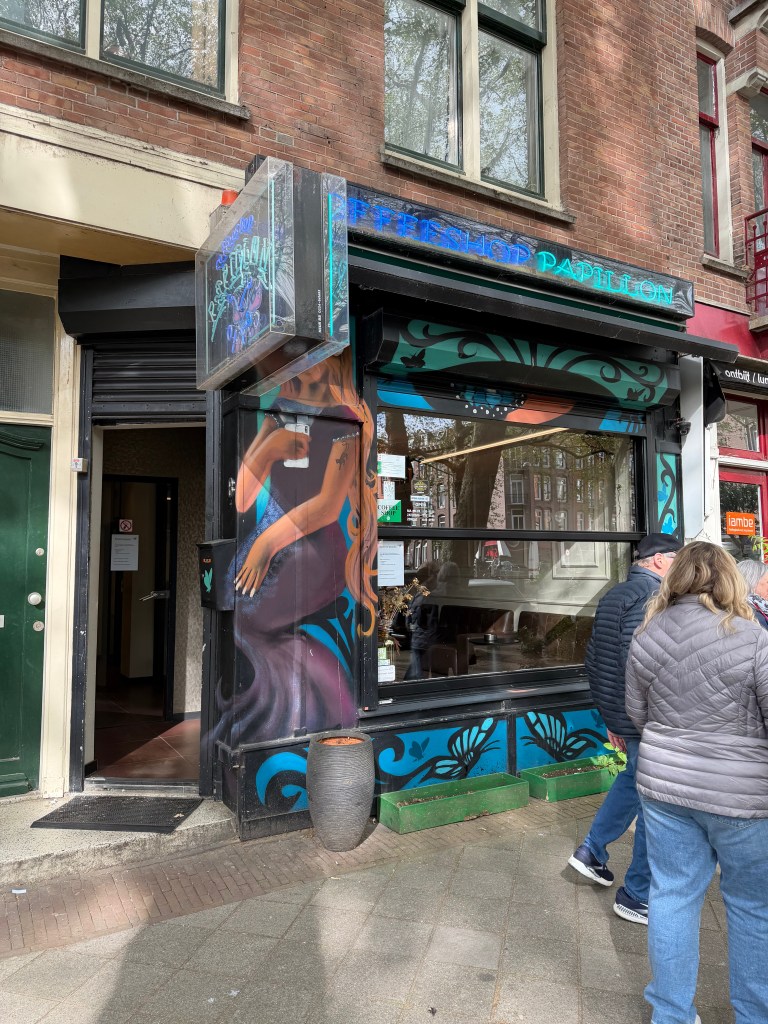
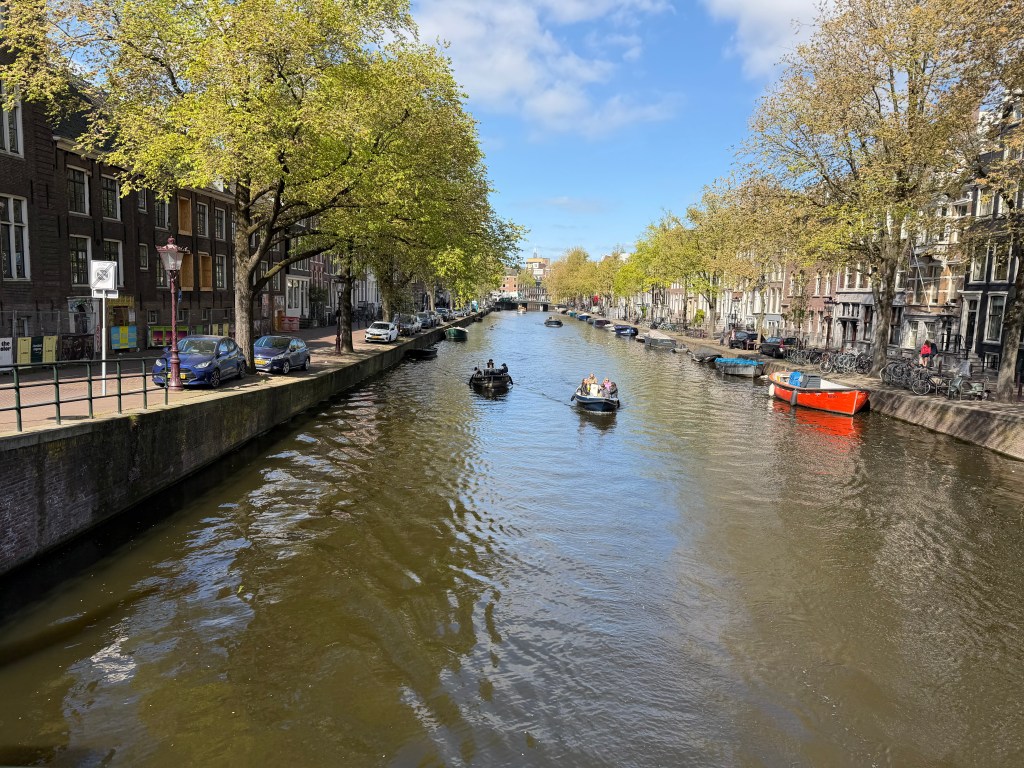
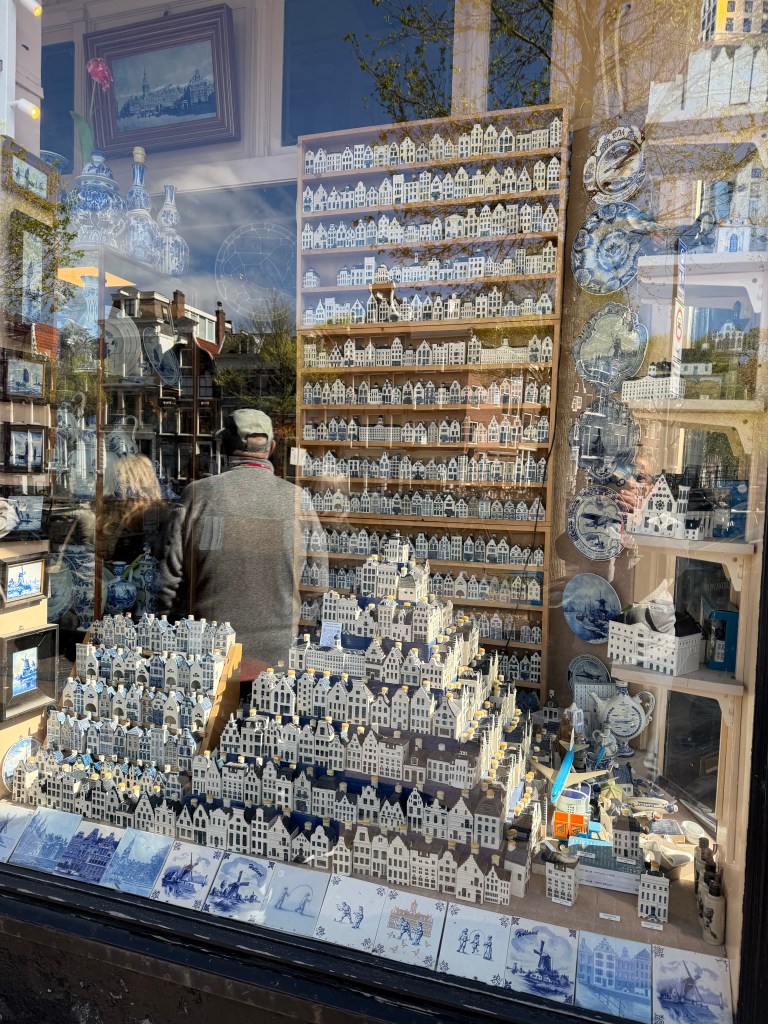
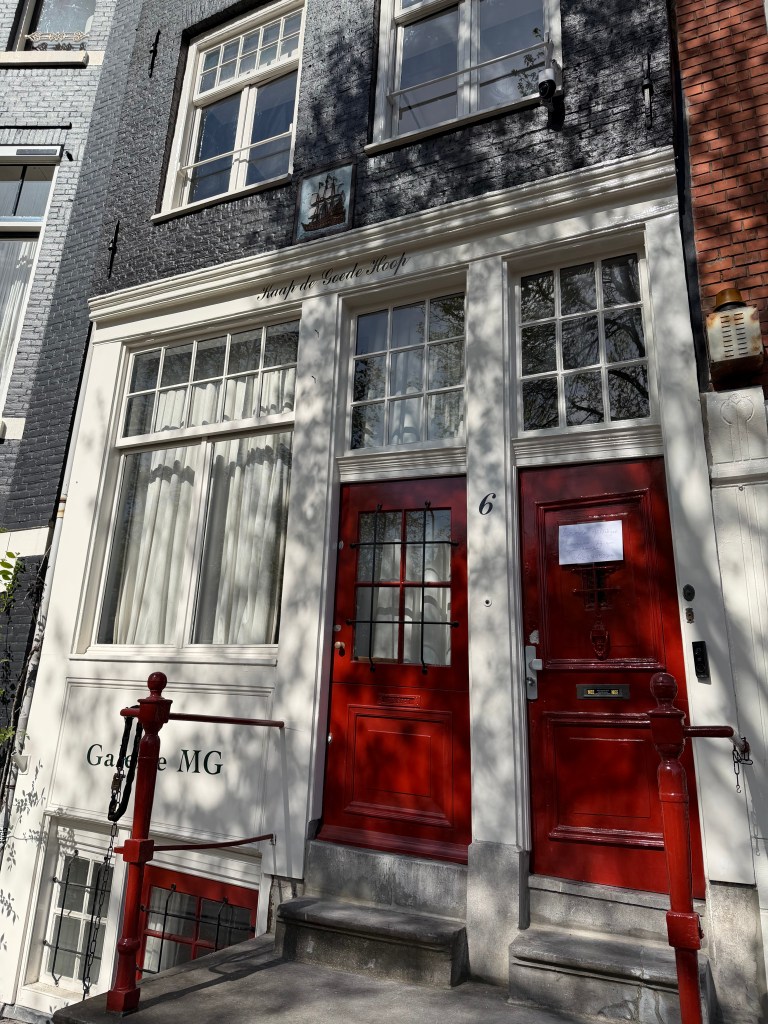
We walked along the streets of Amsterdam, noticing assorted interesting things along the way.

The tour ended at Museum Square behind the Rijks museum. Before heading back, there was the pre-requisite bathroom break in a public bathroom, which of course was down two flights of stairs.

Anybody who follows my blog knows there’s always a few stories about bathrooms in our travels. I didn’t think to take photos, but when I finally toddled down the last step and paid my way into the women’s bathroom, I noticed that the doors on all the stalls were crystal clear glass.

Though slightly alarmed, there wasn’t a choice anymore.

Good news! When I clicked the lock closed, the glass frosted over.

When we got back to the hotel, we asked the Viking rep about places for lunch near the Portuguese synagogue. She didn’t have much, so we decided to uber to the area and find something. Which turned out to be a little harder than we expected, but eventually we did find a cafe.

We bought tickets to enter the Portuguese Synagogue. The ticket lady was asking all the men to wear a kippah. Andy had his own with him – she then warned him not to wear it in public (not that he normally does) because of the rampant anti-semitism in the city. Kinda sad.

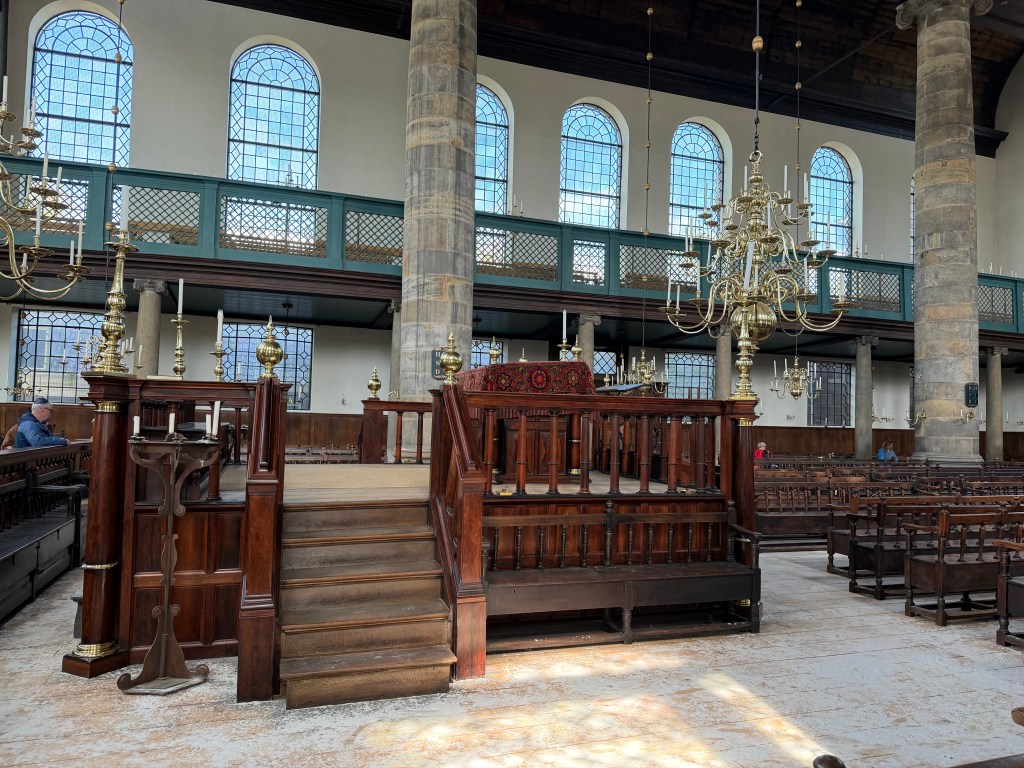
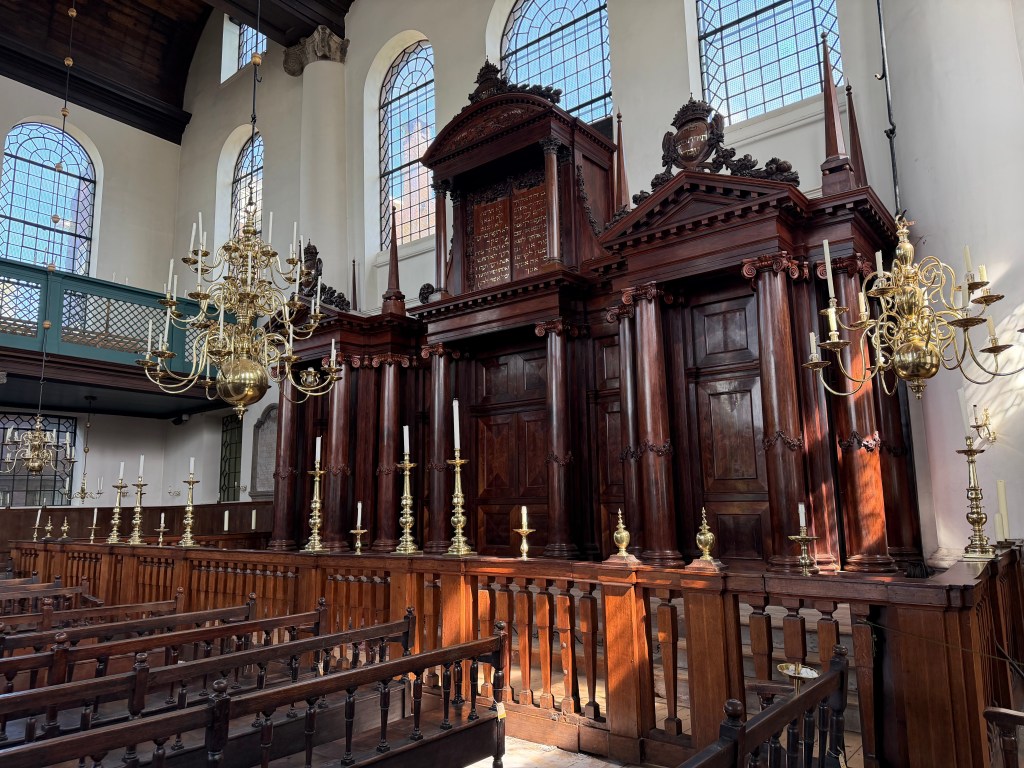
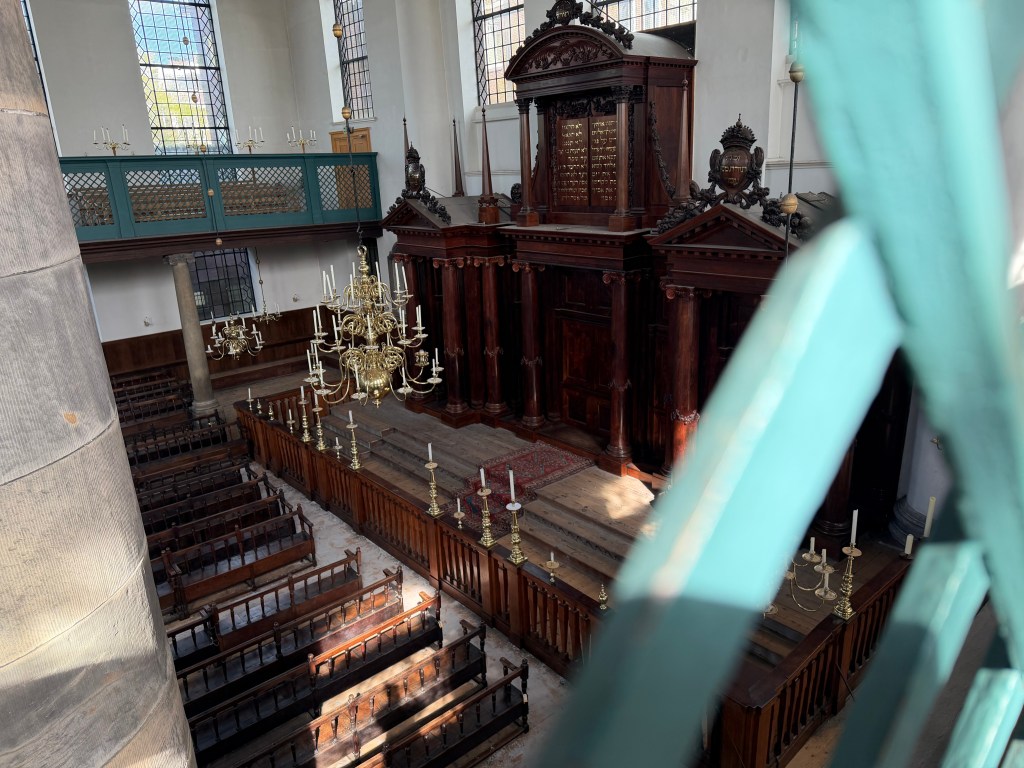
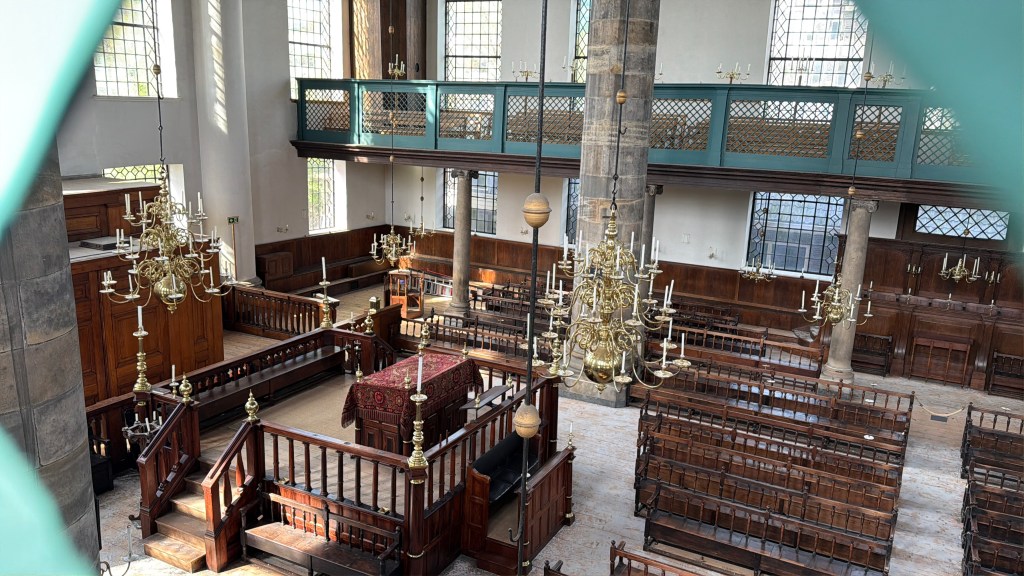
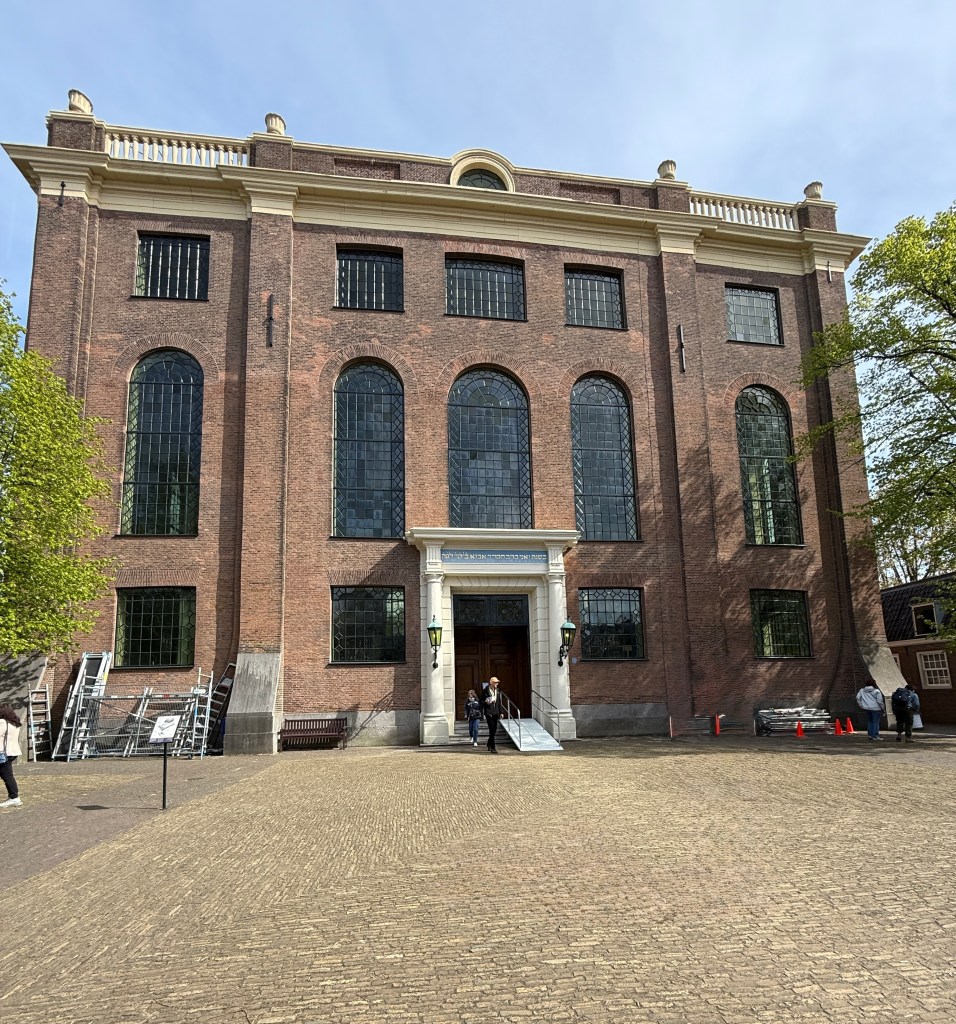
The Portuguese synagogue was built in the 17th century and is one of the oldest synagogues in Europe. There is no electricity or heating, yet it is still used on a regular basis. It is a Sfardi synagogue, which means the configuration of the sanctuary has the Torah reading table in the middle of the congregation, as opposed to up front like in Ashkenazi synagogues.

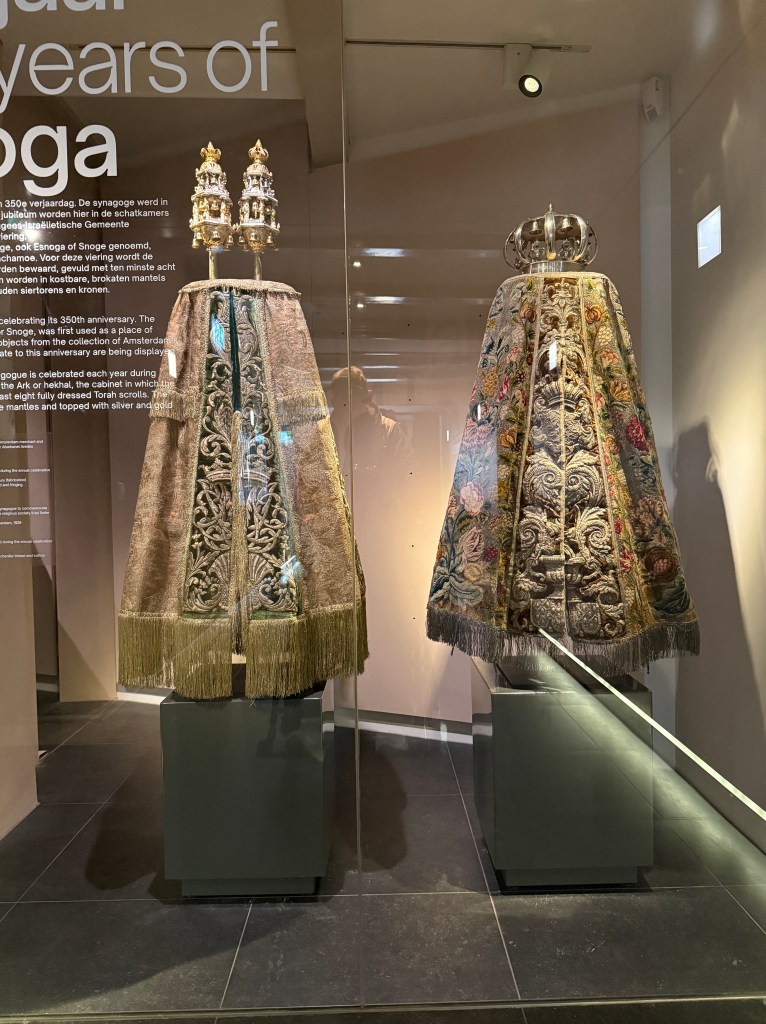
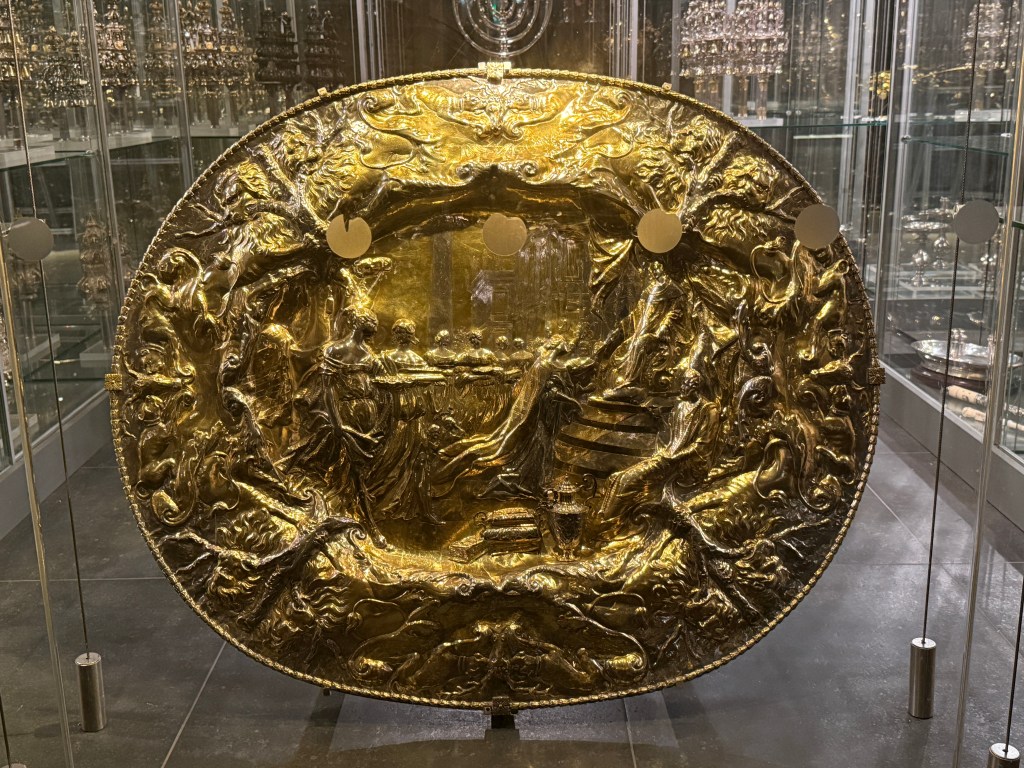
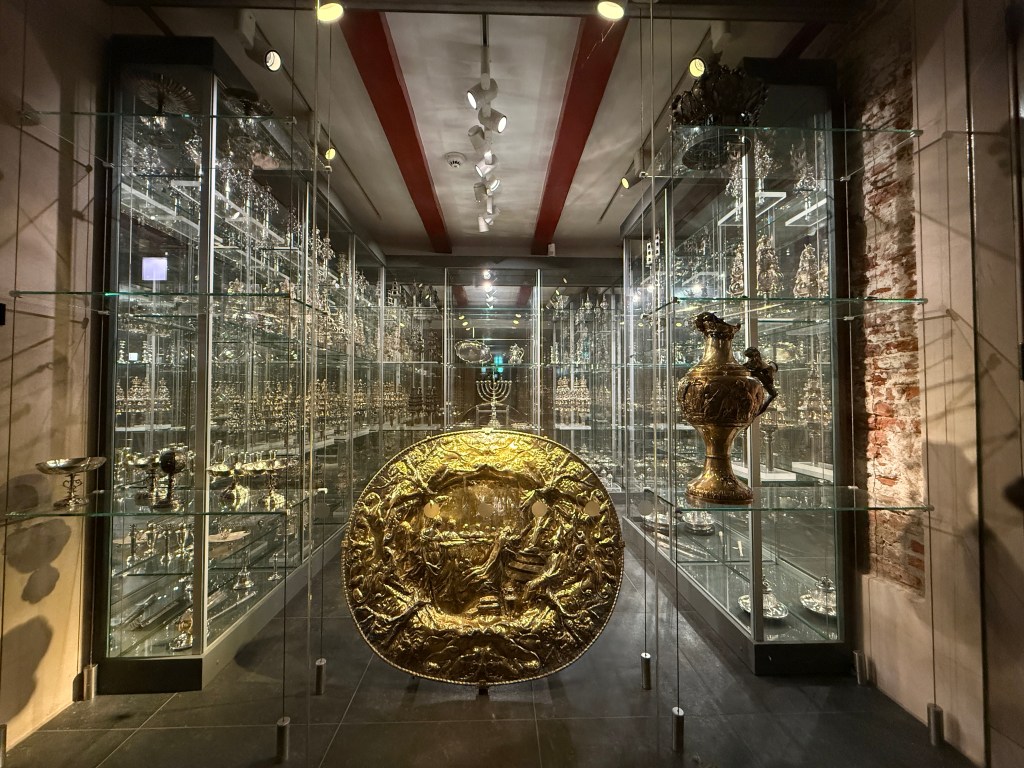
Downstairs were the Treasures that were hidden and saved from the Nazis during WWII

We were given free audio guides, but Andy’s wasn’t working and mine was talking to me in French, so both of us missed the descriptions of the treasures, and google wasn’t helpful.

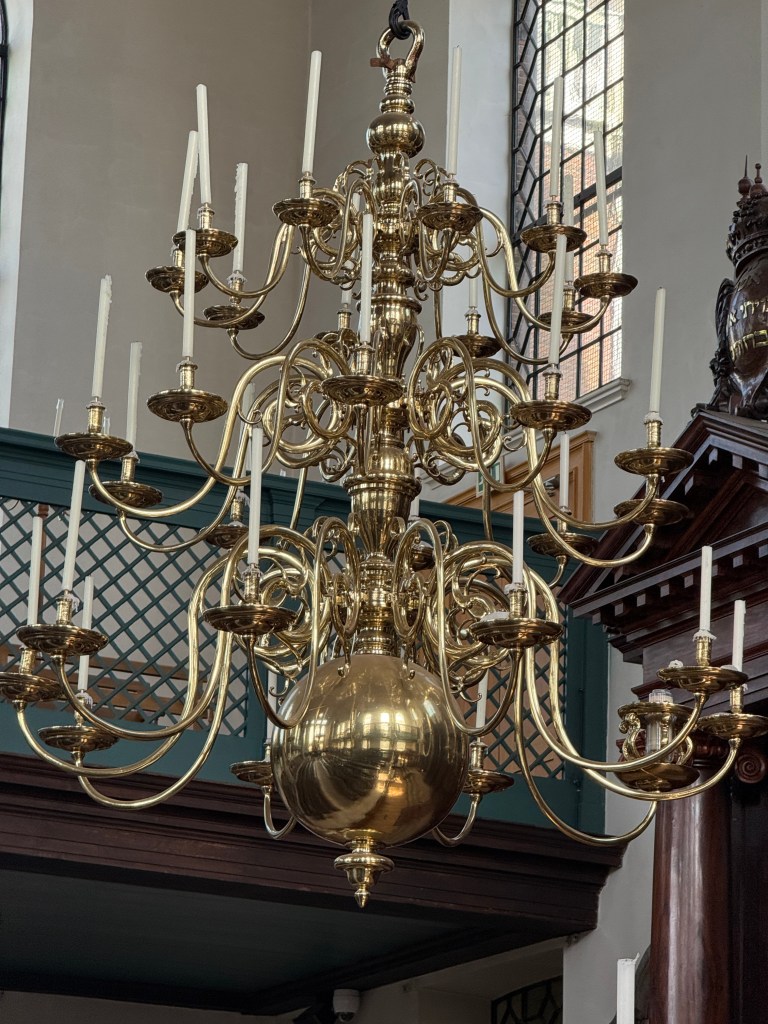
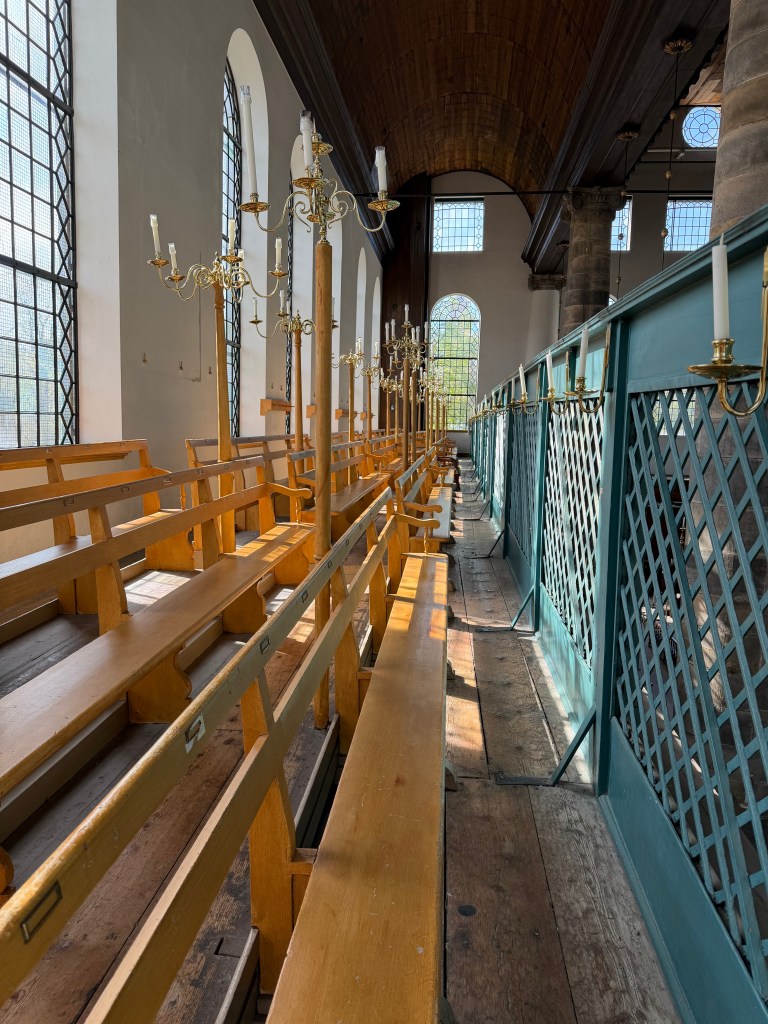
These photos are of the sanctuary. Since there is no electricity, the room is lit with thousands of candles in huge candleabras.

There were more rooms to investigate around the perimeter of the main building.

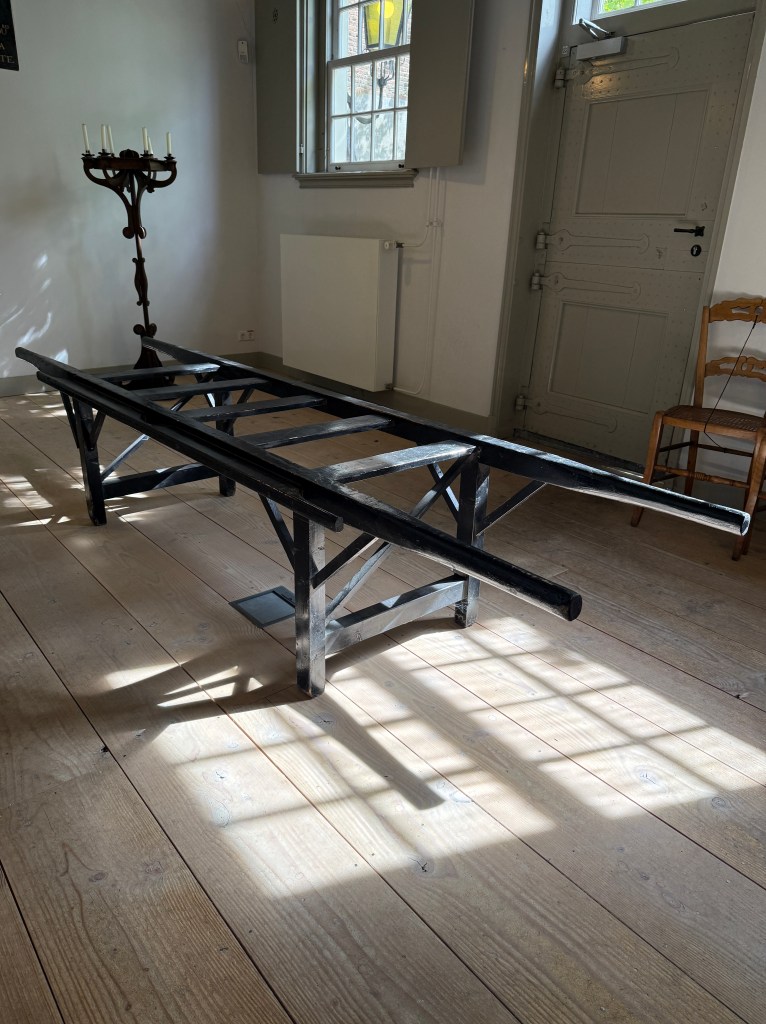
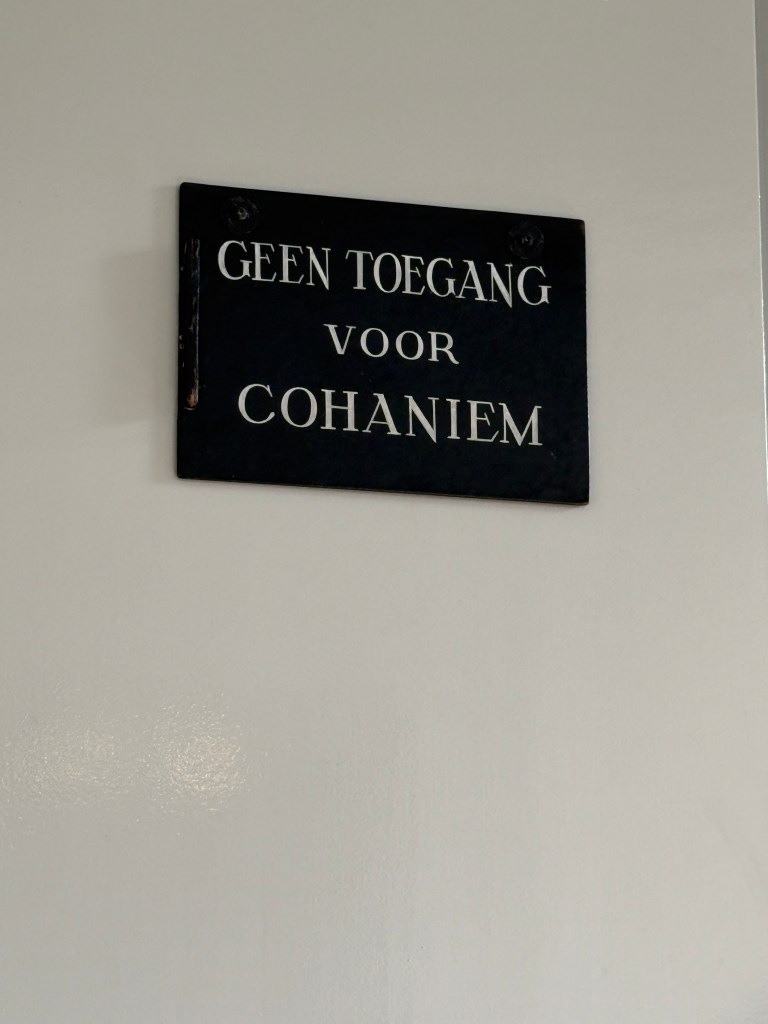
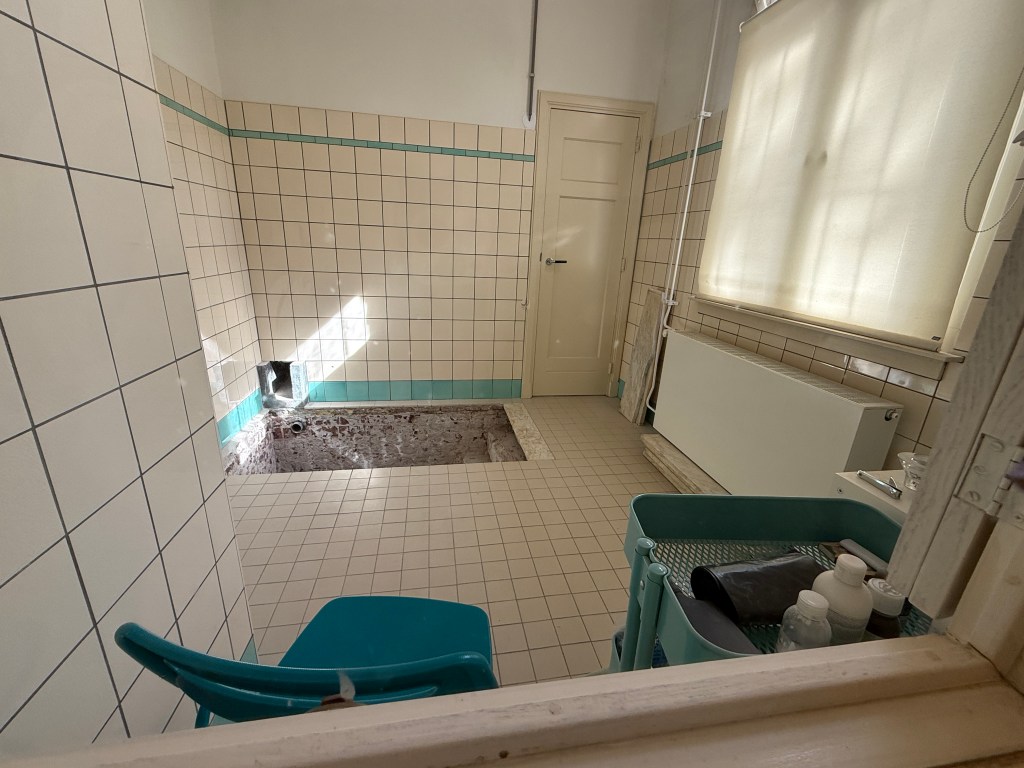
This is the funeral room, where bodies were brought for the tahara (washing and dressing of the deceased). The sign says “No entry for Kohanim” – men who are a kohen (an inherited priest role) can’t come in contact with the dead, because there is currently no way for them to spiritually purify themselves without a Holy Temple

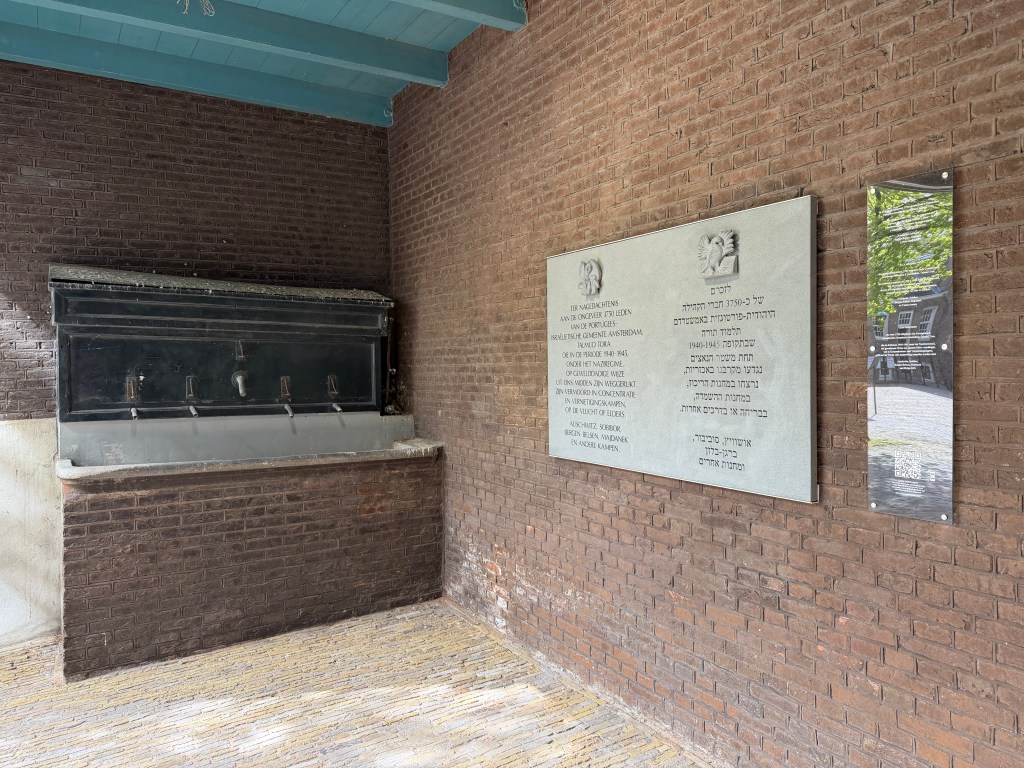
Handwashing station

We sorta ran out of time, again – the synagogue was closing soon. For sure we didn’t have time to visit the Jewish Museum today.

They synagogue from the front facade.

For dinner we went to an Indonesian restaurant recommended by a friend of ours. Getting there and back was a challenge, because the King’s Day celebrations have begun.

Tomorrow: King’s Day and we board the ship.