Where We Spend The Day In Medieval Bruges And Manage To Not Buy Any Souvenirs
Yesterday’s optional (i.e. paid for) tours of Brussels and Antwerp were rated as “Moderate”, and they were – lots of walking and lots of cobblestones. Typically the included excursions (i.e. “free”) have a “leisure” group for the moderate tours. The “leisure” group walks more slowly and avoids steps, which sometimes means that some parts of the excursion aren’t visited. But that’s ok – the goal is to maximize my experience within my physical limitations.
So I’d been a little concerned about the “Medieval Bruges” excursion ever since we booked it months ago. There would be no getting around hours of cobblestones and trying to keep up.
To our surprise, there was a “leisure” group for “Medieval Bruges”! What a relief.
One thing about the leisure groups is discovering there are people on the ship who have worse mobility problems than I do. Suddenly I’m the speedster!
It was a 90 minute drive from Middelburg to Bruges, raining most of the way. At least I remembered to bring a rain jacket. The tour guide who was with us on the bus would not be the guide for the leisure group – he would meet us at Bruges. I asked the bus tour guide if there would be a bathroom break when we arrived in Bruges, considering it’s a 90 minute drive. I felt like he looked at me like I had 2 heads and 4 arms. He said I should ask our Bruges tour guide. Ok? Why was this a big deal?
When we arrived at the bus parking in Bruges, there was a public bathroom right there at the information center, something the bus tour guide surely knew. So he could have said, “Sure, it’s not a problem – there’s a public bathroom at the bus parking.” As we were exiting the bus, he kept mentioning that everybody should let their tour guid know if they need to use the bathroom before the tour started. I felt like I was in kindergarten.
Amazingly enough, there was a long line at the bathroom, because the majority of the people on the three buses were standing in it.
Our little leisure group had a couple of us with mobility aids (me with my chair and a guy with a rollator). Plus we had a few people who just needed to walk slowly. Many hearing aids, including our tour guide, which meant quite a bit of repetition of questions, answers, and instructions – the tour guide to us and from us to the tour guide, because he definitely didn’t hear well, even with the hearing aids. Or maybe he was just ignoring some of the questions, who knows.
The first story he told was the legend of Minna and Stromberg: young lovers who weren’t allowed to marry, because Minna’s father wanted her to marry someone else. When Stromberg went off to war, Minna’s father forced to marry the other guy. So she ran away from home. Her lover Stromberg found her in the woods, dying. He buried her in the woods, and created a dam on the river creating the Minnewater or Lovers Lake.
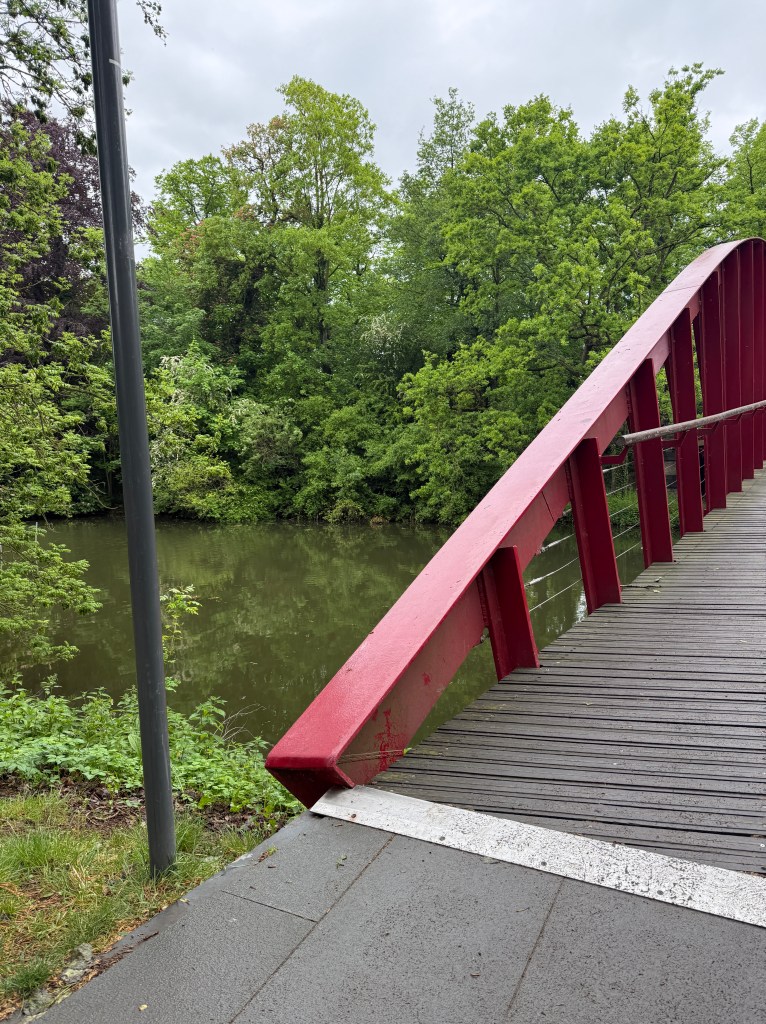
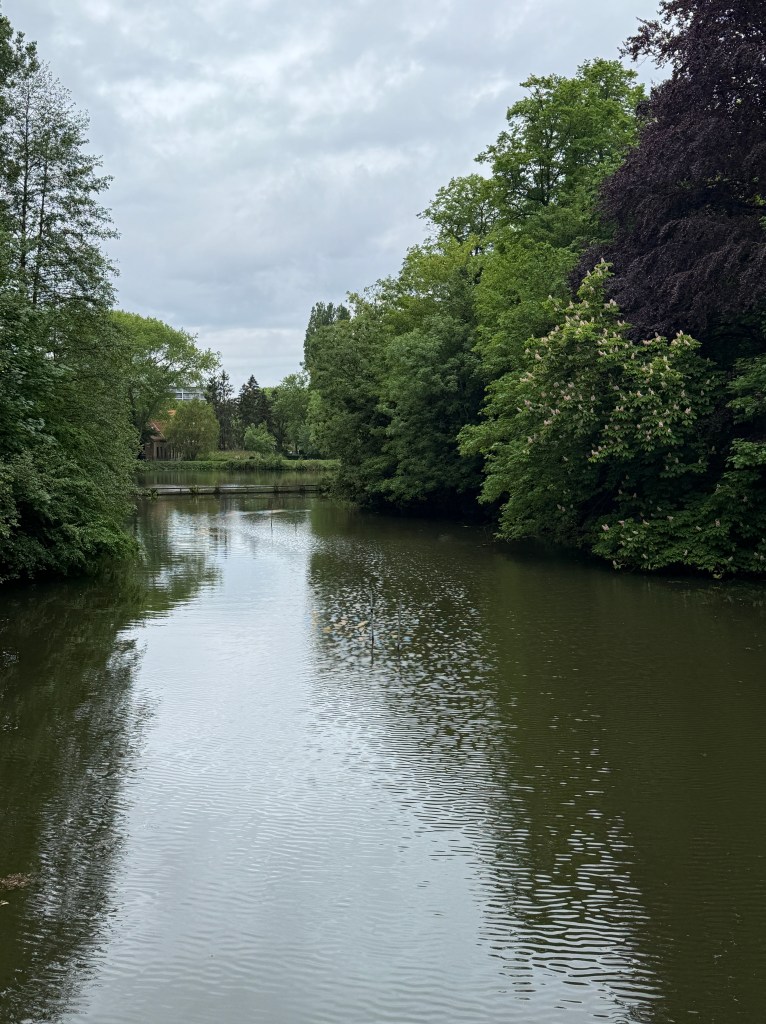
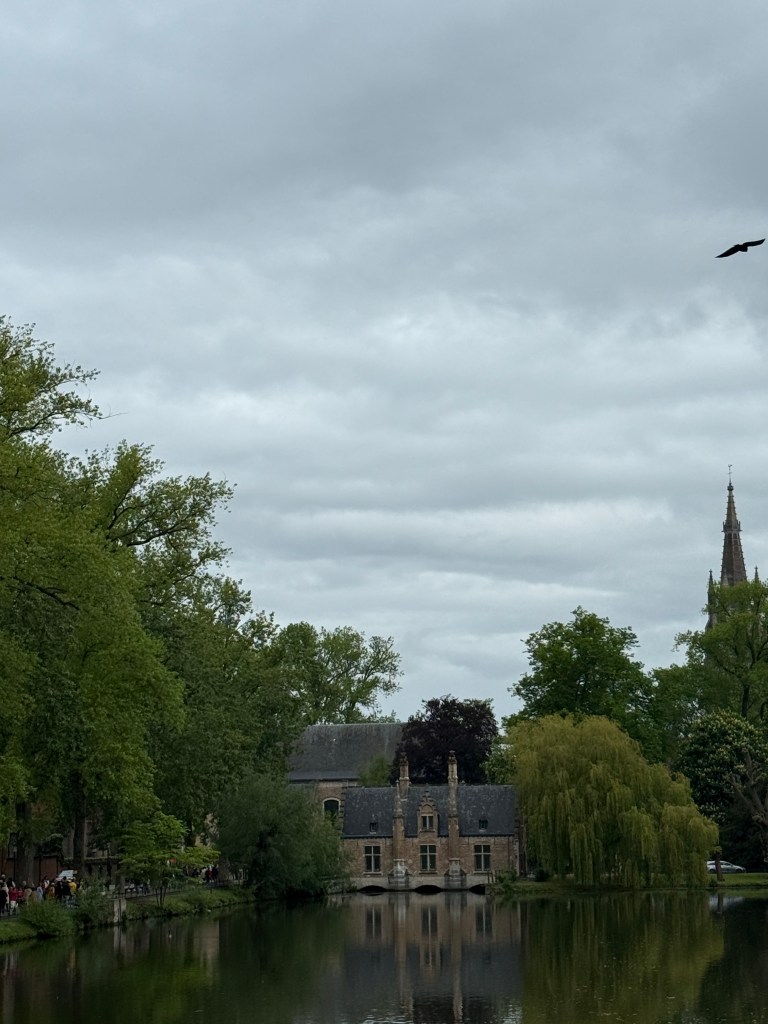
After we crossed the bridge into medieval Bruges, the tour guide talked about a community of lay women living a religious life called beguins. The beguinage in Brussels was started in 1276 and lasted until 1976. The women were all unmarried and had to work to earn their keep, but were free to go at any time – most of the time they left when they were married.
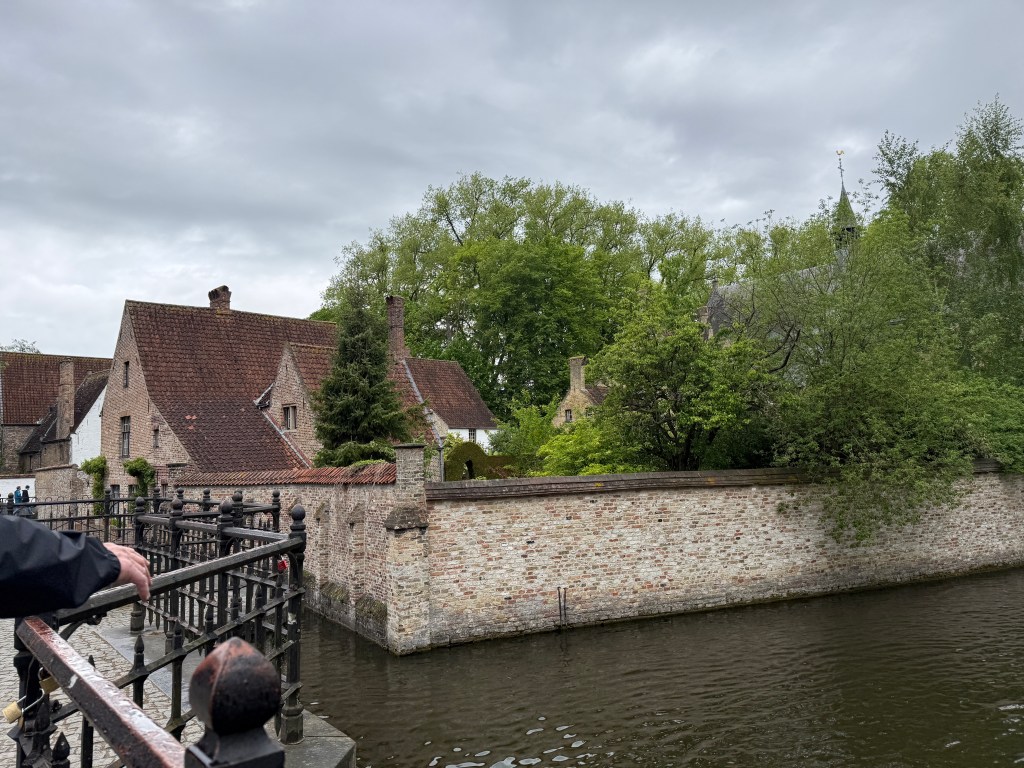
The conversation about the Beguins was almost circular. The guide explained that the women were lay women who wanted to live a holy life, but didn’t want to be nuns forever, they worked for a living and left if/when they got married. Possibly because there were photos of the women dressed in their Sunday clothes that looked like a nun’s habit, there were people in our group (most of them) who kept referring to beguins as “nuns” and couldn’t figure out how nuns could get married or why they had jobs. The tour guide became a little frustrated after a while, and we just had to move on to the next thing.
Which wasn’t easy because we kept passing by beguinage buildings that, of course, triggered another round of explanations as to what a beguin was. Then someone asked why there weren’t anymore beguins (the community closed with the death of the last beguin in 1976), and the circular conversation started again, only this time it included the apparently confusing fact that women no longer have an interest in being sequestered in a lay holy community.
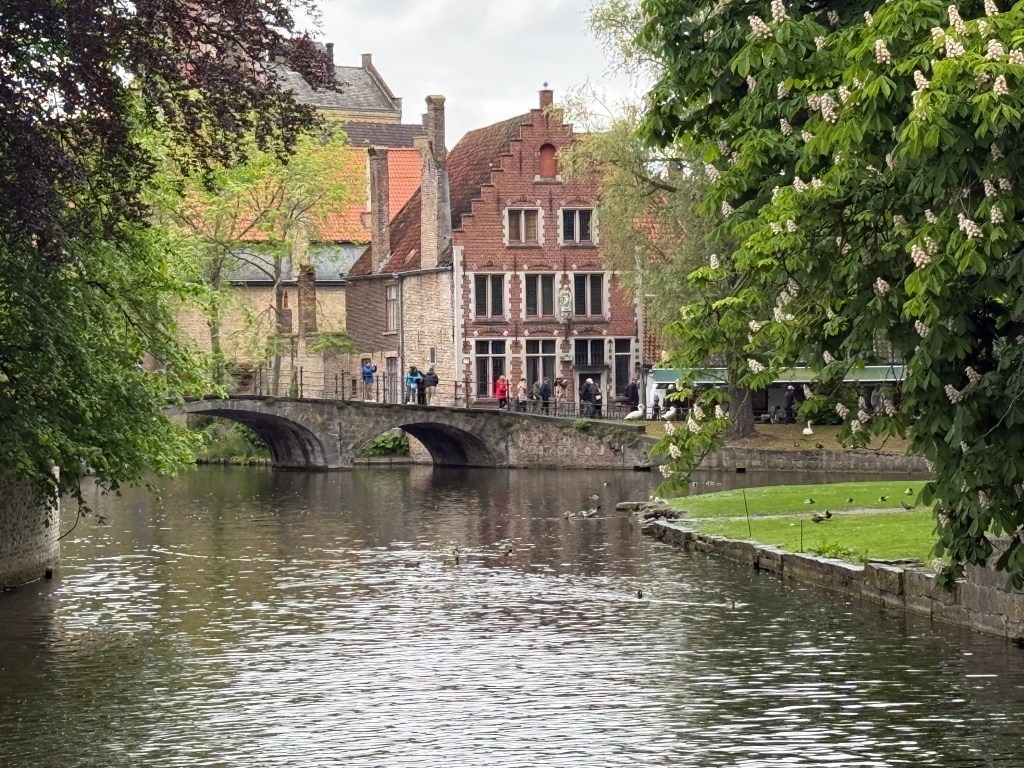
The next story involves why there are swans in Bruges.
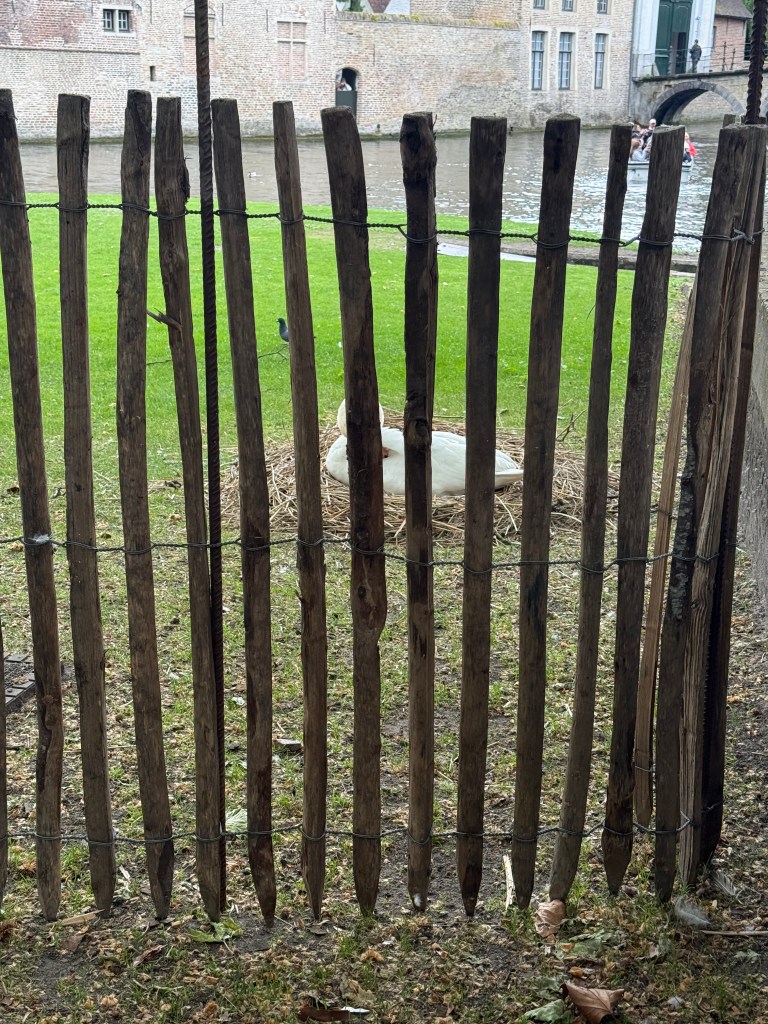
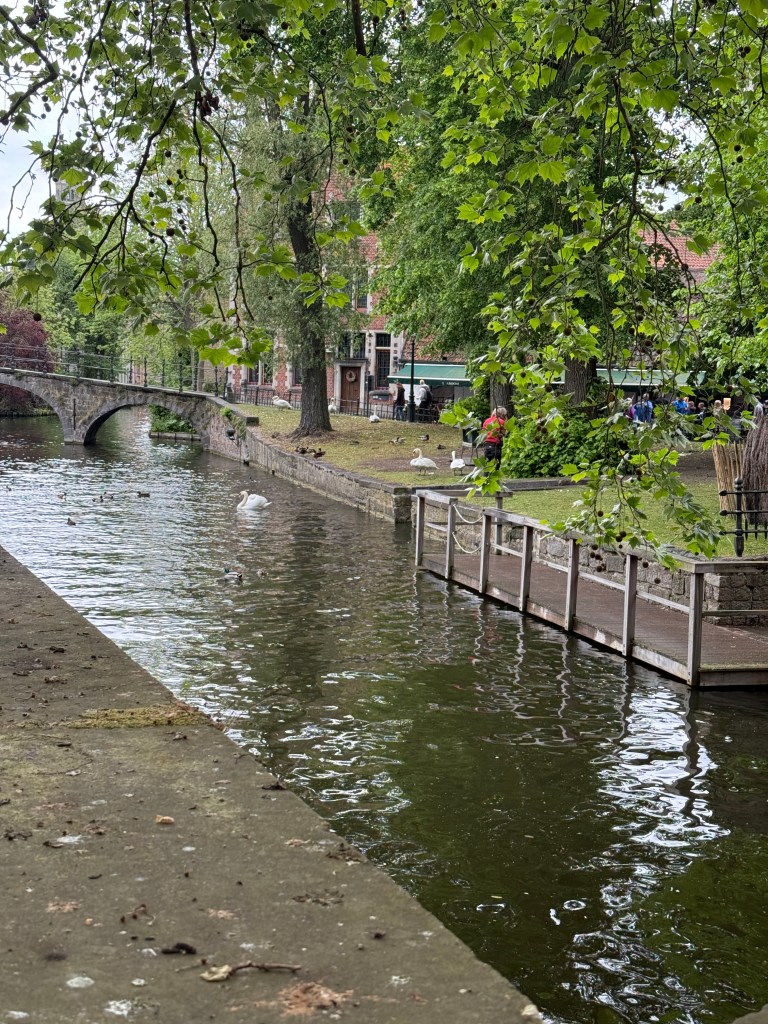
Though most likely swans have always been in the area, these are the key points of the story (per Google):
- Maximilian of Austria was imprisoned in Bruges by local townspeople. He witnessed the torture and execution of his advisor, Pieter Lanchals, who was despised by the locals.
- In retaliation, Maximilian forced the city to maintain the “long necks” (swans) on the canals for eternity (note: the Lanchals’ family crest was a white swan)
- According to the legend, if the swans die or leave the city, it will face ruin; therefore, the city takes good care of the swans.
As we were walking by, a swan keeper drove up in a small truck, came out and picked up a swan and put it in the truck. The consensus was that the swan was sick and the keeper was bringing it in for a physical exam.
As we continued to sloowwwwly walk our way towards the town square, our tour guide talked a lot about chocolate: there are 65 chocolate shops in Bruges, and 5 of them are professional chocolate makers (i.e. they make their chocolate on the premises of the store).
We stopped by a lace store with a lace bobbin display in the window
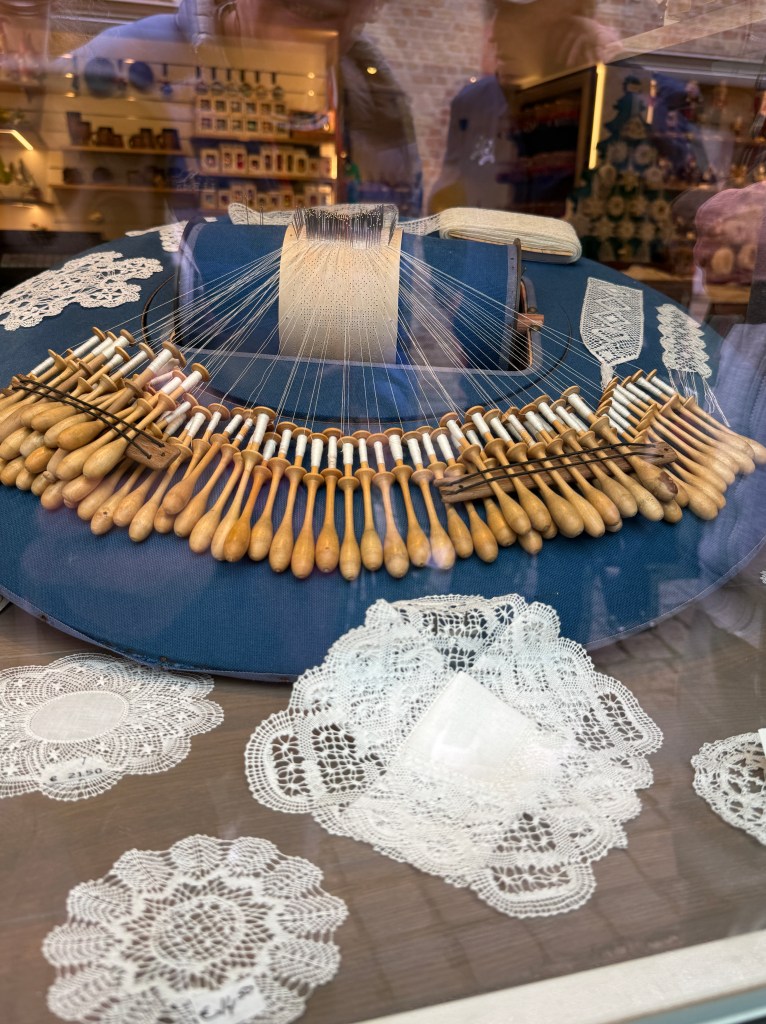
I would have liked to have gone back to this store, but we didn’t have enough time. And I’m not sure I’d be able to find it again, anyway.
As we continued to stroll, the conversation shifted as to whether or not a canal ride was included (it was not), and how one would go about doing the canal ride (there’s 5 different canal ride companies within a couple of minutes of each other), but why wasn’t it included in the program (because it’s not, but you can do it on your own, keeping in mind there’s a wait for some of them and you have to take that into account to make sure you arrive at the meeting point on time), followed by questions regarding the meeting point (we haven’t gotten there yet), and most confusing of all: because we’re the “leisure” group, Viking will arrange for taxis to take us back to the bus, but we have to pay for the taxis.
Resulting in a new circular conversation about the taxis – who will call the taxi? (the tour guide) Where will we meet it? (he will show us). Who pays for it (we do). Why doesn’t Viking pay for it? (because it’s not included). What if I don’t have any euros? (we’ll figure it out).
It didn’t help that the tour guide kept waffling between one big taxi for all of us (which Andy and I didn’t see how that would work with two mobility devices), or two taxis for two sets of 4 people.
Which somehow lead us back to the canal boat ride conversation. It’s amazing we made it to the town square at all.
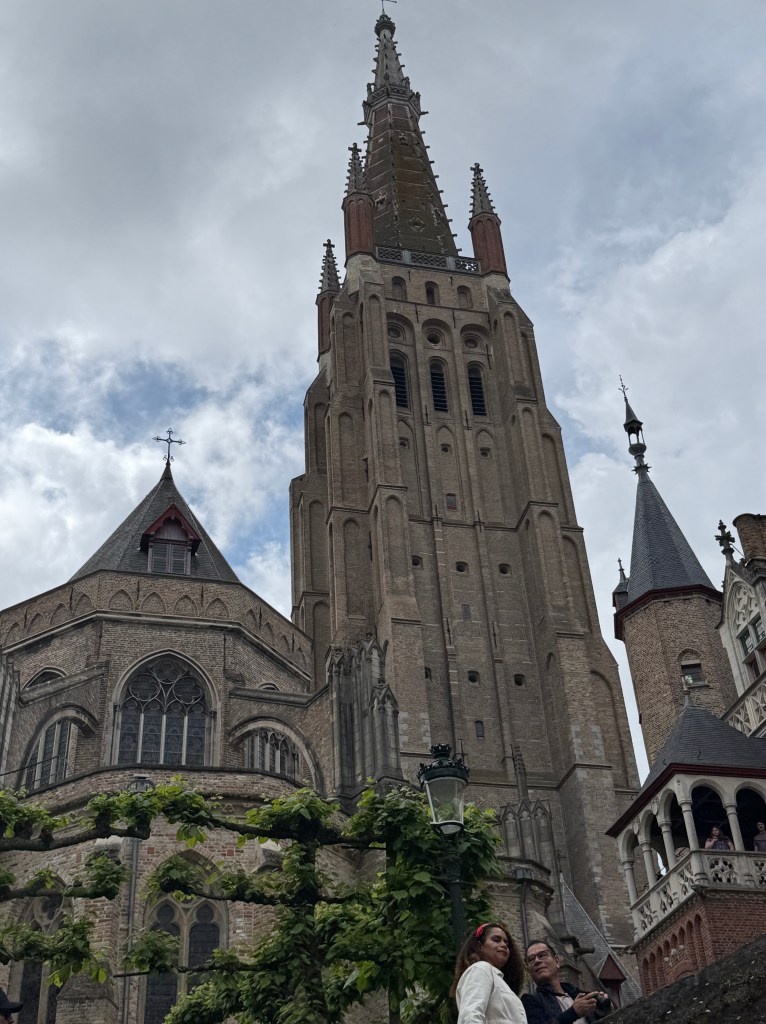
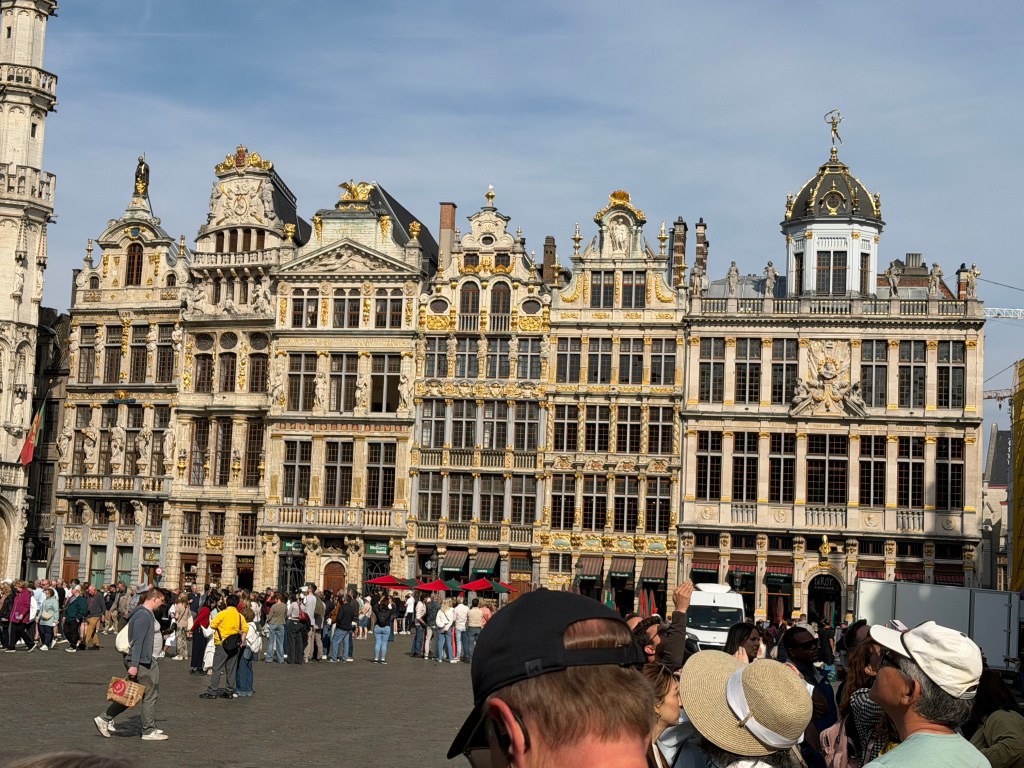
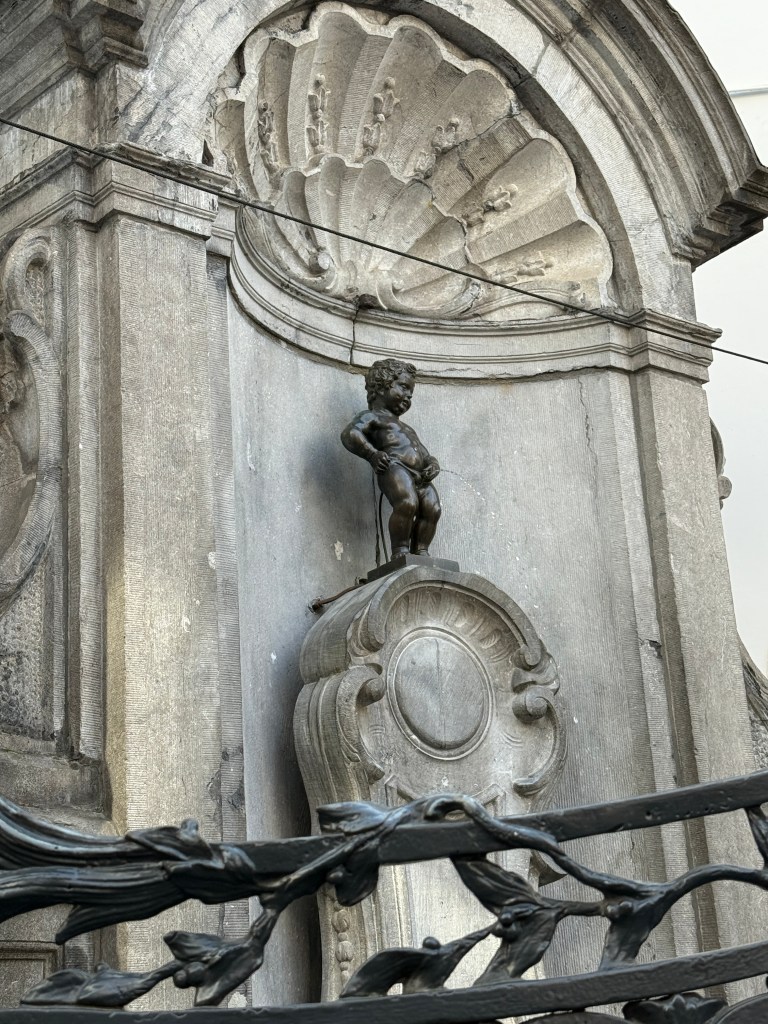
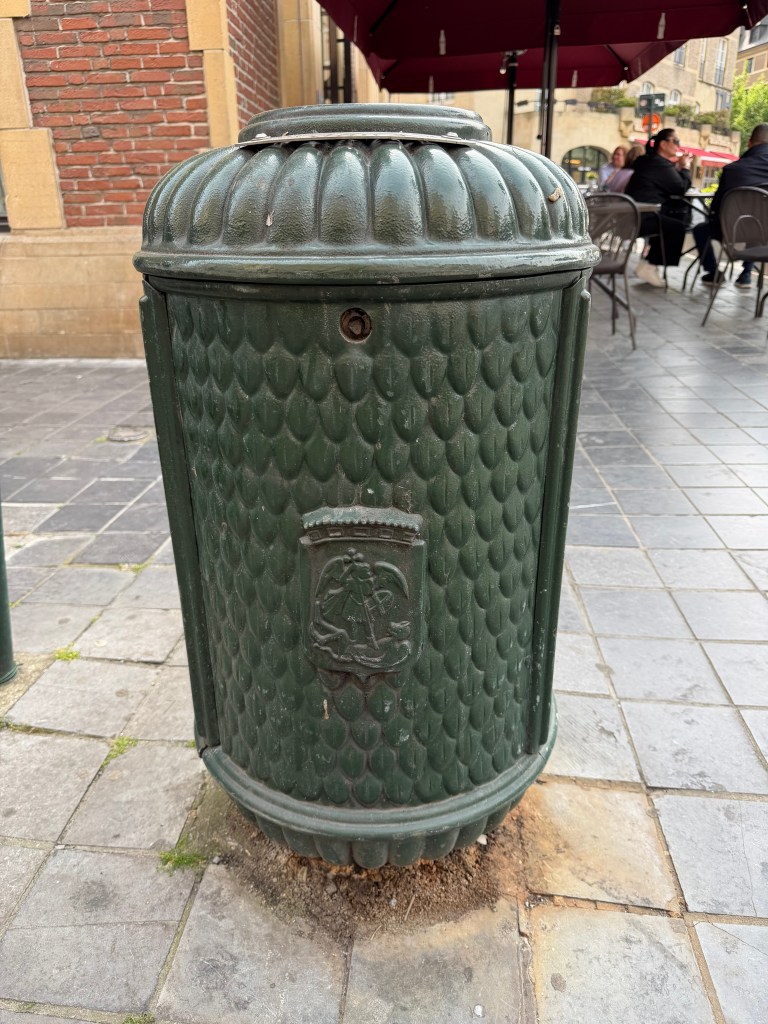
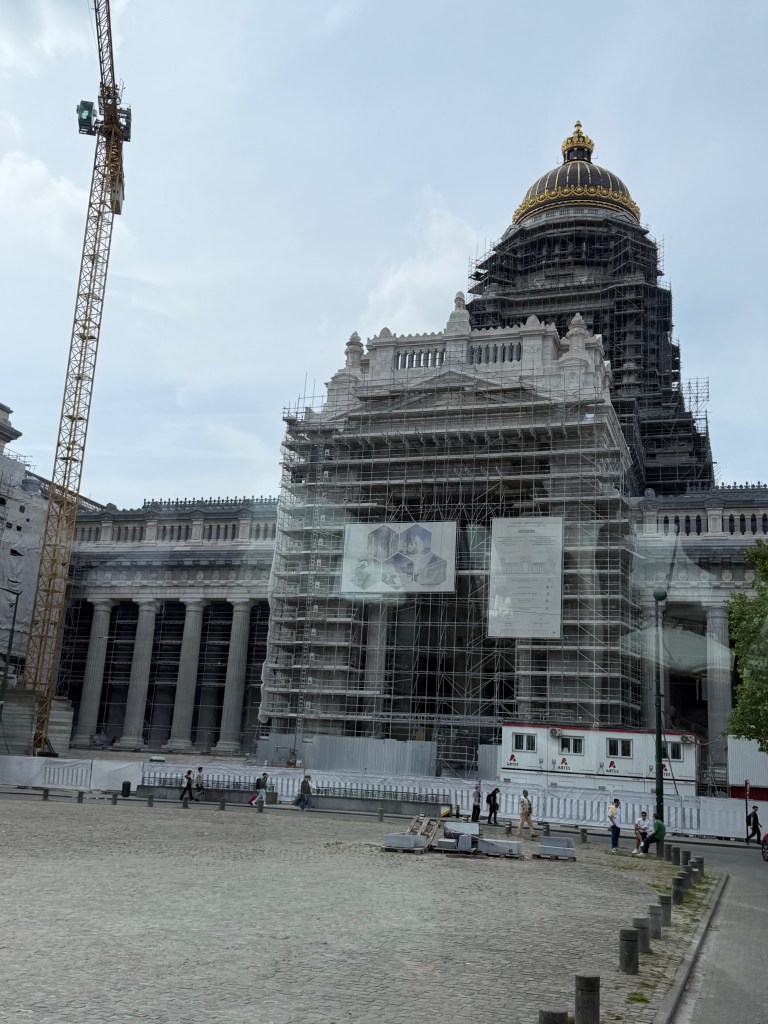
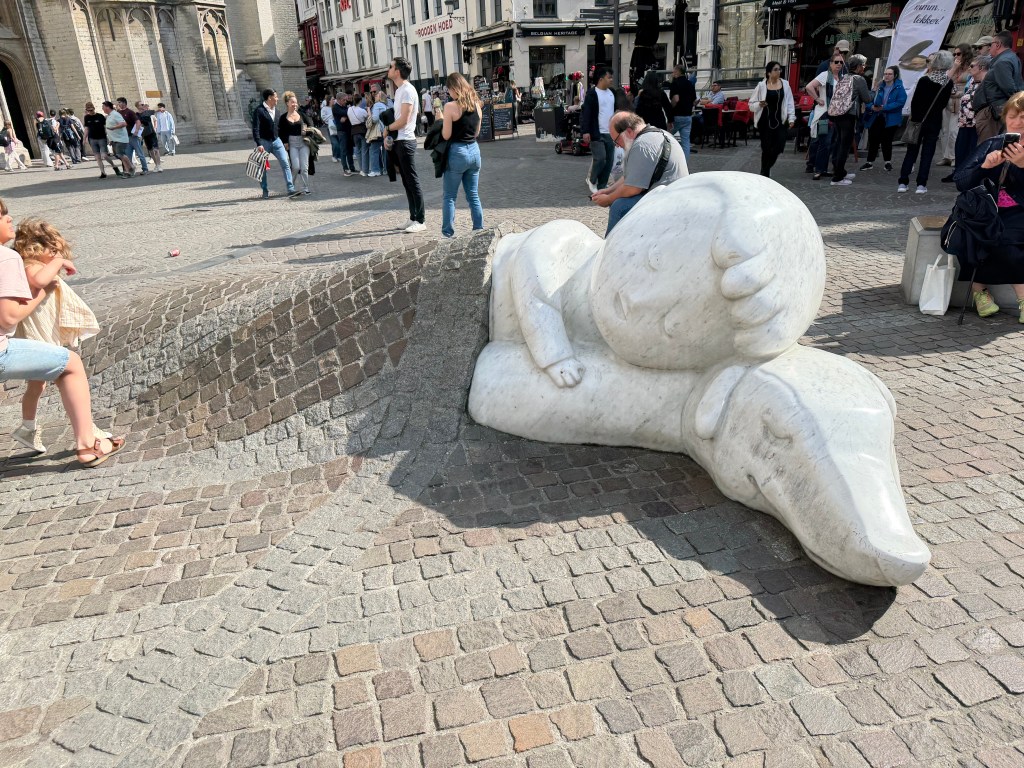
Things we saw along the way.
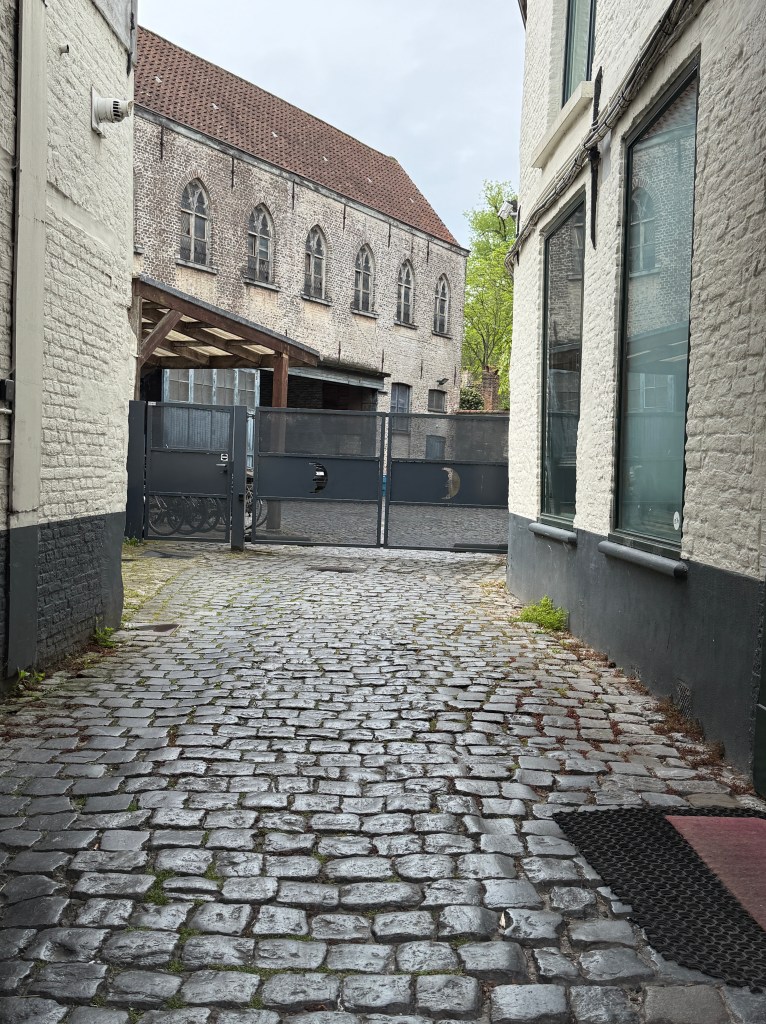
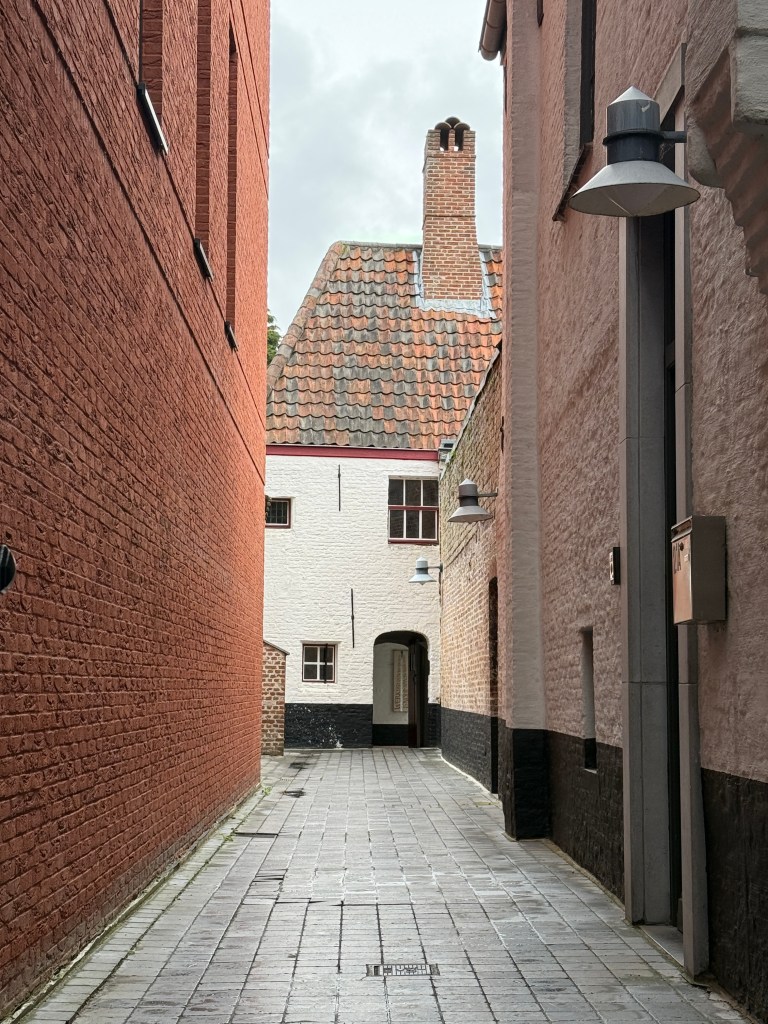
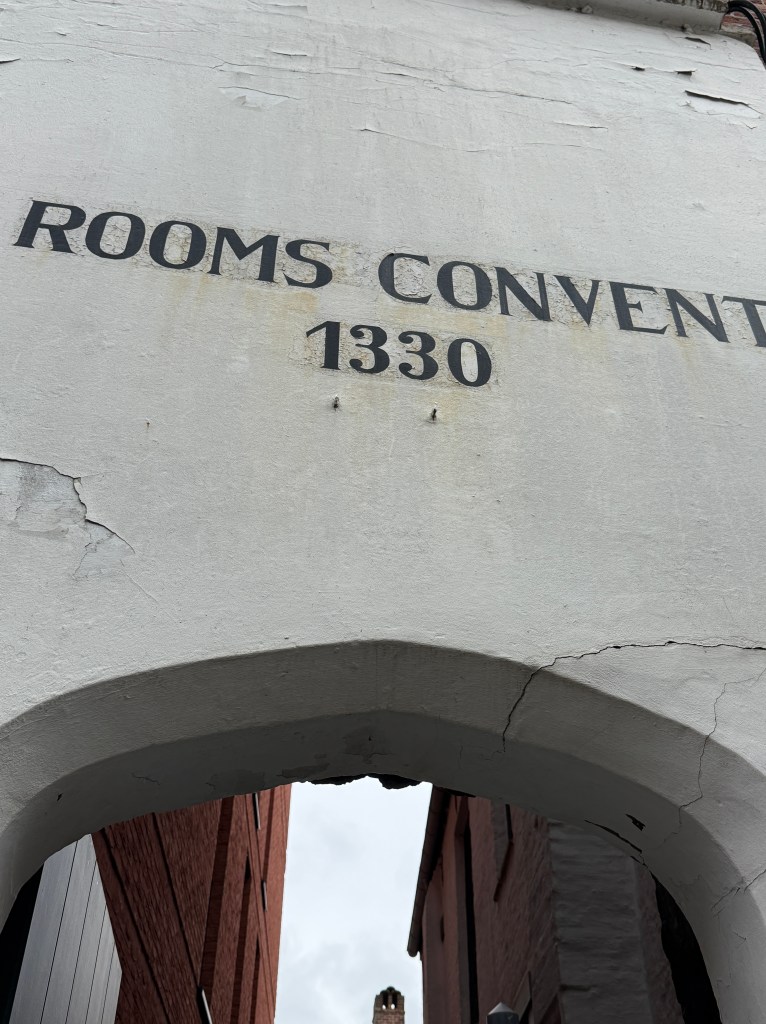
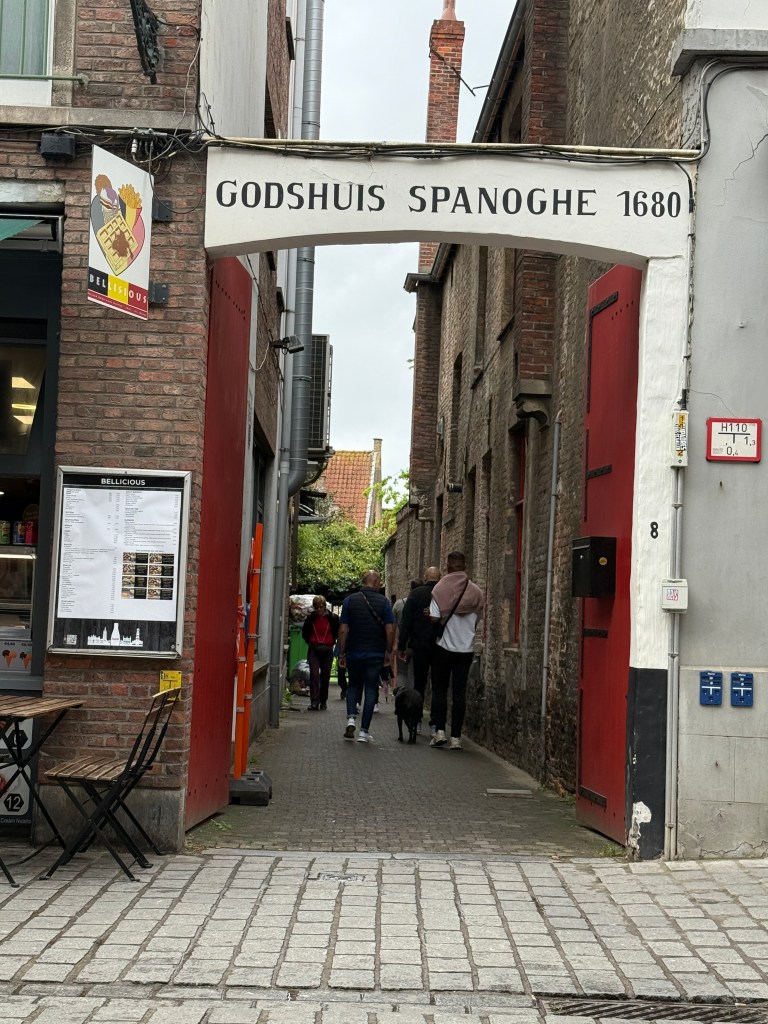
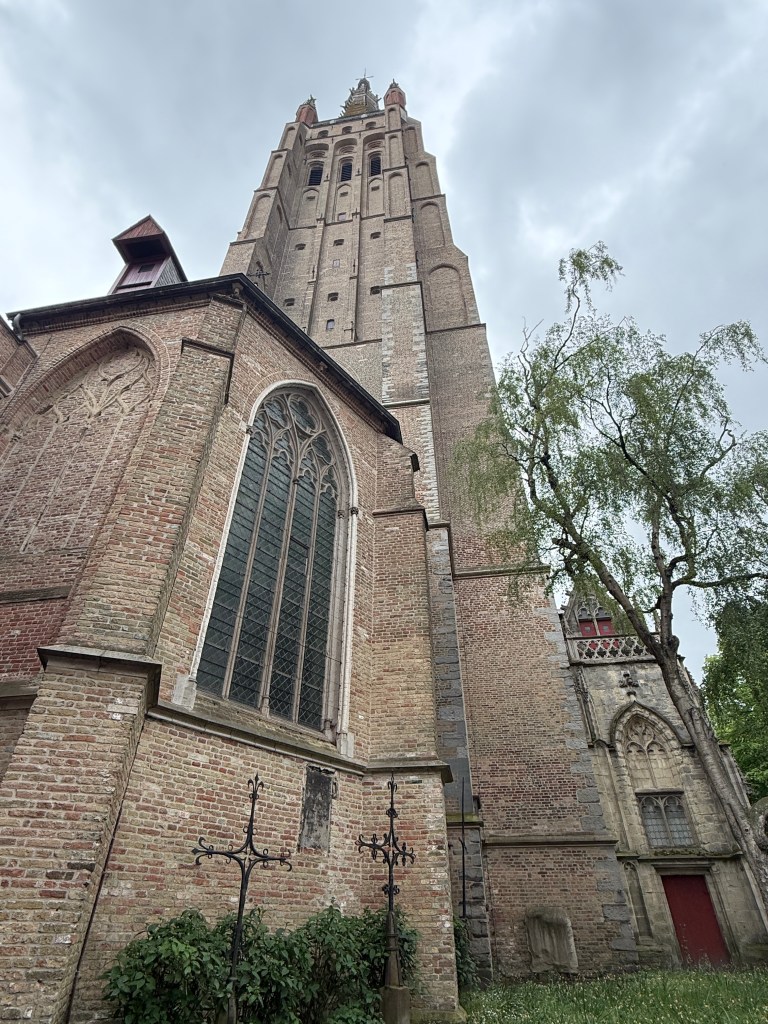
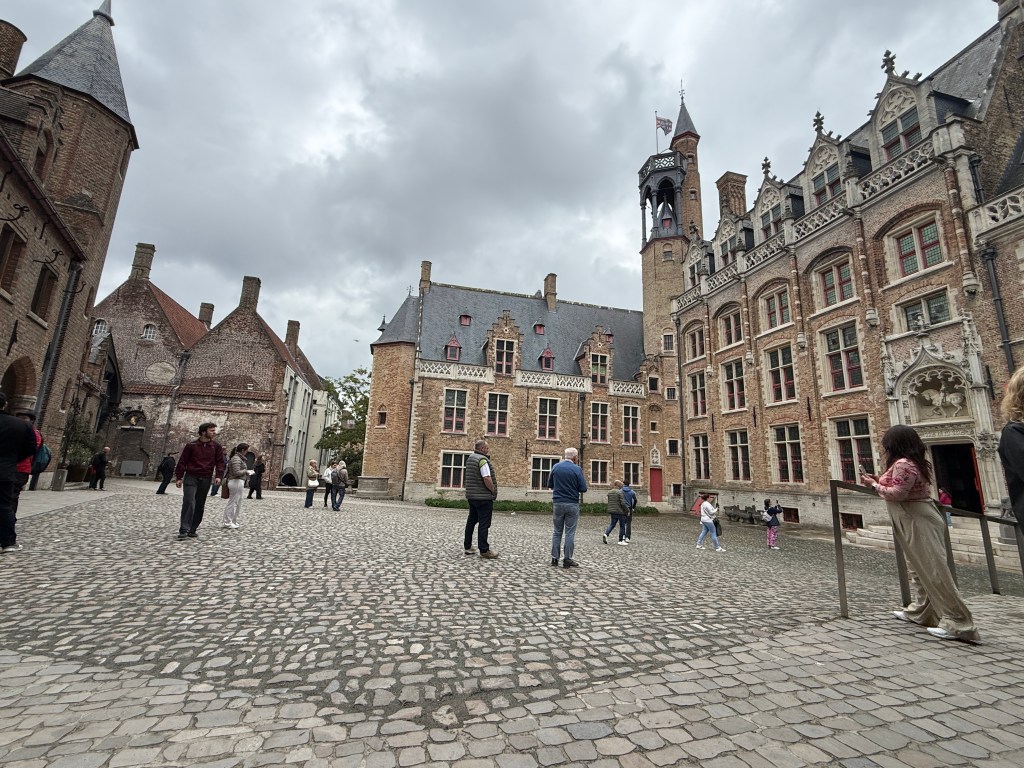
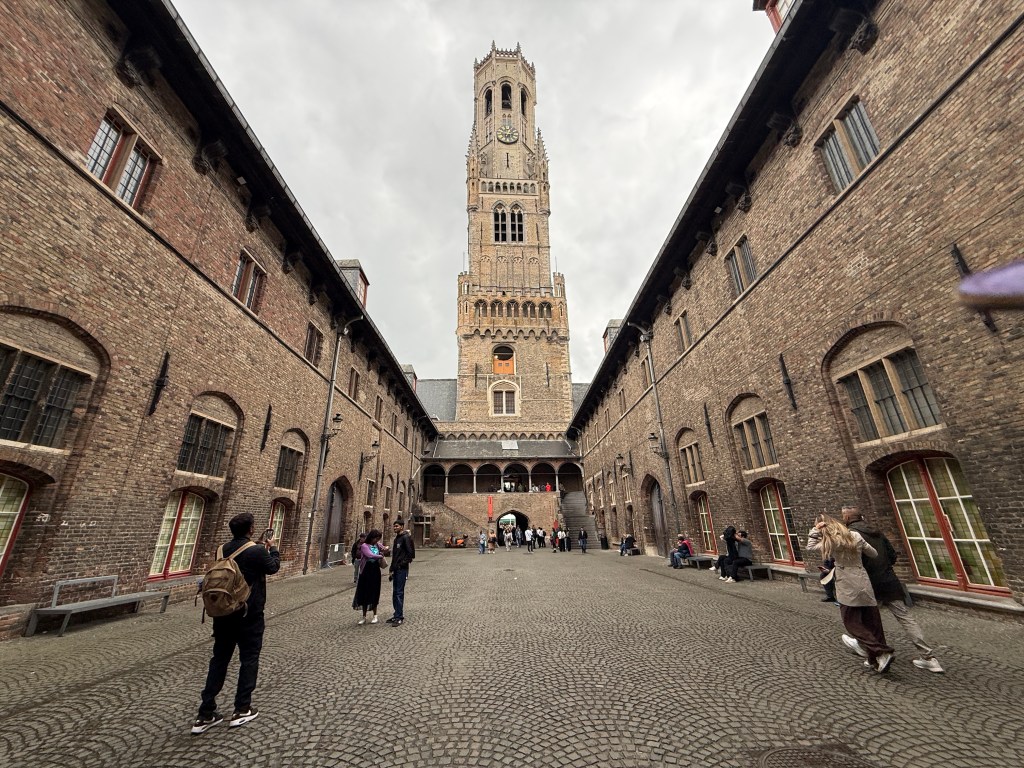
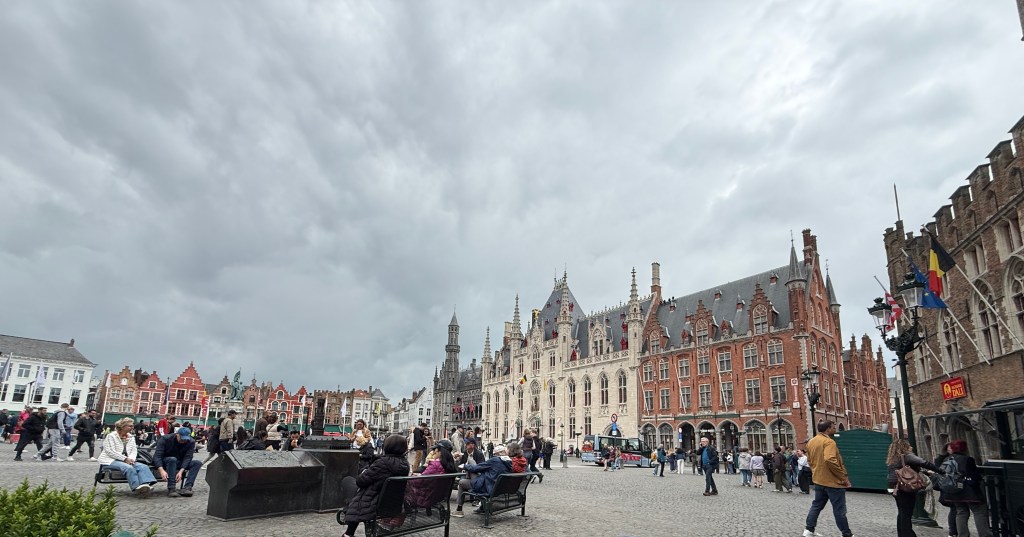
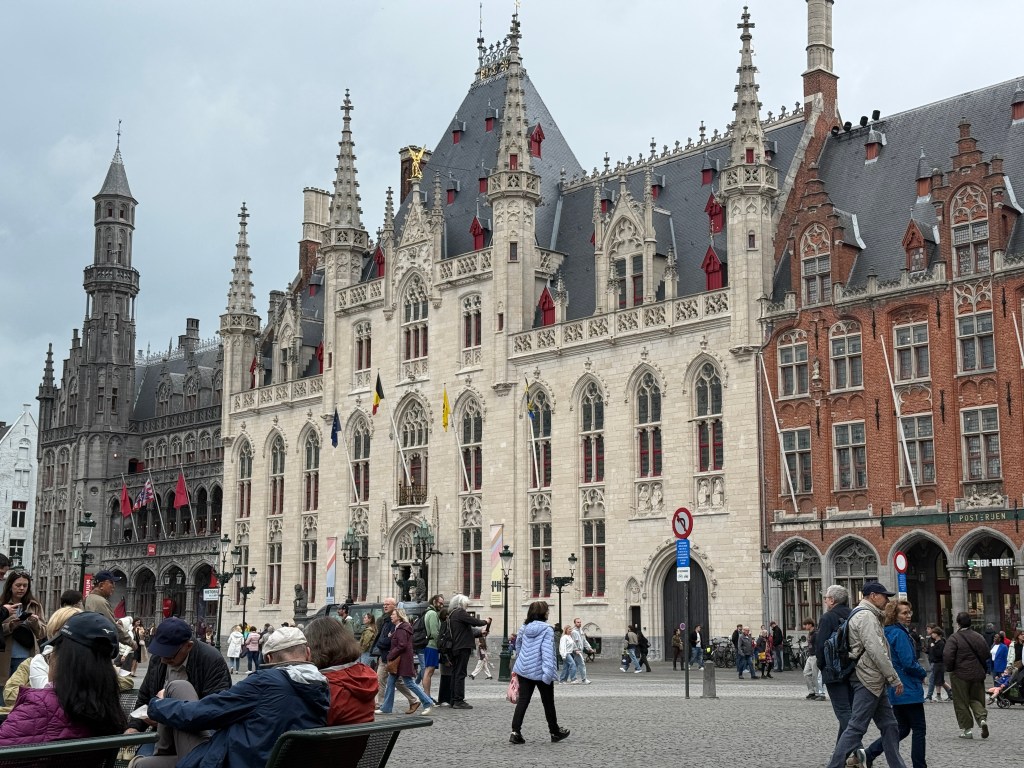
We finally made it to the meeting spot 3 hours after we left the bus parking lot. The regular tour did it in two hours. We now had 2 hours of free time.
For Andy and myself, that was sufficient time to eat lunch and take a canal boat ride. The company right around the corner from the meeting spot had no wait. We walked right on.
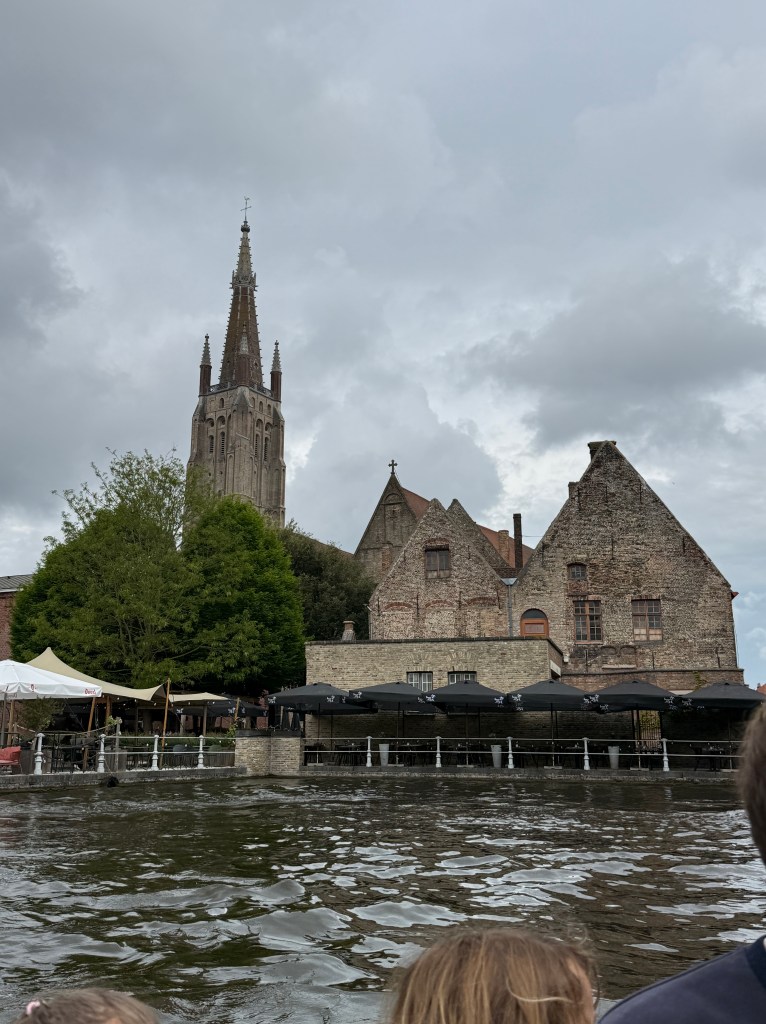
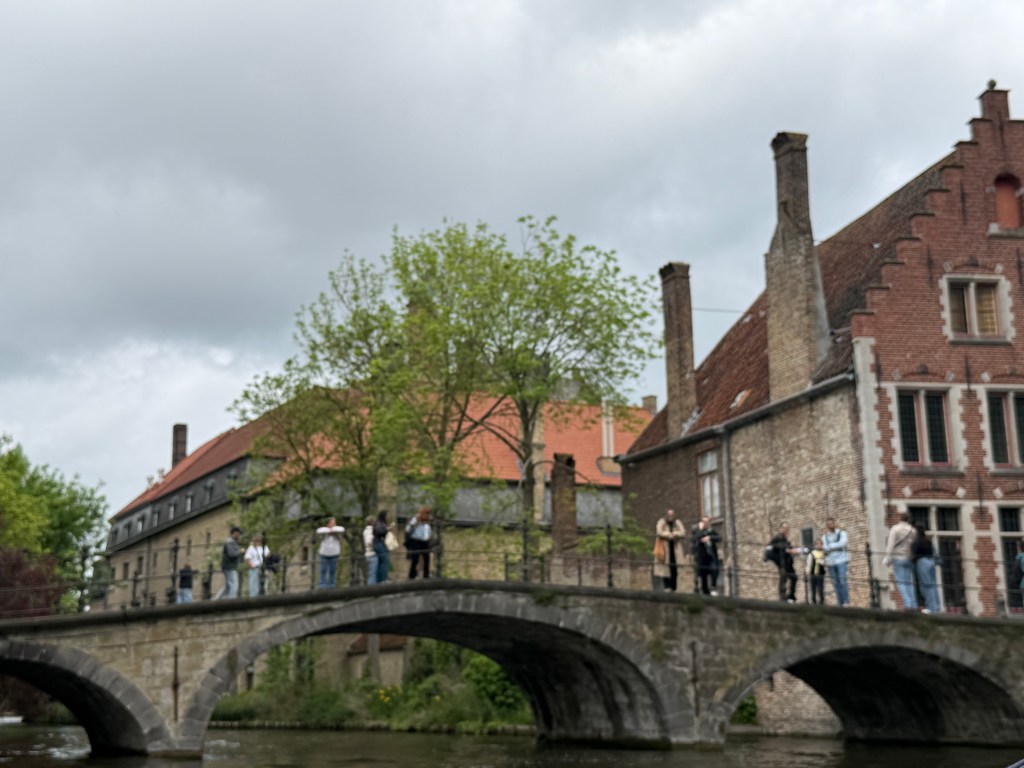
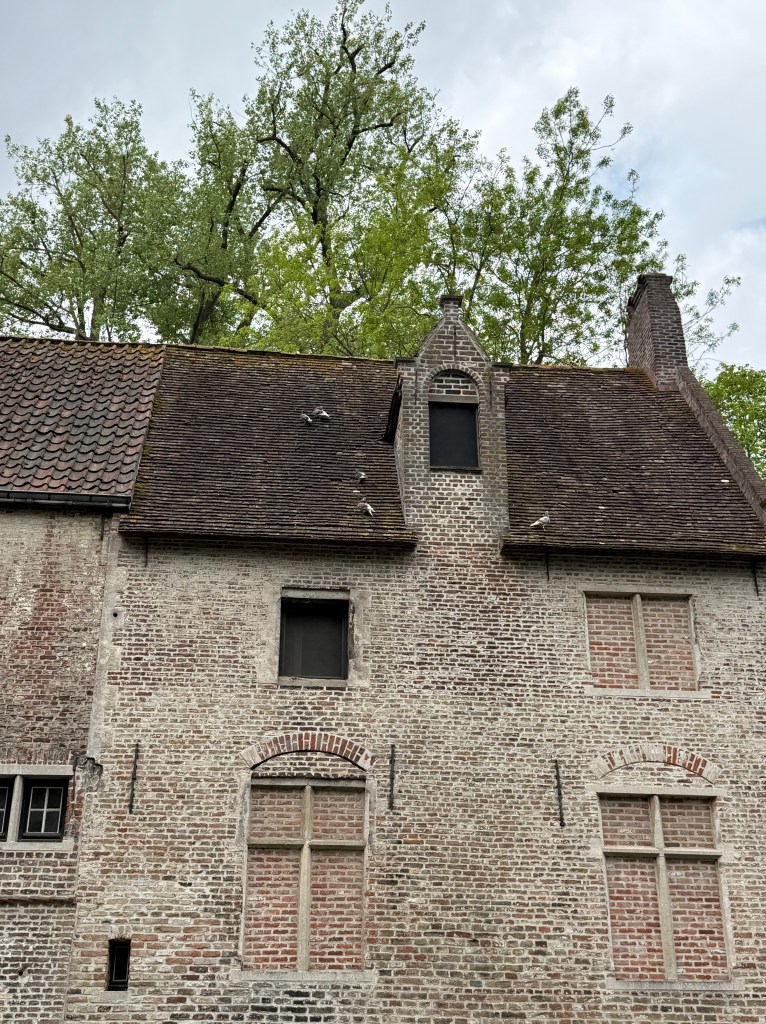
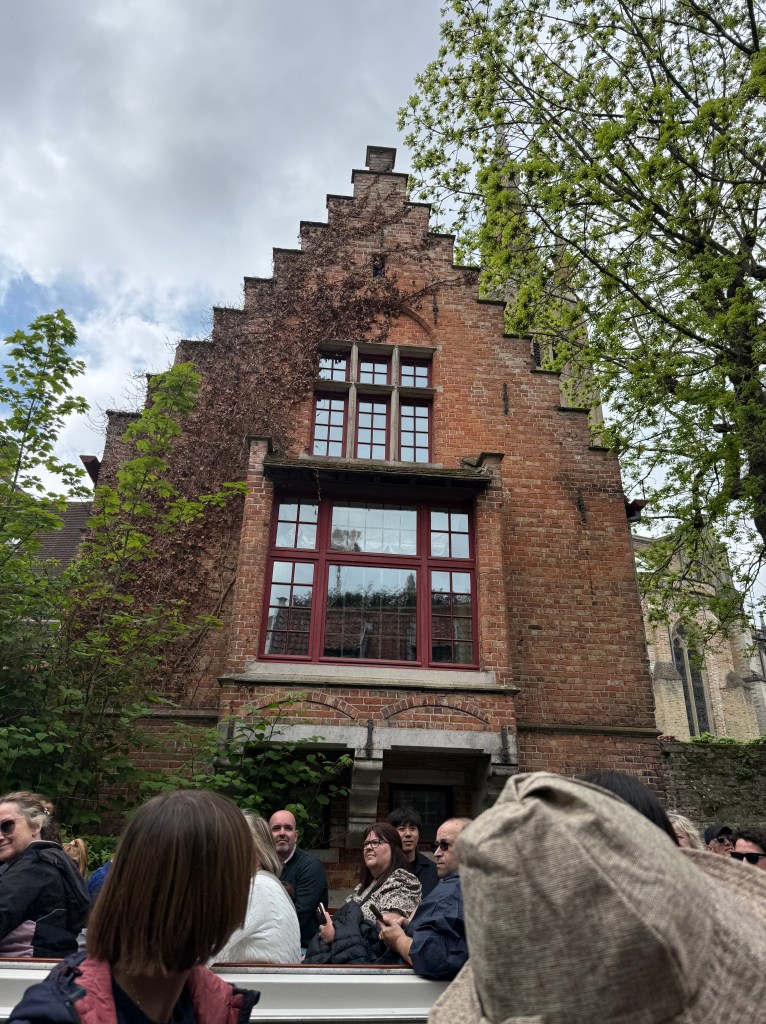
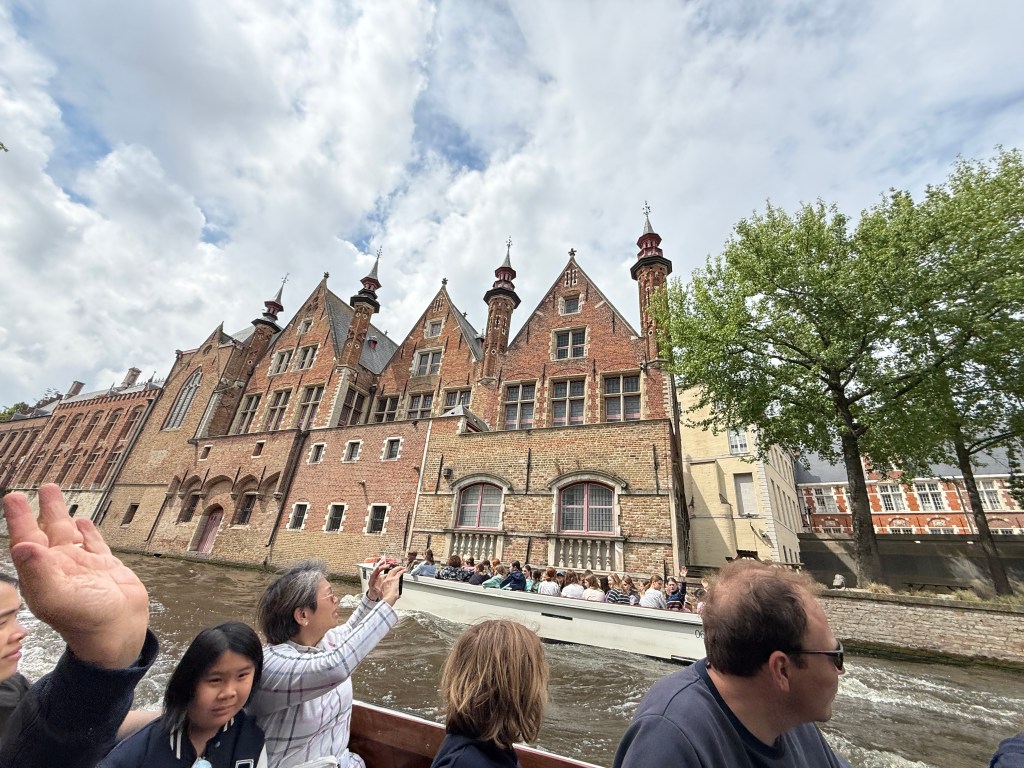
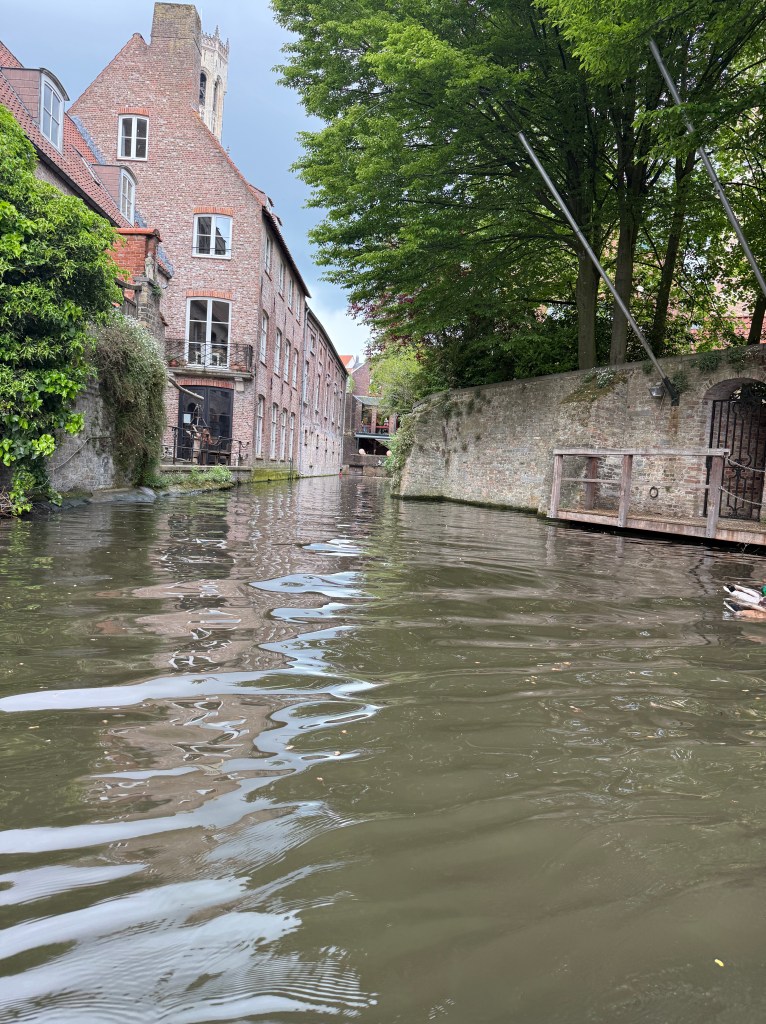
Photos from the canal ride, though I don’t remember what these are in particular. It was hard to understand the boat tour guide/captain over the boat’s motor.
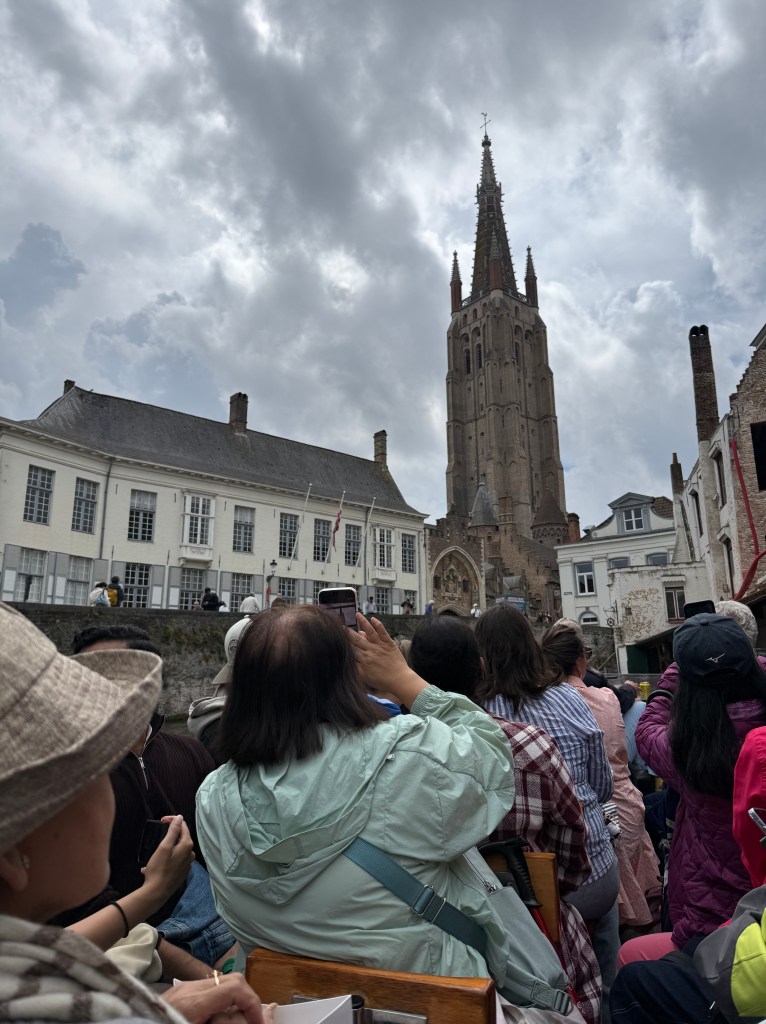
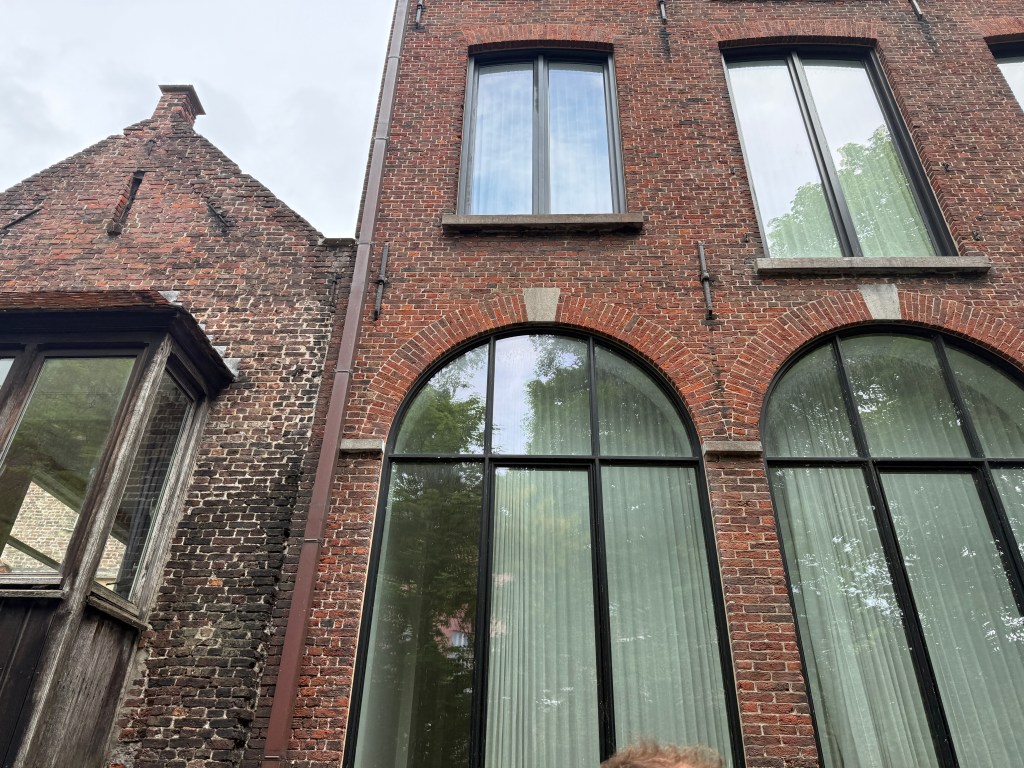
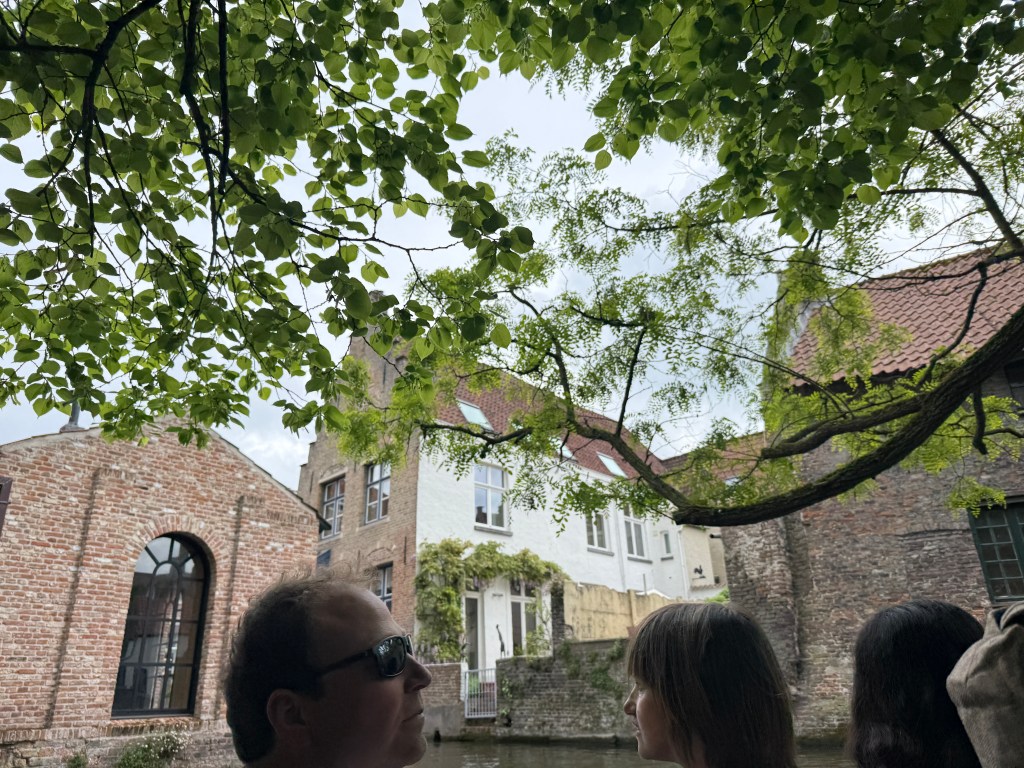
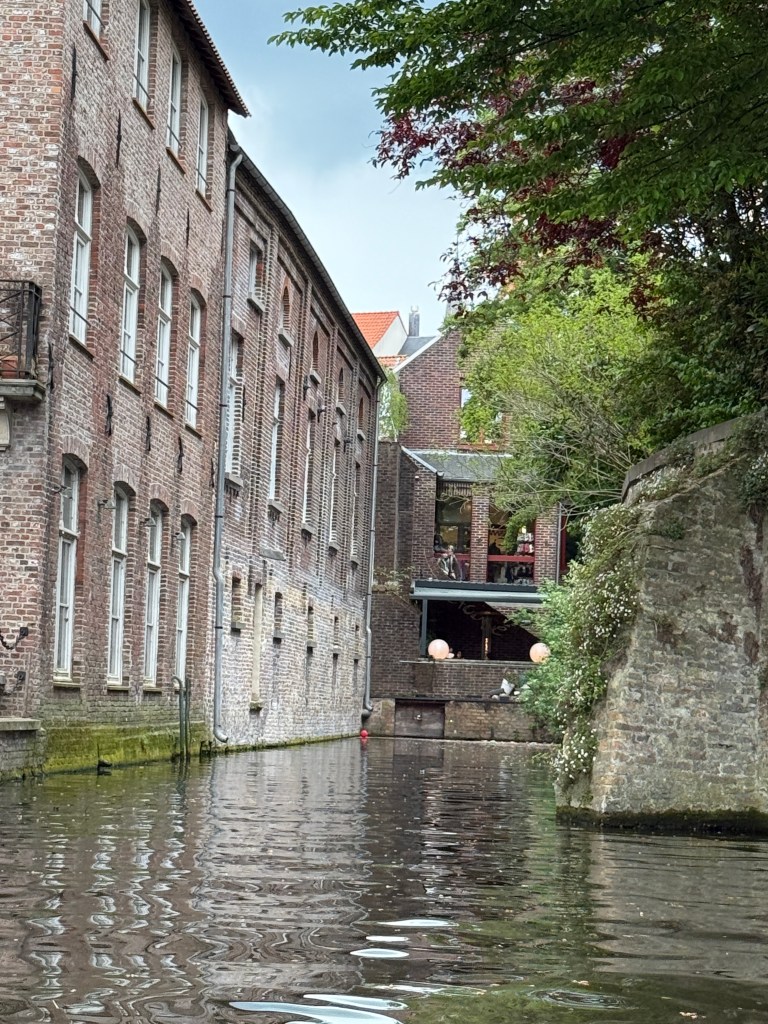
As we walked back around the corner to the meeting spot, the sky opened and it started to pour. The tour guide flagged us down and said we could wait under the overhang instead of at the actual meeting point that was out in the open. He flagged down another couple and had them wait for us while he hunted for the other two couples.
Once all 8 of us were together, the tour guide said he would call the taxi. Once again there was confusion as to who was paying (22 euros for all of us in one cab to be split among us). One person was confused as to why she needed a cab – she said she could walk back! I pointed out it’s 1.5 miles back to the bus in the pouring rain, and we have to be back on the bus by 3:30 p.m. and it’s now 3:10.
But the guy with the rollator didn’t want to get in the minivan cab – I think because of his particular physical issue, it would have been difficult – so we ended up with 4 of us in the minivan and the other 4 in a different cab.
When our cab arrived back at the bus parking lot, our bus was nowhere to be seen. Besides the fact that none of us remembered what the bus looked like.
Never mind – by the time I toddled off to the bathroom and back, the bus had appeared. It was an easy drive back to the ship, which had sailed a few miles on the river from Middelburgh and was now docked in Veere.
A great day, though a bit long, and just a little bit silly. We managed to spend a day in Bruges and not buy any souvenirs.
Tomorrow: Zeeland
 Maryland Meshugas